

How to Maintain a Hot Tub:

To maintain a hot tub, test the water often, balance chemicals, and clean the filter weekly. Drain and refill every few months to prevent buildup. Wipe the shell and cover to stop dirt and mold. Regular care keeps water safe, extends equipment life, and makes your spa easier and more affordable to enjoy year-round.
Quick Maintenance
| Daily | Weekly | Monthly | Every 3–4 Months |
|---|---|---|---|
| Check sanitizer | Test pH | Deep clean filter | Drain & refill |
| Check water level | Shock treatment | Clean cover | Purge lines |
If you want a simple routine that keeps your hot tub clean and stress-free, follow this checklist.
Daily
• Check sanitizer
• Make sure water level covers the jets
• Scoop out leaves or foam
• Open the cover for a minute to let gases escape
Weekly
• Test pH and alkalinity
• Rinse the filter
• Add a shock treatment
• Wipe the waterline
Monthly
• Deep clean the filter
• Clean the hot tub cover
• Check for weird smells or cloudy water
Every 3 to 4 months
• Drain
• Purge the lines
• Refill
• Rebalance water
Check our guide about Hot Tub Water Maintenance full guide.
How to Maintain a Hot Tub (Step-by-Step)
Keeping a hot tub in good shape doesn’t take long, but you do need a simple routine. These steps cover everything from daily care to drain-and-refill cycles so your water stays clean and your equipment lasts longer.
1. Check sanitizer and water level daily
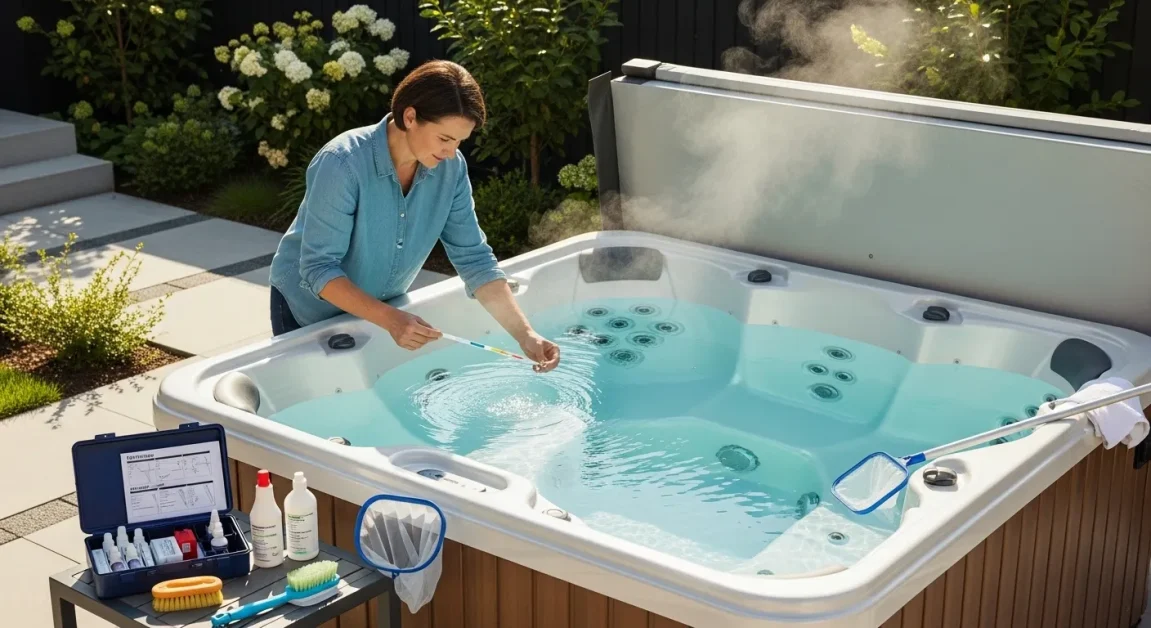
Look at the water level and make sure it’s sitting above the jets. Test sanitizer levels (chlorine or bromine) and top up if the number looks low. Scoop out leaves, bugs, or foam if anything is floating on the surface.
2. Test pH and alkalinity weekly
A quick strip test once a week keeps your water balanced.
Aim for:
• pH: 7.2 to 7.8
• alkalinity: 80 to 120 ppm
If the pH is off, the water can feel irritating and your sanitizer won’t work as well.
3. Rinse the hot tub filter weekly
Pull the filter out and rinse it under clean water. This helps your jets stay strong and reduces strain on the pump. If the water ever looks cloudy, rinse the filter again.
4. Add a shock treatment weekly
A shock dose clears out lotions, sweat, oils, and anything sanitizer can’t handle on its own. Run the jets for ten to fifteen minutes with the cover open after adding it.
5. Deep clean the filter once a month
Use a filter cleaner soak to break down oils stuck inside the pleats. Let the filter dry completely before putting it back, or rotate between two filters so one is always ready.
6. Clean the hot tub cover monthly
Wipe the cover top and bottom with a mild cleaner, then use a protectant to block sun damage, mildew, and cracking. A clean cover also keeps heat in and lowers your energy bill.
7. Drain, purge, and refill every three to four months
Even if the water looks clear, contaminants build up in the pipes. Add a line purge, run the jets, drain the tub, rinse everything, refill, and balance your water again.
8. Seasonal checks
Cold weather and hot weather affect water differently.
• In winter, keep the cover sealed tight and check water levels more often.
• In summer, pH shifts faster, so test more frequently.
Hot Tub (Spa) Water Chemistry Cheat Sheet
Takeaway
Keeping water balanced protects your skin and your equipment. These are the numbers most manufacturers recommend.
Ideal water levels
• pH: 7.2 to 7.8
• Alkalinity: 80 to 120 ppm
• Chlorine: 1 to 3 ppm
• Bromine: 3 to 5 ppm
• Calcium hardness: 150 to 250 ppm
Why these numbers matter
• Low pH stings your eyes and eats metal parts
• High pH causes cloudy water and weak sanitizer
• Low alkalinity makes pH bounce all over the place
• Low calcium can damage the heater
• High calcium causes white flakes and scale
If your water looks cloudy, your pH or sanitizer is almost always the reason.
Seasonal Maintenance Checklists
Winter care
• Keep water topped up
• Don’t shut off the heater
• Check for ice around equipment
• Make sure the cover seals tight
Summer care
• Lower temperature to 97–99°F
• Watch pH, heat speeds up chemical changes
• Adjust run times so the tub doesn’t overheat
Before vacations
• Shock the tub
• Top up sanitizer
• Turn temperature down a few degrees
• Lock the cover
Seasonal steps keep your tub running smoothly no matter the weather.
How to Winterize a Hot Tub (For Cold Climates)
If you aren’t using your hot tub during freezing weather, you need to winterize it so the pipes don’t crack.
Steps
- Turn off power at the breaker
- Drain all water from the tub
- Remove filter and drain pump housing
- Use a wet-dry vacuum to blow out lines
- Add RV antifreeze to plumbing lines
- Wipe the shell dry
- Leave the cover locked in place
If temps hit freezing, even a little leftover water can expand and break fittings. Winterizing protects your investment. Check our guide Winterizing Your Hot Tub.
How to De-Winterize in Spring
Bringing your spa back online only takes a few steps. Your spa should be ready to heat within a few hours.
What to do
- Rinse out antifreeze
- Reinstall filters
- Refill through the filter compartment
- Power the tub back on
- Balance alkalinity
- Adjust pH
- Add sanitizer
- Run jets for 20 minutes


Essential Equipment for Maintaining
You'll require essential tools and supplies to effectively maintain your hot tub. These include a test strip or digital tester to monitor pH, total alkalinity, and sanitizer levels, a cover cleaner and protectant to preserve the body, a filter cleaner to eliminate debris, a shock treatment to kill bacteria, and a hot tub cleaner for removing build-up and scum from surfaces.
For more about How to get rid of hot tub bacteria.
Cost to Maintain a Hot Tub Each Month
Most people spend $25 to $50 per month to keep their tub healthy.
| Cost | Typical Range | Notes |
|---|---|---|
| Chemicals | $12 to $25 monthly | varies by system |
| Electricity | $10 to $30 monthly | insulated covers help |
| Filter replacement | $40 to $60 yearly | replace every 12 to 18 months |
| Purge chemicals | $10 every few months | used before draining |
Safety Rules Every Owner Should Follow
A few small habits prevent most injuries and equipment damage. These simple habits protect everyone using the spa.
• Never mix chemicals
• Keep water below 104°F
• Add shock with the cover open
• Don’t use household cleaners inside the tub
• Don’t soak filters with soap
• Never leave the water level below the jets
• Keep kids out unless an adult is supervising
• Turn off power before draining
Line Purge Before Draining
Before draining your hot tub, use a plumbing purge cleaner to remove buildup inside the pipes.
Steps
• Add purge product
• Run jets for 15–20 minutes
• Let it sit a few hours
• Drain and rinse the tub
• Refill with fresh water
This helps remove hidden contaminants that cause cloudy or smelly water.
Biofilm: What It Is and How to Remove It
Biofilm is a slimy bacteria layer inside hot tub plumbing and a common cause of bad odors.
Signs
• Persistent smell
• Slimy water
• Fast pH changes
Fix
Run a plumbing purge, drain the tub, rinse, and refill with fresh water.

NOTE
Test chemicals or oils before use to confirm effectiveness. Prioritize checking pH balance before adding any chemicals to prevent contamination. You guarantee a pleasurable and healthy hot tub experience by consistently managing chemical levels and pH balance. Contact us for water testing or treatment assistance; we're here to meet all your hot tub needs.
How to Prevent Hot Tub Foam
Foam usually comes from oils, lotions, detergents, or low sanitizer. A little foam is normal during jets, but big white bubbles are a sign something’s off.
How to stop foam
• Rinse swimsuits in plain water, never detergent
• Shower before entering the tub
• Keep sanitizer steady
• Shock after heavy use
• Deep clean filters monthly
• Drain earlier if foam returns quickly
What to Do After Heavy Use (Parties, Kids, Guests)
More people in the water means more lotion, sweat, sunscreen, and bacteria. Shock treatment is non-negotiable.
Right after guests leave
• Add shock
• Run jets for 10 minutes
The next morning
• Test pH
• Check sanitizer
• Rinse the filter
If the water still looks off, add another shock dose or plan a partial drain.
If your spa won't heat, is leaking, has weak jets, or displays an error code, visit our Hot Tub Troubleshooting Guide.
🔍 Want more info? Head over to Hot Tub Patio 🛁 or check our Guides 📖 for extra reading!
Regularly checked hot tub pH levels, clean filters, and balanced chemicals will go a long way in keeping your hot tub running smoothly.
Is Hot Tub Maintenance Hard?
The short answer is no. Most hot tubs only need about 15 to 30 minutes of maintenance each week to keep the water clean and the equipment running properly. Once you establish a simple routine, tasks like testing the water, rinsing the filter, and adding sanitizer become quick habits.
The amount of maintenance depends on how often you use your spa, the number of bathers, and the weather. A hot tub used every day will need more frequent water testing than one used only on weekends.
The easiest way to avoid expensive repairs is to stay consistent. Regular maintenance helps prevent cloudy water, clogged filters, scale buildup, and unnecessary wear on pumps and heaters.
First-Time Hot Tub Owner Maintenance Plan
New hot tub owners often wonder what to do after filling their spa for the first time. Following a simple schedule during the first few weeks helps establish good habits and keeps the water balanced from the beginning.
During the First Week
- Fill the spa according to the manufacturer's instructions.
- Balance total alkalinity before adjusting pH.
- Add the recommended sanitizer.
- Heat the water to your preferred soaking temperature.
- Test the water daily until the chemistry remains stable.
During the First Month
- Test the water at least two or three times each week.
- Rinse the filter every week.
- Shock the water after heavy use.
- Wipe the waterline to prevent buildup.
- Inspect the cover for a proper seal.
After Three to Four Months
When it's time for your first water change:
- Use a plumbing line cleaner before draining.
- Drain the spa completely.
- Clean the shell and filters.
- Refill with fresh water.
- Rebalance the water before using the hot tub again.
Starting with a routine like this makes long-term maintenance much easier.
Hot Tub Chemical Schedule
Adding chemicals on a regular schedule helps keep your water balanced and reduces the chance of cloudy water or bacteria growth. The exact amounts vary by sanitizer type, spa size, and usage, so always test the water before making adjustments.
| Chemical | Typical Frequency | Purpose |
|---|---|---|
| Sanitizer (chlorine or bromine) | Check daily or after each use | Kills bacteria and keeps water safe |
| Shock treatment | Once each week or after heavy use | Removes organic contaminants |
| pH increaser or decreaser | As needed | Maintains pH between 7.2 and 7.8 |
| Alkalinity increaser | As needed | Stabilizes pH levels |
| Calcium hardness increaser | When testing shows low calcium | Protects equipment from corrosion |
Testing your water before adding chemicals prevents unnecessary adjustments and helps maintain a stable balance.
Common Hot Tub Maintenance Mistakes
Even experienced hot tub owners occasionally develop habits that create extra work later. Avoiding these common mistakes can save time, reduce chemical use, and extend the life of your equipment.
Waiting Too Long to Test the Water
Water chemistry can change quickly, especially after several people use the spa. Regular testing helps catch small imbalances before they become bigger problems.
Ignoring Dirty Filters
A clogged filter reduces water circulation and forces the pump and heater to work harder. Rinse the filter regularly and deep clean it every month.
Leaving the Cover Open
Keeping the cover open longer than necessary allows heat to escape, increases evaporation, and lets debris enter the water.
Forgetting to Shock the Water
Body oils, lotions, sunscreen, and sweat build up over time. Weekly shock treatments help remove these contaminants and keep the water clear.
Using Household Cleaning Products
Household soaps and cleaners may leave residues that create foam and interfere with water chemistry. Always use products specifically designed for hot tubs.
Skipping Water Changes
Even perfectly balanced water eventually accumulates dissolved solids that cannot be filtered out. Draining and refilling your spa every three to four months helps maintain water quality.
15-Minute Weekly Hot Tub Maintenance Routine
If you're short on time, this simple routine keeps your hot tub in good condition in about 15 minutes.
| Task | Time |
|---|---|
| Test water chemistry | 3 minutes |
| Adjust sanitizer if needed | 2 minutes |
| Rinse the filter | 4 minutes |
| Wipe the waterline | 3 minutes |
| Inspect the cover and water level | 3 minutes |
Completing these tasks once a week helps prevent many common water quality problems and keeps your spa ready whenever you want to use it.
When Maintenance Isn't Enough
Routine maintenance prevents many common problems, but it can't fix every issue. If your hot tub won't heat, has weak jets, keeps tripping the breaker, develops a leak, or displays an error code, additional diagnosis may be needed.










21 Comments
Comments are closed.