Ultimate Guide to Inflatable Hot Tubs: Setup, Care, and Benefits

An inflatable hot tub is a portable spa made from durable vinyl that inflates with a built-in pump and plugs into a standard 110V outlet. For a beginner-friendly overview of the parts and systems behind any spa, see what a hot tub is and how it works.
Most models seat 2 to 6 people, heat water to 104°F, and provide an affordable alternative to permanent hot tubs.
With proper maintenance, an inflatable hot tub can last 3 to 7 years while costing significantly less than a traditional spa.
What is an inflatable hot tub?
An inflatable hot tub is a portable spa made of durable vinyl that inflates with a pump and fills with water. It sets up on patios, decks, or backyards in just a few hours. Most hold 2–6 people, use about 150–250 gallons of water, and plug into a standard outlet.
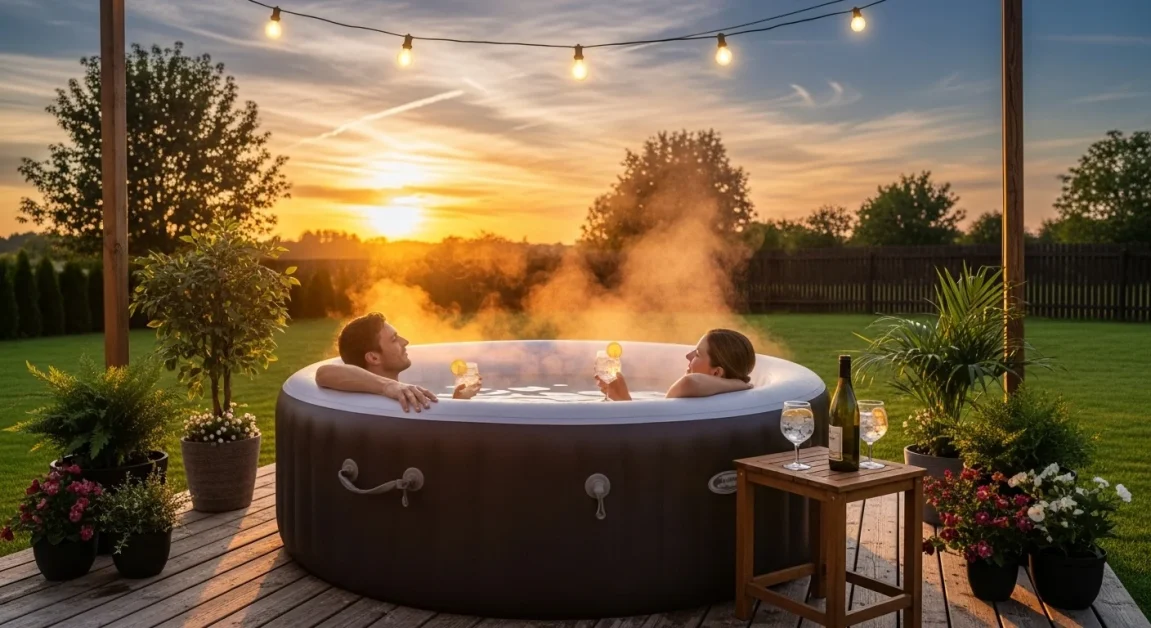
How inflatable hot tubs work compared to traditional spas
Both heat and circulate water, but inflatables use air jets for gentle bubbles while traditional spas use water jets for stronger massage. Inflatables plug into 110V outlets and are easy to move, while permanent tubs need 220V wiring and professional installation.
| Feature | Inflatable | Traditional |
|---|---|---|
| Setup | 2–4 hours | Days with install |
| Power | 110V outlet | 220V line |
| Jets | Air bubbles | Water massage |
| Mobility | Portable | Fixed |
| Lifespan | 3–5 years | 10–20 years |
Average cost of inflatable hot tubs
Most inflatable hot tubs cost between 300 and 800 dollars, while permanent models often start at 3,000. Monthly operating costs are usually 20–40 dollars for power and chemicals. Replacement filters run about 10–20 dollars.
Are inflatable hot tubs worth it?
If you want an affordable, portable way to relax, they are worth it. They give you warm soaks without a big commitment or expense. For powerful hydrotherapy and long-term durability, a permanent spa is the better choice.
Pros and Cons of Inflatable Hot Tubs
An inflatable hot tub gives you many of the benefits of a traditional spa without the high purchase price or permanent installation. For many homeowners, it’s an excellent way to enjoy warm soaks at home, but there are a few trade-offs to consider before buying.
Pros
- More affordable than most hard-sided hot tubs.
- Sets up in just a few hours with a standard 110V outlet.
- Portable and easy to move or store.
- Great for renters or seasonal use.
- Lower maintenance and operating costs.
- Available in a variety of sizes for couples and families.
Cons
- Air jets create relaxing bubbles but don’t provide deep hydrotherapy massage.
- Most models have a shorter lifespan than permanent spas.
- Heating from cold water can take 12 to 24 hours.
- Cold weather can increase electricity costs.
- Vinyl walls require care to avoid punctures.
If you’re still deciding between different models, our guide to the best inflatable hot tubs compares popular options for different budgets and backyard sizes.
What to Know Before Buying an Inflatable Hot Tub
Buying the right inflatable hot tub starts with understanding how and where you’ll use it. Spending a few extra minutes planning now can help you avoid expensive surprises later.
Measure Your Space
Leave at least 2 feet of clearance around the spa for maintenance, cleaning, and comfortable access.
Check the Filled Weight
A filled inflatable hot tub often weighs between 2,000 and 3,500 pounds, depending on its size and the number of bathers. Concrete pads are usually the safest option, while wooden decks should be inspected before installation.
Verify Your Electrical Supply
Most inflatable spas plug into a 110V GFCI outlet. Avoid extension cords, as they can reduce performance and create safety risks.
Look for Good Insulation
Features such as insulated covers, thermal ground mats, reinforced walls, and energy-saving timers help reduce heating time and monthly electricity costs.
Buy From a Brand With Replacement Parts
Choose a manufacturer that offers replacement filters, pumps, covers, and repair kits. These parts are much easier to find from established brands.
If you’re still comparing different styles, our hot tub buying guide explains what features matter most before making a purchase.
Who Should Buy an Inflatable Hot Tub?
An inflatable hot tub is a practical choice for homeowners who want an affordable spa that’s easy to set up and doesn’t require permanent installation.
It’s a great fit if you:
- Are buying your first hot tub.
- Want an affordable backyard spa.
- Rent your home.
- Have limited patio space.
- Plan to use the spa seasonally.
- Prefer a simple plug-and-play setup.
Who Should Skip an Inflatable Hot Tub?
A traditional hot tub may be a better investment if you:
- Need powerful hydrotherapy massage.
- Regularly entertain large groups.
- Want a spa that lasts 15 years or longer.
- Live in an area with long periods of freezing weather.
- Want premium features such as waterfalls or high-pressure massage jets.
Not sure which type fits your needs? Our comparison of different types of hot tubs can help you make the right decision.
Should You Leave an Inflatable Hot Tub Running All the Time?
If you use your inflatable hot tub several times each week, leaving the heater on is often the most economical option. Maintaining water temperature usually requires less electricity than reheating cold water every time you want to use it.
Turning the heater off makes sense if you:
- Won’t use the spa for several days.
- Are cleaning or draining the tub.
- Plan to store it for the season.
During freezing weather, avoid shutting the system down unless you’re fully winterizing the spa. Many newer models include freeze-protection features that help protect the pump and plumbing from damage.
To reduce monthly energy costs, follow these energy-saving tips for hot tubs before the colder months arrive.
How to Heat an Inflatable Hot Tub Faster
Most inflatable hot tubs heat water at a rate of about 2 to 3°F per hour, although outdoor temperature, wind, and insulation all affect performance.
To speed up heating:
- Fill the spa with lukewarm water if your manufacturer allows it.
- Keep the insulated cover on while heating.
- Place the tub in a sheltered location away from strong winds.
- Install an insulated ground mat.
- Clean the filter regularly to maintain good circulation.
- Avoid opening the cover until the water reaches your target temperature.
One mistake many new owners make is checking the water too often. Every time the cover is removed, valuable heat escapes, increasing heating time.
If you’re trying to lower operating costs, our hot tub running cost calculator can estimate how much electricity your spa uses.
Inflatable Hot Tub Setup Checklist
Before filling your new spa, make sure everything is ready so setup goes smoothly the first time.
Before You Start
- ☐ Flat, level surface
- ☐ GFCI electrical outlet
- ☐ Garden hose
- ☐ Filter cartridge installed
- ☐ Insulated cover
- ☐ Water test strips
- ☐ Chlorine or bromine sanitizer
- ☐ pH increaser and decreaser
- ☐ Ground insulation mat (recommended)
- ☐ Owner’s manual
Taking a few minutes to prepare everything before filling the spa helps prevent delays and gives you a much smoother first-time setup. For more detailed instructions, follow our complete hot tub setup guide before your first soak.
Inflatable Hot Tubs Ideas Backyard
Landscaping ideas around inflatable hot tubs
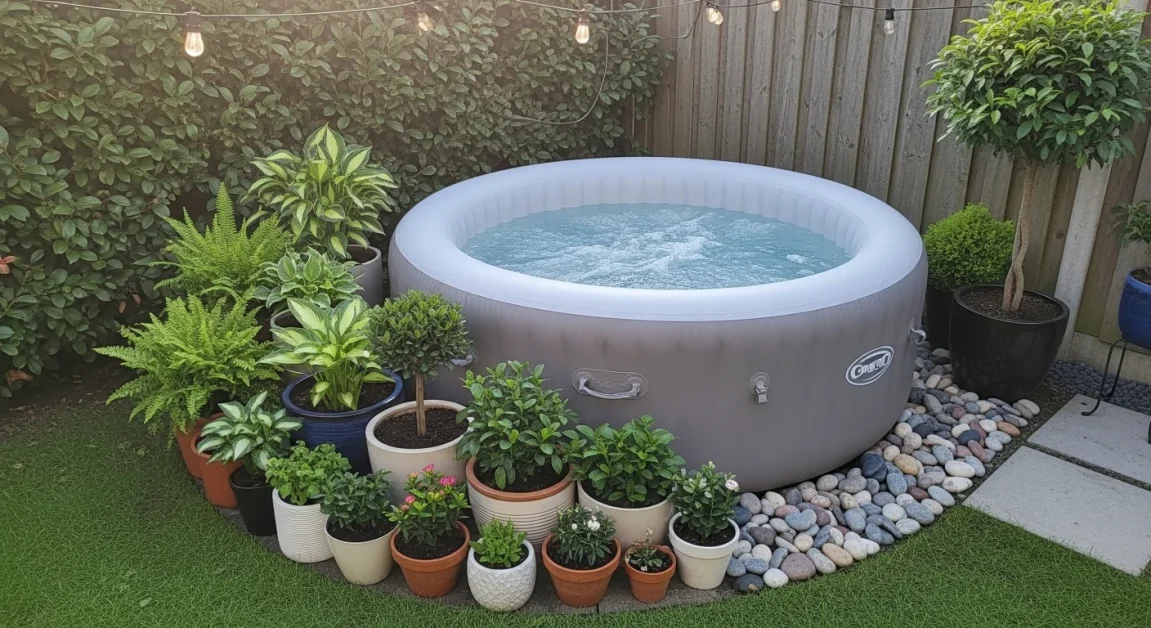
Even a small yard can feel like a retreat with the right landscaping. Use potted plants, garden beds, or tall grasses to frame your hot tub. Adding stones or wooden decking around the base can make it feel more permanent without the cost of a built-in spa.
Affordable backyard spa design tips
You don’t need a big budget to create a spa-like vibe. String lights, outdoor rugs, and a few comfy chairs can set the mood. Look for secondhand patio furniture or DIY wood pallets to build budget seating and storage.
Adding privacy and shade to your hot tub space
Privacy is key for relaxation. Use lattice panels, outdoor curtains, or tall planters to create a secluded space. A pergola or shade sail not only adds cover but also keeps water temperature steady on sunny days.
Cozy backyard setups for inflatable hot tubs
For a warm, inviting setup, focus on soft lighting and layered textures. Lanterns, fairy lights, and cushioned seating make the area feel more intimate. Adding a small fire pit or side table for drinks can turn a simple hot tub soak into a nightly ritual.
Inflatable Hot Tubs for Small Backyards
Adding a compact hot tub to a small backyard doesn’t just save space, it can also make the area feel more inviting and purposeful.
Best inflatable hot tubs for tight spaces
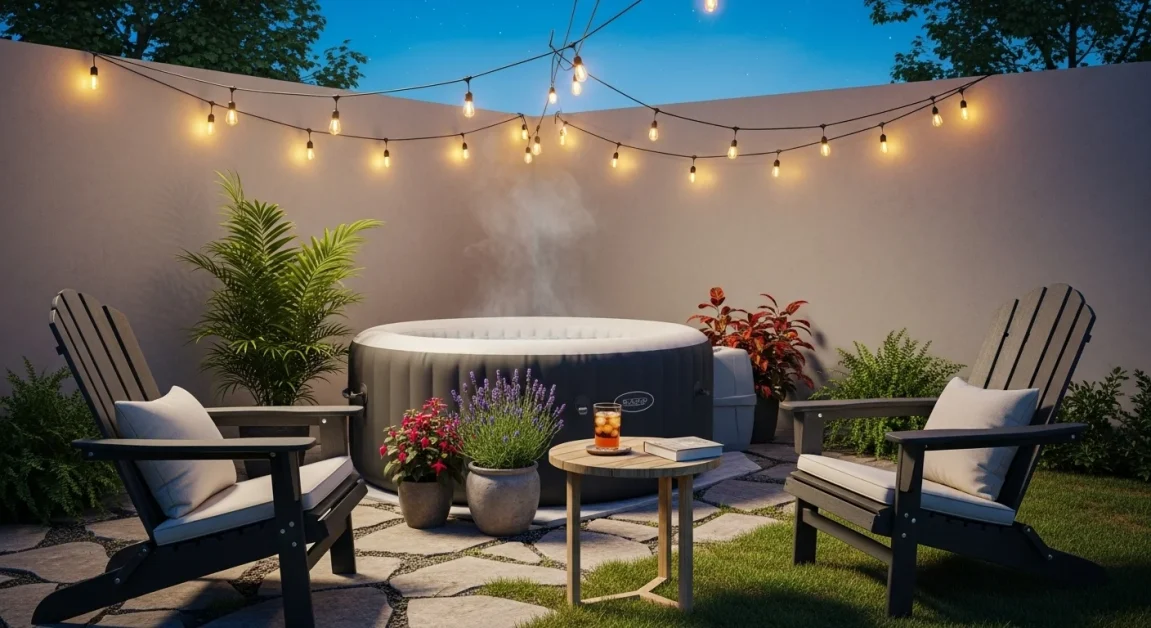
If your backyard is limited, look for round or square models under 77 inches wide. Brands like Intex and Coleman offer compact designs that still seat 2–4 people comfortably. Features like built-in seats, insulated covers, and simple plug-and-play setups make them perfect for small yards without sacrificing relaxation.
Placement tips for a small backyard spa setup
Where you put your hot tub makes a big difference. Keep these in mind:
- Choose a flat, sturdy surface like a concrete slab or reinforced deck.
- Leave at least 2 feet of clearance on each side for access and maintenance.
- Place it near an outdoor outlet but away from low-hanging trees or debris.
- Add privacy screens, planters, or lattice walls to create a cozy spa nook.
Compact inflatable hot tubs for 2 people
Two-person inflatable spas are ideal for couples or solo relaxation. They’re lightweight, easy to move, and use less water (about 150 gallons) and power than larger models. Many heat up within 12–24 hours and maintain a steady 100–104°F temperature. Plus, their smaller footprint leaves room for seating or a grill nearby.
How to make a small yard look bigger with a hot tub
Smart design tricks can help your yard feel more spacious:
- Use neutral colors for decking or tiles to create a seamless flow.
- Add mirrors, string lights, or vertical planters to draw the eye upward.
- Keep furniture minimal and multi-purpose, like benches with storage.
- Position the hot tub in a corner to open up the central space.
Inflatable Hot Tubs Benefits
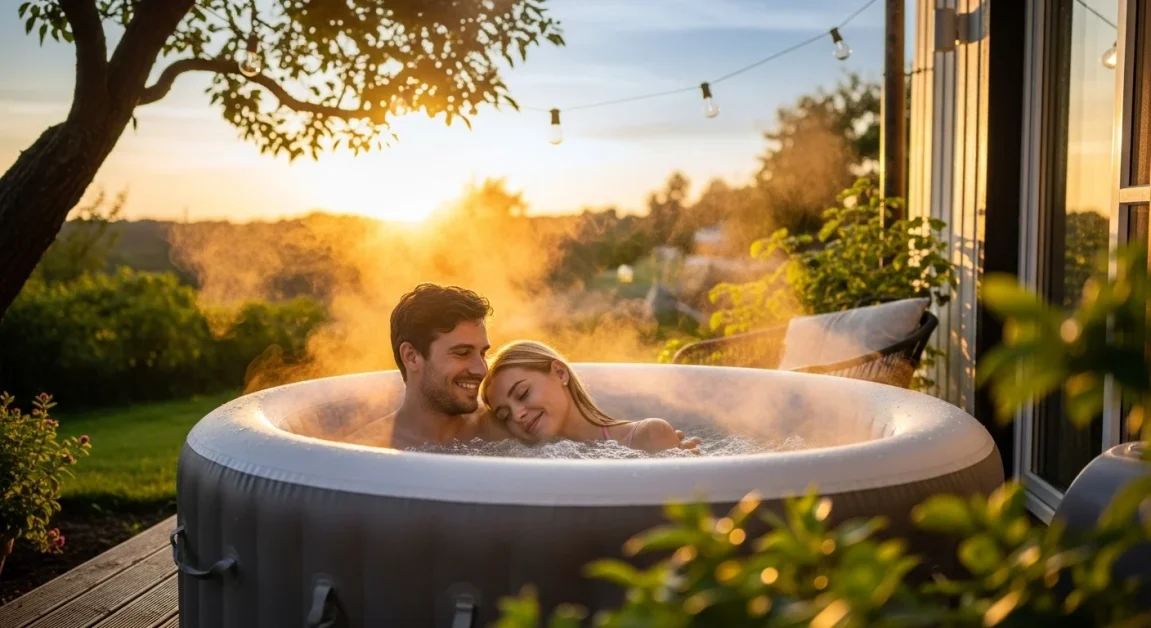
Health and relaxation perks
Hot tubs are known for soothing sore muscles, easing stress, and improving circulation. The warm water and air jets provide gentle hydrotherapy, making them great for recovery after workouts or just winding down.
Budget-friendly compared to permanent spas
Inflatable models cost between $300 and $1,000, while traditional hot tubs often run $5,000 or more. They also use less power, which can cut down monthly energy bills.
Quick setup and portability
Most inflatable hot tubs inflate in 10–15 minutes and plug into a standard outlet. You can drain and move them easily if you change your backyard layout or move homes.
Inflatable Hot Tubs Maintenance
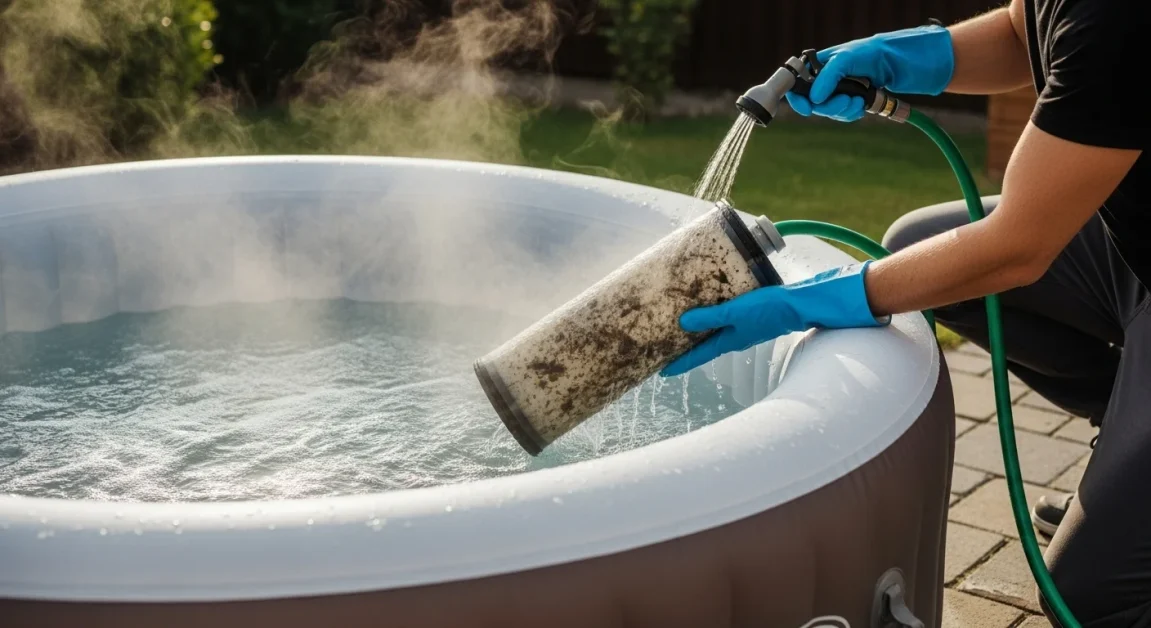
Cleaning basics
Drain and refill the water every 4–6 weeks. Use a spa vacuum or skimmer net to clear out leaves and debris.
Water treatment and chemicals
Test water weekly with strips and balance pH between 7.2 and 7.8. Add chlorine or bromine tablets to keep bacteria away.
Filter care
Rinse filters every week and replace them every 1–2 months, depending on usage. Clean filters are key to clear water and smooth pump operation.
Inflatable Hot Tubs Cost Guide
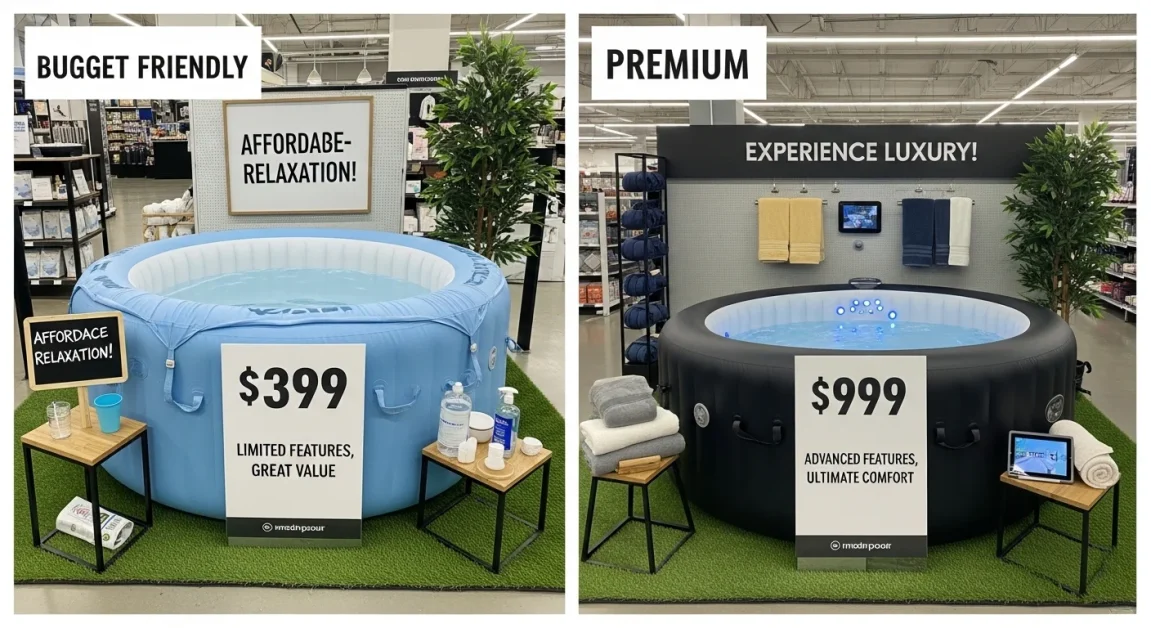
Purchase price ranges
Entry-level models start at about $300, while larger or premium models with extra jets can reach $1,200.
Running costs
Expect to spend $20–$40 per month on electricity if you use it regularly, plus about $15–$25 for chemicals.
Longevity and value
With proper care, most inflatable hot tubs last 3–5 years. Spending a little more upfront on a durable brand often pays off long term.
Inflatable Hot Tubs Safety Tips
Safe setup and use
Always place your hot tub on a flat surface and keep electrical cords away from water. Don’t let children use it unsupervised.
Temperature control
Keep water between 100°F and 104°F. Anything hotter can be risky, especially for kids or people with health conditions.
Seasonal care
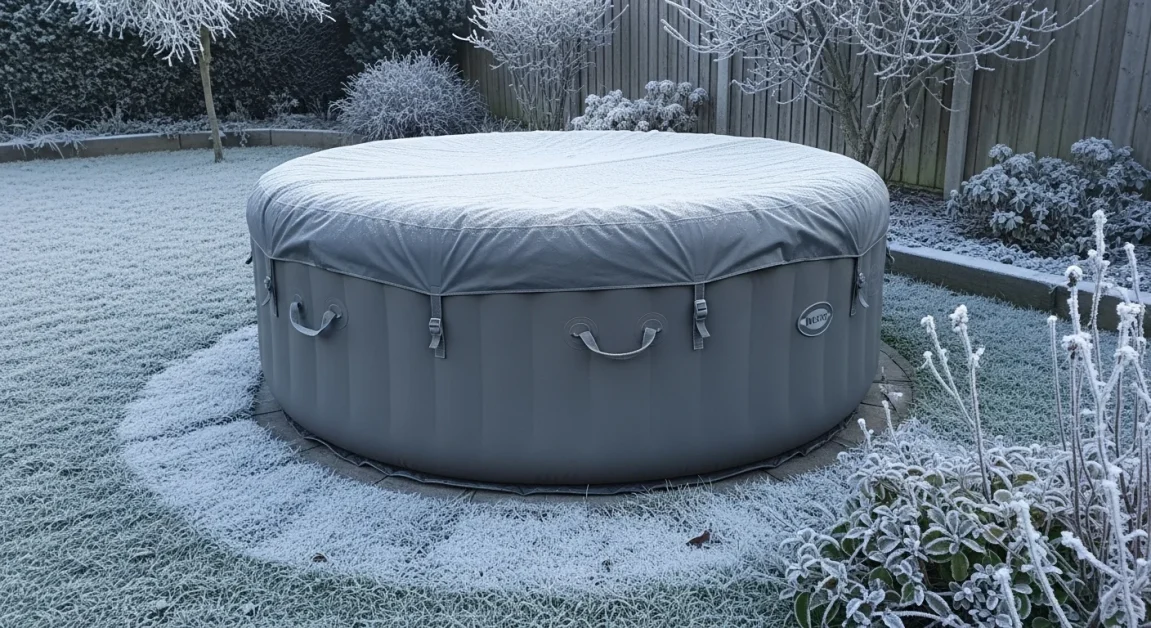
In colder climates, use insulated covers and consider moving the tub indoors to prevent freezing damage.
Inflatable Hot Tubs on Decks
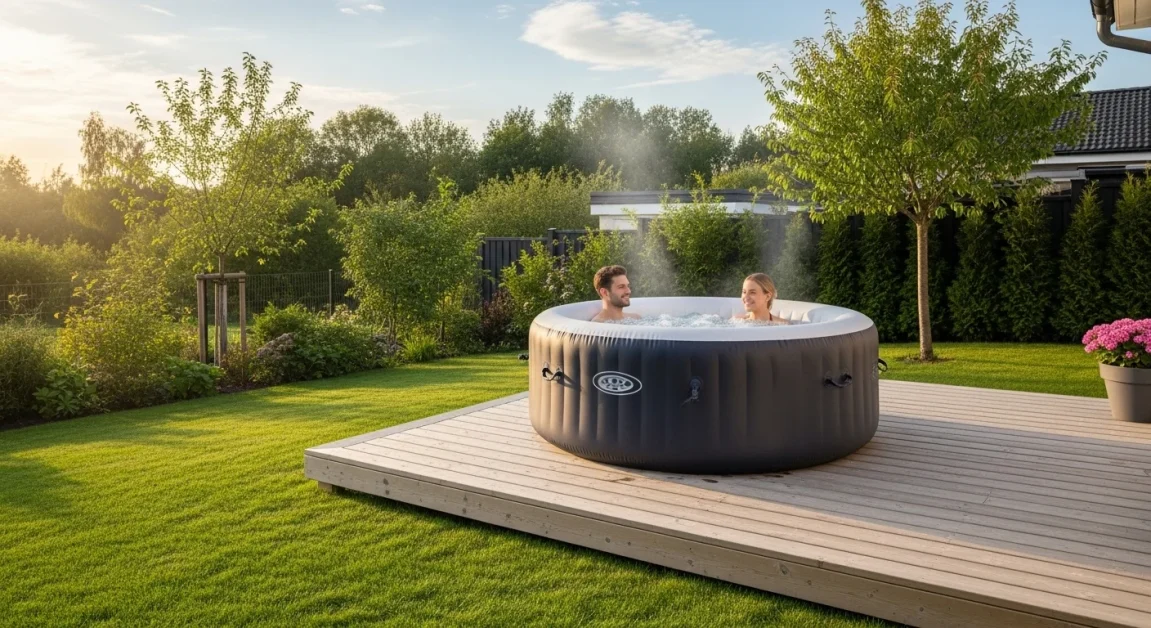
Can you put an inflatable hot tub on a wooden deck?
Yes, but only if the deck is strong enough to handle the added weight. A filled inflatable hot tub can weigh over 2,000 pounds, so not every wooden deck is suitable. Always check the deck’s structural integrity before setting up.
Weight limits and safety tips for decks
Most standard decks are built to hold about 40 to 60 pounds per square foot. A hot tub often exceeds that, so safety checks are a must. Distribute weight evenly, avoid placing the tub too close to railings, and inspect for signs of wear like sagging or rot.
Reinforcing a deck for a hot tub setup
If your deck isn’t built for heavy loads, reinforcement may be needed. This can include adding extra joists, stronger beams, or concrete footings underneath. A contractor can assess the structure and recommend improvements to make it safe for a hot tub.
Waterproof mats and flooring solutions
Protecting your deck from water damage is just as important as weight support. Use waterproof mats, interlocking tiles, or rubber flooring under the tub. These prevent slipping and extend the life of your deck by stopping water from seeping into the wood.
Inflatable Hot Tubs with Adjustable Temperature
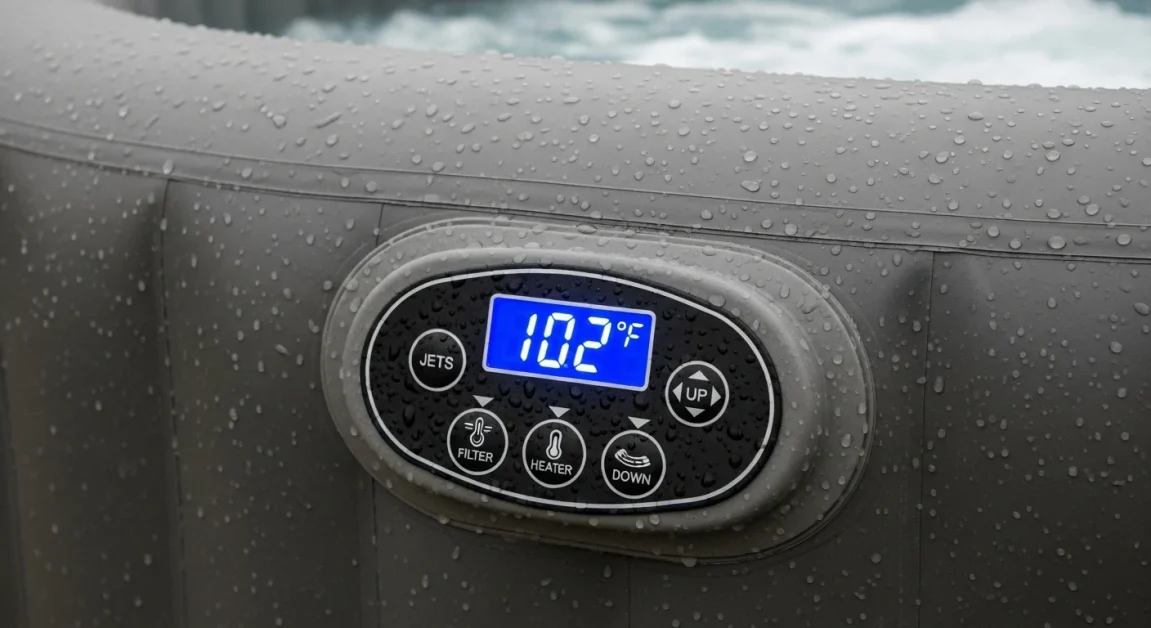
Temperature range of inflatable hot tubs
Most inflatable hot tubs heat up to 104°F, which is the safe maximum set by health standards. Some models allow lower settings for casual soaking, usually between 80°F and 100°F. This flexibility makes them usable year-round.
Energy-efficient heating tips for hot tubs
Keeping heat costs down is possible with a few smart tricks:
- Use an insulated cover when the tub isn’t in use
- Place the hot tub in a sheltered area to block wind
- Heat the water during off-peak electricity hours
- Keep filters clean for better circulation
Cooling down your inflatable spa in summer
Hot tubs don’t have built-in chillers, but you can still enjoy a cool soak. Lower the temperature setting to around 80°F, add ice packs for a quick cooldown, or use the tub without the heater on hot days.
Fast-heating inflatable hot tub models
Some newer inflatable spas feature rapid heating systems that raise water temperature by 3 to 4 degrees per hour. Brands with stronger pumps and insulated walls tend to heat faster and hold warmth longer.
Gazebo Ideas for Inflatable Hot Tubs
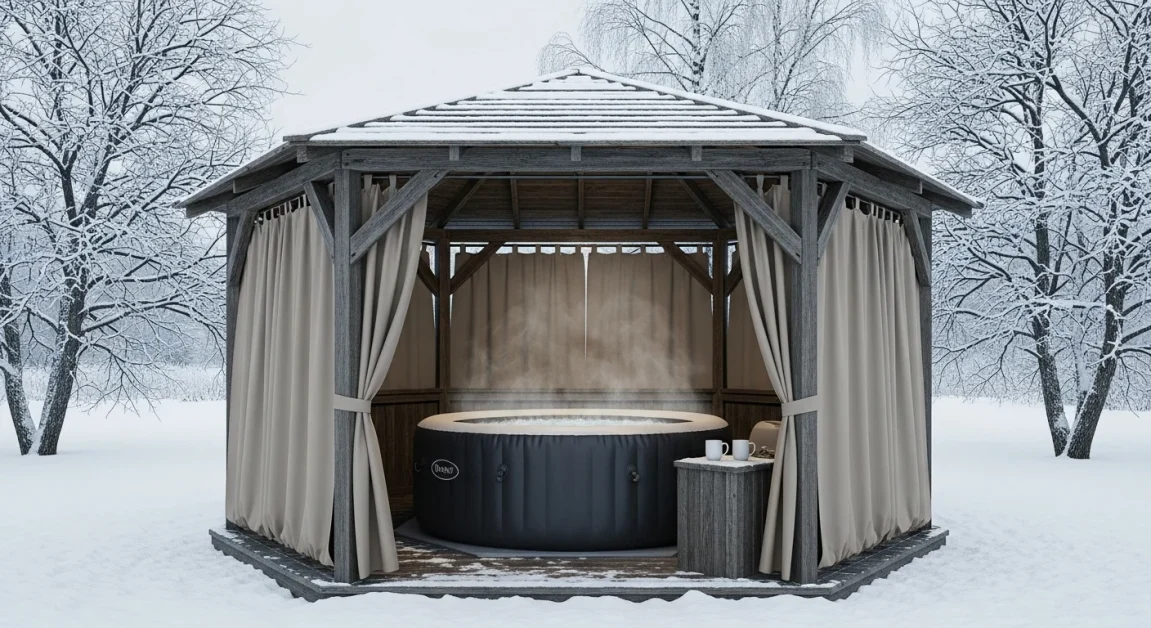
Best gazebos for year-round hot tub use
Permanent gazebos made of metal or heavy-duty wood work well for all seasons. They provide solid overhead coverage, protect the spa from snow and rain, and create a private retreat you can use any month of the year.
DIY gazebo ideas for small yards
If space is tight, try lightweight pop-up gazebos or pergolas built with pressure-treated wood. Simple corner posts with a slatted roof or a retractable fabric top can give shade and shelter without overwhelming the yard.
Budget-friendly canopy and pergola options
Not every setup needs a big investment. Portable canopies, shade sails, and open pergolas provide decent coverage at a fraction of the price. These options are easy to set up and take down as needed.
Weatherproof gazebos for inflatable spas
For heavy rain or strong sun, weatherproof gazebos with UV-resistant fabric and waterproof roofing are worth the extra cost. Look for models with zippered panels or roll-down shades for flexible protection.
Winterization Tips for Inflatable Hot Tubs
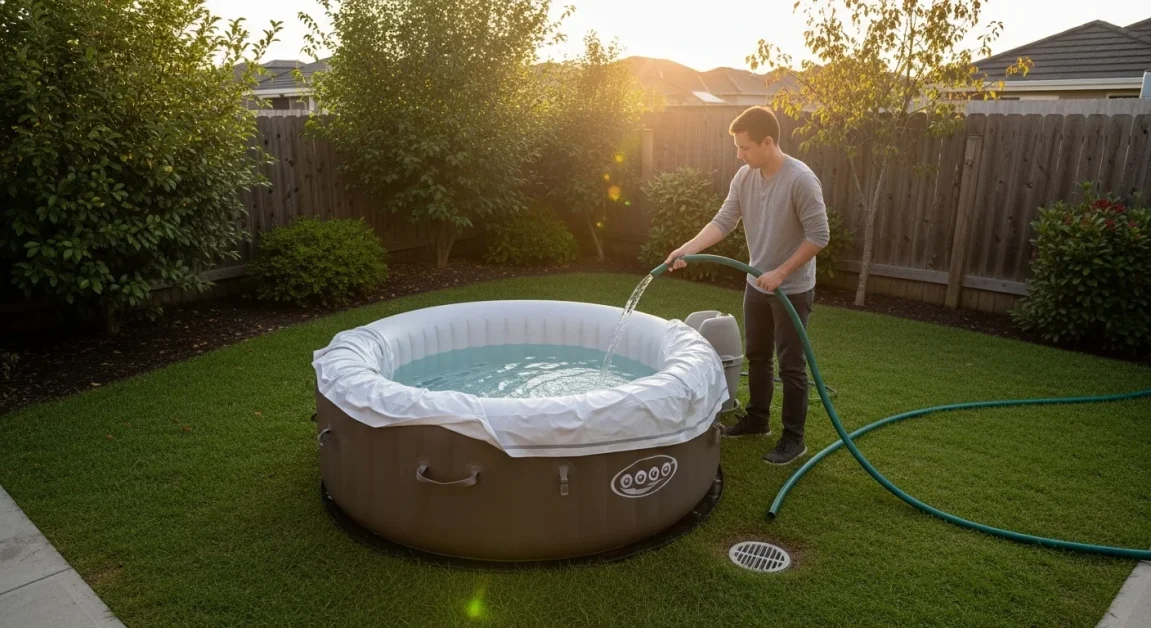
How to drain and store your hot tub for winter
Before freezing temps hit, fully drain your spa, wipe it dry, and let the liner air out to avoid mold. Fold it carefully and store it indoors in a dry place, like a basement or garage. Keep all hoses and pumps together so setup is easier next season.
Protecting your spa from freeze damage
If water is left inside, it can expand and crack the liner or pump. Always check for trapped water in pipes and fittings. Some owners use non-toxic antifreeze in hoses for extra protection, but storage indoors is the safest bet.
Best insulated covers for inflatable hot tubs
A good cover keeps heat in and snow or debris out. Look for thick, insulated covers with locking straps to prevent wind lift. Thermal blankets that float on the water surface add an extra layer of protection.
Can you use inflatable hot tubs in winter?
Most inflatable models are built for mild to moderate weather, not subzero temperatures. Some can handle down to 40°F if they’re heated continuously, but running costs will rise. For cold climates, a permanent spa may be the better choice.