
Hot Tub and Debris: How to Remove It and Keep Your Spa Clean

Keeping debris out of your hot tub doesn’t require hours of maintenance it comes down to a consistent routine.
Skimming the water, cleaning the filter, and checking your water chemistry on a regular schedule will prevent most common debris problems before they affect water quality or your equipment.
A clean hot tub is more enjoyable to use, easier to maintain, and less likely to develop cloudy water or clogged filters.
Start with the simple daily and weekly habits in this guide, and you’ll spend less time cleaning and more time relaxing in clear, inviting water.
What Causes Debris in a Hot Tub?
Hot tub debris comes from both the environment and the people using the spa. Leaves, dust, pollen, insects, body oils, hair, and even bird droppings can collect in the water, reducing water quality and putting extra strain on the filtration system.
If you’re still learning about routine maintenance, our hot tub water care guide explains how clean water and proper chemistry work together.

Leaves and Twigs
Hot tubs placed beneath trees naturally collect falling leaves, seeds, and small branches. Windy days can quickly fill an uncovered spa with organic debris that sinks to the bottom or clogs the skimmer basket.
Besides looking messy, decaying leaves consume sanitizer and may stain the shell if left for several days.
Dirt, Dust, and Pollen
Outdoor spas constantly collect airborne dust and seasonal pollen. This fine material often settles on seats and the footwell, especially after storms or during spring.
Many owners mistake pollen for cloudy water when it’s actually tiny floating particles that need filtration or vacuuming.
Bird Droppings
Bird droppings can land on both the spa cover and directly in the water if the cover is open. Besides creating an unpleasant mess, they introduce organic contaminants that force your sanitizer to work harder.
Cleaning them promptly helps maintain healthier water.
Body Oils, Hair, and Lint
Every soak introduces small amounts of:
- Hair
- Dead skin cells
- Lotions
- Sunscreen
- Clothing fibers
- Cosmetic residue
These materials don’t always disappear into the filter immediately. Instead, they often combine with dirt and create visible debris.
Wind and Nearby Landscaping
Mulch, grass clippings, flower petals, pine needles, and landscaping debris frequently end up in outdoor hot tubs after mowing or windy weather.
Creating a simple cleaning routine after yard work can prevent these materials from accumulating.
Common Types of Hot Tub Debris
| Debris | Common Source | Potential Problem |
|---|---|---|
| Leaves | Nearby trees | Filter clogging |
| Dirt | Wind | Cloudy water |
| Pollen | Seasonal plants | Fine floating particles |
| Hair | Bathers | Reduced filtration efficiency |
| Bird droppings | Wildlife | Increased sanitizer demand |
| Grass clippings | Lawn maintenance | Organic contamination |
Why Debris Is Bad for Your Hot Tub
Even small amounts of debris can shorten the life of your filtration system and make balancing your water more difficult.
A few floating leaves might not seem serious, but organic material breaks down quickly in warm water. As it decomposes, your sanitizer works overtime to eliminate contaminants instead of protecting the water from bacteria.
Regular filter maintenance is just as important as removing visible debris. Our guide to cleaning hot tub filters explains how often filters should be rinsed and deep cleaned.
Ignoring debris may lead to:
- Reduced water circulation
- Dirty or clogged filters
- Higher chlorine or bromine consumption
- Cloudy water
- Increased pump workload
- More frequent cleaning sessions
Many experienced owners notice that spending five minutes removing debris each day saves much more time troubleshooting water problems later.
How to Remove Dirt and Debris from a Hot Tub
Removing debris isn’t complicated, but following the right order makes the job faster and keeps the water cleaner.
Step 1: Remove Floating Debris
Begin by skimming the surface.
Use:
- Spa skimmer net
- Fine mesh leaf net
- Handheld scoop
Removing floating material first prevents it from sinking when the jets are turned on.
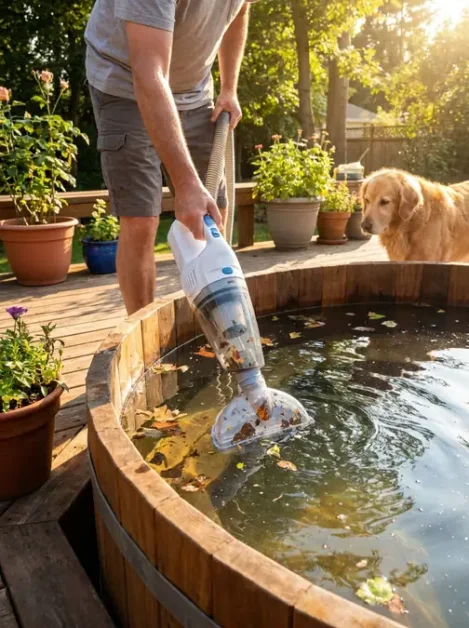
Step 2: Vacuum the Bottom
Fine dirt, sand, and heavier particles settle in the footwell.
A battery-powered spa vacuum is ideal because it collects debris without draining the tub.
Vacuum:
- Seats
- Footwell
- Around drains
- Corners
Step 3: Rinse the Filter
After removing visible debris, clean the filter.
A garden hose usually removes:
- Dirt
- Hair
- Leaves
- Fine sediment
Rinse between each pleat until the water runs clear.
Step 4: Wipe the Waterline
Use a spa-safe cleaner or a soft microfiber cloth to remove oils and residue from the shell.
Pay special attention to the waterline where lotions and body oils tend to collect.
Step 5: Test and Balance the Water
Cleaning removes physical debris, but chemical balance still needs to be checked.
Before adding chemicals, use the Hot Tub Chemical Dosage Calculator to determine the proper amount for your spa size.
Check:
- Sanitizer level
- pH
- Total alkalinity
- Water clarity
Balancing the water after cleaning helps prevent new debris from becoming a larger water quality problem.
Best Tools for Removing Hot Tub Debris
The right cleaning tool depends on the type of debris you’re dealing with. A floating leaf requires a different solution than sand settled in the footwell or sunscreen residue floating on the surface.
Many experienced hot tub owners keep a small cleaning kit nearby so they can remove debris before it becomes a bigger maintenance issue. For a closer look at different cleaning options, see our guide to the best spa vacuum cleaners.
| Tool | Best For | How Often to Use |
|---|---|---|
| Leaf skimmer | Leaves, insects, floating debris | Daily or after each use |
| Spa vacuum | Dirt, sand, and settled debris | Weekly |
| Filter cleaning wand | Cleaning filter pleats | Weekly |
| Oil-absorbing sponge | Lotions and body oils | Weekly |
| Microfiber cloth | Waterline cleaning | Weekly |
| Garden hose | Rinsing filters | Weekly |
Leaf Skimmer
A fine-mesh skimmer is the quickest way to remove floating debris before it sinks. Spend a minute skimming the surface after every soak, especially during fall when leaves are constantly blowing around.
Spa Vacuum
Battery-powered spa vacuums work well for removing:
- Sand
- Dirt
- Tiny stones
- Dead insects
- Heavy organic debris
Unlike pool vacuums, spa vacuums are designed for the smaller space inside a hot tub and are easy to maneuver around seats and footwells.
Filter Cleaning Wand
A filter cleaning attachment connects to a standard garden hose and sprays water between the pleats, removing trapped dirt much more effectively than rinsing alone.
Cleaning the filter regularly helps maintain strong water circulation.
Oil-Absorbing Sponge
Body oils, sunscreen, cosmetics, and lotions don’t always dissolve completely. An oil-absorbing sponge floats on the surface and captures many of these contaminants before they coat the shell or clog the filter.

How to Prevent Debris from Getting Into Your Hot Tub
Preventing debris is much easier than removing it later. A few simple habits can significantly reduce cleaning time while helping your filters last longer.
If your spa cover has accumulated dirt, pollen, or mildew, follow our guide on how to clean a vinyl spa cover to prevent contaminants from falling into the water each time you open it.
Keep the Cover Closed
The spa cover is your first line of defense.
Whenever the hot tub isn’t being used:
- Close the cover completely.
- Secure all locking straps.
- Remove standing water or leaves from the cover before opening it.
This simple habit prevents much of the debris found in outdoor spas.
Trim Nearby Trees and Shrubs
Trees provide shade but also create constant cleanup.
Trim branches that hang directly over the spa to reduce:
- Leaves
- Pine needles
- Seeds
- Blossoms
- Small twigs
A little seasonal pruning can dramatically reduce daily maintenance.
Rinse Before Soaking
Showering before entering removes:
- Sweat
- Dirt
- Hair products
- Makeup
- Sunscreen
- Body lotions
Cleaner bathers mean cleaner water.
Avoid Yard Work Before Using the Spa
Grass clippings and mulch easily stick to feet and clothing.
If you’ve been mowing or gardening, rinse off before stepping into the hot tub.
Clean the Filter Every Week
A clean filter captures debris before it builds up in the plumbing.
Most homeowners find that a quick weekly rinse keeps the filter performing well between monthly deep cleanings.
Skim After Windy Weather
After storms or windy days, inspect the spa before turning on the jets.
Removing leaves first prevents them from breaking apart and spreading throughout the water.
Can You Clean a Hot Tub Without Commercial Cleaner?
Yes but only for certain cleaning tasks. A homemade vinegar solution can help clean the shell or waterline when a commercial spa cleaner isn’t available. According to the SERP report, a common alternative is 1 part white vinegar mixed with 4 parts warm water, followed by a thorough rinse to prevent residue from affecting water chemistry.
This solution works well for:
- Waterline residue
- Light mineral deposits
- Surface dirt
- Exterior shell cleaning
Avoid using vinegar as a substitute for sanitizers like chlorine or bromine. It does not disinfect your hot tub water.
After cleaning:
- Wipe the shell with the vinegar solution.
- Rinse thoroughly with clean water.
- Dry with a microfiber towel if needed.
- Test the water before using the spa again.
For a detailed walkthrough, including where vinegar should and shouldn’t be used, read How to Use Vinegar to Clean Your Hot Tub.
Why Do People Put a Tennis Ball in a Hot Tub?
People put a clean tennis ball in a hot tub because the fuzzy surface can absorb some body oils, sunscreen, lotions, and cosmetics before they build up on the waterline or filter.
It’s a simple trick that has been shared among hot tub owners for years, although it’s not designed specifically for spa maintenance.
The idea is straightforward: oils cling to the felt covering of the tennis ball instead of remaining on the water’s surface. This may slightly reduce oily residue between cleanings, but it won’t remove dirt, leaves, or other physical debris.
Does It Really Work?
Yes but only to a limited extent.
A tennis ball can help collect light surface oils, especially if only a few people regularly use the spa. It won’t replace proper water maintenance or filtration.
A tennis ball cannot:
- Remove dirt or sand
- Replace your sanitizer
- Clean cloudy water
- Filter fine particles
- Prevent algae or bacteria
Many hot tub owners find that it helps reduce the greasy ring that sometimes forms around the shell, but regular cleaning is still necessary.
Better Alternatives
Products designed specifically for hot tubs generally perform better than a standard tennis ball.
These include:
- Floating oil-absorbing sponges
- Scum-absorbing balls
- Disposable oil-absorbing pads
- Floating enzyme sponges
If your spa frequently develops oily residue from sunscreen or lotions, a purpose-built sponge usually absorbs more contaminants and lasts longer.
Our guide to the best oil-absorbing sponges for hot tubs compares the most effective options.
Replace It Regularly
If you choose to use a tennis ball:
- Use a brand-new, clean ball.
- Replace it once it becomes dirty or waterlogged.
- Avoid using old tennis balls that have been on outdoor courts, as they may introduce dirt or chemicals into the water.
What Is the Downside of Owning a Hot Tub?
The biggest downside of owning a hot tub is the ongoing maintenance. Keeping the water clean requires regular attention, especially if your spa is outdoors where leaves, dust, insects, and pollen are constantly finding their way into the water.
This maintenance burden is one of the unanswered People Also Ask topics highlighted in the SERP report.
That doesn’t mean maintenance is difficult it just needs to become part of your weekly routine.
Typical maintenance includes:
- Skimming debris
- Cleaning the filter
- Testing water chemistry
- Balancing sanitizer levels
- Wiping the waterline
- Draining and refilling every few months
Many new owners spend more time cleaning because they wait until debris has already built up. Spending five minutes every day usually prevents larger problems that require much more work later.
A simple hot tub maintenance guide can help turn these tasks into an easy weekly routine.
The Benefits Still Outweigh the Maintenance
Most owners agree that the maintenance is worthwhile because a well-maintained hot tub provides:
- A relaxing place to unwind
- Warm hydrotherapy for sore muscles
- Family time and outdoor entertainment
- Year-round enjoyment
- Better water quality with fewer unexpected problems
Once you establish a consistent cleaning schedule, maintaining a hot tub typically takes much less time than many first-time owners expect.
Common Mistakes When Cleaning Hot Tub Debris
Cleaning debris seems simple, but a few common mistakes can create bigger problems or make cleaning less effective.
If you’re dealing with recurring issues after removing debris, our Troubleshooting & Maintenance Guide can help identify the underlying cause.
Leaving Debris Overnight
Leaves, insects, and other organic material begin breaking down quickly in warm water. As they decompose, they consume sanitizer and may stain the shell.
Removing debris as soon as you notice it keeps your water cleaner and reduces chemical demand.
Forgetting the Filter
Many people skim the surface but overlook the filter.
Even if the water looks clean, your filter may still be packed with:
- Hair
- Dirt
- Fine sediment
- Plant material
- Body oils
A clogged filter reduces circulation and makes it harder to keep the water clear.
Using Household Cleaning Products
Avoid products such as:
- Dish soap
- Glass cleaner
- Bleach
- Multi-purpose cleaners
These products can create foam, damage the shell, or interfere with water chemistry.
Use only cleaners designed for hot tubs or a properly diluted vinegar solution for appropriate cleaning tasks.
Skipping Water Testing
Removing visible debris doesn’t guarantee clean water.
Always test:
- Free chlorine or bromine
- pH
- Total alkalinity
Balanced water helps prevent contaminants from turning into cloudy water or unpleasant odors.
Opening the Cover Without Cleaning It
A cover often collects:
- Leaves
- Dust
- Bird droppings
- Rainwater
If you flip it open without brushing it off first, all of that debris can fall directly into the spa.
Taking a minute to clean the cover before opening it saves much more cleanup later.
Seasonal Debris Prevention
Each season brings different challenges for outdoor hot tubs. Adjusting your maintenance routine throughout the year helps keep debris under control and reduces the workload on your filter.
If you live in an area with changing seasons, our Fall Hot Tub Maintenance Guide provides additional seasonal care tips.
Spring
Spring often brings:
- Heavy pollen
- Blossoms
- Seed pods
- Increased rainfall
Maintenance tips:
- Skim the water daily during pollen season.
- Rinse the filter more frequently.
- Wipe the waterline weekly.
- Test sanitizer after heavy rain.
Summer
Summer usually means more bathers and more sunscreen, which increases oils and organic debris.
Maintenance tips:
- Shower before entering the spa.
- Remove floating debris after each use.
- Check sanitizer levels more often.
- Empty the skimmer basket regularly.
Fall
Fall is typically the busiest season for hot tub cleaning.
Falling leaves, pine needles, acorns, and twigs can quickly overwhelm the filter if left unattended.
Maintenance tips:
- Keep the cover closed whenever possible.
- Remove leaves from the cover before opening it.
- Skim the water every day.
- Trim branches hanging over the spa.
Winter
Winter generally brings less organic debris but introduces snow, ice, and wind-blown particles.
Maintenance tips:
- Brush snow off the cover before opening it.
- Avoid using sharp tools that could damage the cover.
- Check filters regularly since debris may be less visible.
- Inspect the cover seal to prevent dirt from blowing inside.
Quick Hot Tub Debris Maintenance Schedule
Following a simple schedule keeps debris from becoming a larger problem.
| Maintenance Task | Recommended Frequency |
|---|---|
| Skim floating debris | Daily or after each use |
| Empty skimmer basket | Daily |
| Vacuum seats and footwell | Weekly |
| Rinse hot tub filter | Weekly |
| Deep clean filter | Monthly |
| Wipe waterline | Weekly |
| Drain and refill water | Every 3–4 months |
| Inspect spa cover | Monthly |
A consistent routine usually takes only a few minutes but can prevent many common water quality problems.
If you’re unsure when it’s time for a full water change, see How Often Should I Change My Hot Tub Water?
Action Plan
If debris has become a recurring problem, don’t try to solve everything at once. A simple maintenance workflow is easier to stick with and often produces better long-term results.
Daily (5 Minutes)
- Remove floating leaves and insects.
- Check that the cover is securely closed.
- Empty the skimmer basket if needed.
Weekly (15–20 Minutes)
- Vacuum the seats and footwell.
- Rinse the filter thoroughly.
- Wipe the waterline.
- Test and balance water chemistry.
Monthly (30–45 Minutes)
- Deep-clean the filter.
- Inspect the spa cover for cracks or mold.
- Clean around the hot tub to reduce nearby debris.
- Check accessories such as skimmers and oil-absorbing sponges for wear.
Every 3–4 Months
- Drain and refill the hot tub.
- Clean the shell before refilling.
- Install a freshly cleaned or replacement filter if necessary.
Following this routine keeps maintenance manageable and helps your hot tub stay ready for use throughout the year.
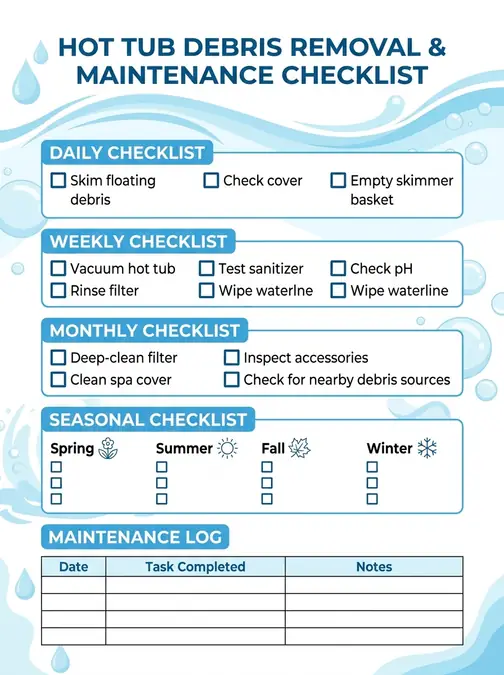
Downloadable Resource

Frequently Asked Questions
How do I get dirt and debris out of a hot tub?
Start by skimming floating debris, then vacuum the seats and footwell, rinse the filter, wipe the waterline, and test the water chemistry. Cleaning in this order removes both visible debris and the contaminants that affect water quality.
Why does my hot tub keep collecting debris?
Outdoor hot tubs naturally collect leaves, pollen, dust, insects, and other materials from the surrounding environment. Nearby trees, windy weather, and frequent use can all increase the amount of debris.
Can debris damage my hot tub pump?
Indirectly, yes. Large amounts of debris can clog the filter, reducing water flow and forcing the pump to work harder. Cleaning the filter regularly helps protect the circulation system.
Is it safe to vacuum a hot tub?
Yes. Battery-powered spa vacuums are designed specifically for hot tubs and safely remove sand, dirt, and other settled debris without draining the water.
Can I use vinegar to clean my hot tub?
Yes, for cleaning the shell or waterline. A mixture of one part white vinegar and four parts warm water can remove light residue, but rinse thoroughly afterward and never use vinegar as a replacement for sanitizer.
Why do people put a tennis ball in a hot tub?
A clean tennis ball can absorb some body oils and lotions floating on the water’s surface. It won’t replace proper filtration, but it may help reduce oily residue between cleanings.
How often should I clean my hot tub filter?
Rinse the filter every week and deep-clean it about once a month. Replace the filter according to the manufacturer’s recommendations or whenever it no longer cleans effectively.
Does debris affect hot tub water chemistry?
Yes. Organic debris consumes sanitizer as it breaks down, making it harder to maintain balanced water. Prompt removal helps keep chlorine or bromine working effectively.