

9 Essential Hot Tub Cleaning Tools You Actually Need

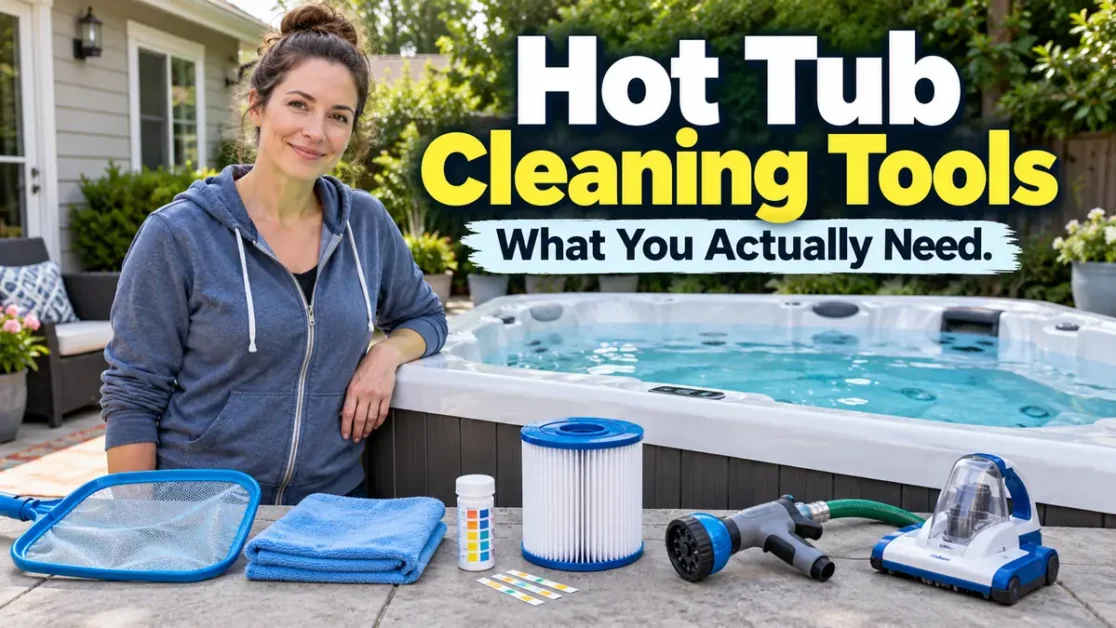
Keeping a hot tub clean gets much easier when you have a small set of tools that each solve a specific problem.
You do not need a cabinet full of brushes, gadgets, and specialty products. For most home spas, the essentials are a skimmer, water-testing supplies, a soft cleaning cloth or sponge, filter-cleaning equipment, and a few tools for deeper cleaning.
The right setup also depends on your backyard. A hot tub under trees may need a vacuum and skimmer more often, while a covered patio spa may need very little debris removal.
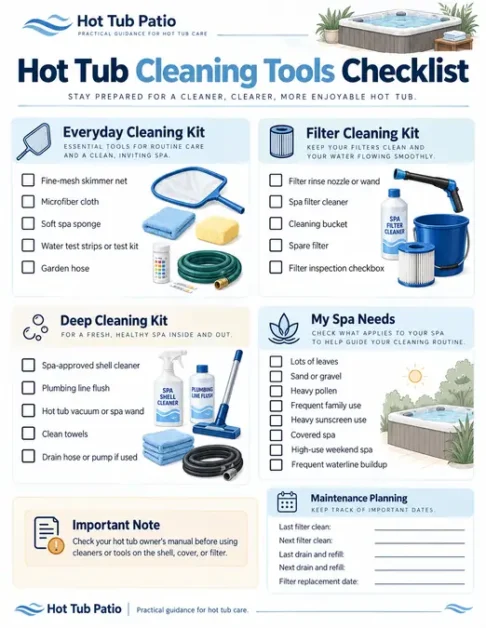
Hot Tub Cleaning Tools Checklist
Here is the practical starter kit for most hot tub owners.
| Cleaning tool | What it does | Priority |
|---|---|---|
| Fine-mesh skimmer net | Removes leaves, bugs, hair, and floating debris | Essential |
| Water test kit or strips | Checks sanitizer and pH | Essential |
| Microfiber cloth or soft spa sponge | Cleans the waterline and shell | Essential |
| Garden hose or filter rinse tool | Flushes debris from filter pleats | Essential |
| Spa filter cleaner | Removes oils and buildup a hose cannot rinse away | Essential |
| Hot tub vacuum or spa wand | Removes sand and grit from the floor | Useful for many outdoor spas |
| Spa-approved shell cleaner | Cleans scum and residue during deeper cleaning | Essential for drain days |
| Plumbing line flush | Cleans buildup inside spa plumbing before draining | Periodic |
| Cover-cleaning supplies | Removes outdoor dirt from the cover | Useful |
Start with the first five tools. Add a vacuum, plumbing cleaner, or other specialty equipment only when your hot tub actually needs it.
1. Fine-Mesh Skimmer Net
A small skimmer net is one of the simplest and most useful hot tub cleaning tools.
It catches:
- leaves
- insects
- flower petals
- grass
- hair
- floating debris
Removing this material before it sinks keeps the floor cleaner and reduces how much debris reaches the filter.
A compact spa-sized net is usually easier to maneuver than a large pool skimmer. Fine mesh helps catch smaller particles without making the tool bulky.
Outdoor spas near trees, gardens, lawns, or windy areas benefit most from frequent skimming.
If leaves and outdoor contaminants are a constant problem, these ways to keep debris out of your hot tub can reduce how much cleaning you need to do in the first place.
Who really needs one?
Nearly every outdoor hot tub owner.
Indoor spas or tubs inside fully enclosed structures may use one far less often.
2. Water Test Kit or Test Strips
Clean-looking water is not necessarily balanced water.
Testing supplies let you check the conditions that you cannot judge just by looking into the spa.
Common tests include:
- sanitizer
- pH
- total alkalinity
- calcium hardness
Follow the testing method and operating ranges recommended for your specific hot tub and water-care system.
Test strips are convenient for routine checks. Drop-style or digital testing systems may appeal to owners who want more detailed readings.
Our hot tub test strip guide explains what the readings mean and what to look for when choosing a testing method.
Cleaning tool or water-care tool?
Technically, it is a water-care tool.
Practically, it belongs in the cleaning kit because clean surfaces and balanced water work together. Scrubbing the shell will not fix a water-balance problem.
3. Microfiber Cloth or Non-Abrasive Spa Sponge
The waterline tends to collect oils, lotions, cosmetics, and other residue.
A soft microfiber cloth or non-abrasive sponge lets you wipe this buildup away before it turns into a stubborn scum line.
Use it for:
- waterline wiping
- shell spot-cleaning
- wiping around controls
- cleaning accessible jet faces
- cover cleaning when appropriate
Keep one cloth or sponge dedicated to the hot tub rather than borrowing one from the kitchen or garage.
Abrasive pads can scratch some spa surfaces. Check your owner’s manual before using a scrubber or cleaner you have not used before.
A simple habit that helps
Wipe a developing waterline when you first notice it.
A 30-second wipe is much easier than scrubbing a thick ring during your next drain and refill.
4. Garden Hose or Filter Rinse Tool
Your filter traps much of the physical material circulating through the water.
That makes regular filter rinsing one of the most important cleaning jobs.
A garden hose with moderate water pressure is enough for many owners. A purpose-made filter rinse wand or pleat cleaner can make it easier to direct water between the folds.
Work from the top of the cartridge downward and rinse between the pleats rather than spraying only the outside surface.
Avoid blasting the filter with a pressure washer unless the filter manufacturer specifically allows it. Excessive pressure can damage filter media.
For the complete process, see our step-by-step hot tub filter cleaning guide.
Is a filter-cleaning wand necessary?
No.
It is mainly a convenience tool.
A normal garden hose can work well, but a dedicated rinse tool becomes more useful if you have:
- large cartridges
- deep filter pleats
- heavy pollen
- frequent use
- multiple filters to clean
5. Spa Filter Cleaner
Water removes loose dirt from a filter, but oils and other residue can remain in the material.
A cleaner specifically designed for your type of spa filter helps break down contaminants that do not rinse away easily.
Depending on the product and filter, cleaning may involve:
- Removing and rinsing the cartridge.
- Applying or soaking it in the approved cleaner.
- Allowing the product to work for the label-specified time.
- Rinsing the cartridge thoroughly.
- Inspecting it before reinstalling.
Always follow the filter and cleaner manufacturer’s instructions.
Cleaner left in the cartridge can create unwanted foam once the filter goes back into the spa, so thorough rinsing matters.
Keep a spare filter if you use the spa frequently
A second compatible cartridge can make filter maintenance much easier.
One can be cleaned while the other remains available for service, provided your spa manufacturer permits that rotation system.
6. Hot Tub Vacuum or Spa Wand
A filter will not catch everything.
Sand, soil, tiny stones, and grit often settle into:
- footwells
- seats
- corners
- around suction areas
- the bottom of the filter compartment
A small hot tub vacuum removes this material without draining the spa.
Manual spa vacuum
A manual vacuum uses pumping, siphoning, or another non-powered suction method.
Best for:
- occasional grit
- smaller hot tubs
- quick spot cleaning
- owners who do not want another device to charge
Rechargeable spa vacuum
A small battery-powered unit can make sense when sediment is a regular problem.
Best for:
- spas beside lawns
- sandy yards
- gravel paths
- heavy outdoor use
- frequent floor cleaning
Do you really need a hot tub vacuum?
Not everyone does.
If you rarely see anything collecting on the spa floor, skip it.
If you regularly feel sand or grit under your feet, a vacuum can become one of the most-used tools in your kit.
7. Spa-Approved Shell Cleaner
A full drain gives you access to areas that are difficult to clean while the hot tub is filled.
That is when a shell cleaner becomes useful.
Choose a product approved for your spa surface, or follow the cleaner recommendations in your owner’s manual.
Use a soft cloth or non-abrasive sponge rather than automatically reaching for household bathroom cleaners.
Hot tub shells, pillows, trim, and other materials vary between manufacturers. A cleaner that is harmless on one surface may not be recommended on another.
Areas worth checking on drain day
Look at:
- the waterline
- seats
- footwell
- corners
- around jets
- behind removable pillows when permitted
- filter compartment
- accessible drains and suction areas
Once everything is clean, rinse away cleaner residue before refilling.
8. Hot Tub Plumbing Line Flush
Some contamination sits where a sponge cannot reach.
Spa plumbing contains pipes, jet lines, and other internal surfaces that remain wet while the hot tub is operating.
A hot-tub-specific plumbing or line-flush product is normally used before a scheduled drain.
The basic workflow is:
- Add the product according to its label.
- Circulate it as directed.
- Drain the spa.
- Clean the accessible shell.
- Clean or service the filters.
- Refill and rebalance the water.
Do not improvise with household plumbing chemicals.
The plumbing, pumps, seals, and other components in a spa are not the same as a household drain system.
If weak or dirty jets are part of the problem, our guide to cleaning hot tub jets covers that task in more detail.
9. Hot Tub Cover Cleaning Supplies
The cover prevents a large amount of debris from reaching the water, so keeping it clean deserves a place in the routine.
Basic cover-care supplies may include:
- garden hose
- soft cloth
- soft-bristled brush when approved
- manufacturer-approved cover cleaner
Pay attention to both the upper surface and the underside according to your cover manufacturer’s instructions.
Do not use a cleaner simply because it works well on patio furniture or car interiors. Hot tub cover materials differ, and inappropriate products can affect the surface or leave residue near the spa water.
A clean, well-fitting cover is also one of the easiest ways to reduce the amount of work your skimmer and filter need to do.
Which Hot Tub Cleaning Tools Are Actually Worth Buying?
Your backyard determines which optional tools provide real value.
| Your situation | Most useful tools |
|---|---|
| Hot tub under trees | Fine-mesh skimmer + vacuum |
| Sand or gravel near spa | Spa vacuum + entry mat |
| Heavy family use | Test kit + spare filter + filter cleaner |
| High pollen area | Fine skimmer + filter rinse tool |
| Covered patio spa | Basic skimmer + cloth + filter supplies |
| Frequent waterline buildup | Microfiber cloth + approved shell cleaner |
| Older spa due for deep cleaning | Line flush + filter cleaner + shell-cleaning supplies |
| New hot tub owner | Test kit + skimmer + cloth + filter-cleaning supplies |
Buying tools based on the dirt you actually encounter keeps the cleaning kit simple.
A large rechargeable vacuum makes little sense if the bottom of your spa stays clean. A $10 net may be more valuable if your main problem is leaves falling into the water every afternoon.
Hot Tub Cleaning Tools You Can Usually Skip
Some products look useful but solve problems you may not have.
Oversized pool equipment
Long telescoping poles and large pool brushes can be awkward inside a compact portable spa.
Choose tools sized for the space whenever possible.
Aggressive scrubbers
Hard or abrasive surfaces can damage some spa shells and finishes.
Start with the gentlest method recommended by your spa manufacturer.
Pressure washers for filter cartridges
More pressure does not automatically mean a cleaner filter.
A normal hose or purpose-made filter rinsing tool is usually the safer starting point for pleated spa cartridges.
Household detergents and multipurpose cleaners
Residue from ordinary household products can create foam or may not be compatible with spa surfaces and filter media.
Use products approved for your hot tub or follow the owner’s manual.
A Simple Hot Tub Cleaning Schedule
Cleaning tools work better when each one has a specific job.
Every few days or as needed
- skim leaves and debris
- wipe a developing waterline
- vacuum visible grit
- check the cover for debris
Regular water-care checks
Use your test kit according to your spa manufacturer’s recommended schedule and adjust the water as required.
Our hot tub water maintenance guide covers the broader routine beyond physical cleaning.
Filter cleaning
Inspect and rinse the filter frequently enough to prevent visible buildup or restricted flow.
Your spa and filter manufacturers should determine the final cleaning interval.
During a drain and refill
This is your opportunity to:
- flush plumbing when appropriate
- clean the shell
- clean the filter compartment
- inspect jets
- service filters
- inspect pillows and accessible fittings
Water-change frequency varies with spa size, bather load, water quality, and manufacturer recommendations. Our guide to how often to change hot tub water can help you plan that part of the routine.
Tailored Action Plan: Build Your Cleaning Kit in Three Steps
Do not buy everything at once.
Step 1: Start with the five basics
Keep these beside your normal spa supplies:
- small skimmer net
- water test kit
- microfiber cloth or spa sponge
- hose or filter-rinsing tool
- filter cleaner
These handle the majority of routine cleaning jobs.
Step 2: Watch where dirt actually collects
Use your spa for a few weeks and note what keeps appearing.
Sand on the bottom points toward a vacuum.
Leaves on the surface make a fine-mesh skimmer more valuable.
A persistent waterline suggests you need a better shell-cleaning routine.
Step 3: Add deep-cleaning supplies before drain day
Before your next scheduled drain, check that you have:
- approved shell cleaner
- filter cleaner
- line flush if appropriate for your spa
- hose
- clean cloths
- water-testing supplies for the refill
Keeping those products together prevents the classic half-drained-hot-tub trip to the store.
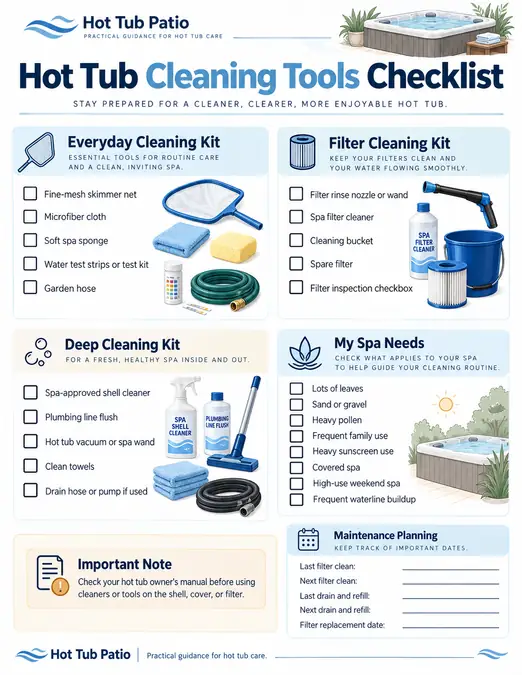
Downloadable Resource
Hot Tub Cleaning Tools FAQs
What tools do I need to clean a hot tub?
Most owners need a skimmer net, water test kit, soft cloth or sponge, garden hose, filter cleaner, and spa-approved shell cleaner. A vacuum and plumbing line flush are useful for specific cleaning jobs but are not needed every day.
Do I need a vacuum for my hot tub?
A vacuum is useful if sand, soil, or grit regularly settles on the bottom. If your spa stays covered and the floor remains clean, you may not need one.
Can I use a pool vacuum in a hot tub?
Some compact pool and spa vacuums can work, but large pool equipment may be awkward in a small spa. Choose a tool compatible with your hot tub and the type of debris you need to remove.
What should I use to clean the inside of a hot tub?
Use a soft cloth or non-abrasive sponge with a cleaner approved for your spa’s shell. Check the owner’s manual before using household cleaners or abrasive products.
Can I clean a hot tub filter with a pressure washer?
A pressure washer can damage pleated cartridge media. A garden hose with moderate pressure or a purpose-made filter rinse tool is usually a better choice unless your filter manufacturer states otherwise.
Is a hot tub filter-cleaning wand worth it?
It can be helpful when you have large or deeply pleated filters, but it is not essential. A garden hose can handle routine rinsing for many owners.
Do I need a plumbing line cleaner?
A line flush is mainly a periodic deep-cleaning product used before draining the spa. Follow your spa manufacturer’s instructions because plumbing systems and recommended cleaning methods vary.
How do I keep my hot tub cleaner between deep cleans?
Keep the cover closed when the spa is not in use, remove floating debris early, wipe the waterline, maintain the filter, test the water regularly, and shower off heavy lotions or dirt before soaking.
Keep the Cleaning Kit Simple
The best hot tub cleaning kit is not the biggest one.
Start with a skimmer, water test kit, soft cleaning cloth, hose, and proper filter cleaner. Add a spa vacuum if grit collects on the bottom and keep shell and plumbing cleaners available for deeper maintenance.
Good tools make the routine faster, but consistency matters more than owning every accessory.
For other useful maintenance upgrades, see our hot tub accessories guide.






One Comment
Comments are closed.