

Sauna and Electrolytes Guide: Hydration Before & After

Most people lose water, sodium, and smaller amounts of other minerals during a sauna session. For short sessions once or twice a week, drinking water and eating a balanced meal afterward is often enough. If you spend longer in the sauna, complete multiple rounds, exercise before your session, or sweat heavily, replacing electrolytes along with water is usually the better choice. For related planning, see Sauna and Exfoliation.
If you’re unsure how much fluid you should replace after your session, our Sauna Hydration Calculator can help estimate your hydration needs based on your sauna routine.

What Happens to Your Body During a Sauna Session?
A sauna raises your core body temperature, triggering your natural cooling system. Blood flow increases, your heart works a little harder, and sweat glands begin producing sweat to regulate body temperature. For related planning, see Eating in the Sauna.
Sweat is mostly water, but it also contains important electrolytes. The amount lost depends on several factors:
- Sauna temperature
- Session length
- Humidity
- Your body size
- Fitness level
- Individual sweat rate
In real sauna sessions, sweating usually starts slowly before becoming much heavier after about 10 minutes. Some people barely dampen a towel, while others finish a session with clothing completely soaked. That’s why electrolyte needs vary from person to person.
Why You Lose More Than Water
Water gets most of the attention, but sweat carries dissolved minerals that help your muscles, nerves, and cardiovascular system function properly.
These include:
- Sodium
- Potassium
- Magnesium
- Calcium
Among these, sodium is lost in the greatest quantity.
If these minerals aren’t replaced over time particularly after frequent sauna use or long heat exposure you may notice:
- Muscle cramps
- Fatigue
- Headaches
- Dizziness
- Reduced exercise performance
- Feeling unusually drained after a sauna
A common mistake beginners make is assuming that clear urine immediately after drinking lots of water means they’re fully rehydrated. In reality, replacing fluids without replacing enough sodium can leave your electrolyte balance lower than before.
If you regularly use a sauna during hot weather, our Summer Sauna Safety Checklist (Downloadable PDF Guide) provides extra precautions to help reduce dehydration risks.
Does Every Sauna User Need Electrolytes?
Not necessarily.
Your electrolyte needs depend more on how much you sweat than simply how often you visit a sauna.
| Sauna Habit | Electrolytes Usually Needed? |
|---|---|
| One short 10–15 minute session once or twice a week | Usually not if your normal diet is balanced |
| Two or three sauna rounds | Often helpful |
| Sauna after an intense workout | Usually recommended |
| Heavy sweaters | Often beneficial |
| Daily sauna users | Frequently beneficial |
One pattern that often appears after tracking sauna sessions for a week is that people who sweat heavily feel noticeably better when they replace both fluids and sodium rather than drinking water alone.
Which Electrolytes Matter Most?
Not every electrolyte leaves your body at the same rate. Some play a much larger role in sauna recovery than others.
Sodium: The Main Mineral Lost Through Sweat
Sodium is the primary electrolyte your body loses during sweating.
It helps regulate:
- Fluid balance
- Blood pressure
- Nerve communication
- Muscle contractions
Replacing sodium after longer sauna sessions helps your body retain the water you drink instead of passing much of it quickly through urine.
Good sodium sources include:
- Electrolyte drink mixes
- Homemade electrolyte solutions
- Salted soups
- Cheese
- Salted nuts
- Lightly salted meals
Potassium: Supports Muscles and Heart Function
Potassium works alongside sodium to maintain fluid balance and healthy muscle contractions.
Although you lose less potassium than sodium in sweat, low potassium intake combined with repeated sauna sessions may contribute to muscle fatigue.
Natural food sources include:
- Bananas
- Potatoes
- Avocados
- Oranges
- Coconut water
- Yogurt
Magnesium: Recovery and Muscle Relaxation
Magnesium losses through sweat are relatively small, but many adults already consume less than recommended.
People who sauna regularly often include magnesium-rich foods because this mineral supports:
- Muscle relaxation
- Normal nerve function
- Energy production
- Recovery after exercise
Foods naturally rich in magnesium include:
- Pumpkin seeds
- Almonds
- Spinach
- Black beans
- Dark chocolate
Calcium: Smaller Losses, Still Important
Calcium isn’t lost in large quantities during a sauna session, yet it remains essential for:
- Muscle contractions
- Bone health
- Nerve signaling
- Heart function
Most people obtain enough calcium through everyday meals without needing additional supplementation solely because they use a sauna.
Electrolyte Comparison Table
| Electrolyte | Primary Role | Amount Lost in Sweat | Good Food Sources |
|---|---|---|---|
| Sodium | Fluid balance and hydration | High | Electrolyte drinks, salted foods, soups |
| Potassium | Muscle and nerve function | Moderate | Bananas, potatoes, avocados, yogurt |
| Magnesium | Recovery and relaxation | Low to moderate | Pumpkin seeds, spinach, almonds |
| Calcium | Muscle contraction and bones | Low | Dairy products, leafy greens, fortified foods |
Many sauna users also like to track hydration alongside energy expenditure.
If you’re curious how heat exposure contributes to overall calorie burn, you can compare your sessions using our Sauna Calories Calculator: How Much Can You Burn? or the detailed Sauna Calories Calculator: How Much Can You Burn? for a broader estimate.
When Should You Take Electrolytes?
The timing of electrolyte replacement can make a difference in how you feel during and after a sauna. Many people focus only on what they drink afterward, but building hydration before you begin often leads to a more comfortable session.
During the first few minutes of a sauna session, the heat usually feels mild. As sweating increases, your body gradually loses more fluid and sodium. Starting your session already hydrated makes it easier to maintain that balance.
Before a Sauna
Drinking electrolytes before every sauna isn’t necessary, but there are situations where it can help.
Consider having an electrolyte drink 30–60 minutes before your session if you:
- Plan to stay in the sauna for multiple rounds
- Already exercised that day
- Tend to sweat heavily
- Are using the sauna in hot summer weather
- Know you usually feel tired afterward
For a short 10–15 minute session, drinking water before entering is often enough.
One practical tip is to avoid chugging a large amount of water immediately before stepping into the sauna. Drinking steadily over the previous hour is generally more comfortable and helps your body absorb fluids more effectively.
If you’re combining heat therapy with exercise, our guide on Sauna Before or After Workout explains how hydration needs change depending on when you schedule your sauna.
During Longer Sauna Sessions
Most traditional sauna sessions don’t require drinking while you’re inside.
Things change if you:
- Spend 30 minutes or longer in the sauna using multiple rounds
- Alternate between sauna and cold plunge several times
- Sweat excessively
- Feel thirsty between rounds
Instead of drinking large amounts all at once, take a few small sips during your cooling break.
This helps maintain hydration without making you feel bloated before returning to the heat.
After a Sauna
The first 30 to 60 minutes after your sauna session is the best time to replace both fluids and electrolytes.
Your recovery drink doesn’t need to be complicated.
A good post-sauna recovery often includes:
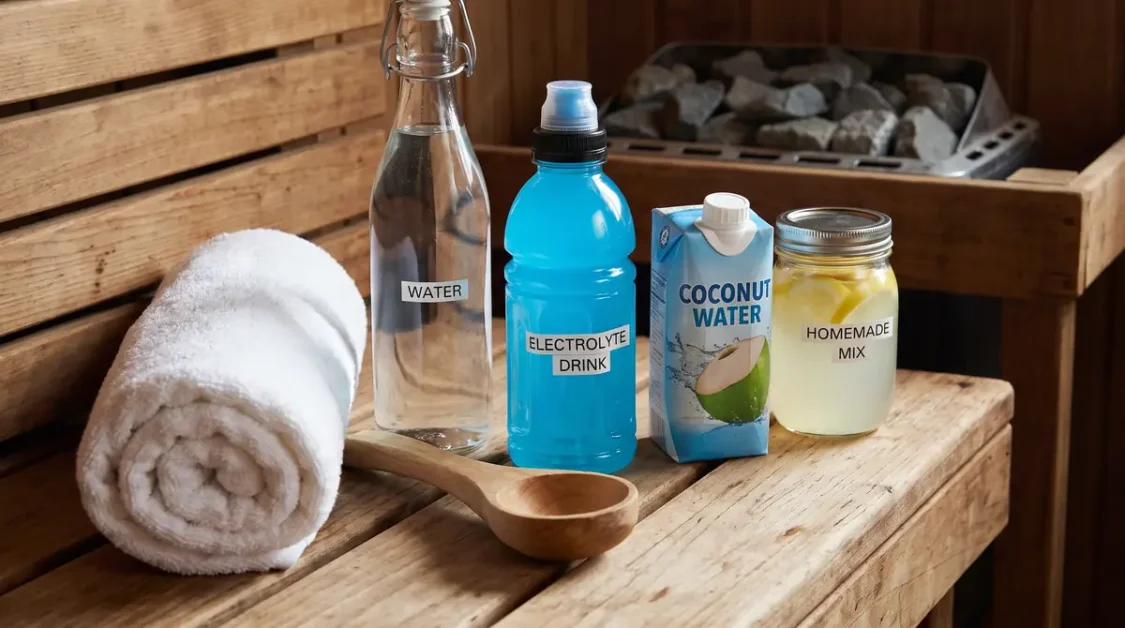
- Water
- Sodium
- Potassium
- A balanced meal within the next hour or two
Many people notice they recover more comfortably when they eat a normal meal instead of relying only on an electrolyte drink.
Best Drinks for Sauna Recovery
Not every recovery drink works equally well. The best choice depends on how much you sweated and how often you use a sauna.
Plain Water
Plain water is perfectly adequate for:
- Short sauna sessions
- Light sweating
- Occasional sauna use
- Healthy adults eating a balanced diet
Water quickly replaces lost fluids, and everyday meals usually provide enough minerals afterward.
Electrolyte Powders
Electrolyte powders are convenient for people who:
- Sauna several times each week
- Train regularly
- Sweat heavily
- Use infrared or traditional saunas for extended sessions
Choose products that contain meaningful amounts of sodium without excessive added sugar.
Coconut Water
Coconut water provides:
- Potassium
- Small amounts of magnesium
- Natural carbohydrates
Its sodium content is relatively low, so it works best when paired with a meal or lightly salted snack after longer sauna sessions.
Homemade Electrolyte Drink
Many experienced sauna users make a simple recovery drink at home.
A basic recipe includes:
- 500–750 ml water
- A pinch of salt
- Fresh lemon or lime juice
- A teaspoon of honey (optional)
This isn’t identical to commercial electrolyte products, but it provides a practical option for moderate sweat losses.
Sports Drinks
Sports drinks can work well after particularly long sauna sessions or when combined with endurance exercise.
Still, many contain:
- Large amounts of sugar
- Artificial coloring
- More carbohydrates than most sauna users actually need
If your sauna session wasn’t especially long or intense, an electrolyte mix with less sugar may be the better option.
Signs You May Need More Electrolytes
Feeling thirsty isn’t the only sign your body needs attention.
A common issue many beginners face is assuming fatigue after a sauna is simply part of the experience. Sometimes it’s a signal that fluids or electrolytes weren’t replaced adequately.
Watch for symptoms such as:
- Persistent headache
- Muscle cramps
- Unusual fatigue
- Dizziness when standing
- Brain fog
- Weakness
- Dry mouth despite drinking water
One symptom alone doesn’t always mean you’re low on electrolytes, but several together—especially after heavy sweating are worth paying attention to.
When Symptoms Need Medical Attention
Stop using the sauna and seek medical care if you experience:
- Confusion
- Fainting
- Chest pain
- Severe vomiting
- Inability to keep fluids down
- Persistent dizziness that doesn’t improve after resting and rehydrating
These symptoms may indicate dehydration or another medical condition that requires prompt evaluation.
Common Hydration Mistakes After a Sauna
Small hydration mistakes can leave you feeling sluggish even after an otherwise relaxing sauna session. Most are easy to avoid once you understand how your body replaces both fluids and minerals.
Drinking Only Large Amounts of Water
Water is essential, but drinking several bottles without replacing sodium after heavy sweating can dilute your electrolyte balance.
For short sessions, this usually isn’t a problem. After longer or frequent sauna sessions, pairing water with electrolyte-rich foods or drinks often supports better recovery.
Ignoring Sodium
Sodium has an unfair reputation because many diets already contain plenty of it. During heavy sweating, though, it’s the mineral your body loses the fastest.
If you regularly experience headaches or fatigue after long sauna sessions despite drinking plenty of water, your recovery meal may simply be missing enough sodium.
Drinking Alcohol Right After a Sauna
A cold beer may sound refreshing, but alcohol encourages further fluid loss and can slow rehydration.
A better routine is:
- Rehydrate with water and electrolytes.
- Eat a balanced meal or snack.
- Wait until you’ve recovered before drinking alcohol.
Waiting Too Long to Rehydrate
One thing people often overlook is that thirst isn’t always an early warning sign.
Making hydration part of your post-sauna routine is much easier than trying to “catch up” several hours later.
Sauna Hydration Plan Based on Your Routine
Every sauna user has different hydration needs. Instead of following one rule for everyone, match your electrolyte intake to how often and how intensely you use the sauna.
Occasional Sauna User
Typical routine
- 10–20 minute session
- Once or twice each week
- Moderate sweating
Recovery plan
- Drink water before and after your session.
- Eat a balanced meal afterward.
- Electrolytes usually aren’t necessary unless you sweat heavily.
Regular Weekly Sauna User
Typical routine
- Three to five sessions each week
- Moderate to heavy sweating
Recovery plan
- Start each session well hydrated.
- Consider an electrolyte drink after longer sessions.
- Include potassium- and magnesium-rich foods throughout the day.
Athlete or Heavy Sweater
Exercise followed by sauna use increases fluid and sodium losses.
Many people who combine workouts with sauna sessions recover better by:
- Drinking water before training.
- Replacing electrolytes after exercise and sauna.
- Monitoring body weight before and after longer sessions to estimate fluid loss.
If your routine includes exercise before heat exposure, our guide on sauna before or after a workout explains how to schedule both activities for better recovery.
Infrared Sauna Users
Infrared saunas generally operate at lower air temperatures than traditional saunas, but many users still sweat significantly.
Your hydration strategy should depend on:
- Session length
- Sweat rate
- Frequency of use
Rather than the sauna type alone.
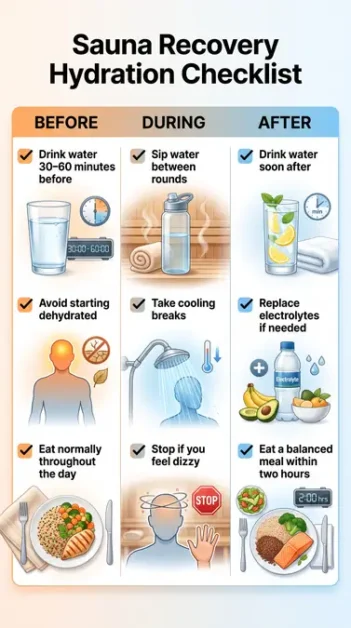
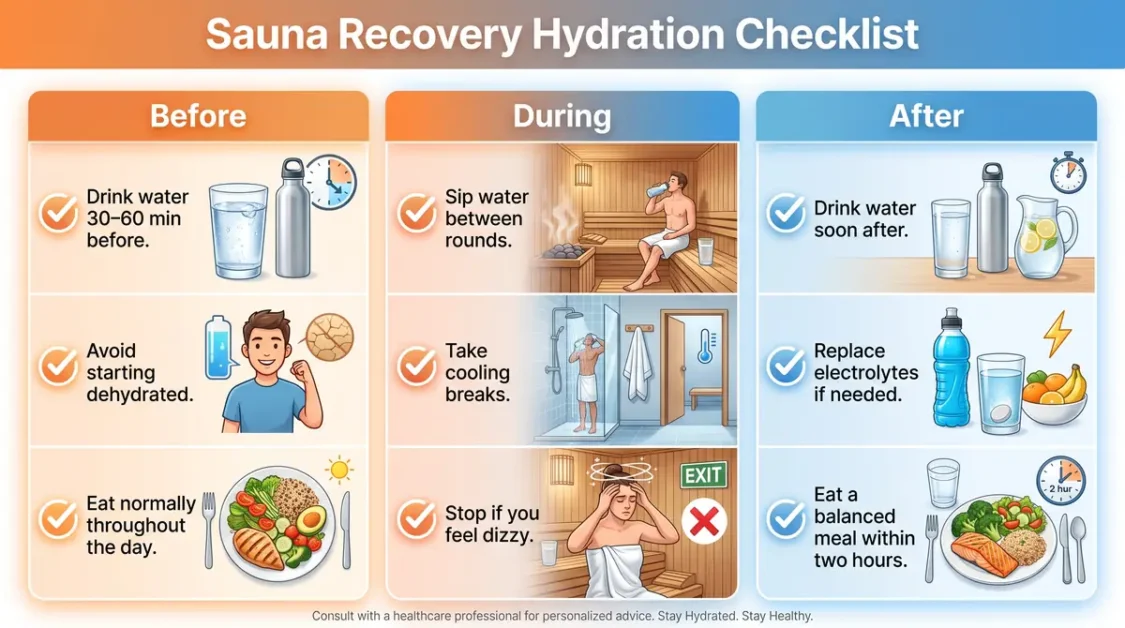
Sauna Recovery Hydration Checklist
Use this checklist after every sauna session.
| Before | During | After |
|---|---|---|
| Drink water 30–60 minutes before | Sip water between multiple rounds if needed | Drink water soon after finishing |
| Avoid starting dehydrated | Take cooling breaks | Replace electrolytes if you sweated heavily |
| Eat normally throughout the day | Stop if you feel dizzy | Eat a balanced meal within two hours |
7-Day Sauna Hydration Tracker
Tracking your recovery for one week often reveals patterns you might otherwise miss.
| Day | Session Length | Sweat Level | Water Drank | Electrolytes | Energy After | Notes |
|---|---|---|---|---|---|---|
| Monday | ||||||
| Tuesday | ||||||
| Wednesday | ||||||
| Thursday | ||||||
| Friday | ||||||
| Saturday | ||||||
| Sunday |
After seven days, review your notes.
Questions to ask yourself:
- Which sessions left you feeling your best?
- Did electrolyte intake reduce headaches or cramps?
- Did longer sessions require noticeably more recovery?
- Were you drinking enough before entering the sauna?
Small adjustments based on your own experience are often more useful than following a one-size-fits-all hydration plan.
FAQs
Do I need electrolytes every time I use a sauna?
No. Short sauna sessions with moderate sweating are usually covered by drinking water and eating a balanced diet. Electrolytes become more helpful after long sessions, heavy sweating, or frequent sauna use.
Is water alone enough after a sauna?
For many occasional sauna users, yes. If you’ve lost a lot of sweat, adding sodium and other electrolytes can improve recovery.
Can I drink electrolytes before entering a sauna?
Yes. An electrolyte drink 30–60 minutes beforehand may help if you’re planning a long session, exercising beforehand, or know that you sweat heavily.
Which electrolyte is lost the most during sweating?
Sodium is the primary electrolyte lost through sweat, making it the most important mineral to replace after heavy sweating.
Are electrolyte powders better than sports drinks?
Often, yes. Many electrolyte powders provide more sodium with less sugar than traditional sports drinks, though either can work depending on your needs.
How much water should I drink after a sauna?
There’s no single amount that fits everyone. Drink enough to replace your fluid losses, paying attention to thirst, urine color, and how much you sweated.
Can too many electrolytes be harmful?
Yes. Excessive electrolyte supplements can be harmful, especially for people with kidney disease, heart conditions, or those taking certain medications. Use them according to your needs rather than automatically after every session.
Is coconut water enough after a sauna?
Coconut water is a good source of potassium but contains relatively little sodium. After heavy sweating, pairing it with a balanced meal or salty snack provides more complete recovery.