

Sauna Calories Burned Calculator + Realistic Fat Loss Guide

A sauna can slightly increase calorie expenditure while supporting relaxation and recovery. But realistic expectations matter.
Most immediate weight changes after sauna use come from temporary water loss, not instant fat reduction.
The safest and most sustainable approach combines:
- exercise
- hydration
- consistent nutrition
- recovery habits
- moderate sauna sessions
Used responsibly, saunas can become a helpful part of a broader wellness routine without relying on exaggerated calorie burn claims.
How Many Calories Does a Sauna Really Burn?
Most people burn between 40 and 150 calories during a 30-minute sauna session, depending on:
- body weight
- sauna temperature
- sauna type
- session duration
- hydration level
A sauna can increase heart rate and sweating, but it does not replace exercise or directly melt body fat.
Use this simple estimation formula:
Estimated Calories Burned = Body Weight × Session Duration × Sauna Intensity Factor
Typical sauna intensity factors:
- Traditional dry sauna: 1.5–2.0
- Infrared sauna: 1.3–1.8
- Steam room: 1.4–1.9
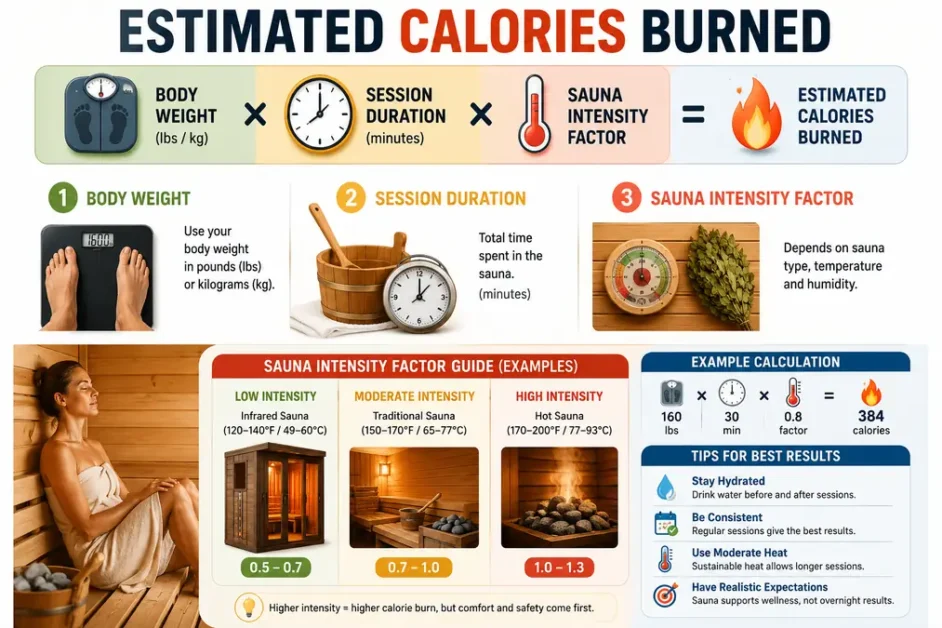
Estimated Sauna Calorie Burn Chart
| Body Weight | 15 Minutes | 30 Minutes | 45 Minutes |
|---|---|---|---|
| 120 lbs | 20–45 calories | 40–90 calories | 60–135 calories |
| 150 lbs | 30–60 calories | 60–120 calories | 90–180 calories |
| 180 lbs | 35–75 calories | 70–150 calories | 105–225 calories |
| 220 lbs | 45–90 calories | 90–180 calories | 135–270 calories |
These estimates vary based on:
- hydration
- heat tolerance
- cardiovascular response
- recovery level
- session intensity
A common mistake is assuming heavy sweating automatically means high calorie burn. In reality, sauna calorie expenditure is usually moderate.

Does a Sauna Actually Burn Calories?
Yes, a sauna burns calories because your body uses energy to regulate temperature during heat exposure.
When you sit inside a sauna:
- Heart rate increases
- Blood circulation rises
- Sweat production activates
- Cooling mechanisms begin working
That process requires energy, which slightly increases calorie expenditure.
Some people compare sauna sessions to light cardio because heat can elevate heart rate. However, a sauna does not create the same muscular workload as:
- jogging
- weight training
- cycling
- high-intensity workouts
Sauna Weight Loss vs Fat Loss
Most sauna-related weight loss comes from temporary water loss.
After a sauna session, you may notice:
- lower body weight
- reduced bloating
- heavy sweating
- temporary fluid reduction
That does not automatically mean body fat decreased.
Heat-based wellness methods can affect the scale in different ways, so it also helps to understand the facts about hot tub weight loss before treating sweating as fat loss.
Why You Gain the Weight Back
Once you:
- drink fluids
- eat meals
- restore electrolytes
your body replaces the lost water naturally.
This is why athletes sometimes use saunas for temporary weigh-ins rather than long-term fat reduction.
If your goal is sustainable fat loss, focus primarily on:
- calorie balance
- movement
- nutrition
- sleep consistency
Calories Burned by Sauna Type
Different sauna styles affect heat intensity and comfort differently.
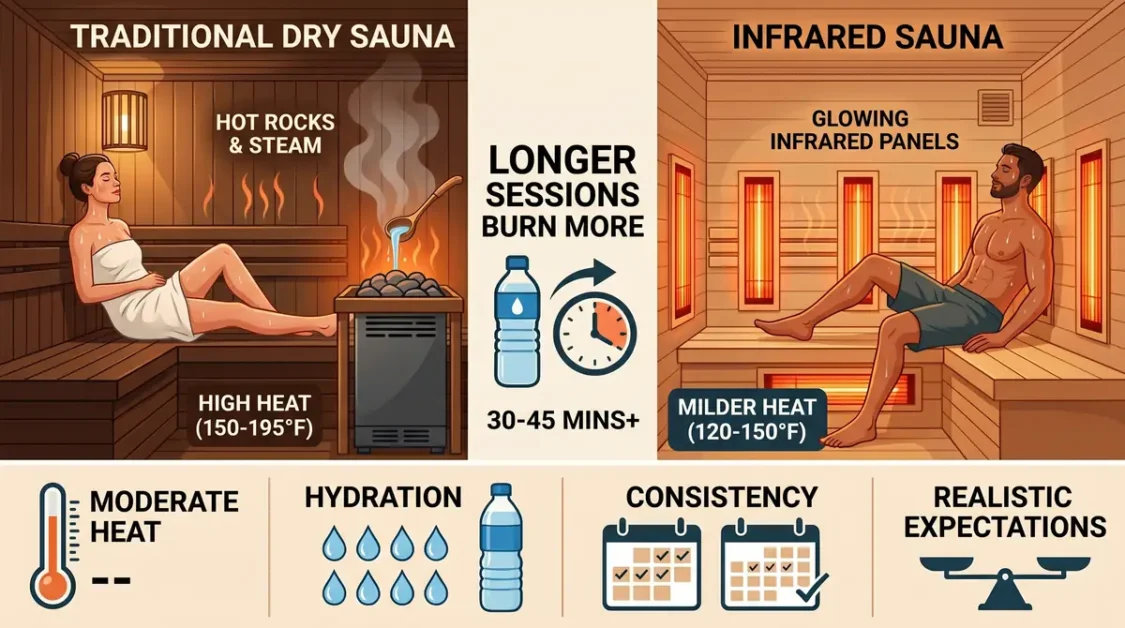
Traditional Dry Sauna
Traditional saunas use heated rocks and dry heat.
Typical temperature:
- 150°F to 195°F
Potential calorie burn:
- moderate to high
Dry heat often feels more intense quickly.
If you are deciding which type of heat therapy suits you better, this sauna vs hot tub comparison explains the differences in heat, comfort, relaxation, and everyday use.
Infrared Sauna
Infrared saunas heat the body more directly using infrared panels.
Typical temperature:
- 120°F to 150°F
Potential calorie burn:
- moderate
Many users tolerate longer infrared sessions comfortably.
Steam Room
Steam rooms combine heat with high humidity.
Typical temperature:
- 110°F to 120°F
Potential calorie burn:
- moderate
Humidity can make sessions feel more intense despite lower temperatures.
Outdoor Sauna
Outdoor sauna performance depends on:
- climate
- insulation
- heat source
- air circulation
Cold outdoor environments may slightly increase thermoregulation demands.
Which Sauna Burns the Most Calories?
Traditional dry saunas and long infrared sessions generally produce the highest calorie expenditure.
However, duration usually matters more than extreme temperatures.
Very high heat often shortens sessions because overheating becomes uncomfortable quickly.
The most sustainable approach is:
- moderate heat
- safe hydration
- consistent use
- realistic expectations
Factors That Affect Sauna Calories Burned
Several variables influence calorie estimates.
Body Weight
Larger individuals generally burn more calories because bigger bodies require more energy for heat regulation.
Session Duration
Longer sessions increase total calorie expenditure.
However, excessively long sessions increase dehydration risk.
Temperature
Higher temperatures increase:
- sweating
- heart rate
- thermal stress
Many beginners mistakenly assume hotter always means better.
Humidity
Steam rooms often feel more intense because humidity reduces evaporative cooling.
Hydration
Hydration directly affects:
- recovery
- circulation
- heat tolerance
- performance
Drink fluids before and after sauna sessions.
Heart Rate Response
Some people naturally experience stronger cardiovascular responses to heat exposure.
Is 30 Minutes in a Sauna Too Long?
For many healthy adults, 15–30 minutes is considered a normal sauna duration.
However, tolerance depends on:
- temperature
- hydration
- health conditions
- experience level
- recovery state
Beginners should usually start with:
- 5–10 minute sessions
- lower temperatures
- gradual progression
Stop immediately if you experience:
- dizziness
- nausea
- confusion
- headache
- rapid heartbeat
Heat exposure can raise your core temperature faster than you expect, and our guide to hot tubs and body temperature explains the warning signs of overheating and why session length matters.
Common Beginner Mistake
A common sauna mistake is chasing extreme heat too quickly.
More heat does not automatically improve:
- fat loss
- calorie burn
- detoxification
- recovery
Moderate, consistent sessions are usually safer and easier to maintain.
What Is the 200 Rule for Saunas?
The “200 rule” is a common sauna comfort guideline where:
- sauna temperature + humidity percentage should total around 200
Example:
- 170°F sauna + 30% humidity
This is not a strict scientific rule, but many sauna users reference it to balance comfort and intensity.
How to Maximize Calories Burned Safely in a Sauna
You can improve sauna effectiveness safely without extreme heat exposure.
Use the Sauna After Exercise
Post-workout sauna sessions may:
- maintain elevated heart rate
- support relaxation
- slightly increase total daily calorie expenditure
Stay Hydrated
Drink:
- water
- electrolyte drinks
- mineral-rich fluids
before and after sauna use.
Be Consistent
Regular moderate sessions are usually more effective than occasional extreme sessions.
Avoid Dangerous Heat Challenges
Very high temperatures can increase:
- overheating risk
- dehydration
- fainting
- heat exhaustion
Longer sessions are not always better.
For another heat-based recovery option, see how hot tub therapy can support relaxation and recovery through warm water, buoyancy, and hydrotherapy.
Common Sauna Calorie Calculator Mistakes
1. Confusing Sweat With Fat Loss
Sweating mainly reflects fluid loss, not instant fat reduction.
2. Believing Exaggerated Online Claims
Claims of burning 600–1000 calories in one sauna session are usually unrealistic.
3. Ignoring Hydration
Dehydration affects:
- recovery
- energy
- blood pressure
- performance
5. Staying in Too Long
Long sessions increase overheating risk with limited additional calorie benefits.
6. Trusting Wearables Too Much
Fitness watches may overestimate sauna calories because elevated heart rate does not always equal exercise-level energy expenditure.
Sauna vs Exercise Calorie Burn
Saunas support recovery and relaxation, but they do not replace exercise.
Approximate 30-Minute Comparison
| Activity | Estimated Calories Burned |
|---|---|
| Sauna Session | 40–150 |
| Slow Walking | 100–180 |
| Weight Training | 150–300 |
| Jogging | 250–500 |
This comparison helps create more realistic expectations around sauna calorie burn.
Frequently Asked Questions
How many calories do you burn in a sauna for 30 minutes?
Most people burn approximately 40–150 calories during a 30-minute sauna session depending on body weight, heat level, and sauna type.
Can smartwatches track sauna calories accurately?
Wearables provide rough estimates, but sauna calorie tracking is generally less accurate than exercise tracking.
Do infrared saunas burn more calories?
Infrared saunas may allow longer comfortable sessions, but calorie burn differences are usually moderate.
Is sauna weight loss permanent?
No. Most sauna-related weight loss comes from temporary fluid reduction.
Can you lose belly fat in a sauna?
A sauna cannot directly target belly fat. Sustainable fat loss depends mainly on nutrition, movement, and long-term calorie balance.
How often should you use a sauna for weight management?
Many people use saunas 3–5 times weekly alongside exercise and healthy eating habits.
Is sauna calorie burn similar to walking?
Some sauna sessions may resemble slow walking calorie expenditure, but results vary significantly between individuals.