
Summer Sauna Mistakes Beginners Make (And How to Avoid Them)

Summer sauna sessions can be just as enjoyable as winter ones when you adjust your routine to match the season. Shorter sessions, proper hydration, gradual cooling, and paying attention to early warning signs make a noticeable difference in both comfort and recovery.
Many beginners focus on staying in the sauna for as long as possible. A better habit is finishing each session feeling refreshed instead of exhausted.
Building that routine early helps you enjoy sauna bathing safely throughout the year.

What Are the Biggest Summer Sauna Mistakes Beginners Make?
The biggest summer sauna mistakes beginners make are:
- Entering the sauna while already overheated from the sun.
- Skipping hydration before the session.
- Forgetting to replace electrolytes after heavy sweating.
- Staying inside too long.
- Ignoring early signs of overheating.
- Cooling down too aggressively afterward.
- Drinking alcohol before or after using the sauna.
- Wearing clothing that traps heat.
- Following the same sauna routine used during winter.
- Chasing maximum sweating instead of a safe, comfortable session.
Most of these mistakes are easy to avoid once you understand how your body responds to heat during summer.
Why Summer Sauna Sessions Feel Harder Than You Expect
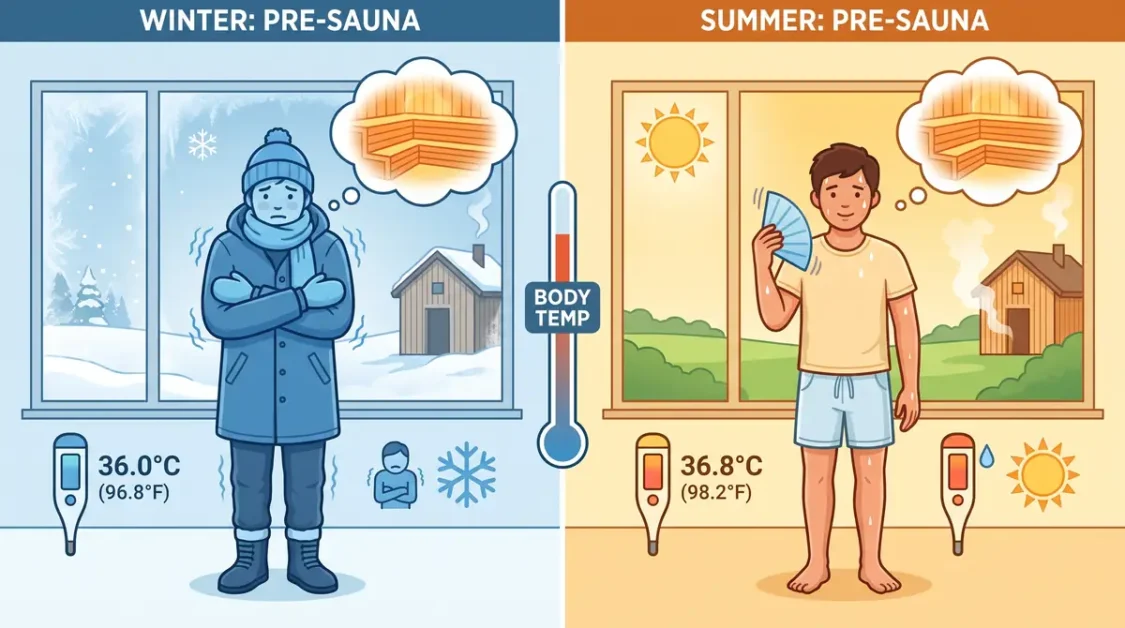
Many first-time sauna users notice that a session in July can feel much more demanding than one in January even when the sauna temperature hasn’t changed. That’s because your body begins the session with a higher heat load.
Your Body Is Already Working to Stay Cool
On a hot summer day, your body is already:
- Producing sweat outdoors
- Increasing blood flow to the skin
- Working to lower your core temperature
- Losing water throughout the day
Walking into a traditional sauna after spending time outside means adding another layer of heat onto an already busy cooling system.
From a practical standpoint, this explains why many beginners feel tired sooner during summer sessions. The sauna itself isn’t necessarily hotter your body simply has less capacity to handle additional heat.
If you’re still learning how different temperatures affect your comfort, our guide to sauna temperature explains how heat levels influence the overall experience.
Heat and Humidity Increase the Challenge
Outdoor weather plays a bigger role than many people realize.
During humid summer days:
- Sweat evaporates more slowly.
- Cooling becomes less efficient.
- Heat feels heavier.
- Recovery often takes longer.
In dry climates, sweat evaporates faster, but water loss can become significant before you even notice how much you’ve perspired.
Many beginners underestimate how much fluid they’ve already lost before entering the sauna.
Why Experienced Sauna Users Often Shorten Summer Sessions
One pattern that often appears after several months of regular sauna use is that experienced users naturally adjust their routine with the seasons.
Instead of trying to match winter session lengths, they often:
- Reduce session time.
- Take longer cooling breaks.
- Drink more fluids before entering.
- Skip the sauna if they’re already overheated from outdoor activities.
This flexible approach usually leads to a more comfortable experience while reducing the risk of dehydration and heat exhaustion.
These seasonal adjustments are consistent with broader sauna safety recommendations that encourage listening to your body, staying hydrated, and adapting your routine to environmental conditions.
The North American Sauna Society also emphasizes practical sauna education and safe sauna practices for new and experienced users alike.
10 Summer Sauna Mistakes Beginners Make
Mistake #1: Going Straight Into the Sauna After Being in the Sun
A common mistake beginners make is treating the sauna as the next stop after spending time outdoors. For related planning, see The Hot Tub Deck Height Mistake Most Homeowners Make (And How to Avoid It).
Examples include:
- Finishing yard work.
- Returning from the beach.
- Going for a long walk.
- Sitting beside a pool.
By this point, your body may already be warmer than normal and has likely started losing fluids through sweat.
Adding another 15–20 minutes of intense heat can quickly push your body beyond its comfort zone.
A better routine is simple:
- Move into a shaded or cool indoor area.
- Drink water.
- Let your breathing and heart rate settle.
- Enter the sauna once you feel comfortable again.
Many experienced sauna users discover that even a 15-minute cooling break beforehand makes the session noticeably more enjoyable.
Mistake #2: Treating Summer Sessions Like Winter Sessions
Seasonal conditions matter far more than many beginners expect.
A 20-minute sauna session that feels comfortable during winter may feel overwhelming during summer because:
- Outdoor temperatures are already high.
- Core body temperature starts higher.
- Sweat production begins earlier.
- Fluid loss increases faster.
Instead of focusing on a specific number of minutes, pay attention to how your body feels.
Signs you’re approaching your limit include:
- Heavy breathing
- Feeling unusually fatigued
- Difficulty relaxing
- Lightheadedness
- Loss of concentration
Leaving a few minutes earlier almost always feels better than staying just a little too long.
Many regular sauna users find that shorter, consistent sessions provide a better experience than pushing for longer stays simply to sweat more.
Mistake #3: Skipping Water Before the Session
Most first-time users underestimate how much water they’ve already lost during a summer day. Even if you don’t feel thirsty, spending time outdoors, driving with the windows down, mowing the lawn, or walking in the heat can reduce your fluid levels before you step into the sauna.
The sauna then speeds up sweating, making dehydration happen much faster.
One practical tip is to start drinking water 30 to 60 minutes before your session instead of waiting until afterward. Arriving well hydrated usually makes the experience feel much more comfortable.
Good hydration habits include:
- Drinking water before entering the sauna.
- Taking a water bottle for your cool-down break.
- Drinking again after your session.
- Avoiding sugary drinks that don’t replace fluids effectively.
If you’re planning longer or more frequent sessions, learning what to eat and drink after the sauna can help you recover more comfortably.
Mistake #4: Forgetting About Electrolytes
Water replaces fluid, but it doesn’t replace everything you lose through sweat.
During summer sauna sessions, your body also loses electrolytes such as sodium and potassium. These minerals help regulate muscle function, nerve signals, and fluid balance.
Many beginners drink plenty of water but still feel tired or develop headaches afterward because electrolyte losses weren’t replaced.
You don’t always need a sports drink. Depending on how much you’ve sweated, recovery may simply involve:
- A balanced meal.
- Coconut water.
- An electrolyte tablet.
- A homemade electrolyte drink.
- Foods naturally rich in sodium and potassium.
People who sauna several times each week during hot weather often notice recovery improves once they begin paying attention to electrolyte intake rather than focusing only on water.
Our guide to sauna and electrolytes explains when electrolyte replacement is helpful, what to drink, and how to avoid common hydration mistakes after a sauna session.
Mistake #5: Staying Too Long
Many beginners assume more time means more benefits.
In reality, longer sessions increase heat stress without necessarily improving your experience.
During the first few minutes, the heat usually feels comfortable. After about 10 minutes, sweating increases noticeably. This is often the point where beginners think they’re doing well and decide to stay much longer.
What usually happens is that fatigue begins to build gradually instead of all at once.
For most beginners during summer:
| Experience Level | Suggested Session Length |
|---|---|
| First session | 8 to 10 minutes |
| Beginner | 10 to 15 minutes |
| Regular user | 15 to 20 minutes if comfortable |
These are general guidelines. Outdoor temperatures, humidity, hydration, and individual heat tolerance all affect how long a session feels comfortable.
Instead of chasing a timer, pay attention to how your body responds. Ending your session while you still feel comfortable is usually the better choice.
If you’re unsure how session length changes with different sauna temperatures, our guide on how long you should stay in a sauna explains how to adjust your routine safely.
Mistake #6: Ignoring Early Signs of Overheating
Your body gives several warning signs before overheating becomes serious.
Many beginners expect to suddenly feel sick, but the early symptoms are usually much more subtle.
Watch for signs such as:
- Lightheadedness.
- A mild headache.
- Nausea.
- Feeling unusually weak.
- Difficulty concentrating.
- An uncomfortable racing heartbeat.
If any of these develop, leave the sauna immediately.
A simple recovery routine is:
- Move to a cool, shaded, or air-conditioned area.
- Sit down and rest.
- Drink water slowly.
- Replace electrolytes if you’ve been sweating heavily.
- Wait until you feel completely normal before considering another session.
Stopping early isn’t a failure. Experienced sauna users know that listening to these signals helps prevent much bigger problems later.
Mistake #7: Cooling Down Too Quickly
Cooling off is an important part of every sauna session, but many beginners rush the process.
Jumping into ice-cold water immediately after a long summer sauna session may sound refreshing, yet it isn’t always the best choice for someone who is still adapting to heat exposure.
A gradual cool-down is usually more comfortable.
A practical routine looks like this:
- Leave the sauna.
- Sit for several minutes.
- Drink water.
- Take a cool shower.
- Allow your breathing and heart rate to settle before returning to normal activities.
Many regular sauna users alternate between heat and cooling, but they build that routine gradually over time rather than trying everything during their first few sessions.
Mistake #8: Drinking Alcohol Before or After Your Sauna Session
Alcohol and sauna heat are a poor combination, especially during summer.
Both increase fluid loss, making dehydration more likely. Alcohol can also affect your body’s ability to recognize when it’s becoming too hot, which means you may stay inside longer than you should.
Some beginners assume having a cold beer after a sauna helps them cool down. It may feel refreshing at first, but it doesn’t replace the water and electrolytes your body has lost.
A safer approach is to:
- Drink water before having any alcoholic beverage.
- Eat a light meal after your session.
- Wait until you’ve cooled down completely.
- Replace fluids before drinking alcohol.
Many experienced sauna users save alcoholic drinks for later in the day instead of making them part of their recovery routine.
Mistake #9: Wearing Heavy or Non-Breathable Clothing
What you wear has a bigger impact than many beginners expect.
Heavy fabrics trap heat and reduce airflow around your skin, making the sauna feel hotter than it actually is. Tight clothing can also become uncomfortable as sweating increases.
Lightweight, breathable materials are usually the better choice.
For most sauna sessions, people prefer:
- A clean towel.
- A lightweight cotton wrap.
- A breathable swimsuit where appropriate.
- Loose-fitting sauna clothing designed for heat.
If you’re unsure what works best, our guide on how to dress for the sauna explains what to wear in different types of saunas and public facilities.
Mistake #10: Chasing Bigger Sweat Instead of Better Recovery
Many beginners judge a sauna session by one thing: how much they sweat.
That mindset often leads to staying inside too long, increasing the temperature unnecessarily, or skipping cooling breaks.
Sweating is simply your body’s natural cooling response. More sweat doesn’t automatically mean you’re getting greater benefits.
People who use saunas regularly often focus on how they feel afterward instead.
Signs of a successful summer sauna session include:
- Feeling relaxed.
- Recovering quickly.
- Sleeping well that night.
- Finishing without dizziness or headaches.
- Wanting to return for another session.
A comfortable 12-minute session with proper hydration usually provides a much better experience than pushing through 25 uncomfortable minutes just to sweat more.

Warning Signs You Should Leave the Sauna Immediately
Your body usually tells you when enough is enough.
Ignoring early symptoms can turn an enjoyable sauna session into an unpleasant experience.
Leave the sauna right away if you notice:
- Dizziness.
- Nausea.
- A severe headache.
- Feeling faint.
- Confusion.
- Chest discomfort.
- Difficulty breathing.
- An unusually rapid heartbeat.
Many first-time sauna users think they should “push through” these feelings. That’s never the right approach.
What To Do Next
If you begin feeling overheated:
- Leave the sauna immediately.
- Sit somewhere cool with fresh air.
- Sip water slowly instead of drinking large amounts all at once.
- Replace electrolytes if you’ve been sweating heavily.
- Rest until your symptoms completely disappear.
If symptoms are severe, continue getting worse, or don’t improve after cooling down, seek medical attention.
How Long Should Beginners Stay in a Sauna During Summer?
Summer changes how your body handles heat, so session length often needs to change as well.
Many regular sauna users naturally shorten their sessions during the hottest months because their body starts with a higher core temperature.
A simple guideline is:
| Experience | Recommended Summer Session |
|---|---|
| First visit | 8 to 10 minutes |
| Beginner | 10 to 15 minutes |
| Regular sauna user | 15 to 20 minutes if comfortable |
These aren’t strict limits. Your ideal session depends on several factors, including:
- Outdoor temperature.
- Humidity.
- Sauna temperature.
- Hydration level.
- Personal heat tolerance.
One practical tip is to finish your session while you’re still feeling comfortable instead of waiting until you feel exhausted.
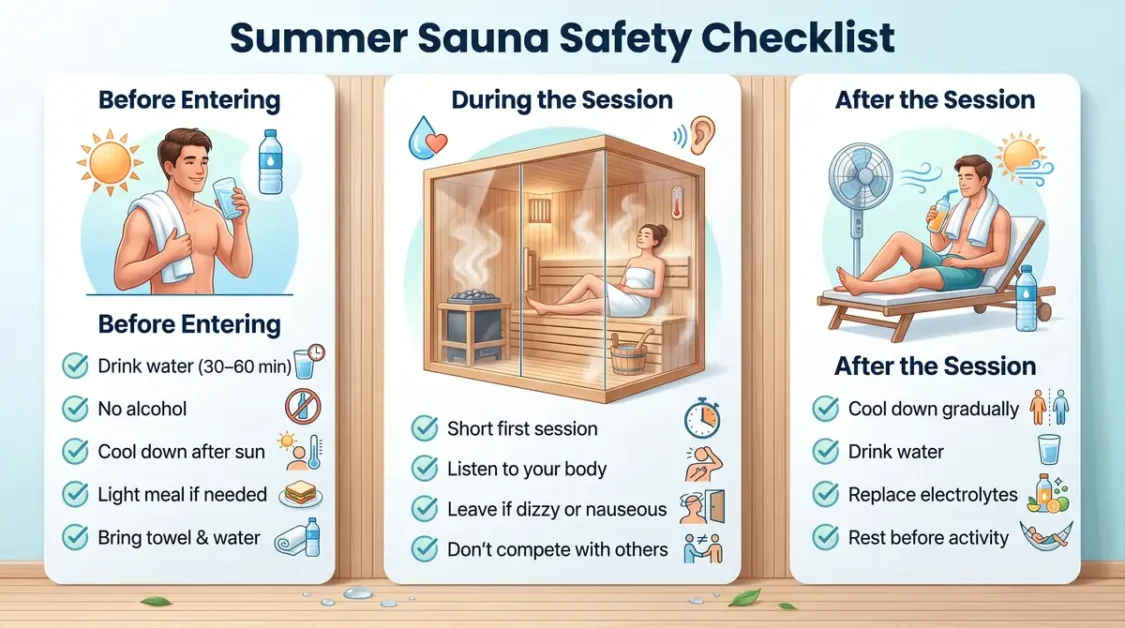
Summer Sauna Safety Checklist
Use this quick checklist before every summer sauna session.
Before Entering
- Drink water 30 to 60 minutes beforehand.
- Avoid alcohol.
- Wait until you’ve cooled down after spending time in the sun.
- Eat a light meal if you’re hungry.
- Bring a towel and water bottle.
During the Session
- Start with a shorter session.
- Pay attention to how you feel.
- Leave immediately if you become dizzy or nauseous.
- Don’t compete with other people’s session lengths.
After the Session
- Cool down gradually.
- Drink water.
- Replace electrolytes if you’ve been sweating heavily.
- Rest before returning to exercise or outdoor activities.
Summer Sauna Routine for Beginners
Following a simple routine removes much of the guesswork from your first few summer sauna sessions. Many people discover that consistency feels better than trying to stay in the heat for as long as possible.
Before the Sauna
Preparing your body starts well before you open the sauna door.
A good pre-session routine includes:
- Drinking water 30 to 60 minutes beforehand.
- Staying out of direct sunlight if possible.
- Waiting until your breathing and heart rate return to normal after exercise.
- Wearing lightweight, breathable clothing.
- Setting a timer so you don’t lose track of time.
During the Session
The goal is to stay comfortable, not to test your limits.
Many first-time sauna users notice the heat builds gradually instead of instantly. Resist the urge to stay longer simply because the first few minutes feel easy.
During your session:
- Sit comfortably and relax.
- Breathe slowly and naturally.
- Pay attention to how your body feels.
- Leave if you notice dizziness, nausea, or unusual fatigue.
Cooling Down
Cooling down is part of the sauna experience, not an optional extra.
A gradual cool-down helps your body return to its normal temperature more comfortably.
A simple routine is:
- Step outside the sauna.
- Sit quietly for several minutes.
- Drink water.
- Take a cool shower if desired.
- Rest before doing anything physically demanding.
After the Sauna
Recovery continues after you’ve finished sweating.
Many regular sauna users notice they feel their best after:
- Drinking water.
- Replacing electrolytes if needed.
- Eating a light, balanced meal.
- Resting for 20 to 30 minutes.
- Avoiding strenuous activity until they’ve cooled down completely.
If you’re building a long-term sauna routine, our Sauna Safety 101 guide covers additional habits that help you stay safe throughout the year.
Outdoor vs. Indoor Summer Sauna Mistakes
Summer conditions affect outdoor and indoor saunas differently. Knowing what changes can help you avoid problems before they happen.
| Outdoor Sauna | Indoor Sauna |
|---|---|
| Direct sunlight can increase your body temperature before the session. | Air conditioning may make you feel cooler than you actually are. |
| Walking barefoot on hot surfaces can be uncomfortable. | Poor ventilation can make the room feel stuffy. |
| Hydration needs are usually higher after spending time outside. | Smaller sauna rooms often heat up more quickly. |
| Sun exposure before entering can shorten your comfortable session length. | Beginners sometimes increase the heater temperature unnecessarily. |
Neither option is automatically safer during summer.
The most important difference is how much heat your body has already experienced before entering the sauna.
FAQs
How do beginners use a sauna correctly during summer?
Start with a shorter session, stay well hydrated, cool down gradually afterward, and leave the sauna if you notice any signs of overheating.
What is the 200 rule for saunas?
The 200 rule is an informal guideline suggesting that the combined sauna temperature in degrees Fahrenheit and humidity percentage should stay around 200. It’s a comfort guideline rather than a medical or safety rule.
What should beginners avoid after a sauna?
Avoid intense exercise, alcohol, and skipping hydration immediately after your session. Giving your body time to cool down and recover usually leads to a much better experience.
How long should a beginner stay in a sauna during summer?
Around 8 to 15 minutes is a good starting point for most beginners, depending on the weather, sauna temperature, and individual comfort level.
Can I use a sauna every day during summer?
Many healthy adults can enjoy regular sauna sessions, but daily use may not be appropriate for everyone. Shorter sessions with proper hydration are generally more comfortable during hot weather.
Should I drink electrolytes after every sauna session?
Not always. Water is often enough for shorter sessions. Electrolytes become more helpful after longer sessions or when you’ve been sweating heavily throughout the day.
Is an infrared sauna easier to tolerate during summer?
Many people find infrared saunas feel more comfortable because they usually operate at lower air temperatures than traditional saunas. Heat tolerance still varies from person to person.