Sauna Hydration Calculator: Estimate Water Loss & Recovery

Most sauna users lose between 0.5 and 2 liters of fluid during a session, depending on temperature, humidity, body size, and duration.
A good starting point is to replace 125% to 150% of estimated fluid losses over the next few hours. That means if you lose 1 liter of sweat, you may need 1.25 to 1.5 liters of fluids to fully recover.
Many first-time sauna users notice the heat feels manageable during the session, but the real effects often appear afterward. What usually happens is that people focus on sweating and relaxation while forgetting how much fluid their body is losing.
A sauna hydration calculator helps estimate your sweat loss and provides a practical starting point for replacing fluids after your session. In this guide, you’ll learn how to use a hydration calculator, understand your fluid needs, and create a simple hydration routine that supports safer sauna use.
Sauna Hydration Calculator
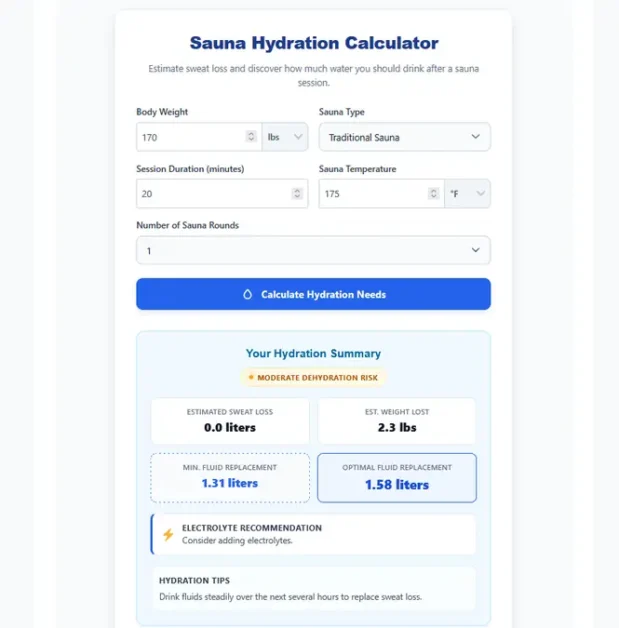
Use the calculator formula below to estimate your hydration needs.
Sauna Hydration Calculator
Estimate sweat loss and discover how much water you should drink after a sauna session.
Disclaimer: This sauna hydration calculator provides estimates only. Individual sweat rates vary based on health, environment, and personal physiology.
Simple Sweat Loss Estimator
| Sauna Session Length | Estimated Fluid Loss |
|---|---|
| 10 minutes | 0.3 to 0.5 liters |
| 20 minutes | 0.5 to 0.9 liters |
| 30 minutes | 0.8 to 1.3 liters |
| 45 minutes | 1.0 to 1.8 liters |
| 60 minutes | 1.2 to 2.0 liters |
Recommended Rehydration Formula
Estimated Sweat Loss × 1.25 = Minimum Fluid Replacement
Example:
- Sweat loss: 1 liter
- Rehydration target: 1.25 liters
Hydration Warning Levels
| Estimated Fluid Loss | Recommendation |
|---|---|
| Under 0.5 L | Water usually sufficient |
| 0.5 to 1.5 L | Increase water intake |
| 1.5 to 2.0 L | Consider electrolytes |
| Over 2.0 L | Aggressive rehydration needed |
Why Hydration Matters During Sauna Use
Sweating is your body's cooling system. During sauna sessions, that system works much harder than normal.
In everyday sauna use, fluid loss happens faster than many people expect. Some users feel perfectly fine during the session but notice fatigue, headaches, or thirst afterward.
What Happens When You Sweat
Sweat contains:
- Water
- Sodium
- Potassium
- Small amounts of other minerals
As these leave the body, blood volume temporarily decreases. This can make your heart work harder and may contribute to dizziness if fluids aren't replaced.
Many people exploring the benefits of regular heat therapy through sauna benefits and usage are surprised to learn hydration often has a bigger impact on comfort than session length.
Signs You're Becoming Dehydrated
Watch for:
- Dry mouth
- Headache
- Fatigue
- Dizziness
- Dark urine
- Muscle cramps
One thing people often overlook is that dehydration symptoms may appear several hours after the sauna session ends.
Why Beginners Often Underestimate Fluid Loss
Most first-time users underestimate how important hydration is.
Because sweat evaporates quickly in some traditional sauna environments, people may not realize how much fluid they're losing until they stand up and feel weak or tired.
Hydration becomes even more important during warm months. If you're planning regular sessions in July or August, it's worth understanding the best time of day to use a sauna in summer to reduce unnecessary fluid loss.
How Much Water Do You Lose in a Sauna?
There isn't a universal number because sweat rates vary significantly.
Traditional Sauna Sweat Loss
Traditional saunas typically create the highest sweat rates because temperatures often range from 150°F to 195°F.
Many users lose:
- 0.5 to 1.5 liters in 30 minutes
Infrared Sauna Sweat Loss
Infrared saunas operate at lower temperatures but still create substantial sweating.
Typical fluid loss:
- 0.4 to 1.2 liters in 30 minutes
If you're comparing different heat environments, our guide to infrared saunas explains how sweating patterns differ from traditional models.
Steam Sauna Sweat Loss
High humidity slows evaporation.
Because sweat remains on the skin, many people perceive they are sweating more.
Typical fluid loss:
- 0.5 to 1.3 liters in 30 minutes
Factors That Affect Fluid Loss
Your hydration needs depend on:
- Body weight
- Fitness level
- Sauna temperature
- Humidity
- Session duration
- Number of rounds
- Personal sweat rate
Over time, most sauna users discover their fluid needs become easier to predict.
Outdoor temperatures can also affect how much water you lose. People often wonder can you use a sauna in hot weather, and the answer is yes, but hydration needs usually increase when heat exposure comes from both the sauna and the environment.
How to Use the Sauna Hydration Calculator Correctly
Step 1: Record Your Starting Weight
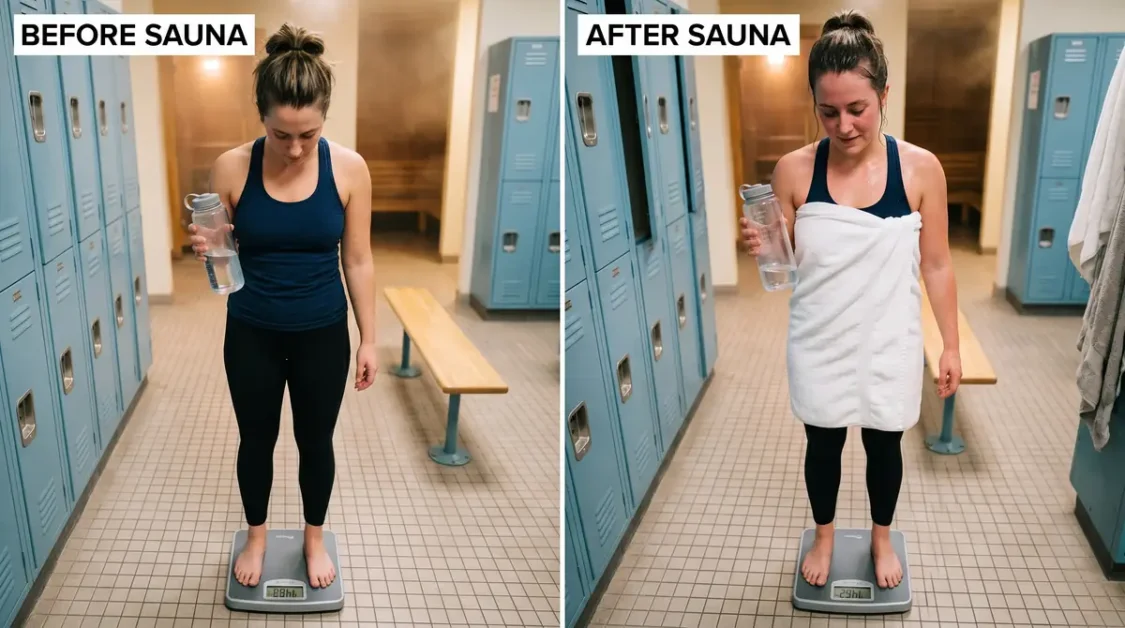
The most accurate approach is weighing yourself before the session.
Step 2: Enter Session Details
Record:
- Sauna type
- Temperature
- Time spent in heat
- Cooling breaks
Step 3: Estimate Sweat Loss
Use the calculator table or compare pre and post session weight.
Every pound lost equals approximately:
16 ounces (473 ml) of fluid loss
Step 4: Create a Rehydration Plan
Replace fluids gradually over the next several hours.
One practical tip is to avoid drinking huge amounts all at once because absorption tends to be more effective when spread out.
Sauna Hydration Examples
Example 1: 20 Minute Infrared Session
- Weight: 180 lbs
- Duration: 20 minutes
- Sweat loss estimate: 0.7 liters
Recommended replacement:
- 0.9 liters of fluids
Example 2: 30 Minute Traditional Sauna Session
- Weight: 210 lbs
- Duration: 30 minutes
- Sweat loss estimate: 1.2 liters
Recommended replacement:
- 1.5 liters of fluids
Example 3: Multiple Heat Rounds
- Three rounds
- Total heat exposure: 45 minutes
Estimated loss:
- 1.5 to 2 liters
Recommended replacement:
- 2 to 3 liters over several hours
Common Sauna Hydration Mistakes
Drinking Only After the Session
Hydration starts before entering the sauna.
A common mistake beginners make is arriving already dehydrated.
Ignoring Electrolytes
For longer sessions or heavy sweaters, water alone may not always be enough.
Drinking Alcohol Before Sauna Use
Alcohol increases dehydration risk and may worsen dizziness.
Staying in Too Long
Many beginners assume longer sessions provide better results.
In reality, excessive heat exposure often creates unnecessary dehydration without providing additional benefits.
For safe session planning, review these practical sauna safety guidelines.
Sauna Hydration Tracker
One useful experiment is tracking hydration for a week and comparing how you feel after sessions.
Daily Tracking Worksheet
| Date | Sauna Time | Sweat Loss Estimate | Water Consumed | Electrolytes | Notes |
|---|---|---|---|---|---|
While hydration is the priority, many users are also curious about energy expenditure. You can compare your fluid loss estimates with our Sauna Calories Burned Calculator to get a more complete picture of each session.
7 Day Hydration Challenge
For seven consecutive sauna sessions:
- Record pre session weight.
- Record post session weight.
- Calculate fluid loss.
- Track water intake.
- Track energy and recovery.
Many users discover that their ideal hydration amount differs significantly from generic recommendations.
Sauna Hydration Best Practices
Before Your Session
- Drink water throughout the day
- Avoid arriving dehydrated
- Eat normally
During Your Session
- Take breaks if needed
- Listen to your body
- Exit if dizziness develops
After Your Session
- Replace fluids gradually
- Consider electrolytes for heavy sweating
- Continue hydrating throughout the day
Nutrition also plays a role in recovery. Learn more about what to eat and drink after the sauna.
If you combine a sauna with a backyard spa, keeping overall heat exposure under control matters. Many homeowners also look for ways to keep hot tub water cool in summer so recovery sessions remain comfortable.
FAQs
How much water should I drink after a sauna?
Most people should replace 125% to 150% of estimated sweat losses over the next several hours.
Can I drink too much water after a sauna?
Yes. Drinking excessive amounts too quickly may dilute electrolyte levels. Gradual rehydration is usually best.
Do I need electrolytes after every sauna session?
Not always. For shorter sessions, water is often enough. Longer or more intense sessions may benefit from electrolyte replacement.
Does an infrared sauna cause less dehydration?
Generally yes, but fluid loss can still be significant depending on session duration and individual sweat rate.
Should I weigh myself before and after a sauna?
Yes. It's one of the simplest ways to estimate actual fluid loss.
What is the 200 rule for saunas?
The 200 rule refers to a guideline where the sum of sauna temperature (°F) and relative humidity stays around 200 for comfort and safety.
During summer, dehydration risks can climb quickly. Following a practical summer sauna safety checklist can help you avoid the most common heat-related mistakes.
Conclusion
A sauna hydration calculator won't tell you exactly how much you'll sweat, but it provides a useful estimate that helps prevent dehydration.
Many experienced sauna users eventually develop a personal hydration routine based on session length, temperature, and sweat rate. Tracking your results for a week or two can reveal patterns that make future sessions safer, more comfortable, and more enjoyable.