
Infrared Sauna Before or After Workout: Which Is Better?

So, should you use an infrared sauna before or after a workout?
For most people, the best choice is after exercise. Post workout sauna sessions support recovery, relaxation, and muscle comfort while fitting naturally into a wellness routine.
That said, a short infrared sauna session before a workout can still be useful if your goal is warming up muscles or improving flexibility. The best timing ultimately depends on your fitness goals, how your body responds to heat, and how well you stay hydrated throughout the process.
Infrared Sauna Before vs After Workout: Quick Answer
For most people, using an infrared sauna after a workout is the better option. It supports muscle recovery, encourages relaxation, and can help ease post workout soreness.
However, using an infrared sauna before a workout can also be beneficial if your goal is to warm up muscles, improve mobility, or prepare mentally for exercise.
Here’s a quick overview:
| Goal | Best Timing |
|---|---|
| Warm up muscles | Before workout |
| Improve flexibility | Before workout |
| Muscle recovery | After workout |
| Reduce soreness | After workout |
| Relaxation | After workout |
| Stress relief | After workout |
| General wellness | After workout |

How an Infrared Sauna Affects the Body
Unlike a traditional sauna, an infrared sauna uses infrared light to heat the body directly instead of heating the surrounding air.
This creates a gentler heat experience while still promoting sweating and increasing circulation. If you’re new to this type of heat therapy, our guide on how infrared saunas work explains the process in more detail.
Increased Circulation
Heat exposure causes blood vessels to expand, allowing blood to circulate more efficiently throughout the body.
Many people use saunas after workouts because improved circulation may help deliver oxygen and nutrients to recovering muscles.
Elevated Body Temperature
Infrared sauna sessions gradually raise your core temperature. Many first-time sauna users notice the heat builds gradually rather than instantly, making infrared units feel more comfortable than traditional saunas.
Relaxation Response
Heat therapy often promotes relaxation after physical activity. People who sauna regularly often describe a calming feeling that continues long after the session ends.
Benefits of Using an Infrared Sauna Before a Workout
Using an infrared sauna before exercise can act as a warm-up tool.
Helps Warm Up Muscles
During the first few minutes of a sauna session, the heat usually feels mild. As body temperature rises, muscles become warmer and more pliable.
This can make movement feel easier when you begin exercising.
May Improve Flexibility and Mobility
A common mistake beginners make is jumping straight into intense activity without preparing their muscles and joints.
Heat exposure may help improve mobility before workouts that involve stretching, yoga, weight training, or sports requiring a large range of motion.
Can Support Mental Focus
Many people find that a short sauna session helps them disconnect from distractions before training.
The quiet environment can provide a mental transition into workout mode.
Potential Drawbacks
Pre workout sauna sessions are not ideal for everyone.
Potential downsides include:
- Dehydration before exercise
- Reduced energy during long workouts
- Increased fatigue in hot environments
- Elevated heart rate before training
For most people, keeping pre workout sessions short works best.
Benefits of Using an Infrared Sauna After a Workout
For recovery purposes, post workout sauna use is usually the preferred option.
Supports Muscle Recovery
Many people use saunas after workouts for muscle relaxation.
After exercise, your muscles experience stress and microscopic damage. Heat therapy promotes circulation, which may help support the recovery process.
If muscle recovery is one of your goals, you may also enjoy learning about muscle growth and sauna use.
May Reduce Post Workout Stiffness
What usually happens is that muscles tighten as the body begins recovering from exercise.
An infrared sauna session may help reduce feelings of stiffness, especially after intense strength training or endurance workouts.
Encourages Relaxation
After a hard workout, many people find relaxation improves after several sauna sessions.
The combination of exercise and heat therapy often creates a calming post workout routine.
Helps Establish a Recovery Habit
In everyday sauna use, consistency often matters more than session length.
Using an infrared sauna after workouts can become part of a sustainable recovery routine.
Image suggestion:
Athlete relaxing in an infrared sauna after a workout with a towel around their shoulders.
Infrared Sauna Before or After Workout for Weight Loss
Many people search for the best sauna timing for weight loss.
The reality is that sauna use alone is not a fat loss solution.
What Actually Happens
Sauna sessions increase sweating, which can temporarily reduce body weight through fluid loss.
However, this weight usually returns once you rehydrate.
Can It Support a Weight Loss Plan?
An infrared sauna may support a healthy lifestyle by:
- Promoting relaxation
- Encouraging recovery between workouts
- Helping maintain exercise consistency
If you’re curious about the relationship between sweating and calorie expenditure, check out this guide on how many calories you burn in a sauna.
Best Timing for Weight Loss Goals
If your primary goal is fat loss, exercising first and using the sauna afterward is generally the more practical approach.
This allows you to prioritize workout performance while still enjoying recovery benefits.
Best Infrared Sauna Timing Based on Your Goal
Choose Before a Workout If You Want To:
- Warm up muscles
- Improve flexibility
- Prepare for mobility training
- Feel mentally focused before exercise
Choose After a Workout If You Want To:
- Support recovery
- Relax muscles
- Reduce stiffness
- Unwind after training
- Build a recovery routine
For most people, the post workout option delivers the greatest overall benefit.
How Long Should You Stay in an Infrared Sauna?
Session length matters just as much as timing.
Recommended Duration
Most beginners do well with:
- 10 to 15 minutes initially
- 15 to 30 minutes after adaptation
- Shorter sessions before workouts
Many beginners expect longer sessions to produce better results, but longer is not always better.
Recommended Temperature Range
Most infrared saunas operate between 110°F and 150°F.
For more details on heat levels, see our guide to ideal sauna temperature settings.
Signs You’ve Stayed Too Long
Leave the sauna if you experience:
- Dizziness
- Nausea
- Headache
- Excessive fatigue
- Lightheadedness
Your body should feel relaxed, not overwhelmed.
Common Mistakes to Avoid
Going Into the Sauna Dehydrated
Most first-time users underestimate how important hydration is.
Drink water before and after sauna sessions.
Using the Sauna Immediately After Intense Exercise
Allow your body a brief cooling period before entering the sauna.
Many experts recommend waiting several minutes after strenuous exercise.
Staying Too Long
New sauna users often stay too long during their first session.
Start conservatively and increase duration gradually.
Ignoring Nutrition
Recovery involves more than heat therapy.
Proper hydration and nutrition are equally important. You can learn more about what to eat and drink after the sauna to support recovery.
Infrared Sauna Safety Tips Around Exercise
Using an infrared sauna safely helps you get the benefits without unnecessary risks.
Stay Hydrated
The easiest way to avoid dehydration is drinking water before and after sessions.
You may need additional fluids if your workout was particularly intense.
Listen to Your Body
If the heat feels overwhelming, stepping out briefly helps regulate body temperature.
Don’t push through symptoms like dizziness or nausea.
Know When to Skip a Session
Consider postponing your sauna session if you:
- Feel ill
- Are severely dehydrated
- Have heat sensitivity
- Have been exercising in extreme outdoor temperatures
For a complete overview, review these essential sauna safety guidelines.
Infrared Sauna Workout Timing Action Plan
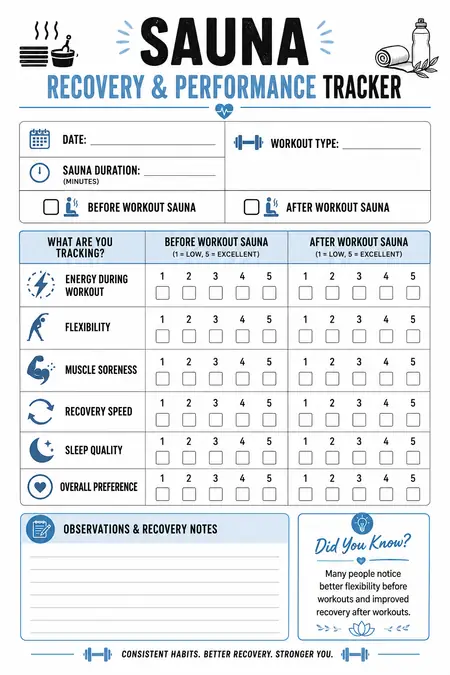
If you’re still unsure whether to use an infrared sauna before or after your workout, try this simple 7 day experiment.
Many users discover that the best timing depends on their primary goal. What works well for flexibility may not produce the same results for recovery.
7 Day Sauna Timing Test
Days 1 to 3: Pre Workout Sauna
Before each workout:
- Use the infrared sauna for 10 to 15 minutes
- Drink water before entering
- Pay attention to flexibility and mobility
- Notice how your muscles feel during exercise
Track:
- Energy level during workouts
- Range of motion
- Warm up time needed
- Overall workout performance
Days 4 to 7: Post Workout Sauna
After each workout:
- Wait about 10 to 15 minutes after exercise
- Use the infrared sauna for 15 to 25 minutes
- Focus on recovery and relaxation
Track:
- Muscle soreness the next day
- Recovery speed
- Sleep quality
- Overall body comfort
Recovery and Performance Tracker
Use this simple free downloadable worksheet:
Quick Decision Framework
Choose before your workout if your goal is:
- better mobility
- flexibility
- warming up muscles
- mental focus
Choose after your workout if your goal is:
- muscle recovery
- reduced soreness
- relaxation
- post workout recovery
- better recovery routines
For most people, an infrared sauna after a workout becomes the long term winner because recovery benefits are easier to notice after several sessions.
For a deeper look at recovery focused heat therapy, you can also explore our guide on sauna therapy and recovery routines.
FAQs
Can I use an infrared sauna both before and after a workout?
Yes. Some experienced users enjoy short sessions before exercise and longer sessions afterward, provided they stay hydrated and monitor how they feel.
How long should I wait after exercising before using an infrared sauna?
A short cooling period of about 10 to 15 minutes is often recommended so your heart rate and body temperature can begin returning toward normal.
Is an infrared sauna good for muscle recovery?
Many people use infrared saunas after workouts because the heat promotes circulation and may help reduce feelings of muscle stiffness.
Does an infrared sauna help burn more calories after exercise?
A sauna can increase energy expenditure slightly, but it should not be viewed as a replacement for exercise or a primary weight loss tool.
Is it okay to use an infrared sauna every day?
For many healthy adults, daily sauna use can be safe when sessions are moderate and hydration is maintained.