How to Create the Perfect Indoor Sauna Nook: Small Space, Big Style

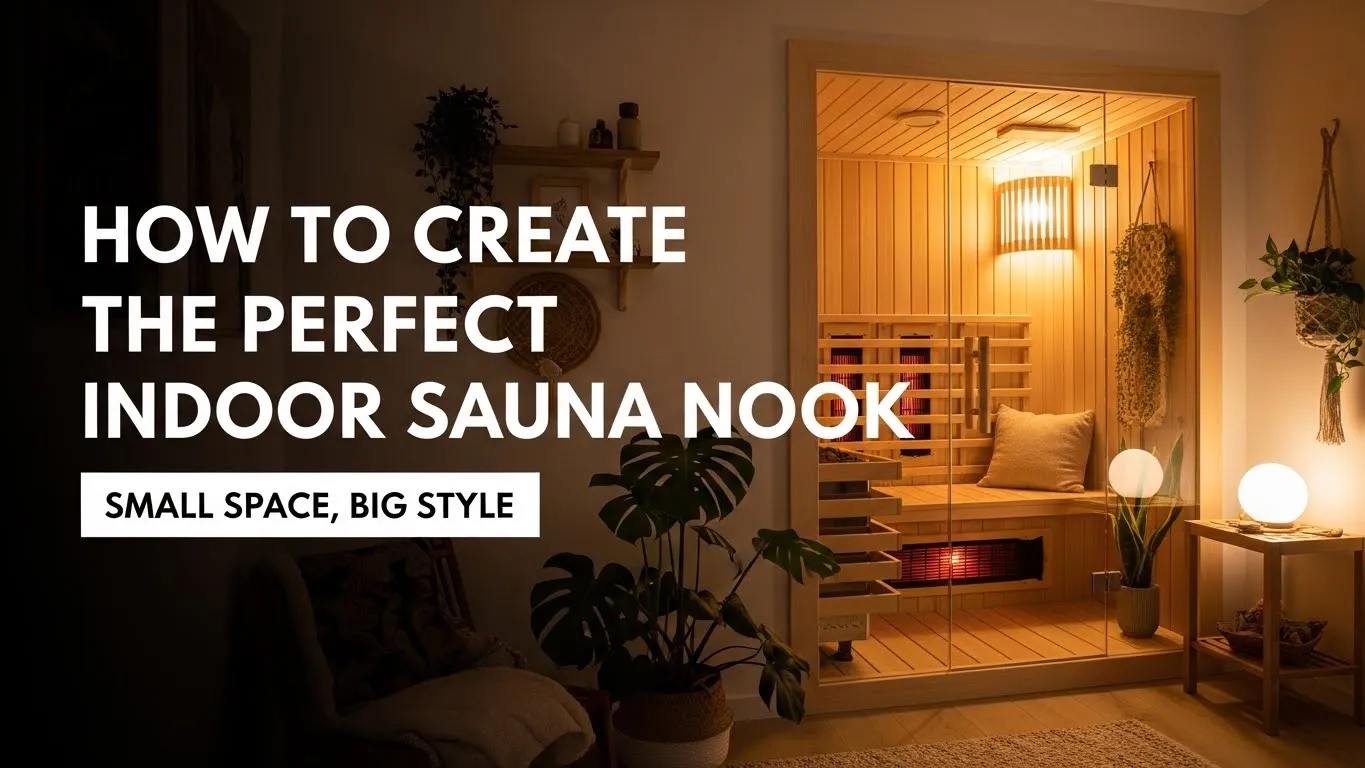
Creating a home sauna used to mean dedicating an entire room or building a backyard structure. That’s changed fast over the last few years. More homeowners are now turning unused corners, closets, and small alcoves into compact indoor sauna nooks that still feel luxurious.
The best part is you don’t need a huge space to make it work.
A properly planned sauna nook can fit into as little as 15 to 25 square feet while still giving you the relaxing heat, calming atmosphere, and spa style feel people love about sauna sessions.
In this guide, you’ll learn how to choose the right location, plan the layout, pick materials, avoid common mistakes, and build a small indoor sauna step by step.
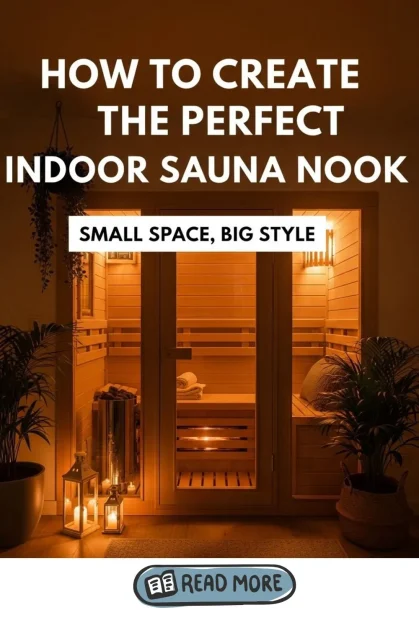
What Makes a Small Indoor Sauna Nook Actually Work
A sauna nook only feels relaxing when the basics are done right. In most home sauna setups, insulation, airflow, and heater sizing matter far more than the actual room size.
Many first time sauna users assume a small sauna is easier to build, but tiny spaces can overheat, trap moisture, and feel uncomfortable if the layout is wrong.
A good indoor sauna nook needs:
- Proper ventilation
- Heat safe materials
- Enough bench clearance
- Correct heater sizing
- Moisture protection
- Comfortable ceiling height
Once those pieces come together, even a tiny sauna can feel surprisingly spacious.y attic as a sauna explains the limits in a simple way.

Keep Your Sauna Temps Perfect Every Time
The Inkbird ITC-308 makes dialing in your sauna heat super easy. Dual heating and cooling control, °C/°F display, built-in safety alarms, and an 1100W limit that fits home sauna setups.
- 4.5 stars, 13,800 reviews
- Black Friday Price: $25.20 (30 percent off)
- Dual display and buzzer alerts
- Perfect for steady sauna temps
This page contains affiliate links. I may earn a small commission at no extra cost to you.
How Much Space You Really Need
One of the biggest misconceptions is thinking a sauna needs an entire room.
Most compact sauna nooks fit comfortably into:
| Sauna Size | Best For |
|---|---|
| 3×4 ft | Single user |
| 4×4 ft | Comfortable solo use |
| 4×6 ft | Two person layout |
| 5×5 ft | More open seating |
Anything around 15 to 25 square feet works well for most indoor sauna projects.
If you’re still deciding between different sauna styles, this guide on which sauna is right for me helps compare traditional and infrared setups for small homes.
The Best Indoor Spots for a Sauna Nook
The easiest sauna builds usually happen in spaces that already have decent flooring, nearby power access, and some airflow.
Good indoor sauna locations include:
- Unused walk in closets
- Basement corners
- Home gym alcoves
- Large bathrooms
- Under stair spaces
- Spare room corners
Many DIY sauna builders underestimate how important ceiling height is. A cramped ceiling traps heat too aggressively and makes the room feel uncomfortable.

A Luxury Two Person Sauna for Your Home
The ZONEMEL 2 Person Canadian Hemlock Sauna gives you a full spa experience right at home with a Harvia heater, Bluetooth audio, skylight ventilation, and loads of accessories.
- 4.4 stars from verified buyers
- Harvia 3.5 kW heater for fast heat up
- Includes stones, bucket, scoop, hourglass, and lighting
- 7 color ceiling lighting for a relaxing vibe
- Comfortable removable bench for sitting or hot yoga
This page contains affiliate links. I may earn a small commission at no extra cost to you.
Ideal Sauna Ceiling Height
Most indoor saunas work best with:
- 7 to 8 foot ceilings
- Enough space above the upper bench for sitting upright
- Balanced heat circulation
A common mistake beginners make is building benches too close to the ceiling. Heat rises quickly inside compact rooms.
How To Prepare Your Indoor Sauna Space
Before building anything, prep the area properly.
This is one of the most overlooked parts of a DIY sauna build.
Flooring Preparation
Your sauna should sit on a solid moisture resistant surface.
Best flooring options:
- Tile
- Concrete
- Vinyl plank
- Heat safe composite flooring
Avoid carpet completely.
One thing people often overlook is how much moisture collects under benches and around the heater area.
Wall and Moisture Preparation
If you’re converting an existing room:
- Remove drywall if needed
- Check for mold or trapped moisture
- Seal any air leaks
- Confirm framing is solid
- Plan electrical routing early
In everyday sauna use, moisture control becomes one of the biggest long term durability factors.
Electrical Planning
Traditional sauna heaters often need 240V power.
Infrared saunas usually work on standard 120V circuits.
Always confirm:
- Breaker capacity
- Wire type
- Outlet placement
- Heater requirements
If you’re planning a traditional setup, this guide on sauna heater explains how different heater styles affect installation and heat performance.

Keep Your Sauna Area Dry and Fresh
These Vacplus Moisture Absorbers are great for bathrooms, closets, or any humid corner near your sauna. Fragrance free, leak proof, long lasting, and super easy to use.
- 4.4 stars, 15,044 reviews
- Price: $21.99 (12 percent off)
- 6 pack, 10.5 oz each
- Fast moisture trapping with calcium chloride
- Great for bathrooms, basements, laundry rooms
This page contains affiliate links. I may earn a small commission at no extra cost to you.
Traditional vs Infrared for Small Sauna Nooks
Both sauna types work well indoors, but they create very different experiences.
Traditional Sauna
Traditional saunas heat the air first.
Typical temperatures:
- 160 to 195°F
Benefits:
- Classic sauna feel
- Steam capability
- Higher heat experience
- Better for sauna purists
Challenges:
- More ventilation needed
- Longer warm up time
- Higher humidity
Infrared Sauna
Infrared saunas heat your body directly.
Typical temperatures:
- 120 to 150°F
Benefits:
- Faster warmup
- Lower power use
- Easier wiring
- Better for tight spaces
Challenges:
- Different heat sensation
- Less traditional sauna feel
If you want a deeper comparison between heating styles, the guide on infrared saunas breaks down the pros and cons clearly.
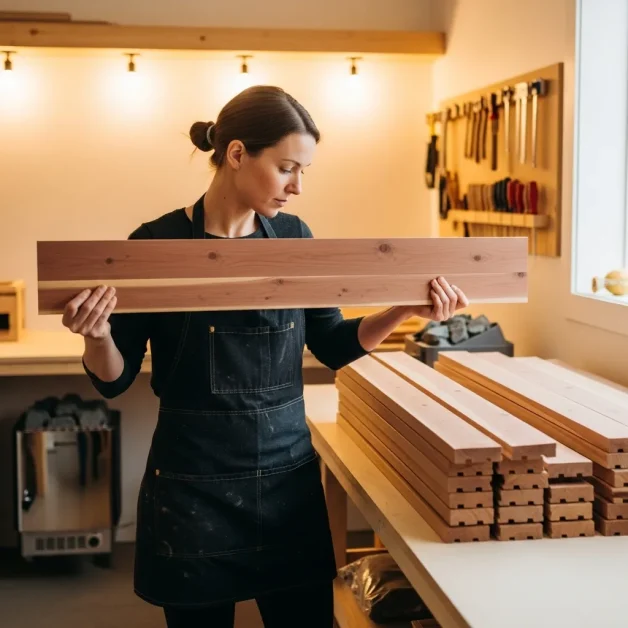

What Is the Best Sauna Layout for Small Spaces?
One of the top questions people ask is:
What is the best layout for a sauna?
For compact indoor nooks, the best layout is usually the one that keeps airflow open while maximizing bench comfort.
Straight Bench Layout
Best for:
- Narrow closets
- Hallway nooks
- Small alcoves
Benefits:
- Simplest build
- Cheapest option
- Easy ventilation
Corner Sauna Layout
Best for:
- Bathrooms
- Basement corners
- Home gyms
Benefits:
- Uses dead space efficiently
- Feels more open
- Better room flow
Two Tier Bench Layout
Best for:
- Taller ceilings
- Traditional saunas
Benefits:
- Better heat layering
- More seating flexibility
- Classic sauna experience
If you like compact modern layouts, the inspiration in modern sauna design ideas can help you visualize what works in small indoor spaces.
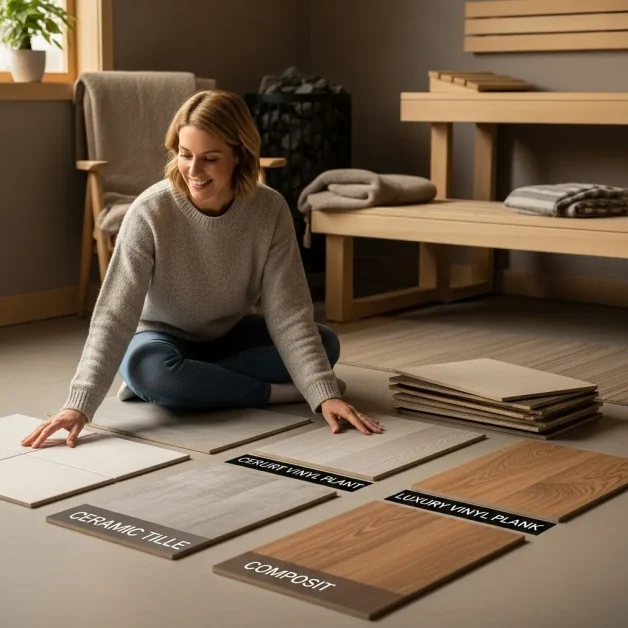
Best Materials for a DIY Indoor Sauna
The materials you choose affect:
- Heat retention
- Moisture resistance
- Comfort
- Maintenance
- Longevity
Best Sauna Woods
The most common sauna woods are:
| Wood Type | Why People Use It |
|---|---|
| Cedar | Moisture resistant and aromatic |
| Hemlock | Smooth and low odor |
| Spruce | Budget friendly |
Many people find cedar gives the most authentic sauna feel, especially in smaller spaces.
Insulation and Vapor Barrier
A sauna struggles to hold temperature without proper insulation.
Recommended setup:
- R13 or R15 wall insulation
- R19 ceiling insulation
- Foil vapor barrier behind wood panels
If your sauna isn’t heating properly, the issue is often ventilation or insulation gaps.
Best Sauna Lighting
Soft lighting completely changes the atmosphere inside compact sauna spaces.
Popular choices:
- Warm LED strips
- Hidden under bench lights
- Corner wall fixtures
- Dimmable sauna lights
If you want more lighting ideas for a relaxing spa vibe, this guide on sauna lighting has great examples for compact builds.

A Strong Heater for Fast Cozy Sauna Sessions
The VEVOR 6KW Sauna Heater warms small to midsize saunas quickly with its corrosion resistant build and easy mechanical temp and timer controls.
- Amazon’s Choice, 4.2 stars, 228 reviews
- Black Friday Price: $127.20 (15 percent off)
- Heats 176 to 318 cu.ft rooms
- Durable aluminized zinc shell and stainless elements
- Easy wall mount with quick install bracket
This page contains affiliate links. I may earn a small commission at no extra cost to you.
How to Build a Sauna Cheap Without Ruining the Experience
A lot of people assume indoor saunas are expensive.
They can be, but small sauna nooks are one of the most affordable ways to build a home sauna.
Budget Friendly Ways to Save Money
You can reduce costs by:
- Using spruce instead of cedar
- Building one bench instead of two
- Reusing existing flooring
- Choosing a smaller heater
- Building inside an existing closet
Where You Shouldn’t Cut Corners
Never go cheap on:
- Electrical safety
- Heater clearances
- Ventilation
- Vapor barrier
- Heat safe wiring
One practical tip builders learn quickly is that fixing moisture damage later costs far more than preventing it during construction.
If you’re trying to estimate long term electricity use, this breakdown on sauna cost to run explains what to expect.
Step by Step: Building Your Indoor Sauna Nook
1. Frame the Sauna Area
Build the structure like a compact room.
Image suggestion:
Wood framing being installed inside a small indoor sauna nook.
Steps:
- Use 2×4 framing
- Space studs 16 inches apart
- Add blocking for benches and heater mounting
- Keep walls square and level
If you’re converting a closet, some framing may already exist.
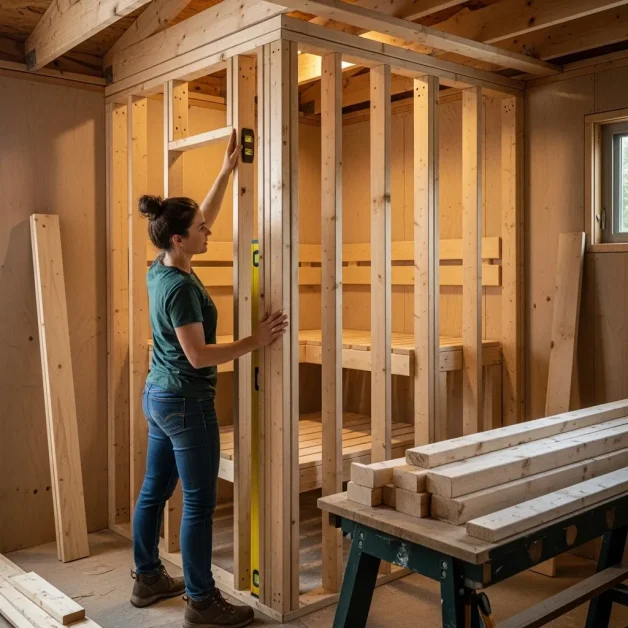
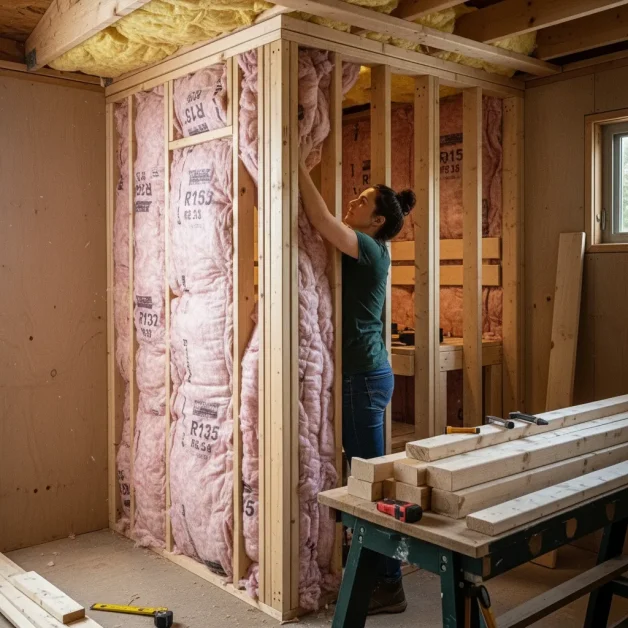
2. Add Insulation
Good insulation keeps heat inside the sauna instead of escaping into nearby rooms.
Image suggestion:
Fiberglass insulation being installed between sauna wall studs.
Recommended insulation:
- R13 or R15 walls
- R19 ceiling
Don’t compress insulation tightly.
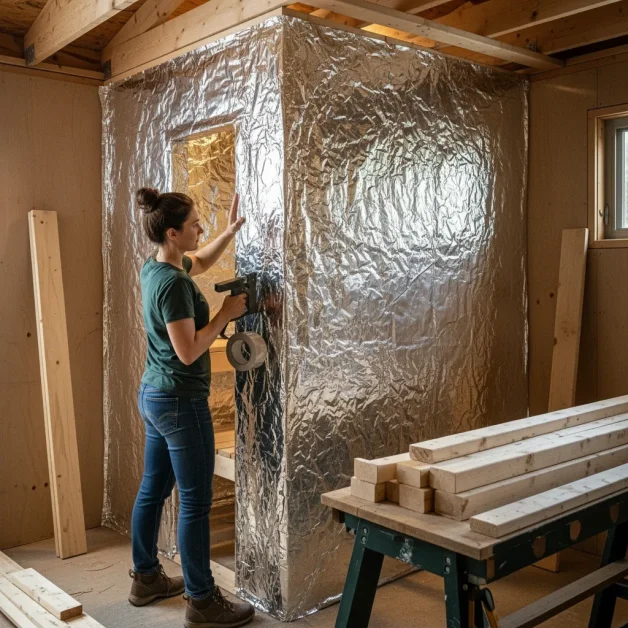
3. Install the Vapor Barrier
This layer protects your framing from trapped moisture.
Image suggestion:
Foil vapor barrier being attached to sauna walls before paneling.
Steps:
- Use foil faced sauna vapor barrier
- Face shiny side inward
- Overlap seams by 2 to 3 inches
- Seal seams with foil tape
A properly sealed vapor barrier dramatically improves sauna durability.
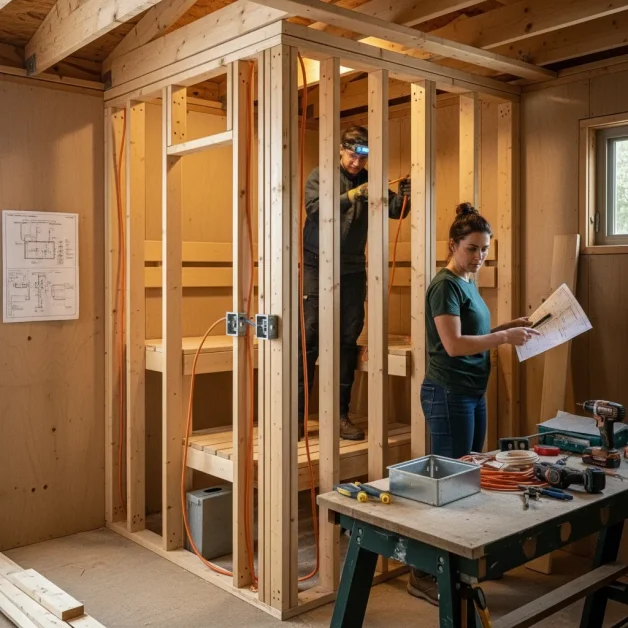
4. Run Electrical Safely
This is usually the stage where hiring an electrician makes sense.
Image suggestion:
Heat rated electrical wiring being installed inside a sauna wall.
Important steps:
- Follow heater manufacturer specs
- Use heat rated wire
- Install dedicated circuits if needed
- Keep switch boxes outside the sauna
If you’re using a traditional heater and want help choosing one that fits your cubic footage, the guide on sauna heater walks you through picking the right type.
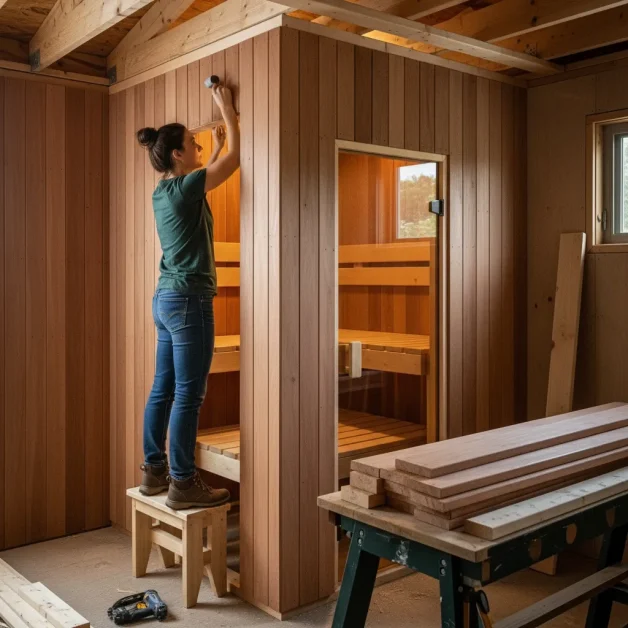
5. Install Wall and Ceiling Panels
This is where the sauna finally starts feeling real.
Image suggestion:
Cedar tongue and groove boards being installed inside a compact sauna nook.
Recommended materials:
- Cedar
- Hemlock
- Spruce
Use tongue and groove boards around ¾ inch thick.
6. Build and install your benches
Keep them simple and sturdy.
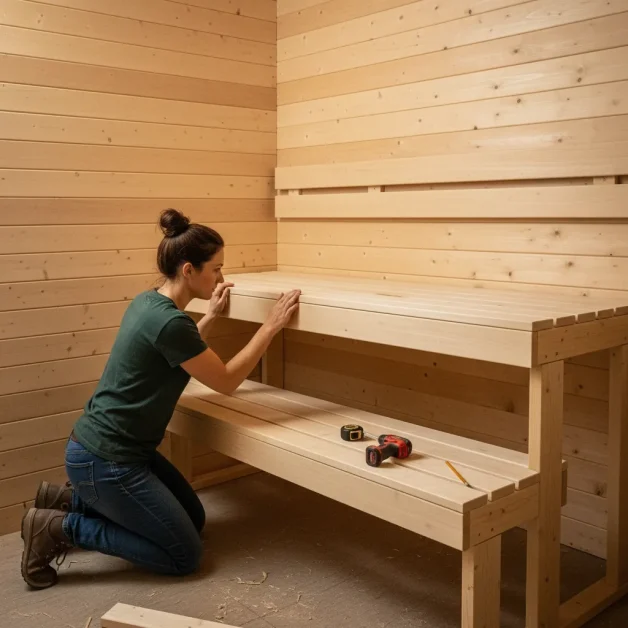
- Upper bench: 20 to 24 inches deep
- Lower bench: 14 to 18 inches
- Use smooth, knot free wood for comfortable seating
- Attach benches to the blocking you added earlier
Make sure airflow can pass underneath the upper bench.
7. Set up the heater
Your heater should always be the last big install.
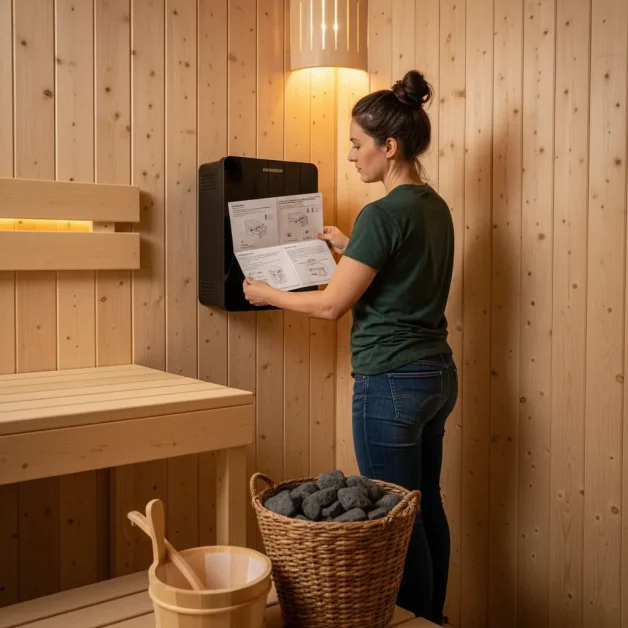
- Follow the manufacturer’s clearance rules
- Most require 3 to 6 inches side clearance
- Keep anything flammable a safe distance away
- Add stones if you’re using a traditional model
A small space heats fast, so the right heater size makes a huge difference in comfort.
8. Add lighting and final touches
Little details make your nook feel like a spa.
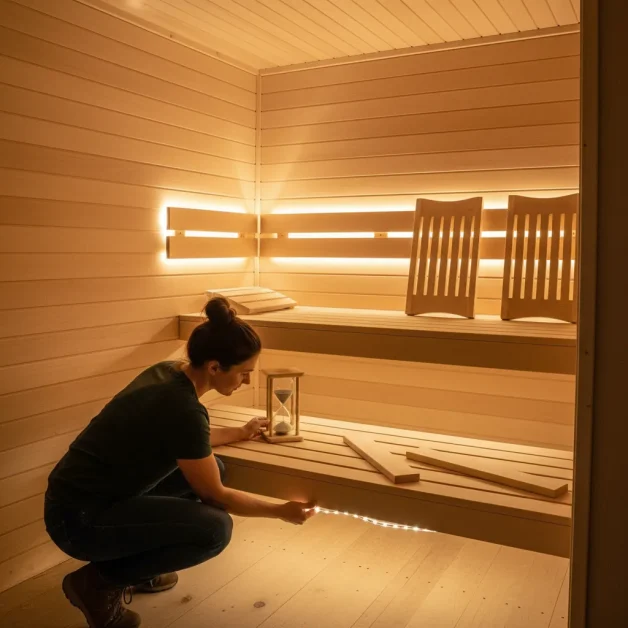
- Use sauna rated LED fixtures
- Place lights low or behind a bench for softer glow
- Add a sand timer or wooden backrests
- Use trim pieces to hide gaps and seams
9. Do a test heat
Before your first session, warm the sauna up for 30 to 45 minutes.
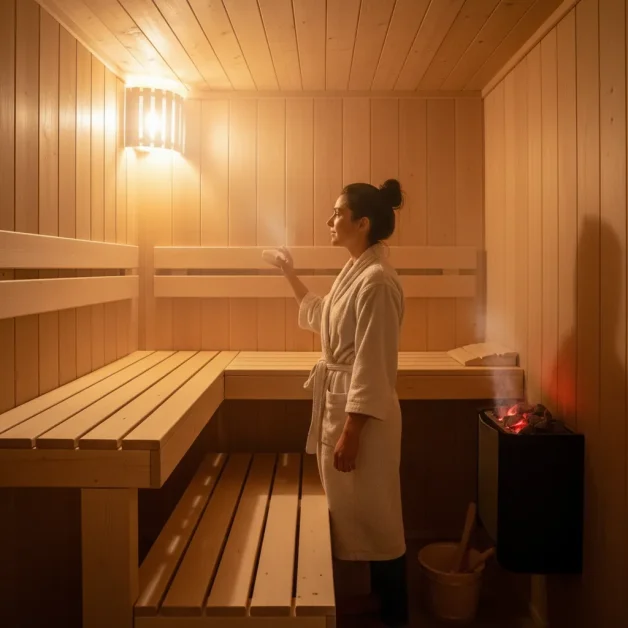
You’re checking for:
- Even heating
- Any hot spots
- Airflow balance
- Strange smells from new wood or wiring
After the test run, your sauna is ready for regular use.
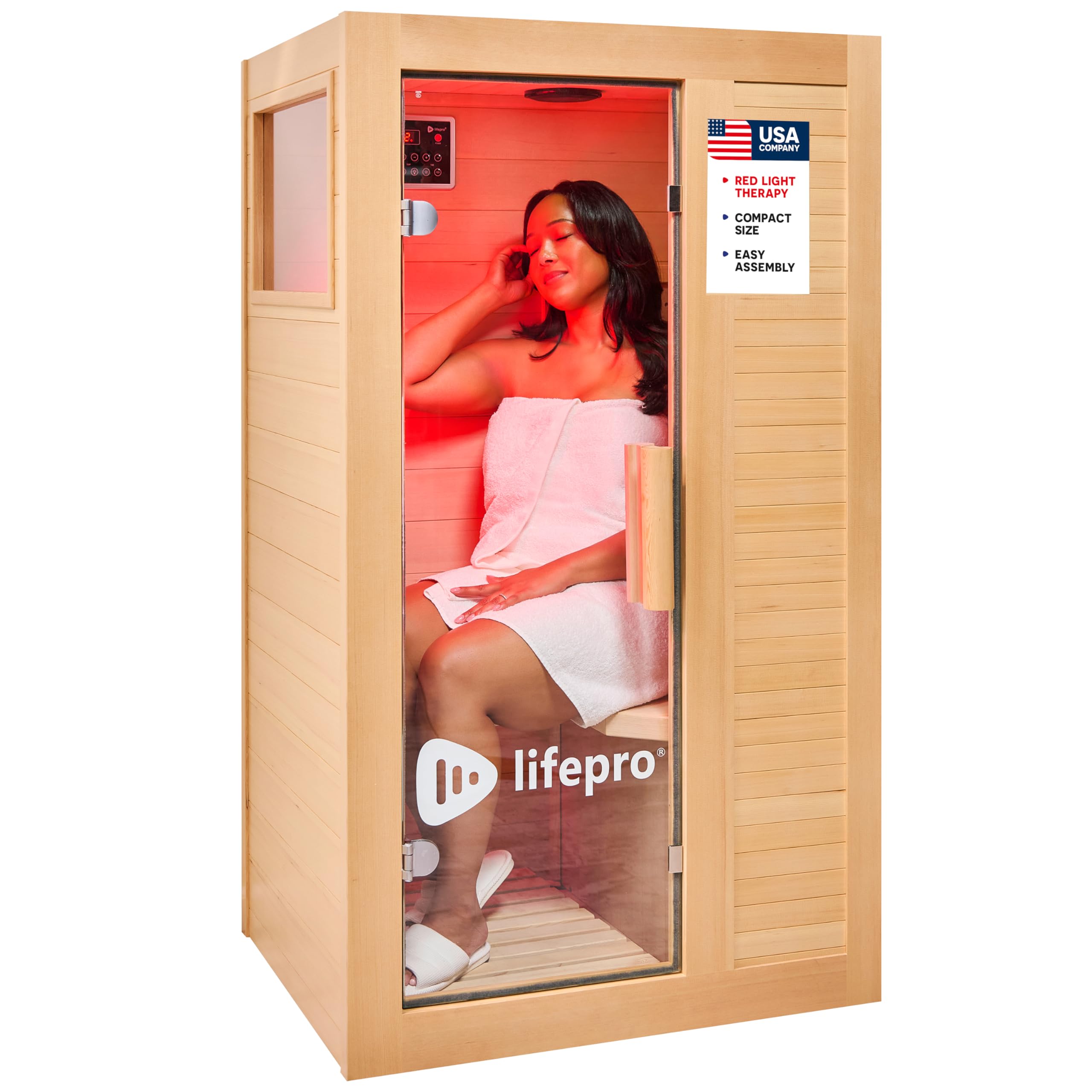
A Compact Infrared Sauna With Red Light Therapy
The LifePro Rejuvacure Infrared Sauna brings gentle far infrared heat, red light therapy, chromotherapy lighting, and Bluetooth sound to a compact one person home setup.
- 4.6 stars, 122 reviews
- Amazon’s Choice
- 7 carbon fiber heaters for fast even warmth
- Red light and 9 chromotherapy modes
- Made from durable Canadian hemlock
This page contains affiliate links. I may earn a small commission at no extra cost to you.
What Is the 200 Rule for Saunas?
Another common question from search results is:
What is the 200 rule for saunas?
The sauna 200 rule is a simple guideline some people use to balance temperature and humidity.
The idea is:
- Temperature in Fahrenheit
- Plus humidity percentage
- Should stay around 200 combined
Example:
- 170°F with 30 percent humidity
- 180°F with 20 percent humidity
This isn’t a strict safety law, but many experienced sauna users find it creates a comfortable balance between heat and breathing comfort.
If you like the idea of a curved, cozy layout, the design ideas in the barrel sauna kit guide can help you shape an indoor version with rounded benches and smoother airflow.
Ventilation Tips Most DIY Builders Miss
Ventilation is one of the biggest differences between a sauna that feels amazing and one that feels stuffy.
A common issue many beginners face is placing both vents too high.
Proper Sauna Vent Placement
You want:
- Intake vent near the heater
- Exhaust vent higher on the opposite wall
- Small door gap for airflow
When a sauna struggles to reach temperature, poor airflow design is often the reason.
Common Indoor Sauna Mistakes
Even good DIY builds run into problems.
Mistake 1: Oversized Heater
A heater that’s too powerful overheats compact rooms quickly.
Mistake 2: Poor Moisture Control
Skipping the vapor barrier usually leads to hidden moisture damage.
Mistake 3: Weak Ventilation
Without airflow, the sauna feels suffocating.
Mistake 4: Bench Placement Problems
Benches too high create uncomfortable heat exposure.
Mistake 5: Cheap Lighting
Non sauna rated lighting often fails quickly under heat.
If you’re new to sauna ownership, this beginner friendly guide on sauna safety 101 explains more common safety mistakes to avoid.
HSmart Upgrades That Make a Tiny Sauna Feel Luxurious
Small spaces feel far more relaxing with the right details.
Great Small Sauna Add Ons
- Hidden LED lighting
- Bluetooth speakers outside the sauna
- Wooden backrests
- Aromatherapy cups
- Sand timers
- Glass doors
Many people find relaxation improves after several sauna sessions once the environment feels calm and uncluttered.
Cleaning and Maintaining an Indoor Sauna
A little maintenance keeps sauna wood fresh for years.
After Every Session
- Leave the door open
- Let benches dry
- Wipe moisture spots
- Allow airflow
Monthly Maintenance
- Vacuum under benches
- Check heater stones
- Tighten loose hardware
- Clean panels gently
If you use infrared panels, this guide on how to clean an infrared sauna explains the safest cleaning process.
When an Outdoor Sauna Makes More Sense
Indoor sauna nooks are great for convenience.
But outdoor saunas may work better if:
- You want larger seating capacity
- You prefer wood burning heat
- You want higher temperatures
- You have backyard space available
Outdoor saunas also create a more traditional sauna experience.
If you like rustic outdoor layouts, the guide on outdoor sauna compares different backyard sauna styles and sizes.
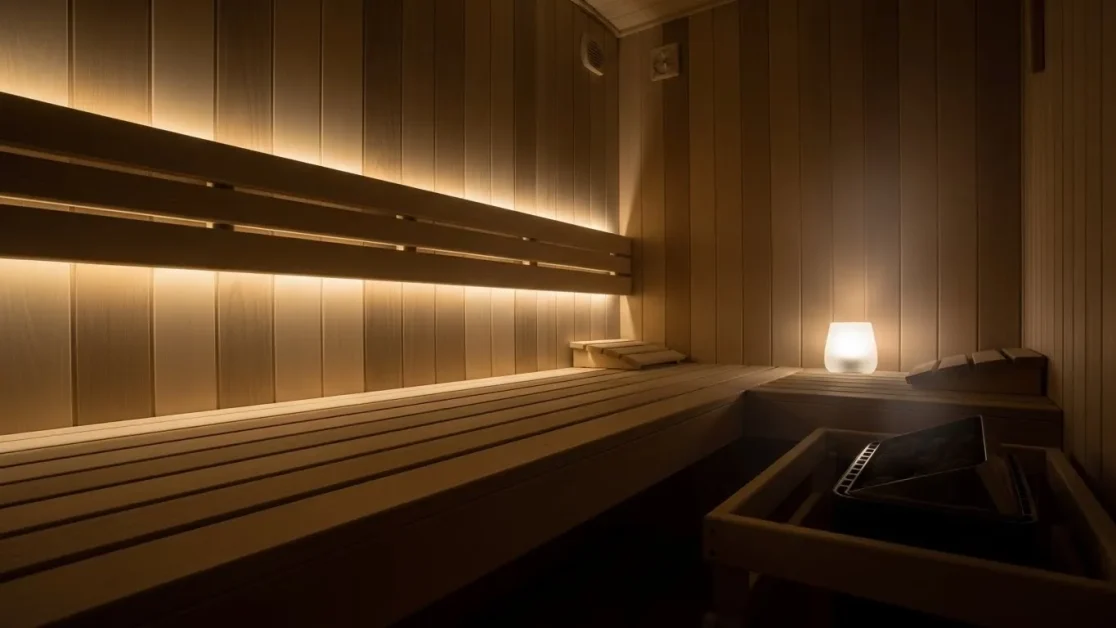
If you want inspiration for lighting placement and color, the guide on sauna lighting has tons of ideas that work well in tight spaces.
Backrests and comfort upgrades
Little touches make a big difference when the room is small.
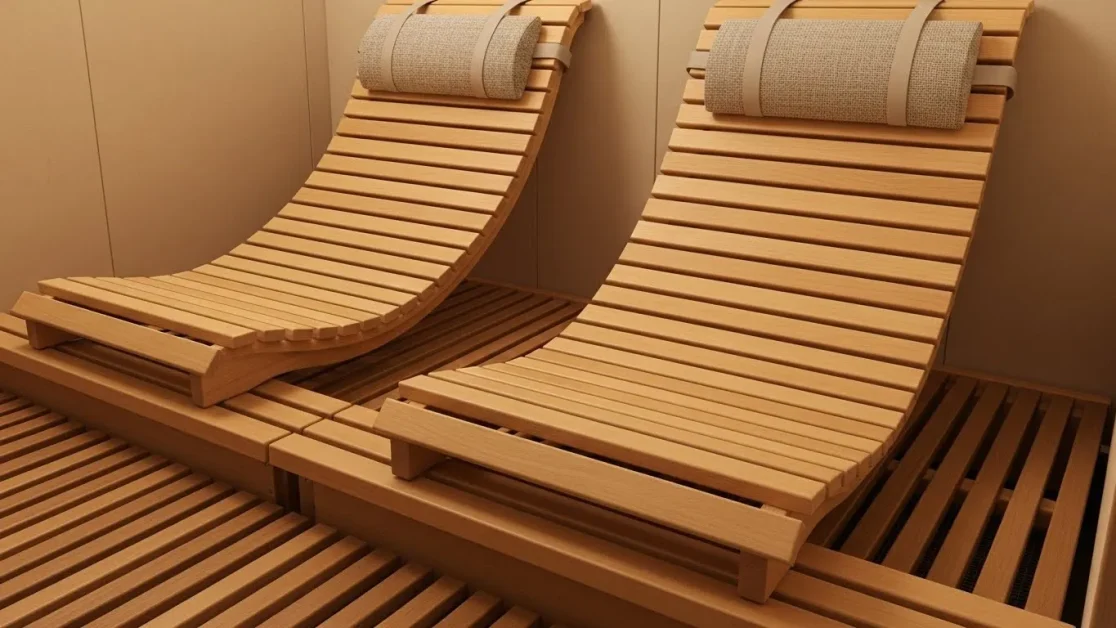
- Curved wooden backrests
- Detachable headrests
- A narrow footrest for better posture
- Wooden floor mats that stay cool and dry
These upgrades help you relax longer without feeling cramped.
Scent and sensory add-ons
Smell and sound change the whole experience.
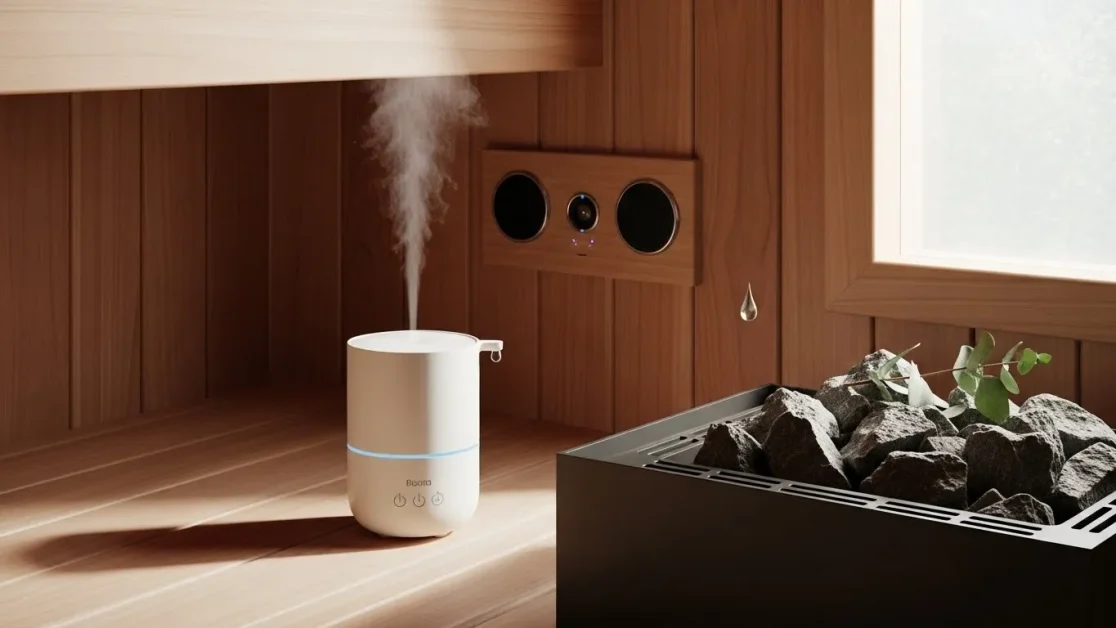
Try adding:
- A small essential oil cup near the heater
- Cedar or eucalyptus scents
- Gentle background speakers outside the sauna
A single drop of eucalyptus oil can make even a tiny nook feel like a spa.
Smart storage tricks
You don’t want clutter in a small sauna, so keep storage simple.
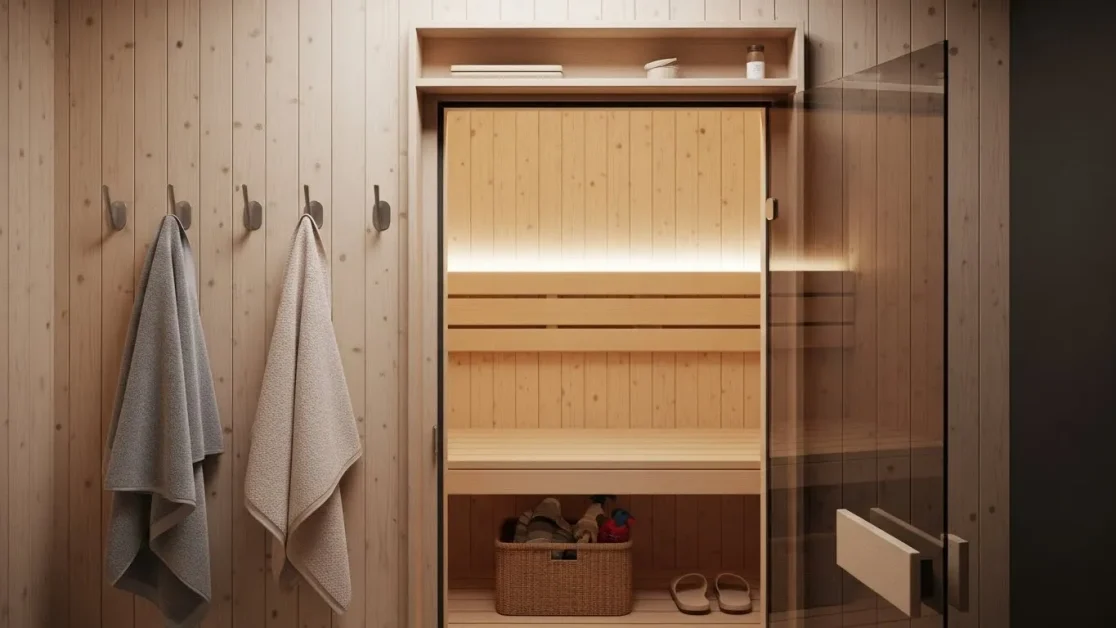
- Hooks for towels outside the door
- A slim shelf above the doorway
- A bench basket for sandals or cleaning supplies
Small spaces feel bigger when everything has a place.
Tech upgrades if you want them
A few modern touches can make your sauna easier to use.
- A waterproof sand timer
- A digital thermometer with humidity readings
- A voice controlled controller placed outside the sauna
- A simple Bluetooth speaker positioned just outside the door
If you like exploring creative sauna setups, the stories in sauna life show how different people personalize their sauna space with lighting, textures, and small add ons.
Care and Maintenance in a Small Indoor Sauna
A little cleaning and airflow go a long way in a small sauna nook. Keep the wood dry, air it out after every session, and give it a light monthly refresh. With simple maintenance, your indoor sauna stays warm, clean, and inviting for years.
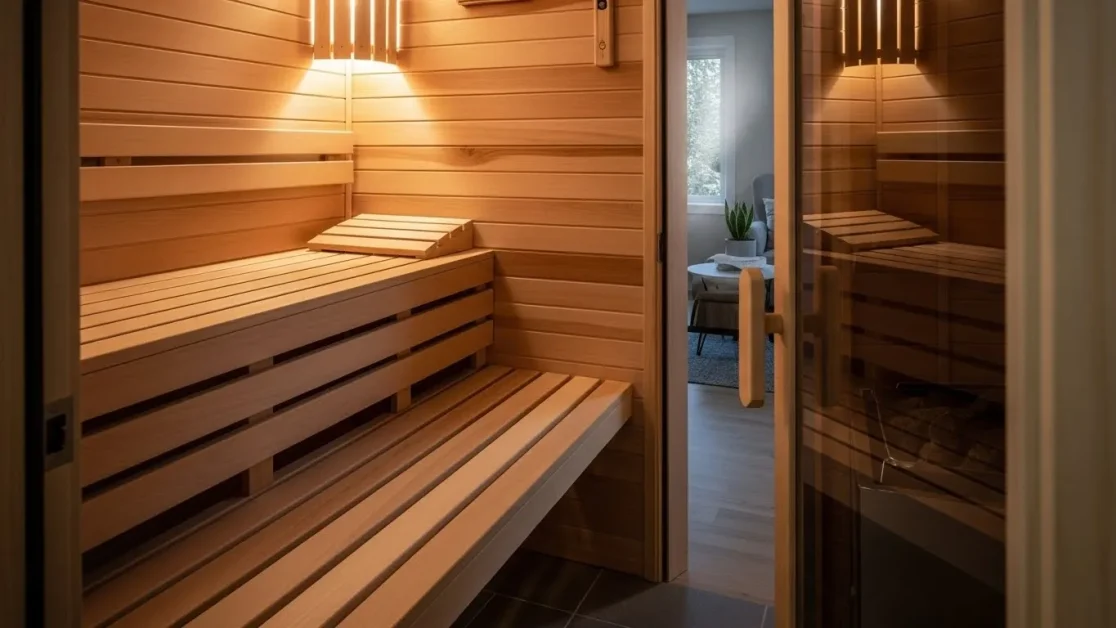
Keep the wood clean and dry
Sauna wood stays beautiful when it’s treated gently.
Do this after every session:
- Lift the benches or leave the door open so air can move
- Wipe sweat spots with a damp cloth
- Let the room cool naturally before closing it
Skip harsh cleaners. Mild water and a soft brush handle almost everything.
Airing out your sauna
Good airflow is a big part of sauna health, especially indoors.
Right after your session:
- Open the door for at least 20 to 30 minutes
- If you have a bathroom fan or window nearby, use it
- Let the benches breathe so moisture doesn’t trap underneath
It takes almost no time but prevents most long term issues.
Deep cleaning once a month
A quick monthly refresh keeps everything looking new.
- Brush benches with warm water and gentle soap
- Vacuum under the benches
- Check corners for moisture build up
- Tighten any loose screws or boards
If your sauna uses infrared panels and you want the safest way to clean them without damaging the surfaces, this step by step guide on how to clean an infrared sauna walks you through the right method.
Heater care
Your heater doesn’t need a lot, just periodic checks.
For traditional heaters:
- Rinse stones every few months
- Replace cracked stones to keep airflow even
- Make sure nothing touches the heater during use
For infrared panels:
- Wipe them gently with a dry or slightly damp cloth
- Keep dust off the edges for even heating
Moisture and odor control
Indoor saunas handle humidity well as long as you stay on top of routine drying.
Quick habits that help:
- Place towels on benches to catch sweat
- Avoid leaving water buckets inside when you’re done
- Check your vapor barrier seal once or twice a year
If the sauna ever smells musty, it usually means airflow wasn’t strong enough after a session.
When to Choose an Outdoor Sauna Instead
If you love convenience, quick heating, and small cozy spaces, your sauna nook is perfect. If you want more room, higher heat, or that classic backyard sauna experience, an outdoor model will feel more satisfying in the long run.
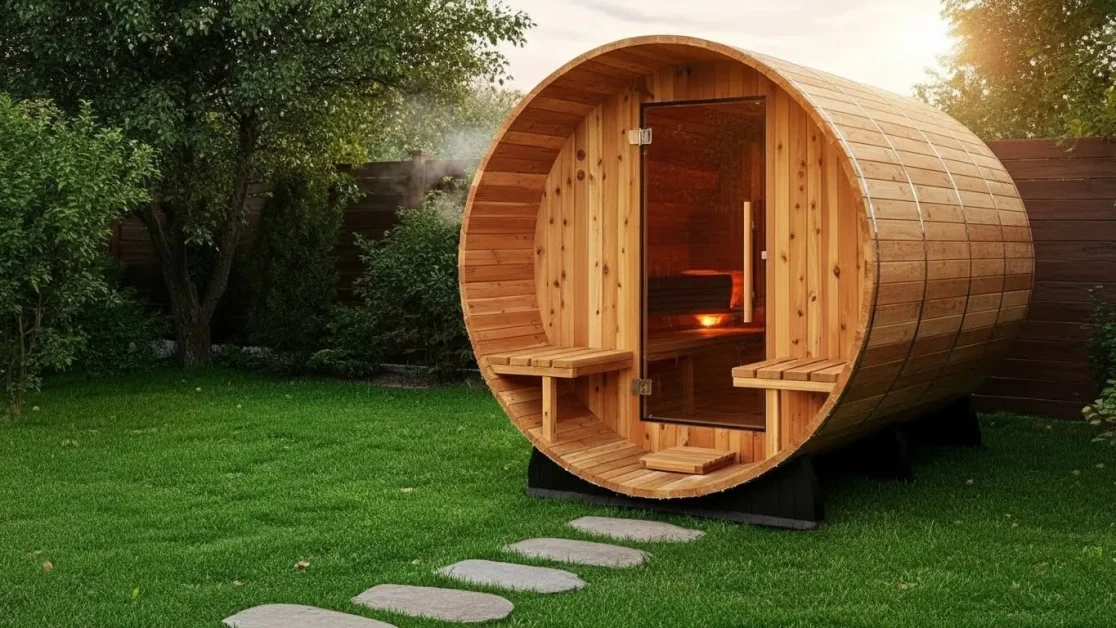
When an outdoor sauna is the better fit
If any of these sound familiar, an outdoor setup might actually give you a better experience.
- You want higher temps without worrying about heating nearby rooms
- You don’t have a good indoor location with electrical access
- You want more than two people to fit comfortably
- You prefer a traditional wood burning or high output heater
- You want the sauna experience to feel separate from the house
Outdoor models handle ventilation and heat expansion naturally, which makes them more forgiving for beginners.
Space and comfort differences
Outdoor saunas give you more freedom with layout and bench size.
Indoor nook limits:
- Usually 1 to 2 people
- Bench and heater clearance are tighter
- Ceiling height is fixed by your home
Outdoor advantages:
- Easily fits 4 to 6 people
- Higher ceilings make heat feel softer
- More flexibility with windows, doors, and different shapes
If you’re curious about a rustic style with great airflow, the guide on barrel sauna wood burning shows why curved outdoor designs stay popular.
Cost comparison
Indoor nooks tend to be cheaper because you’re using an existing structure. But outdoor builds aren’t always pricey if you choose a simple layout.
Indoor sauna costs:
- Lower initial build cost
- Lower operating cost (especially infrared)
- Uses existing insulation and walls
Outdoor sauna costs:
- Higher upfront cost because you’re building a small structure
- More lumber and weatherproofing
- Higher wattage heaters in many cases
For people who love the ritual of walking outside into the cold, the extra cost feels worth it.
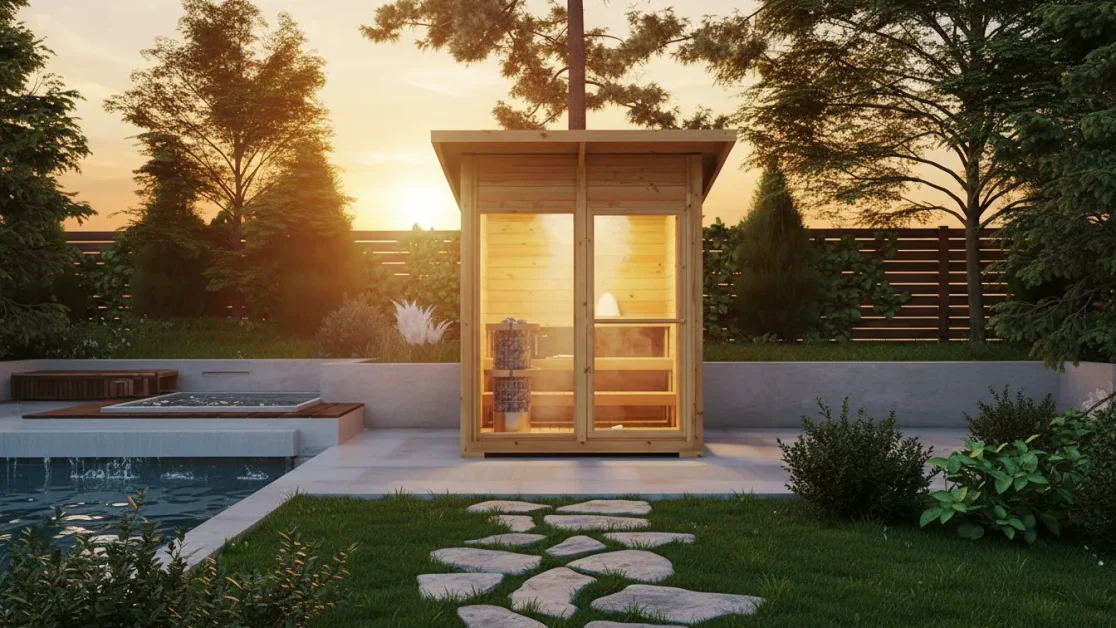
Privacy and vibe
Indoor saunas are incredibly convenient, but outdoor saunas create that classic spa feel.
Indoor vibe:
- Fast warmup
- Easy for daily use
- Cozy and compact
Outdoor vibe:
- Feels like a getaway
- Beautiful in cold weather
- Ideal for small gatherings
When to stick with an indoor nook
An indoor sauna still wins if:
- You’re working with a tight budget
- You only need space for one or two people
- You want low maintenance
- You prefer infrared or gentler heat
- You don’t want to build a full separate structure
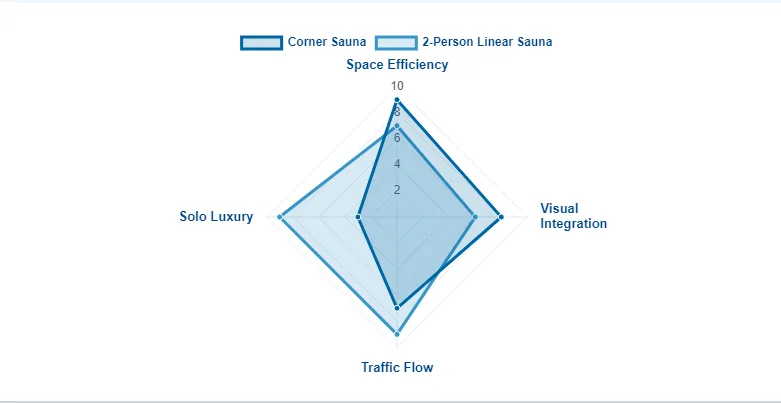
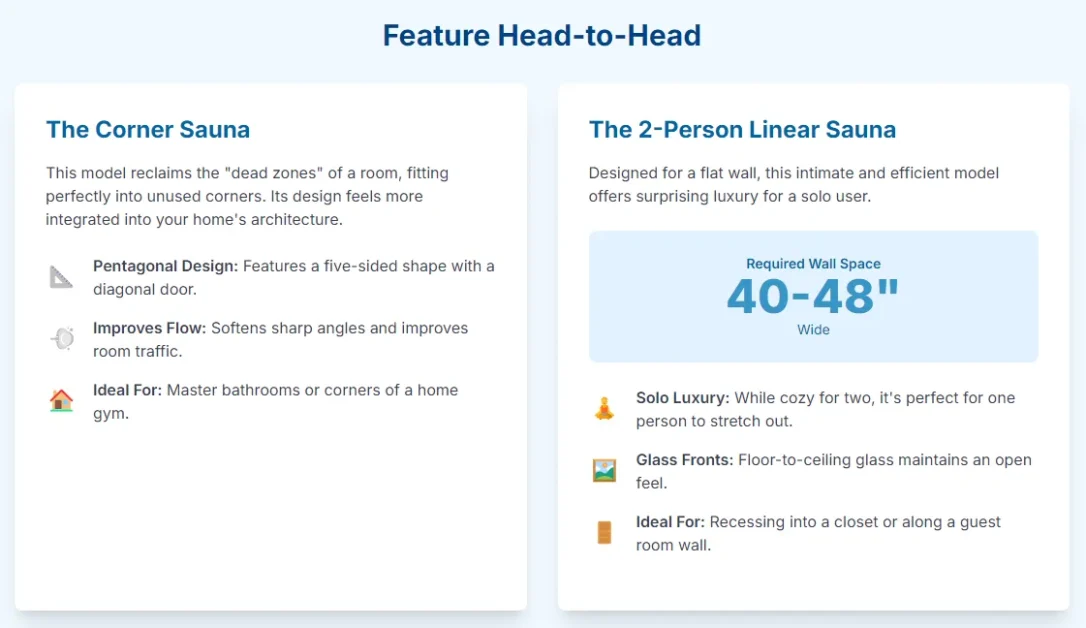
The Space-Saving Heroes: 2-Person & Corner Models
When you are working with limited square footage, standard boxy saunas can feel imposing. To create a nook that feels like a retreat rather than a storage locker, you need to choose a footprint that works with your room’s geometry, not against it. This is where 2-person and corner models shine.
FAQs
Can I put a sauna in a closet?
Yes, many compact sauna nooks are built inside unused walk in closets as long as ventilation, electrical access, and moisture control are handled properly.
Is infrared or traditional better for small spaces?
Infrared is usually easier for tight indoor spaces because it runs cooler and needs less ventilation.
How long should a sauna session last?
Most beginners start with 10 to 15 minute sessions before slowly increasing over time.
Can I build a sauna myself?
Yes, many homeowners build DIY indoor saunas successfully with proper planning, safe electrical work, and solid ventilation.
What wood should never be used in a sauna?
Avoid treated lumber and woods with heavy sap because they can release odors or become uncomfortable under high heat.
Does a sauna increase home value?
A well built indoor sauna can improve home appeal, especially in wellness focused or luxury style homes.
Do I need ventilation in an infrared sauna?
Yes. Even infrared saunas need some airflow for comfort and moisture control.
Can I use a sauna every day?
Many regular sauna users enjoy daily sessions, but hydration and session length matter.