

How to Clean an Infrared Sauna Safely

Clean an infrared sauna by powering it down, letting every surface cool, removing loose debris, and using only the methods approved for its wood, emitters, controls, glass, floor, and ventilation. The exact manufacturer manual takes priority because materials and heater designs differ.
This page covers cleaning and maintenance only. For operation and safety, return to the infrared sauna guide.

Before Cleaning
- Turn the sauna off and unplug it if the manual directs.
- Wait until emitters, guards, lamps, benches, controls, and other surfaces are completely cool.
- Remove towels, liners, cushions, accessories, and floor mats.
- Inspect cords, plugs, controls, sensors, guards, and emitters. Do not continue cleaning or using equipment that is damaged or wet internally.
After Each Use
- Remove damp textiles and wash them separately.
- Blot or wipe visible perspiration with a clean, slightly damp cloth.
- Allow the interior to air-dry under the manufacturer’s ventilation instructions.
- Do not leave standing water, saturated towels, or cleaning residue inside the cabin.
Cleaning Wood Benches and Walls
Start with a soft cloth or nonabrasive brush and a small amount of water. If the manual permits a cleaner, dilute and apply it exactly as directed. Work with the grain, avoid soaking the wood, and remove residue with a clean damp cloth.
Do not automatically use bleach, ammonia, strong fragrance, essential oils, steam cleaners, pressure washing, abrasive pads, or a heavy furniture finish. Heat can intensify residues and odors, and excess moisture can stain, swell, or warp wood.
Cleaning Emitters and Guards
Never spray liquid directly onto a heater, lamp, panel, guard, sensor, connector, or control. Once the sauna is cool and de-energized, remove surface dust only by the method in the manual—often a dry microfiber cloth, soft brush, or carefully controlled vacuum attachment.
Do not open heater housings, remove guards, or use liquid behind panels. Contact the manufacturer for staining, cracks, looseness, unusual odor, a cold emitter, an error code, or debris that cannot be reached safely.
Glass, Floor, and High-Touch Surfaces
- Use a glass cleaner only if it is compatible with the door, seals, adjacent wood, and manufacturer instructions. Apply it to the cloth rather than spraying toward electronics.
- Vacuum or sweep the floor first, then damp-clean it according to the floor material.
- Wipe handles, control surrounds, and accessories without letting liquid enter seams or openings.
- Keep the floor dry and free of residue that could cause a slip.
Ventilation and Airflow
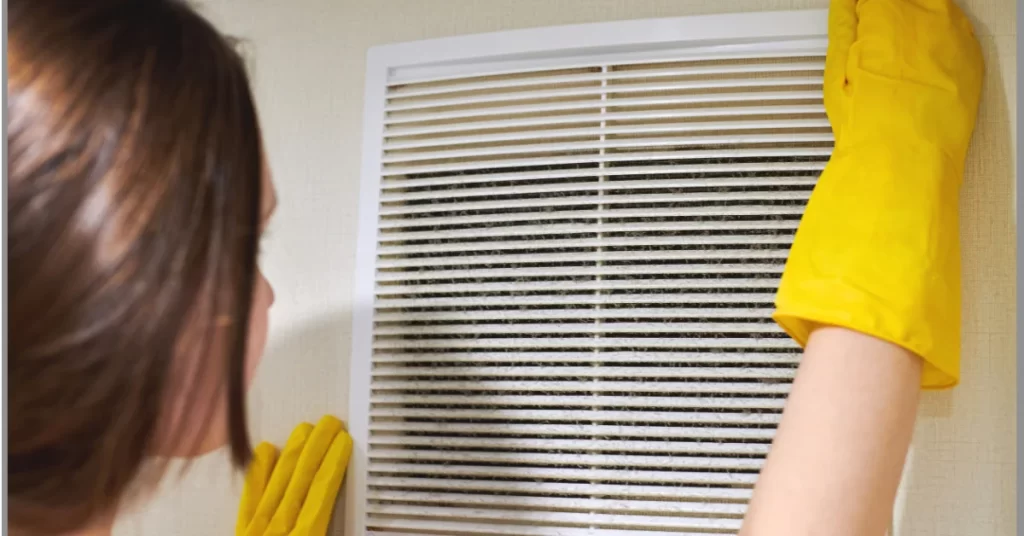
Inspect accessible vents for lint and dust. Clean grilles with the sauna off, using a soft brush or vacuum method the manual permits. Do not block, tape over, resize, or relocate ventilation in an attempt to increase heat.
How Often Should You Deep Clean?
There is no universal monthly schedule. Frequency depends on use, number of bathers, perspiration, textiles, pets, dust, room humidity, and the manufacturer’s maintenance plan. Deep-clean when residue, odor, visible soil, or the manual’s service interval indicates it—without saturating or sanding the interior unnecessarily.
Odor, Mold, or Persistent Staining
A persistent musty odor, visible growth, repeated dampness, water intrusion, or staining behind panels needs investigation, not fragrance. Stop use if moisture may have reached wiring or heaters. Correct the moisture source and obtain manufacturer or qualified remediation advice before aggressive cleaning.
Maintenance Checklist
- Interior dry and free of damp textiles
- Door and seals clean and operating normally
- Vents unobstructed
- Emitters, guards, sensors, and controls undamaged
- Cord, plug, and outlet free of heat damage or looseness
- No unexplained odor, moisture, sparking, errors, or repeated breaker trips
When in doubt, stop using the sauna and contact its manufacturer. Cleaning should protect the equipment and indoor environment—not become an electrical or material-damage risk.