Infrared Sauna Guide: How It Works, Benefits, Risks & Buying

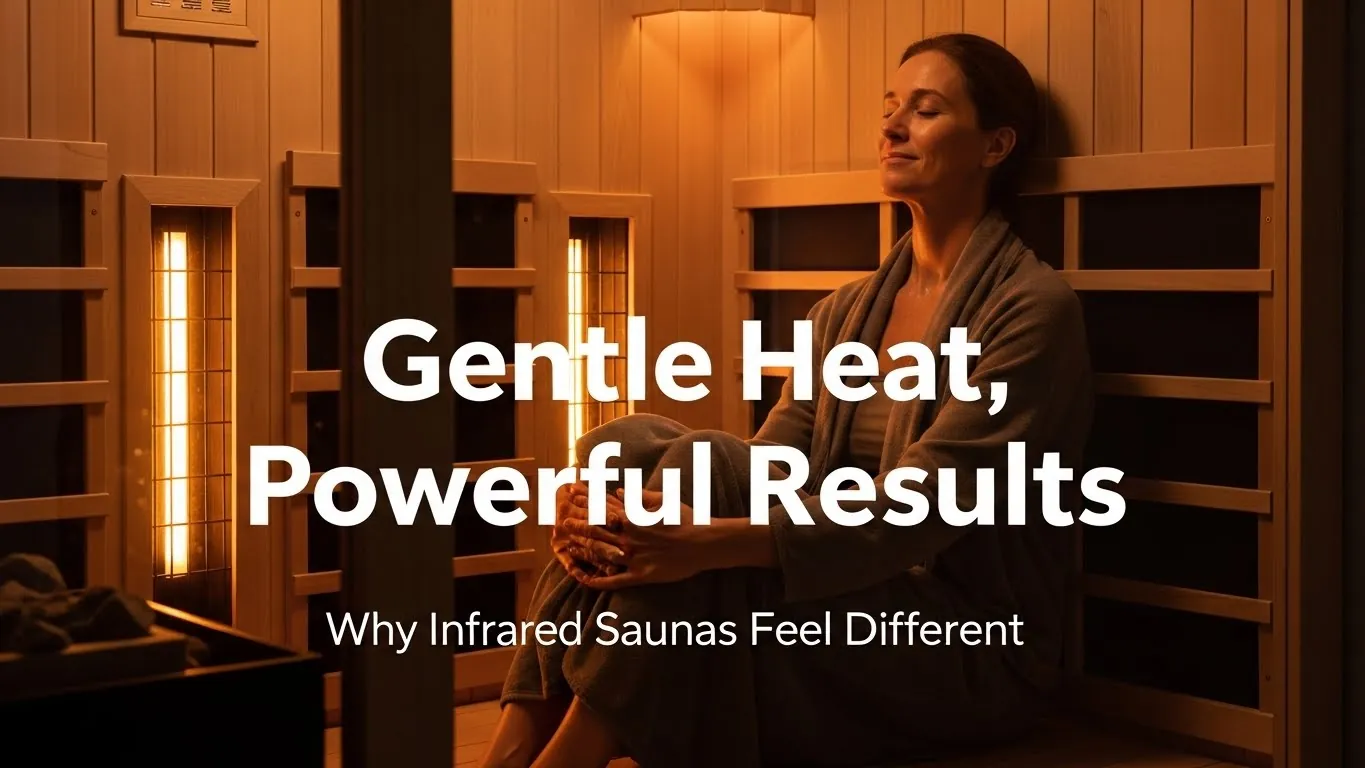
An infrared sauna uses electrically powered emitters to deliver radiant infrared energy while the cabin air is generally cooler than in a traditional hot-rock sauna. It still exposes the body to heat, so the practical benefits, limitations, and heat-safety precautions matter more than claims about a “special” wavelength.
This is the main infrared-sauna hub. Use it to understand the technology, compare formats, choose a unit, and reach the dedicated guides on benefits and evidence, risks, wavelength types, and troubleshooting.

What an Infrared Sauna Is
Infrared is non-ionizing electromagnetic radiation associated with radiant heat. In an infrared sauna, panels or lamps emit energy that is absorbed at the skin and converted to heat. The cabin air, benches, and walls also warm during operation.
That is different from a traditional sauna, where a heater and stones primarily warm the room air and allow brief humidity changes when water is added to approved stones. Neither design is automatically “healthier.” Comfort, construction, heater coverage, controls, and safe use usually matter more than the label.
Near, Mid, Far, and Full-Spectrum Systems
Manufacturers commonly describe emitters as near infrared, mid infrared, far infrared, or full spectrum. These labels refer to wavelength ranges, but product boundaries and measurement methods are not always presented consistently. A full-spectrum label does not establish that the sauna produces superior clinical outcomes.
- Near infrared: shorter infrared wavelengths, often produced by lamps or targeted emitters.
- Mid infrared: an intermediate range that is less commonly isolated in consumer cabins.
- Far infrared: longer infrared wavelengths used by many panel-based cabins and blankets.
- Full spectrum: a marketing and engineering description for systems intended to emit across multiple infrared bands.
The infrared-sauna types guide explains what these distinctions can—and cannot—tell a buyer.
Benefits: What the Evidence Actually Shows
Heat exposure can produce sweating, a temporary rise in heart rate, changes in skin blood flow, and a feeling of relaxation. Small infrared-sauna studies have explored exercise recovery and medically supervised heat programs, but they do not prove that a home infrared sauna treats disease or is superior to other sauna types.
A systematic review of repeated dry-sauna studies found potential benefits but also emphasized that most studies were small, interventions varied, and evidence was insufficient to prescribe a specific sauna type, duration, or frequency for a clinical condition.
Sweating is primarily temperature regulation. It does not establish that a sauna “detoxifies” the body, burns body fat, cures pain, boosts immunity, regulates hormones, or treats skin or cardiovascular disease. See the evidence-based benefits guide for claim-by-claim context.
Risks and Who Should Be Careful
Infrared saunas can cause overheating, dehydration, lightheadedness, low blood pressure, burns from hot surfaces, and falls. Alcohol, illness, impaired heat sensation, and medicines that affect sweating, blood pressure, alertness, or temperature regulation can increase risk.
People who are pregnant, undergoing cancer treatment, managing unstable cardiovascular disease, using implanted medical devices, or living with a condition that changes heat tolerance should ask their treating clinician before use. The dedicated infrared-sauna risks guide covers contraindications and warning signs without presenting sauna as treatment.
How to Choose an Infrared Sauna
- Electrical requirements: Match the model’s voltage, circuit, plug, grounding, and installation instructions. Use qualified electrical help when required.
- Safety certification: Ask for the exact model’s listing or test documentation, not a general company claim.
- Emitter layout: Check coverage around the seated body, guarded hot surfaces, control and sensor positions, and whether panels can be switched independently.
- Space and placement: Confirm clearances, indoor/outdoor rating, ambient-temperature limits, ventilation, floor loading, and service access.
- EMF claims: “Low EMF” has no universal consumer definition. Request measurements by field type, unit, distance, operating condition, and test method. See the low-EMF buying guide.
- Support: Download the manual before purchase and review warranty exclusions, replacement parts, controller support, and return terms.
Basic Use
- Read the exact model manual and confirm that the unit, outlet, cords, controls, and emitters appear undamaged.
- Preheat only as the manufacturer directs. Infrared heat may be noticeable before the displayed cabin temperature resembles a traditional sauna.
- Start conservatively, keep the door operable, and never bypass a sensor, thermostat, timer, overheat control, or intended vent.
- Leave immediately if you feel dizzy, faint, confused, nauseated, unusually weak, short of breath, or otherwise unwell.
- Let the cabin cool, then clean it using the manufacturer-compatible cleaning guide.
There is no universal safe session length or water quantity for every person. Use the unit manual, your clinician’s advice when relevant, and the broader sauna safety guide.
Infrared Sauna Resource Map
- Infrared sauna benefits and evidence
- Near, mid, far, and full-spectrum systems
- Risks, contraindications, and warning signs
- Understanding low-EMF claims
- Infrared sauna not getting hot enough
- Infrared sauna before or after a workout
- Infrared sauna vs. steam room
- Infrared sauna blanket guide