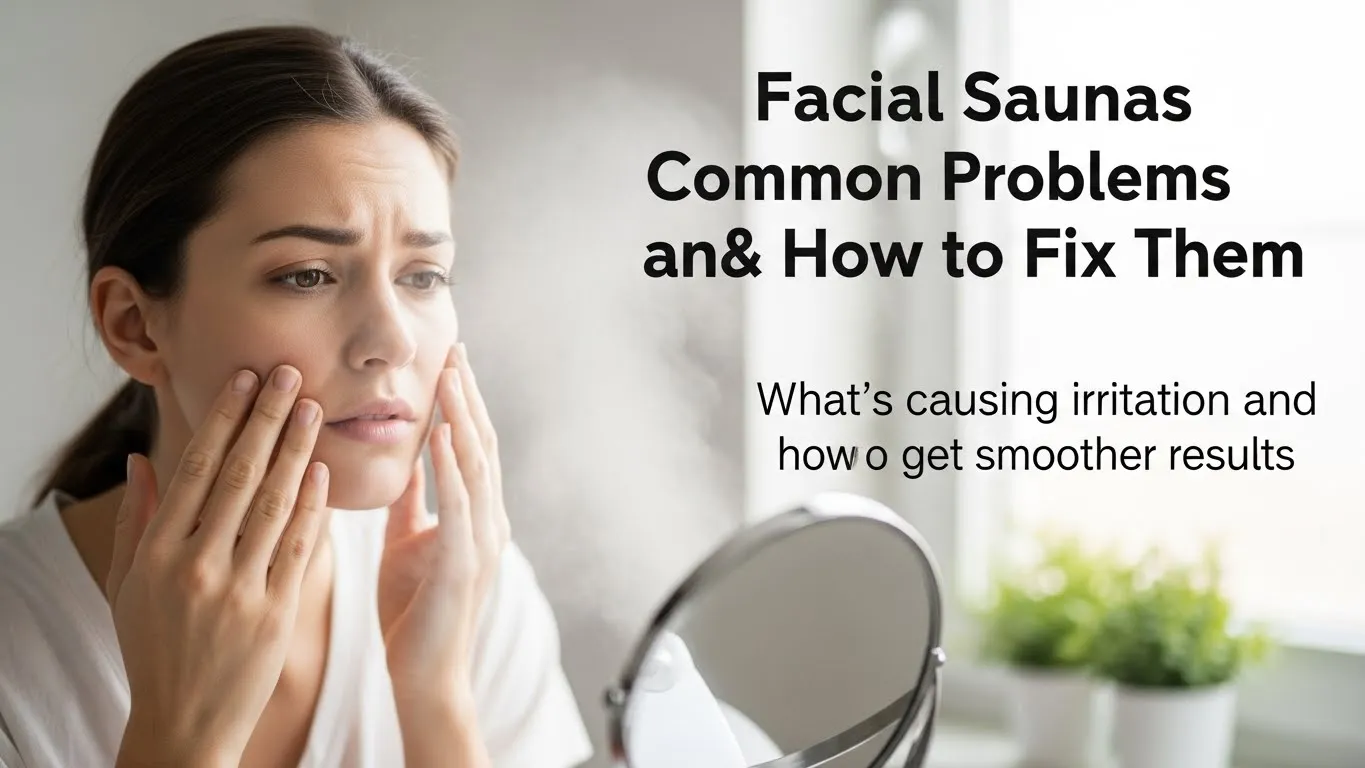
Facial Saunas Common Problems and How to Fix Them

Facial saunas often cause dryness, redness, or breakouts when the steam is too hot or used too often. You can fix most issues by lowering the steam temperature, keeping sessions short, and applying a gentle moisturizer right after. Sticking to plain water and avoiding strong add-ins helps protect sensitive skin from irritation.
Facial steaming can be a great tool when you treat it gently. Most common problems come from too much heat or too many sessions, and once you fix that, your skin usually bounces back quickly. Try shorter sessions, stick to plain water, and moisturize right away. Your face will thank you.
Facial steaming feels simple until your skin starts acting up. One day it gives you a great glow, then suddenly your cheeks look red or tight. If you’ve been dealing with dryness, irritation, or breakouts after a steam session, you’re not alone. Most people run into the same problems, and the good news is they’re all easy to fix.
What a Facial Sauna Actually Does
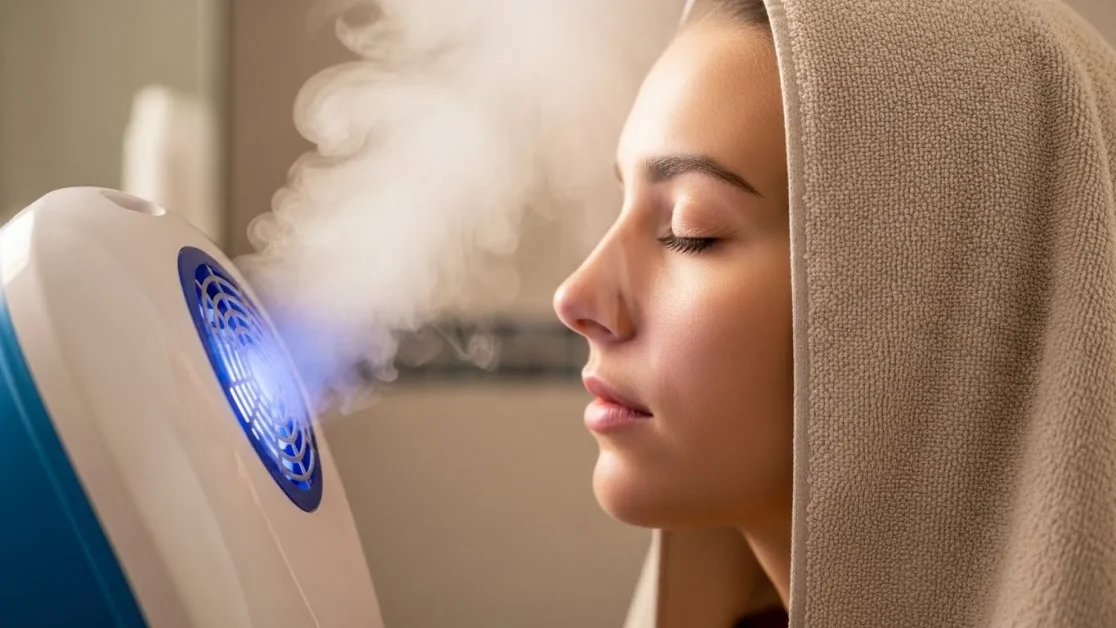
A facial sauna works by warming your skin with gentle steam. The heat loosens buildup inside your pores and softens the top layer of skin, which makes cleansing a lot easier. If you want a deeper look at how steam lifts dirt from your pores, check out how steam clears pores fast in this guide:
➡️ How Steam Clears Pores Fast
Most people steam for 5 to 10 minutes, then follow up with a quick rinse and moisturizer. It seems simple, but small mistakes can lead to big skin problems.
The Oversteam Test: A Quick Self-Check
- Your skin feels tight for more than 30 minutes after steaming
- Tiny bumps appear within 24 hours
- You need heavy moisturizer afterward
- Your cheeks stay flushed longer than usual
- You steam because it feels relaxing, not because your skin needs it
If two or more match your experience, lower frequency and shorten your sessions.
Common Problems People Run Into
Here are the issues people complain about the most:
- Skin feeling dry or tight after steaming
- Red patches or irritation
- Surprise breakouts
- Skin becoming more oily than usual
- Eczema or sensitive areas getting worse
- Feeling “overheated” or lightheaded
A lot of these come from steam that’s too hot or sessions that last a bit too long. Heat sensitivity is a real thing, and the way your skin reacts isn’t the same as someone else’s. If you’re curious how heat affects the body in general, this overview of heat exposure and its impact can help: ➡️ Sauna Heat Impact
Real-World Steaming Patterns
Week 1 vs Week 3
The Honeymoon Phase
Result: Skin looks softer and brighter. Everything seems perfect!
Silent Damage Builds
What’s happening: Moisture loss slowly builds beneath the surface. You might not notice it yet.
The Breaking Point
Visible damage: Redness or breakouts appear from frequent steaming. The barrier is compromised.
Why This Pattern Matters
This pattern explains delayed irritation. The damage isn’t instant—it accumulates over time, making it easy to miss the warning signs until it’s too late.
Why These Problems Happen
The main reason steaming causes trouble is because hot air pulls moisture out of your skin pretty quickly. If the session goes longer or hotter than your skin can handle, that dryness shows up fast.
Other reasons steaming goes wrong:
- Using strong essential oils in the water
- Steaming daily or for long sessions
- Using steam when you already have irritated skin
- Not moisturizing after
Steam opens pores, but it also weakens your skin barrier for a moment. If anything harsh touches your skin after steaming, irritation shows up almost immediately.
Dermatology Breakdown: What Heat Does to Your Skin Barrier
This is the part most posts skip, but it’s the reason steaming must be gentle.
What the heat actually does:
- Softens corneocytes (top skin cells)
- Increases water loss from the skin
- Weakens the barrier temporarily
- Boosts product absorption because the barrier isn’t as tight
This explains why your skin feels amazing right after steaming, but irritated if you skip post-care.
What to Do Right After Steaming
Aftercare makes or breaks your results. When your skin is warm and soft, it needs gentle products only. Try:
- Splashing with cool water
- Using a calming toner or hydrating serum
- Applying a light moisturizer
- Skipping exfoliants for at least 12 hours
If you like exfoliating, it’s better to do it separately from your steam day. Here’s a helpful look at the connection between saunas and exfoliation:
➡️ Sauna and Exfoliation
Problem-to-Fix Matrix
A quick guide so you can fix problems fast.
| Problem | Why It Happens | Easy Fix |
|---|---|---|
| Dryness | Barrier stress and moisture loss | Shorter sessions, hydrate after |
| Redness | Steam too hot or too close | Pull back, reduce heat |
| Breakouts | Oil pushed to the surface | Cleanse right after |
| Eczema flare | Heat triggers sensitivity | Avoid steaming until healed |
| Tightness | Barrier weakened | Add a hydrating serum |
This tiny table saves users from skimming long paragraphs.
How Often You Should Steam Your Face
Most people only need steaming once or twice a week. Here’s a simple breakdown:
- Oily skin: 2 times weekly
- Dry skin: 1 time weekly
- Combination: once weekly or every 10 days
- Sensitive or eczema-prone: once every 2 weeks, if tolerated
Oversteaming is the number one cause of dryness and irritation. If your skin feels tight afterward, take a break.
If you want to understand how heat exposure adds up and when it becomes too much, you can check this out:
➡️ Sauna Temperature Guide
What to Add to the Steam
(And What to Avoid)
Safe & Simple
Plain water is always the safest. Your skin doesn’t need fancy add-ins to get results.
Safe Additions
If your skin tolerates them:
What to Avoid
Why avoid these? These ingredients can irritate your eyes, nose, or skin once the steam spreads them into the air.
Special Cases: Eczema, Acne, and Sensitive Skin
Steam can be too much for eczema-prone skin. The heat increases inflammation, which can make flare-ups worse. If you tend to break out easily, steaming can also kick up new bumps by pushing oil through open pores.
Anyone dealing with acne should be cautious, since heat can trigger more oil production. This breakdown explains why heat sometimes makes breakouts worse:
➡️ Does Sauna Make Acne Worse?
For eczema or sensitive skin, patch-test steam sessions and keep them very short. If irritation shows up, stop steaming completely.
Benefits of Proper Facial Steaming
When you do it right, steaming feels amazing and gives your skin a warm, healthy glow. Some of the perks include:
- Softer skin
- Easier blackhead removal
- Better product absorption
- Brighter tone
- Relaxed facial muscles
Just remember that moderation matters way more than temperature or time.
The Post-Steam Cooling Routine
If you want better results with no irritation, try this cooling routine:
- Cool water splash
- Light hydrating serum
- Soothing cream
- Optional aloe if skin feels warm
- No retinol or exfoliants until tomorrow
Simple, gentle steps go a long way.
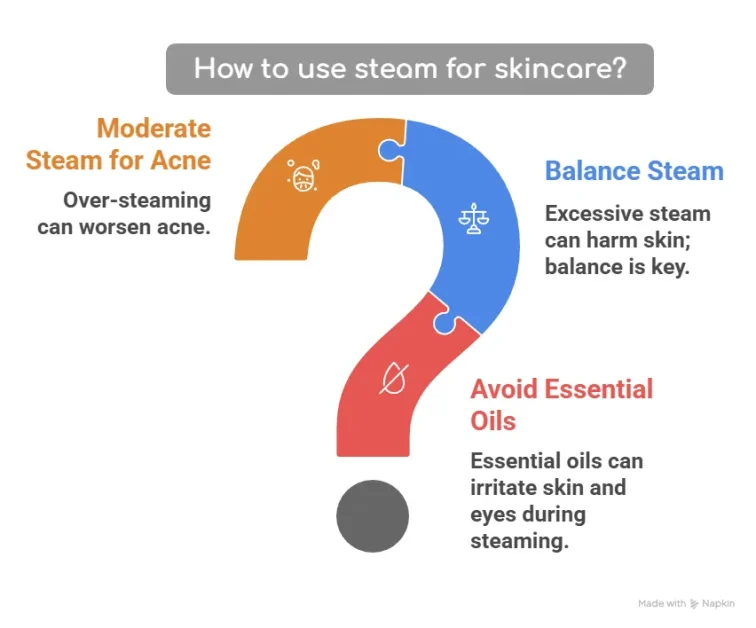
Myth vs Fact
Myth: Essential oils make steaming better.
Fact: They often irritate your skin and eyes.
Myth: More steam means better results.
Fact: Your skin needs balance, not more heat.
Myth: Steam cures acne.
Fact: It can actually make acne worse if you overdo it.
If you’re comparing steam to infrared heat or wondering which is gentler, this breakdown clears it up:
➡️ Infrared vs Steam Sauna Benefits
Tips
Keeping steam sessions simple is the best way to get clear, glowing skin. Use plain water, keep your face at a comfortable distance, and moisturize right after. Your skin will tell you if it needs more or less steam, so pay attention to those small changes.
And if you ever feel dizzy or overheated, take a quick break. Even facial steam can get intense. Learn why overheating happens with this safety guide: ➡️ Sauna Safety 101
Facial Sauna Conair: What You Should Know
If you’re using a Conair facial sauna, treat it the same way you would any other steamer. The heat is gentle, but it can still dry out your skin if you sit too close or steam too long. Most people get the best results by keeping sessions under ten minutes and staying at least eight to ten inches away from the steam. Conair units warm up fast, so start farther back and move in only if your skin feels comfortable.
Facial Sauna System Basics
A facial sauna system is simply a steam device that warms your skin and loosens buildup inside your pores. Some systems come with nose attachments or adjustable steam levels, but the goal stays the same: soften your skin so cleansing is easier. Keep your setup simple, stick to plain water, and always moisturize afterward to protect your barrier.
Sauna and the Common Cold
Steam won’t cure a cold, but it can make you feel less congested for a little while. The warm air loosens mucus and helps you breathe easier. Just keep the heat comfortable and don’t steam if you feel dizzy or feverish. For cold relief, shorter sessions feel better than long ones.
Are Facial Saunas Good for Acne
Steam can help soften clogged pores, but it doesn’t treat acne on its own. If your breakouts are inflamed or cystic, too much heat can make them worse. The safest approach is to keep steam short, cleanse gently afterward, and avoid essential oils. If your skin gets more red or oily after steaming, cut back right away.
Sauna Complexion Effects
Steam gives your complexion a warm, temporary glow because heat brings more blood flow to the surface of your skin. The color fades once your skin cools down, but the hydration boost from your moisturizer sticks around longer. When you keep sessions short and gentle, your skin tone often looks brighter and softer for the rest of the day.
What to Do After Steaming Your Face
Your skin is more vulnerable right after steaming, so the products you use matter. Keep things light and calming. Try a cool water splash, a hydrating toner or serum, and a simple moisturizer. Skip anything strong like retinol or exfoliating acids for at least twelve hours. Your skin needs time to settle before you bring active ingredients back.
Steaming Your Face Every Day for 21 Days
Daily steaming sounds like a glow-up challenge, but in reality it’s too much for most people. Skin usually starts off fine, then slowly gets tight, dry, or breakout-prone as the barrier weakens. If you test a 21-day routine, watch for signs of overstress like redness or bumpiness. Most people feel better sticking to one or two sessions a week instead.
Disadvantages of Steaming Your Face
Steaming is great when it’s gentle, but going too hot or too long causes predictable problems. The heat dries out your skin, weakens your barrier, and can push oil to the surface, which may trigger breakouts. Sensitive skin types also flush faster and stay red longer. The easiest fix is moderation, plain water, and quick aftercare.
Is Sauna Good for Skin Eczema
People with eczema need to be extra careful with steam and heat. Even mild warmth can spike inflammation and cause a flare. If you try steaming at all, keep it under five minutes and stop the moment your skin feels tight or itchy. Most dermatologists recommend avoiding facial steam during active eczema flare-ups because the heat makes cracks in the barrier worse.
What to Add in Steam for the Face
You don’t need anything fancy to make steaming work. Plain water is safest and gentlest. If your skin handles botanicals well, chamomile, rose petals, mint, or a green tea bag can add a subtle calming effect. Skip essential oils completely. They spread through the steam and can sting your eyes or irritate your skin.
Benefits of Steaming Your Face
When done right, steaming softens the top layer of your skin, loosens debris inside your pores, and helps your moisturizer sink in better. It also relaxes facial muscles and gives you a temporary glow. The biggest benefit comes from pairing steam with simple hydration afterward so your skin stays calm and smooth instead of dried out.
Benefits of Steaming Your Face With Salt Water
Salt water sounds helpful, but it actually pulls moisture from your skin. While it may feel refreshing at first, it can leave your face tight and more irritated afterward. If you want minerals from salt, you’ll get a safer effect by using a hydrating serum after steaming instead of adding salt to the water.
Sauna Skin Before and After
Most people notice softer skin and a brighter complexion right after steaming. Once your skin cools, the glow fades, but you’re left with smoother texture if you moisturize well. Before steaming, your pores feel tighter and less flexible. After steaming, they’re softer and easier to clean. The key is keeping heat low enough that your skin looks fresh instead of flushed.
Facial Steaming Stats: What Most People Get Wrong
Quick data that shows why skin irritation is more common than you think.
steam too close to the device
feel dryness after the second week
break out when steaming more than twice weekly
use essential oils incorrectly in steam water
skip moisturizing right after steaming
feel irritation within the first 10 minutes of hot steam