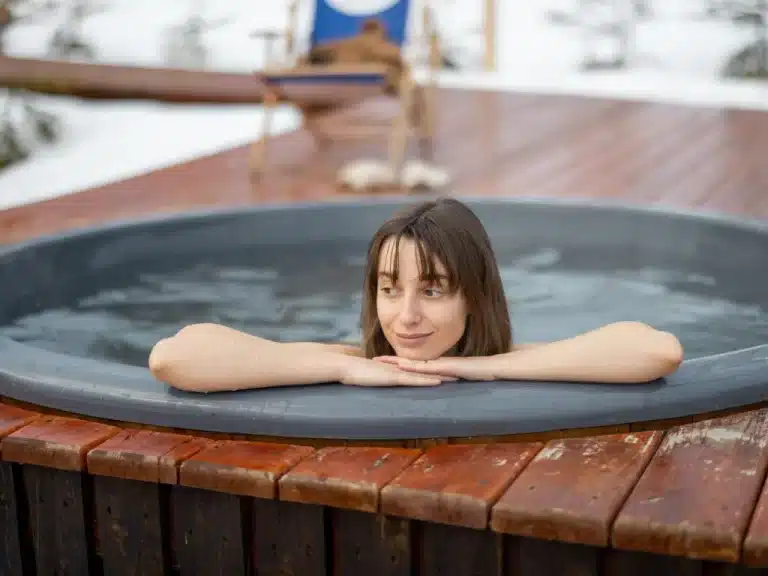

How to Keep Hot Tub Water Cool in Summer Heat

Hot tub water overheating during summer is a very common problem, especially during long heat waves.
The good news is that small adjustments usually make a big difference. Lowering the thermostat, running pumps overnight, improving shade, and venting the cover can keep your water much more comfortable without expensive upgrades.
Once you find the right summer routine for your backyard setup, your hot tub can stay relaxing all season long. For a broader seasonal checklist, see our guide to getting your hot tub ready for summer.
Why Hot Tub Water Gets Too Hot in Summer
Hot tub water usually overheats during summer because outside temperatures, pump heat, and trapped heat under the cover slowly raise the water temperature throughout the day.
Even if your heater barely runs, several things can still warm the water.
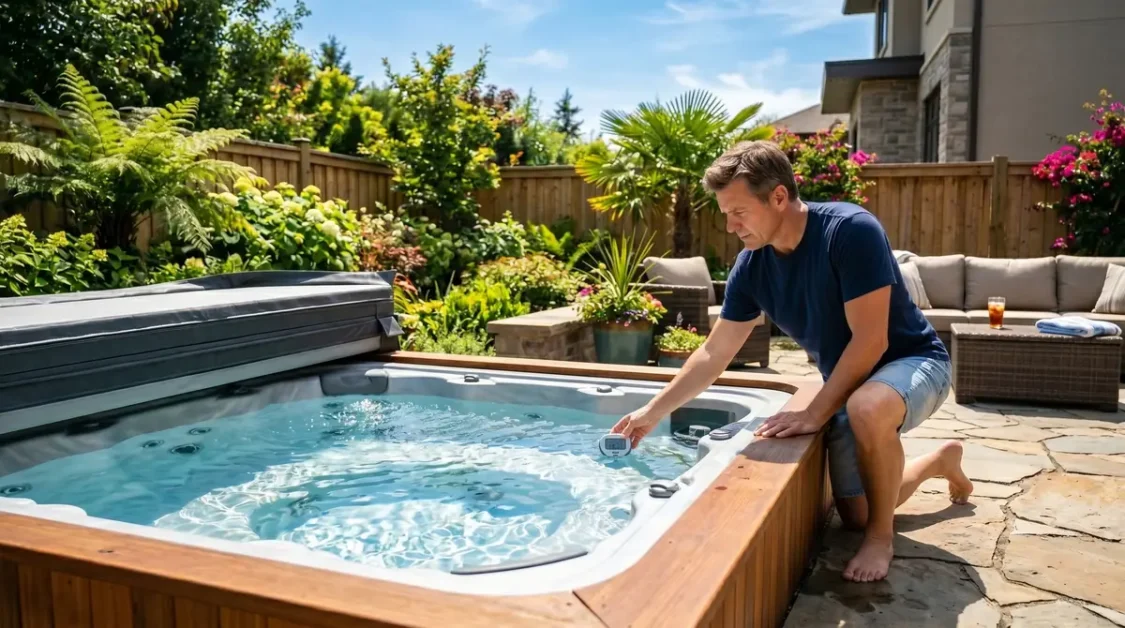
Hot weather raises water temperature naturally
When outdoor temperatures stay above 90°F, your spa shell and plumbing absorb heat all day long. That warmth transfers directly into the water.
This is especially common with:
- dark spa cabinets
- tubs sitting on concrete patios
- hot tubs exposed to afternoon sun
- fully insulated acrylic spas
Many owners notice the water keeps heating up even overnight during heat waves.
If you’re preparing your spa for seasonal weather changes, these seasonal hot tub care tips can help you avoid temperature swings throughout the year.
Your hot tub cover traps heat
Hot tub covers are designed to hold heat in during winter. In summer, they can work almost too well.
A tightly sealed insulated cover traps:
- water heat
- pump heat
- warm humid air
- solar heat buildup
That’s why many tubs feel much hotter after sitting covered all afternoon.
Pumps and filtration cycles create heat
This surprises a lot of new owners.
Your circulation pump naturally creates heat while moving water. Long daytime filtration cycles can slowly increase water temperature even when the heater is off.
Some hot tubs may rise 2°F to 5°F above the set temperature during extreme summer weather.
Direct sunlight makes overheating worse
A spa sitting in direct sun for 6 to 8 hours can heat up very quickly.
Black covers, dark acrylic shells, and enclosed patio spaces often make the problem even worse because they absorb and trap more heat.
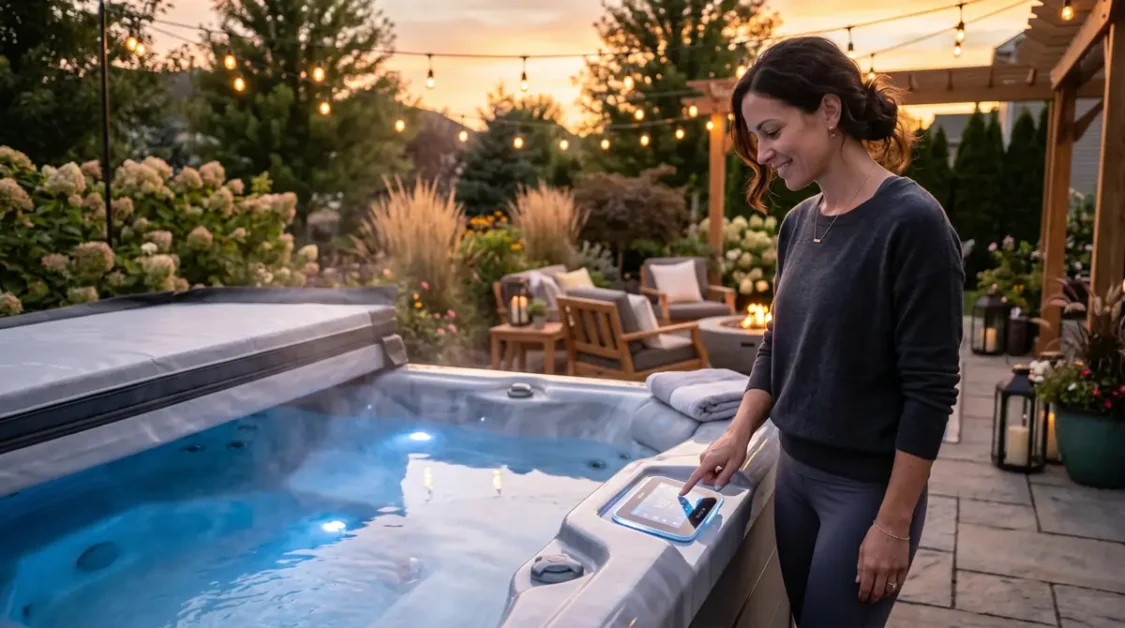
What Temperature Should a Hot Tub Be in Summer?
Most people find a summer hot tub temperature between 85°F and 95°F much more comfortable during hot weather.
For light hydrotherapy or evening relaxation:
- 95°F to 100°F works well for many owners
During extreme heat:
- avoid soaking near 104°F
- lower settings help prevent overheating and dehydration
Many hot tub owners treat their spa more like a mini plunge pool during summer. Cooler water can still feel relaxing, especially after yard work, workouts, or long days outside.
If you’re unsure what temperature feels best for your setup, this best hot tub temperature guide explains ideal ranges for different seasons and situations.
Quick summer temperature guide
| Use Type | Recommended Temperature |
|---|---|
| Cooling soak | 85°F to 92°F |
| Relaxation soak | 95°F to 100°F |
| Traditional hot soak | 101°F to 104°F |
| Extreme heat days | Under 100°F recommended |
How to Keep Hot Tub Water Cool in Summer Heat
Most overheating problems can be controlled with a few simple changes to your daily routine.
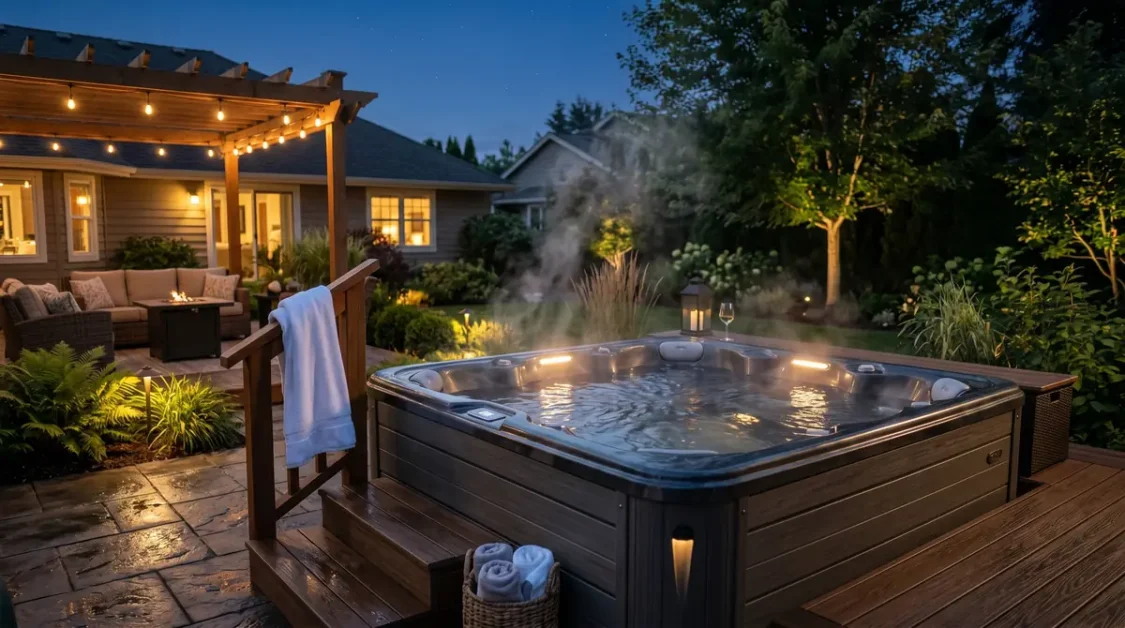
Lower the thermostat setting
Start by lowering the spa temperature several degrees below your normal setting.
For example:
- if you usually keep it at 102°F, try 95°F during summer
Keep in mind:
- water often rises above the set temperature naturally in hot weather
A lower setting gives the spa more room before overheating.
Run filtration cycles overnight
This is one of the best real-world cooling tricks.
Nighttime air is cooler, so running the pumps overnight helps release heat instead of building it up during the afternoon.
Many owners switch their filtration schedule to:
- late evening
- early morning
- overnight only
This can noticeably reduce daytime overheating.
If you want to lower operating costs while managing summer heat, these energy and water saving tips for hot tubs are worth using too.
Open the cover during cool evenings
A partially opened cover allows trapped heat to escape.
Try opening the cover:
- after sunset
- early morning
- during cooler nighttime temperatures
A common mistake hot tub owners make is keeping the spa sealed tightly 24 hours a day during summer.
Just make sure:
- children and pets stay away
- the spa remains supervised
- debris cannot easily blow into the water
Keep the hot tub shaded
Shade makes a huge difference.
Good options include:
- spa umbrellas
- pergolas
- shade sails
- patio covers
- privacy walls
- trees with filtered shade
Even partial shade can help slow heat buildup during the hottest hours.
Reduce unnecessary jet use
Jets create friction and motor heat. Running them all afternoon can slowly warm the water.
During heat waves:
- use jets only when soaking
- shorten massage cycles
- avoid long daytime circulation runs
Use summer or economy mode
Some modern spas include:
- summer mode
- economy mode
- sleep mode
These settings reduce heater activity and often limit daytime heating cycles.
Check your owner’s manual to see if your spa includes these features.
Add cool water slowly
If your water is getting uncomfortable, adding a small amount of fresh cool water can help lower the temperature gradually.
Avoid:
- dumping large amounts of icy water in quickly
- sudden temperature changes
Slow adjustments are safer for pumps, heaters, and acrylic shells.
How to Cool Down a Hot Tub Quickly
Sometimes the water gets too hot fast, especially during heat waves.
These methods usually work quickest.
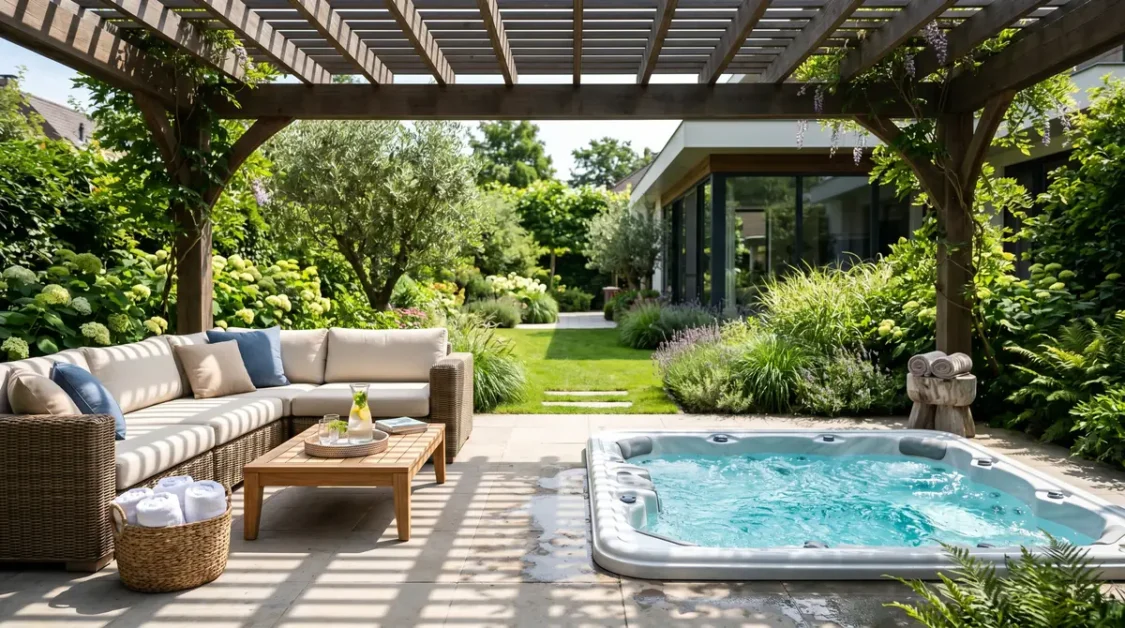
Partially drain and refill the tub
A partial drain is one of the fastest safe cooling methods.
Steps:
- Drain about 25% to 40% of the water
- Refill with cool fresh water
- Run pumps for circulation
- Retest temperature after 20 to 30 minutes
This works especially well when the water climbs above 104°F unexpectedly.
Remove the cover temporarily
Removing the cover lets trapped heat escape quickly.
Nighttime cooling works best because:
- outdoor temperatures drop
- direct sunlight disappears
- evaporation helps cool the water
Use cool hose water carefully
Fresh cool water can help reduce temperature safely if added slowly.
Avoid:
- freezing cold water shocks
- rapid temperature swings
- overfilling the spa
Can you put ice in a hot tub?
Yes, but only in moderation.
A few bags of ice can temporarily cool the water for short summer soaks. Just don’t overdo it.
Too much ice at once can:
- stress equipment
- create sudden shell temperature changes
- confuse temperature sensors
If you’re considering this method, this guide explains when it’s safe to put ice in your hot tub.
Should You Leave Your Hot Tub Cover Off in Summer?
Leaving the cover off for short periods can help release heat, especially at night.
But leaving it uncovered all day usually creates new problems.
Benefits of removing the cover
- releases trapped heat
- improves nighttime cooling
- lowers water temperature faster
Problems with leaving it uncovered too long
- debris enters the water
- sanitizer burns off faster
- UV rays damage water chemistry
- evaporation increases
Most owners get the best results by:
- venting the cover at night
- keeping it closed during peak debris hours
- using shade during the day
A quality cover still matters during summer because it protects water balance and keeps dirt out. These hot tub spa cover tips can help extend cover life in hot weather.
Tailored Action Plan for Hot Summer Climates
If you live somewhere with long stretches of 95°F to 110°F weather, your spa needs a summer routine.
This simple action plan helps many hot tub owners keep water comfortable.
Daily summer cooling routine downloadable checklist
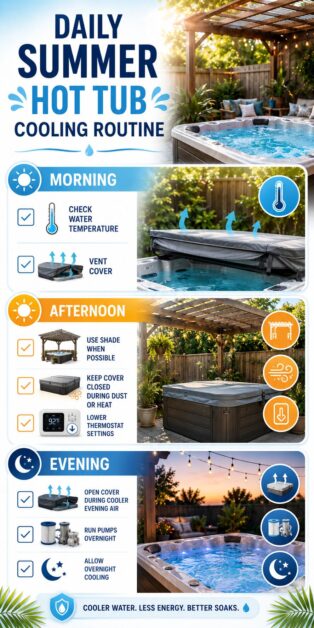
Morning:
- check water temperature
- leave cover slightly vented if safe
- confirm filtration runs overnight
Afternoon:
- keep spa shaded
- avoid running jets unnecessarily
- keep cover closed during dust or debris conditions
Evening:
- open cover during cooler air
- run pumps overnight
- lower thermostat if needed
Best times to use your hot tub in summer
Most owners enjoy summer soaking more during:
- early mornings
- late evenings
- nighttime
Midday soaking during heat waves usually feels uncomfortable fast.
Inflatable hot tubs heat faster
Inflatable spas often overheat quicker because:
- walls are thinner
- pumps sit externally
- insulation works differently
Many inflatable spa owners lower temperatures more aggressively during summer.
For ongoing upkeep, this guide on how to maintain a hot tub helps prevent extra seasonal problems.
Simple heat wave checklist downloadable
During extreme heat:
- lower temp to 90°F to 95°F
- run filtration overnight
- increase shade
- vent the cover nightly
- monitor water daily
You can download free here for every time use.

Common Mistakes That Make Hot Tub Water Hotter
Sometimes small habits accidentally create overheating problems.
Running jets all day
Jets create extra heat through pump friction.
Keeping the cover sealed constantly
This traps heat inside like an oven.
Ignoring filtration schedules
Daytime filtration often warms the water more than owners realize.
Leaving the spa in direct sunlight
Full afternoon sun can raise temperatures quickly.
Forgetting to adjust seasonal settings
A lot of owners simply leave winter settings active during summer.
If your water temperature still acts strangely after adjustments, this water care troubleshooting guide covers other common spa issues.
When to Consider a Spa Chiller or Cooling System
Most homeowners never need a dedicated cooling system.
But spa chillers can help if:
- you live in extremely hot climates
- your spa overheats constantly
- you want cold-plunge style temperatures
- your tub stays outdoors year-round
Some modern heat pumps can both:
- heat
- cool
These systems cost more upfront but can improve comfort in places with intense summer heat.
For more long-term efficiency ideas, these energy efficient hot tub solutions may help reduce overheating and operating costs.
Frequently Asked Questions
How do I keep my hot tub cool in 100 degree weather?
Lower the thermostat, run filtration overnight, add shade, and vent the cover during cooler evenings. Nighttime cooling usually works best during extreme heat.
Why is my hot tub hotter than the set temperature?
Pumps, trapped cover heat, sunlight, and hot outdoor temperatures can all raise water temperature above the thermostat setting during summer.
Can I use my hot tub in summer?
Yes. Many owners lower the temperature and enjoy cooler evening soaks during summer months.
Is it safe to put ice in a hot tub?
Small amounts of ice are usually fine occasionally, but avoid adding large amounts all at once because sudden temperature swings may stress equipment.
Should I turn my hot tub off during summer?
Usually no. Keeping the water circulating helps maintain water quality. Most owners simply lower the temperature and adjust filtration schedules instead.
How often should I change hot tub water during summer?
Most hot tubs need fresh water every 3 to 4 months, though heavy summer use may require more frequent water changes.