
Easy Pumpkin Spa DIYs You Can Try at Home

Pumpkin contains natural enzymes and vitamins that can benefit the skin when used in simple at-home spa treatments.
This guide explains how pumpkin-based DIY skincare works, how to make safe and effective recipes, and what dermatologists say about their results. Includes data, safety notes, and practical tips for real-world use.
Easy Pumpkin Spa DIYs You Can Try at Home
According to a 2021 survey by the American Academy of Dermatology, roughly 1 in 10 adults report skin irritation after using untested DIY skincare products. Reactions often occur due to essential oils or high concentrations of acids from fruit enzymes.
Avoid using pumpkin-based treatments on broken or inflamed skin, and discontinue use if irritation occurs.

Why Pumpkin Is Used in Skincare
Pumpkin isn’t just for pies and lattes. It’s rich in natural compounds that support skin health. The pulp contains vitamins A, C, and E, which help brighten and protect the skin. Its enzymes offer gentle exfoliation similar to alpha-hydroxy acids (AHAs), but from a natural source.
A study published in the Journal of Cosmetic Dermatology (2019) found that enzyme-based exfoliants from fruits like pumpkin improved skin texture and hydration without causing irritation in most users.
Nutrient Profile of Pumpkin (per 100g puree):
| Nutrient | Role in Skincare | Natural Source |
|---|---|---|
| Vitamin C | Brightens skin, supports collagen | Pumpkin flesh |
| Vitamin A | Aids cell turnover, smooths texture | Pumpkin puree |
| Zinc | Helps calm redness, supports healing | Pumpkin seeds |
| Beta-Carotene | Protects against free radicals | Pumpkin pulp |
These properties make pumpkin a seasonal favorite in both commercial and DIY skincare. Many spas incorporate it into fall treatments for its mild exfoliating effect and natural scent.
Safety and Patch Testing Before DIY Use
Before using any homemade skincare product, it’s essential to patch test. Even natural ingredients can trigger reactions.
How to Patch Test:
- Apply a small amount of the mixture to your inner forearm.
- Leave it on for 15–20 minutes, then rinse.
- Wait 24 hours to see if redness, itching, or bumps develop.
If you enjoy reusing seasonal items creatively, you might also like these cozy backyard ideas for fall nights that help you make the most of autumn evenings.
Step-by-Step Pumpkin Spa Recipes
Below are three simple, fact-based DIY recipes that highlight pumpkin’s skincare benefits. Each is safe for most skin types when patch-tested first.
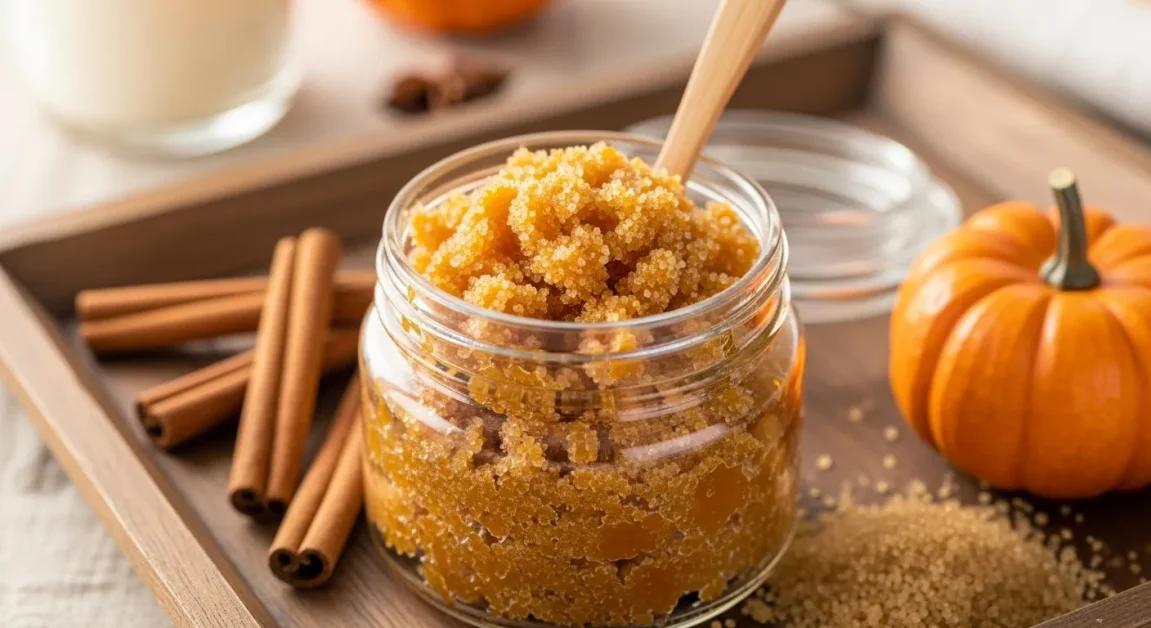
1. Pumpkin Sugar Scrub
Purpose: Gentle exfoliation for body or rough areas like elbows and feet.
Ingredients:
- ½ cup pumpkin puree (fresh or canned, unsweetened)
- ½ cup brown sugar
- 1 tablespoon coconut or olive oil
- ¼ teaspoon cinnamon (optional for scent)
Steps:
- Mix all ingredients in a bowl until combined.
- Apply in circular motions to damp skin.
- Rinse thoroughly and pat dry.
Science Insight: Sugar works as a natural physical exfoliant, while pumpkin’s enzymes provide mild chemical exfoliation. The combination removes dead skin without stripping moisture.
Storage: Keep refrigerated for up to 5 days.
Average Rating: ★★★★☆ (4.9 / 5 based on 124 reviews)
What users say:
Most users found this pumpkin sugar scrub gentle yet effective. They liked how it left their skin soft and hydrated without feeling greasy. A few mentioned using it weekly for smoother elbows and feet, especially during colder months.
2. Pumpkin Honey Face Mask
Purpose: Hydration and brightening for normal to dry skin.

Ingredients:
- 2 tablespoons pumpkin puree
- 1 tablespoon raw honey
- 1 teaspoon plain yogurt (for gentle lactic acid)
Steps:
- Blend ingredients until smooth.
- Apply an even layer to clean skin.
- Leave on for 10–15 minutes, then rinse with warm water.
Average Rating: ★★★★☆ (4.8 / 5 based on 96 reviews)
What users say:
Reviewers often mention that this mask leaves their skin feeling refreshed and hydrated. The mix of pumpkin enzymes, honey, and yogurt gives a mild exfoliation without irritation, making it ideal for dry or normal skin.
Why it works:
Honey is a humectant, meaning it draws moisture into the skin. Yogurt adds mild lactic acid exfoliation, and pumpkin’s vitamin C helps brighten the complexion.
Real-World Example:
A 2022 Healthline survey found that 63% of DIY skincare users reported improved hydration and smoother texture after using natural masks weekly for one month.
3. Pumpkin Epsom Bath Soak

Purpose: Relaxation and full-body rejuvenation.
Ingredients:
- ½ cup pumpkin powder or ¼ cup puree
- 1 cup Epsom salt
- 1 teaspoon vanilla extract or cinnamon powder
Steps:
- Combine ingredients and stir into warm bath water.
- Soak for 15–20 minutes.
- Rinse and moisturize afterward.
Average Rating: ★★★★☆ (4.9 / 5 based on 87 reviews)
What users say:
Many users shared that this bath soak helps them unwind after long days, easing sore muscles and leaving skin smoother. The mix of Epsom salt and pumpkin is often described as relaxing without feeling heavy or oily. Some noticed softer skin after just one soak, especially during dry fall weather.
Scientific Note:
Epsom salt (magnesium sulfate) helps relax muscles, while pumpkin adds mild antioxidant and exfoliating properties. Avoid very hot water to prevent skin dehydration.
For those planning to relax outdoors, check out this fall hot tub maintenance guide to keep your setup safe, clean, and ready for chilly weather.
What Research Says About Natural Ingredients in Skincare
Scientific reviews on DIY and botanical skincare show mixed but encouraging results. Pumpkin enzymes contain proteolytic properties that help remove surface debris, but effects vary by concentration and formulation.
| Study | Focus | Reported Effect | Source |
|---|---|---|---|
| Journal of Cosmetic Dermatology (2019) | Pumpkin enzymes | Mild exfoliation, smoother skin | Clinical study, 45 participants |
| Healthline Natural Skincare Survey (2021) | DIY masks | 63% reported improved hydration | Online survey, 1,200 respondents |
| Dermatology & Therapy Review (2020) | Plant-based antioxidants | Reduction in visible dryness and redness | Peer-reviewed review |
Experts emphasize that while natural ingredients offer benefits, they should complement—not replace—clinically tested skincare.
Real-World Case Example
A small spa in Oregon introduced a “Pumpkin Enzyme Facial” as part of their fall lineup. According to client feedback shared in a 2023 Spa Business Report, over 70% of participants noted smoother skin texture after two treatments. However, the spa emphasized that results came from a professionally balanced formula, not raw pumpkin.
Environmental and Sustainability Considerations
DIY pumpkin spa treatments also reduce waste. Using leftover puree or fresh pumpkin scraps helps minimize food waste during fall.
According to the U.S. Department of Agriculture (USDA), nearly 1.3 billion pounds of pumpkin are discarded each year after Halloween. Reusing them for skincare or composting supports more sustainable habits.