Hot Tubs and Diabetes: Safe Use, Benefits, and Risks

If you have diabetes, you’ve probably wondered if it’s safe to use a hot tub.
The short answer is yes, you can enjoy a hot tub. But you do need to be a little more careful than most people. Things like water temperature, soak time, and your blood sugar levels all play a role.
In this guide, you’ll learn exactly how hot tubs affect diabetes, what risks to watch for, and how to enjoy your soak safely without stress.
Disclaimer:
This article is for general information only and should not replace medical advice. Always check with your doctor before using a hot tub if you have diabetes or related health conditions.
Can People With Diabetes Use a Hot Tub Safely?
Yes, most people with diabetes can use a hot tub safely if they follow a few simple precautions.
The key is staying aware of how your body responds to heat and not pushing your limits.

When It’s Generally Safe
You can usually enjoy a hot tub if:
- Your blood sugar is stable
- You don’t have open wounds or infections
- You keep sessions short
- You stay hydrated
A lot of hot tub owners with diabetes use their tub regularly without issues once they get into a safe routine.
When to Avoid Hot Tubs
Skip the hot tub if:
- Your blood sugar is too high or too low
- You feel dizzy or weak
- You have cuts, sores, or foot wounds
- You’re dealing with an infection
If you’re unsure, it’s always safer to wait and check with your doctor.
Why Hot Tubs Can Be Risky for Diabetics
Hot tubs feel great, but the heat can affect your body in ways that matter more if you have diabetes.
Understanding these risks helps you stay in control.
Neuropathy and Reduced Sensation
Diabetes can cause nerve damage, especially in your feet.
This means:
- You might not feel how hot the water really is
- Burns can happen without you realizing it
This is why checking water temperature matters so much.
Overheating and Blood Pressure Drops
Hot water opens up your blood vessels.
That sounds good, but it can also:
- Lower your blood pressure
- Make you feel lightheaded
- Increase your risk of fainting
Getting out slowly helps avoid that sudden dizzy feeling.
Slow Healing and Infection Risk
People with diabetes often heal more slowly.
In a hot tub:
- Bacteria can grow if water isn’t properly maintained
- Small cuts can turn into bigger problems
That’s why following proper water care is essential. If you’re unsure where to start, this hot tub water care guide can help you keep things clean and safe.
Potential Benefits of Hot Tubs for Diabetes
It’s not all risk. Hot tubs can actually offer some real benefits when used the right way.

Improved Blood Circulation
Warm water increases blood flow.
That can help:
- Deliver oxygen to muscles
- Reduce stiffness
- Support overall comfort
Possible Blood Sugar Reduction
Some people notice their blood sugar drops slightly after a soak.
That’s because:
- Heat improves circulation
- Your body reacts similarly to light exercise
It’s not a replacement for exercise, but it can support your routine.
Relief for Diabetic Neuropathy
If you deal with nerve pain, warm water can help.
Many people say it:
- Reduces tingling or burning sensations
- Helps them relax
- Improves sleep after use
You can learn more about how soaking helps overall health in this hot tub benefits for your health guide.
Does a Hot Tub Lower Blood Sugar?
Yes, a hot tub can lower blood sugar slightly for some people, but the effect varies.
Why It Happens
When you sit in warm water:
- Blood vessels expand
- Circulation improves
- Your body uses energy differently
This can lead to a small drop in blood glucose.
Why You Should Still Monitor Levels
Here’s the important part.
If you take insulin or certain medications:
- Blood sugar could drop too much
- You might not notice symptoms right away
Always check your levels before and after using your hot tub.
Hot Tub Safety Rules for Diabetics
This is where everything comes together. These simple rules make a big difference.
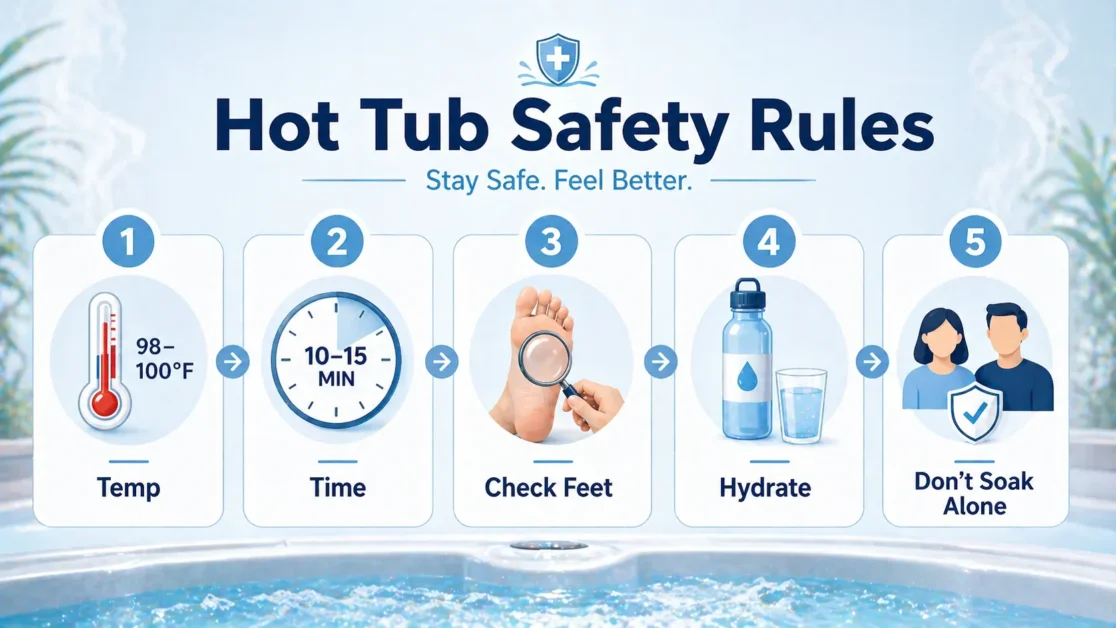
1. Keep Water Temperature Safe
Stick to 98°F to 100°F.
If you’re unsure about temperature settings, check this guide on best hot tub temperature for a clear breakdown.
2. Limit Soak Time
Keep sessions short:
- 10 to 15 minutes is ideal
- Take breaks if needed
Long soaks increase the risk of overheating.
3. Check Your Feet Before and After
This is one many people overlook.
Look for:
- cuts
- redness
- swelling
Catching small issues early prevents bigger problems later.
4. Stay Hydrated
Hot water makes you sweat more than you think.
Drink water before and after your soak to avoid dehydration.
5. Never Soak Alone
- It’s always better to have someone nearby.
- If you feel dizzy or unwell, help is right there.
Hot Tub vs Hot Bath vs Sauna for Diabetics
You might be wondering how hot tubs compare to other heat options.
Hot Tub vs Bath
- Hot tubs stay at a steady temperature
- Baths cool down over time
Hot tubs can be more relaxing, but also require more attention to safety.
Can Diabetics Use Saunas?
Yes, but saunas are usually hotter than hot tubs.
That means:
- Higher risk of dehydration
- Faster overheating
Which Is Safer?
A well-controlled hot tub is usually the safest option because you can manage the temperature more easily.
If you’re comparing options, this sauna vs hot tub comparison breaks it down in a simple way.
| Feature | Hot Tub | Hot Bath | Sauna |
|---|---|---|---|
| Temperature Control | Steady and adjustable (usually 98°F to 104°F) | Starts hot but cools over time | Very high heat (often 150°F to 190°F) |
| Safety for Diabetics | Generally safe with precautions | Safer due to lower, decreasing heat | Higher risk due to extreme heat |
| Blood Sugar Impact | May slightly lower blood sugar | Mild effect | Can cause faster changes |
| Risk of Overheating | Moderate if too hot or too long | Low to moderate | High risk |
| Ease of Monitoring | Easy to control time and temp | Easy, but less consistent | Harder due to intense heat |
| Best For | Relaxation, circulation, routine use | Short, gentle soaking | Occasional use with caution |
| Main Concern | Staying too long or overheating | Water cooling too quickly | Dehydration and dizziness |
Special Considerations for Type 1 vs Type 2 Diabetes
Not all diabetes is the same, and your approach might be slightly different.
Type 1 Diabetes
- Blood sugar can change quickly
- Higher risk of sudden drops
You’ll need to monitor levels more closely.
Type 2 Diabetes
- Often easier to manage in this context
- Still requires awareness and routine
Either way, the same basic safety rules apply.
Common Mistakes Diabetics Make in Hot Tubs
These are the things that tend to cause problems.
- Staying in too long
- Setting water too hot
- Skipping blood sugar checks
- Ignoring foot care
- Using the hot tub alone
Avoiding these puts you ahead of most people.
Simple Routine for Safe Hot Tub Use
Here’s a quick routine you can follow every time.
- Check your blood sugar before getting in
- Set temperature below 100°F
- Soak for 10 to 15 minutes
- Get out slowly to avoid dizziness
- Check your blood sugar again
Once this becomes a habit, it feels natural.
When to Talk to Your Doctor
It’s a good idea to get medical advice if:
- You feel dizzy during or after soaking
- Your blood sugar is hard to control
- You have neuropathy or circulation issues
Your doctor can help you set safe limits based on your situation.
Quick Recap
Hot tubs and diabetes can absolutely go together.
You don’t have to miss out on relaxation. You just need to be a little more aware of how your body reacts and follow a few simple rules.
Keep the temperature moderate, limit your time, and stay on top of your blood sugar. Once you dial that in, your hot tub can become one of the most relaxing parts of your routine.
Frequently Asked Questions
How long should a diabetic stay in a hot tub?
Most people with diabetes should limit sessions to 10 to 15 minutes to avoid overheating and blood sugar changes.
Can hot water raise or lower blood sugar?
Hot water can slightly lower blood sugar in some people, but effects vary, so it’s important to monitor your levels.
Is a hot tub good for diabetic neuropathy?
Yes, warm water can help reduce pain and improve circulation, which may ease neuropathy symptoms.
What temperature is safe for diabetics in a hot tub?
A safe range is usually between 98°F and 100°F to reduce the risk of overheating or burns.
Can type 1 diabetics use hot tubs safely?
Yes, but they need to monitor blood sugar more closely since levels can change quickly with heat exposure.