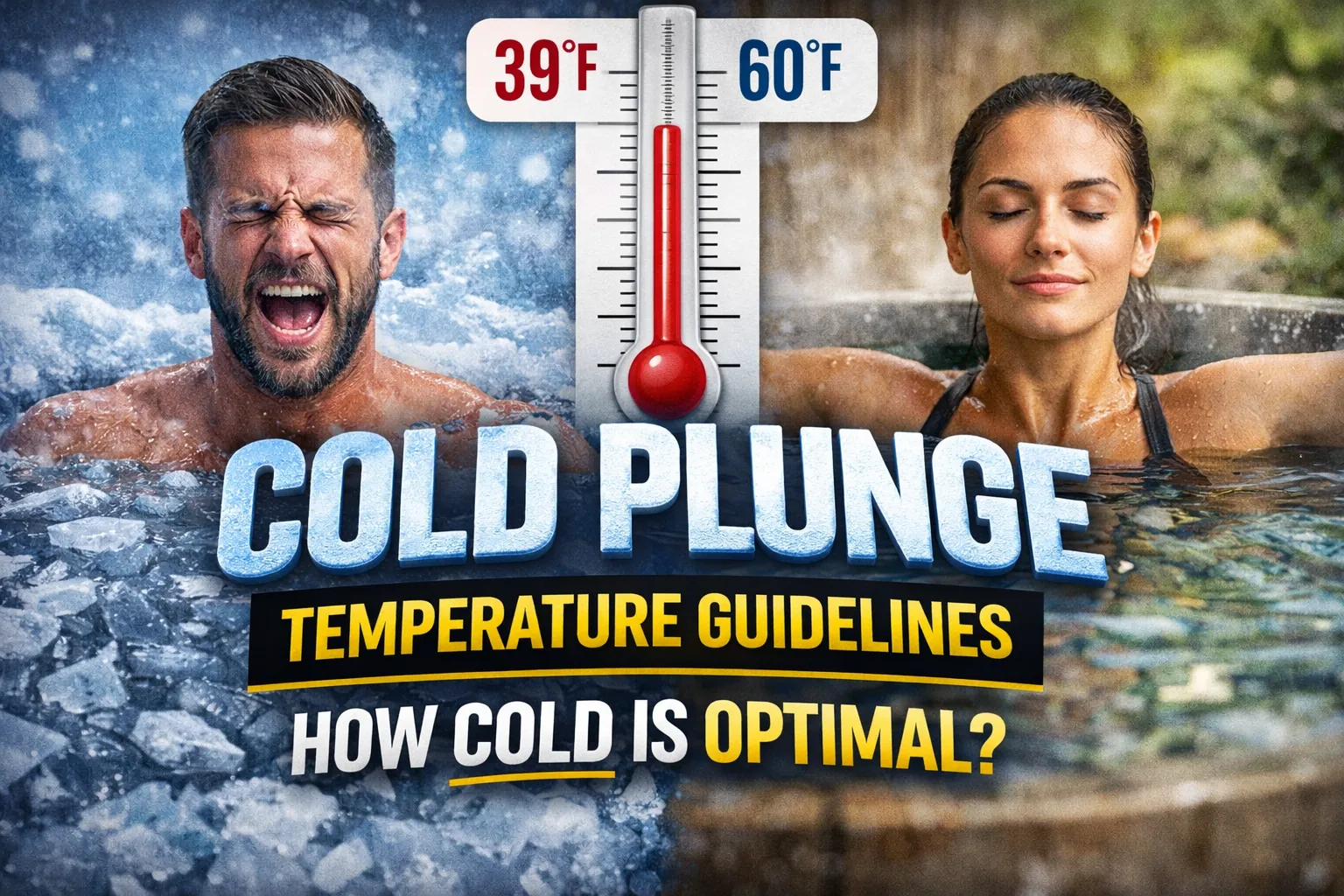
Cold Plunge Temperature Guidelines: How Cold Is Actually Optimal?

Cold plunges are everywhere right now.
But here’s the real question: how cold should the water be for results, without wrecking your nervous system or quitting after a week?
Most people either:
• Go too warm and get no meaningful adaptation
• Go too cold and burn out, dread it, or feel worse
This guide breaks down temperature ranges by goal, when each works, when it backfires, and how to choose correctly.
If you’re new to contrast therapy or combining hot and cold routines, our full plunge pool and cold plunge guide gives broader setup and planning details.
The 3 Temperature Zones That Actually Matter
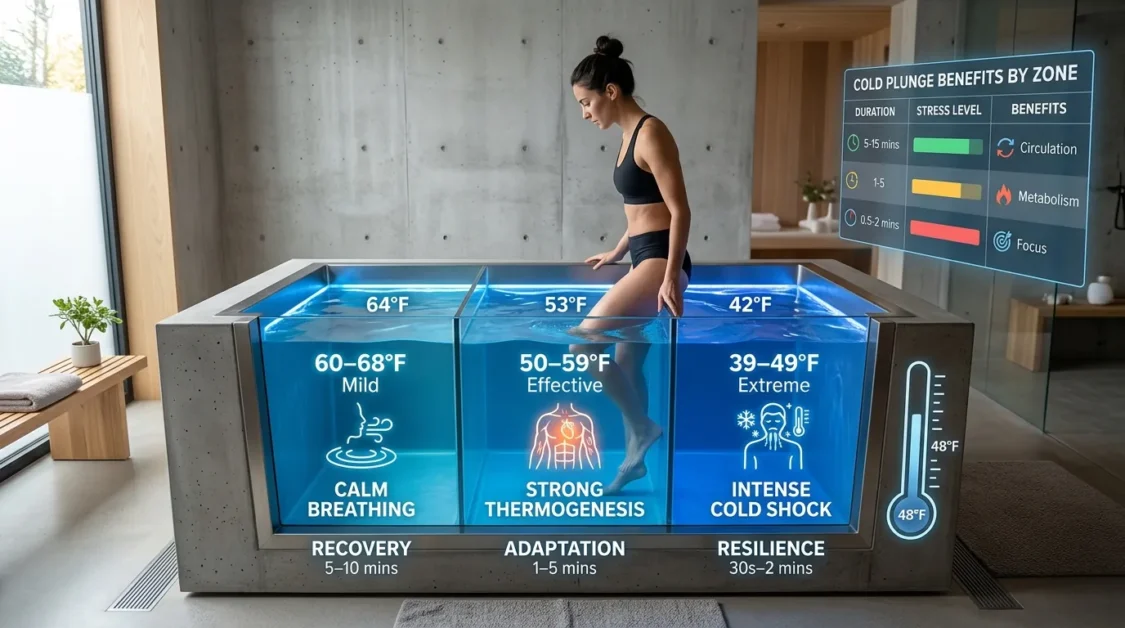
1. Mild Cold: 60 to 68°F (15 to 20°C)
Best for: Beginners, daily use, nervous system training
What happens here
• Noticeable but manageable cold shock
• Mild adrenaline increase
• Low dropout risk
When it works
• You’re new to cold exposure
• You want consistency over intensity
• You struggle with anxiety and don’t want extreme stress
When it fails
• You’re chasing metabolic or brown fat adaptation
• You stay too comfortable
Signal: If you can breathe calmly within 30 seconds, you’re in a productive range.
This range pairs well with lighter recovery days, especially if you’re already using heat sessions for relaxation.
2. Effective Zone: 50 to 59°F (10 to 15°C)
Best for: Most people seeking measurable benefits
This is the sweet spot.
What happens here
• Strong but controllable cold shock
• Adrenaline and norepinephrine increase
• Meaningful thermogenesis
• Mental resilience training
When it works
- 2 to 4 sessions per week
- 2 to 5 minutes per session
- Natural rewarming instead of jumping into a hot shower
When it fails
• You jump straight here without adaptation
• You overstay past your tolerance
• You do it daily while already stressed
If you’re only going to use one range long term, this is it.
For a deeper look at how cold therapy compares to heat-based recovery, see our breakdown of benefits of ice baths and hot tubs.
3. Extreme Cold: 39 to 49°F (4 to 9°C)
Best for: Advanced users, short exposure
This is what you see in social media ice barrels.
Reality check
The marginal benefit over 50 to 55°F is smaller than people think.
What happens here
• Intense cold shock
• Very high stress response
• Increased dropout risk
• Higher cardiovascular strain
When it works
- You’re experienced
- Sessions are under 3 minutes
- You have no cardiovascular risk factors
Who should avoid this range
• Beginners
• Anyone with high blood pressure
• Anyone using cold exposure for stress regulation
Colder is not automatically better.
If you’re exploring structured contrast routines, our comparison on sauna vs hot tub helps you understand how different heat modalities affect recovery.
How to Choose the Right Temperature
Use this instead of copying influencers.
Step 1. Define Your Goal
| Goal | Ideal Range |
|---|---|
| Mental resilience | 50 to 59°F |
| Stress regulation | 60 to 65°F |
| Metabolic activation | 45 to 55°F |
| Recovery, non-hypertrophy phase | 50 to 59°F |
If you’re unsure how heat and cold affect performance and wellness overall, our guide on hot tub benefits and risks gives you a broader recovery perspective.
Step 2. Check Your Recovery Capacity
Cold is stress.
If you already:
• Sleep poorly
• Train intensely
• Run high anxiety
• Are under heavy work pressure
Lower intensity wins.
More stress does not equal more growth.
Step 3. Use the Breath Control Rule
If you cannot:
- Regain nasal breathing within 30 to 45 seconds
- Stay mentally present
- Avoid panic
It’s too cold for your current adaptation level.
The Hidden Trade-Offs People Ignore
1. Colder Water Increases Dropout Rate
Most people quit because:
• It’s too unpleasant
• They associate it with suffering
• They escalate too quickly
Consistency beats intensity.
2. Cold After Lifting Can Reduce Muscle Growth
If hypertrophy is your goal, regular post-lift cold immersion may blunt some adaptation.
Use it:
• During deloads
• During endurance blocks
• During competition phases
Avoid it:
• Immediately after strength sessions focused on growth
If muscle recovery is your priority, structured heat sessions like those discussed in hot tubs muscle recovery may be a better fit.
3. Duration Often Matters More Than Temperature
A 3-minute plunge at 52°F can be more productive than 30 seconds at 39°F.
You want:
• Controlled stress
• Full-body immersion
• Measured exposure
Not shock for shock’s sake.
How Long Should You Stay In?
Use this simple rule:
| Temperature | Duration |
|---|---|
| 60 to 65°F | 5 to 10 minutes |
| 50 to 59°F | 2 to 5 minutes |
| 39 to 49°F | 1 to 3 minutes |
Longer is not better if shivering becomes aggressive.
When Cold Plunges Backfire
Cold exposure may not be right if:
• You feel wired but exhausted afterward
• Sleep worsens
• You dread the session
• You start avoiding workouts
Cold is a hormetic stressor, meaning the dose makes the benefit.
- Too little and nothing happens
- Too much and performance declines
Safety First
Avoid or consult a medical professional if you have:
• Cardiovascular disease
• Uncontrolled hypertension
• History of fainting
• Raynaud’s phenomenon
Never plunge alone in extreme cold.
If you have concerns about circulation or temperature tolerance, reviewing how heat affects the body in hot tubs and body temperature can add useful context.
The Sustainable Approach That Works Long Term
If you want a simple, realistic protocol:
- Start at 60°F
- Adapt for 2 weeks
- Move to 55°F
- 3 sessions per week
- 3 to 4 minutes
- Focus on breath control
This works for most people.
Not flashy. Not extreme. Effective.
Final Takeaway: Optimize for Adaptation, Not Bragging Rights
Cold plunges work because they create controlled stress.
Your goal isn’t to suffer.
Your goal is to adapt.
The right temperature is the coldest one you can:
• Enter voluntarily
• Control your breath in
• Repeat consistently
• Recover well from
That’s your optimal zone.
FAQs
Can I start cold plunging at 50°F right away?
You can, but it’s usually better to start closer to 60°F for a week or two so your nervous system adapts without overwhelming stress.
Do I need to go below 45°F for real benefits?
No. Most measurable benefits happen between 50 and 59°F, and going colder mainly increases stress, not results.
Is it okay if I shiver during a cold plunge?
Mild shivering is normal, but aggressive or uncontrollable shivering means it’s time to get out and warm up gradually.
What’s the best way to warm up after a plunge?
Let your body rewarm naturally with light movement and dry clothes instead of jumping straight into a hot shower.
Can I do cold plunges every day?
You can at milder temperatures like 60 to 65°F, but most people benefit more from 2 to 4 sessions per week at moderate intensity.