Is Sauna Good for PCOS? Heat Research, Risks & Limits

You have PCOS and keep seeing claims that sweating in a sauna can balance hormones, lower insulin resistance or regulate periods. The problem is that the most frequently cited PCOS heat-therapy experiment did not use a sauna at all.
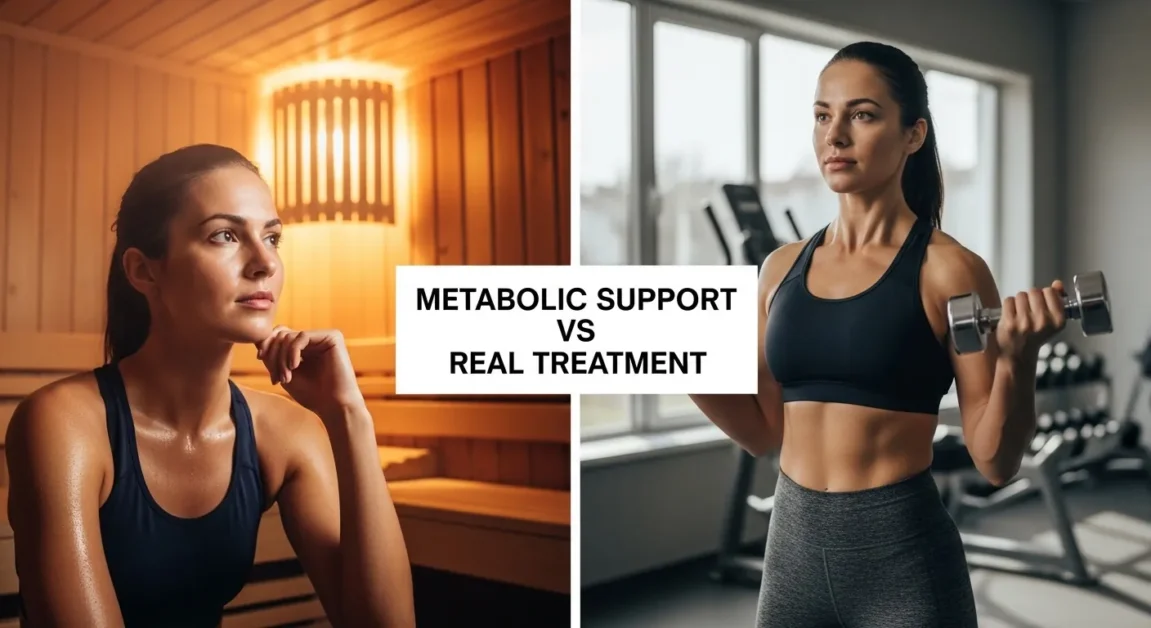
Quick answer: Sauna bathing has not been established as a treatment for polycystic ovary syndrome (PCOS), now also called polyendocrine metabolic ovarian syndrome (PMOS). A small 2019 study found changes in metabolic markers after supervised hot-tub immersion in people with PCOS and obesity, but it did not test infrared or traditional saunas. Sauna may be an enjoyable leisure activity for someone able to tolerate heat, not a replacement for evidence-based care.
Below is the important distinction between direct research, plausible ideas and untested marketing claims, followed by a worksheet to organize questions for your healthcare team.
Is Sauna Good for PCOS? What Can It Actually Do?
There is not enough direct PCOS-specific sauna evidence to say that a traditional or infrared sauna improves insulin resistance, lowers testosterone, restores ovulation, promotes conception or reduces inflammation. Some people enjoy the warmth and quiet time. That personal comfort should not be described as a measured treatment response.
For someone weighing time, money or discomfort, the distinction matters. The international PMOS/PCOS guideline recommends lifestyle measures and individualized clinical management. It does not establish a sauna prescription for the condition.
PCOS and PMOS: Why the Name Changed in 2026
In May 2026, an international consensus process introduced polyendocrine metabolic ovarian syndrome (PMOS) as the new name for the condition widely known as polycystic ovary syndrome (PCOS). The change was announced May 12, 2026, and is being introduced through a transition period. PCOS and PMOS refer to the same condition, not two diagnoses.
The former name focused too heavily on ovaries and the misleading idea that everyone has ovarian cysts. The newer term better reflects the combination of endocrine, metabolic and reproductive features. The Endocrine Society’s name-change announcement and Monash University’s international guideline portal explain the change. The 2023 guideline recommendations remained in place when the terminology was updated.
People with PCOS/PMOS can have different combinations of irregular ovulation or periods, excess androgen symptoms and metabolic risks. Not everyone has the same insulin resistance or weight-related concerns. Diagnosis and treatment depend on an individual clinical assessment, not a single hormone claim on a sauna advertisement.
What Does the 2019 Heat-Therapy Study Actually Show?
A frequently shared 2019 study by Ely and colleagues enrolled 18 women with PCOS and obesity, with nine in a heat-therapy group and nine in a comparison group. The heat-therapy participants completed 30 supervised, one-hour hot-tub immersion sessions over 8 to 10 weeks. Researchers measured glucose tolerance, insulin signaling in abdominal fat and several blood markers.
The original metabolic-health study reported improved glucose-related measurements, increased measured fat-cell insulin signaling and lower serum testosterone in the treated group. Another 2019 report on cardiovascular measures described lower blood pressure, reduced sympathetic nerve activity and changes in some inflammatory and vascular markers.
Crucial detail: These two 2019 reports used the same small participant group. They are not independent replications. The protocol involved controlled hot-water immersion, not a home or gym sauna; it is a research exposure, not a suggested at-home temperature, duration or weekly plan.
| Study detail | What was actually tested | Why it matters |
|---|---|---|
| Participants | 18 women with obesity and PCOS, with 9 assigned to heat therapy and 9 to comparison | Results may not generalize to people with different PCOS presentations or health conditions. |
| Heat exposure | Repeated supervised hot-tub immersion, 30 one-hour sessions | This was not a traditional sauna, infrared cabin or ordinary home hot-tub routine. |
| Outcomes | Glucose measurements, selected insulin-signaling and hormone markers; cardiovascular variables in a linked report | Encouraging biomarker changes do not establish fewer PCOS symptoms or improved long-term health for everyone. |
| Evidence limits | Small group, limited follow-up and no direct sauna comparison | The study cannot determine a PCOS-safe sauna schedule, optimal treatment dose or benefits to fertility. |
No one should copy the 2019 intervention from a blog summary. Clinical research heat protocols can involve conditions requiring supervision; the results cannot be transferred into instructions for an unsupervised sauna.
Can Sauna Improve Insulin Resistance, Hormones or Inflammation?
Insulin resistance
Insulin resistance is clinically relevant to many people with PCOS/PMOS, but the small heat-therapy study measured improvements after hot-tub immersion. That does not prove sauna heat has the same effect. A hotter room, more sweating or more weekly sessions should not be treated as a substitute for evidence-based metabolic care.
Testosterone, ovulation and periods
The same 2019 experiment recorded lower serum testosterone in its heat-therapy group. That result is interesting, but it does not establish that sauna use can lower androgen symptoms, normalize menstrual cycles or trigger ovulation. The larger international guideline summary discusses established treatment choices based on a person’s goals, including cycle symptoms and fertility plans.
For a missed or late period, consult our separate sauna and menstrual-timing guide rather than assuming that a sauna changed ovarian function.
Cortisol, stress and inflammation
Some people feel relaxed after a sauna session, but a calm feeling is not proof of sustained cortisol reduction or less PCOS-related inflammation. The 2019 researchers measured certain markers in a hot-tub protocol; no direct trial established that a normal sauna routine treats chronic inflammation in PCOS. Avoid judging hormone levels by sweat, pulse rate or how calm a session feels.

Sauna vs Hot Tub vs Infrared Heat for PCOS
| Heat option | What evidence exists for PCOS | What to avoid assuming |
|---|---|---|
| Hot-tub immersion | A small supervised 2019 study in women with obesity and PCOS measured metabolic and cardiovascular changes. | The study’s exposure is not a proven safe or effective home treatment schedule. |
| Traditional sauna | No comparable established PCOS-specific clinical outcome evidence was identified for routine sauna bathing. | Higher heat or a strong sweat response means better insulin sensitivity. |
| Infrared sauna | No established PCOS-specific head-to-head evidence demonstrates superior hormonal or metabolic outcomes. | Lower air temperature means it corrects hormones or is automatically medically safe. |
Infrared and conventional saunas transfer heat differently, but a mechanism is not the same as a demonstrated PCOS benefit. Our infrared sauna types guide explains the equipment differences. It is not a recommendation to purchase one for hormonal treatment.
What Actually Helps Manage PCOS?
The international evidence-based guideline recommends lifestyle management, including physical activity and healthy eating, for overall health and metabolic outcomes. Goals should be individualized and sensitive to each person’s circumstances, without treating weight loss as the only marker of success.
- Physical activity: Choose sustainable movement and strength-building activities suited to your health, preferences and abilities. You do not need a sauna to receive the benefits of exercise.
- Food and lifestyle: Work toward eating patterns that are realistic and nutritionally adequate. The guideline does not endorse a single miracle diet for everyone with PCOS.
- Sleep and emotional well-being: Discuss sleep difficulties, mood changes or anxiety when relevant. Psychological symptoms deserve proper attention, not an unverified promise that sweating will fix them.
- Medical management: Your clinician may discuss treatments based on cycle patterns, metabolic risks, androgen symptoms or fertility goals. Do not replace prescribed care with heat therapy.
- Ongoing follow-up: Use appropriate clinical monitoring for relevant metabolic and reproductive concerns rather than measuring progress in calories sweated away.
The 2023 international guideline recommendations emphasize shared decision-making and improved quality of life as well as physical health. Even if sauna is a preferred way to unwind, that personal preference is separate from guideline-supported PCOS treatment.
When Should Someone With PCOS Avoid Sauna Heat?
General sauna risks still apply, regardless of a PCOS diagnosis. A hot room can contribute to dizziness, overheating and fluid loss. Low blood pressure, certain heart conditions, medication effects or other health concerns may require specific advice. Stop heat exposure if you feel faint, nauseated, dizzy or unusually unwell. Our sauna safety guide addresses broader precautions.
Trying to conceive and being pregnant are different situations. If pregnancy may be possible, discuss heat exposure with a clinician; if pregnant, follow pregnancy-specific guidance. ACOG advises against saunas and hot tubs early in pregnancy because raising core temperature may pose risks to fetal development.
If fertility is your main concern, our sauna and fertility evidence review addresses conception separately. A PCOS article should not substitute for fertility assessment.
There is no validated number of sauna minutes or sessions per week proven to treat PCOS. Avoid copying any hot-tub research protocol, ignoring symptoms or postponing a care appointment while trying a heat routine.
PCOS Sauna Safety & Evidence Discussion Checklist
This original worksheet focuses on the questions that can actually help with a decision: which heat exposure you use, what benefit you hope for, what the research tested, and what medical factors you want your care team to review. It has download and print options, but does not diagnose, grade severity or authorize sauna use.
PCOS / PMOS Heat-Exposure Discussion Worksheet
Gather questions for a clinician without treating sauna use as a hormonal treatment. This worksheet does not measure insulin resistance, diagnose PCOS, estimate fertility or provide medical clearance.
Evidence questions to review
Notes stay on this page unless you print or download them. The worksheet does not submit data to the website. Avoid entering personal identifiers.
Frequently Asked Questions
Can a sauna lower testosterone in PCOS?
The small 2019 hot-tub study measured a reduction in serum testosterone in participants receiving supervised hot-water immersion. It did not demonstrate that traditional or infrared sauna use lowers testosterone in PCOS.
Can sweating or detoxing regulate PCOS hormones?
No clinical evidence shows that sweating out toxins restores ovulation, balances androgens or treats insulin resistance in PCOS. The body’s heat response is not a hormone treatment.
Does infrared sauna help insulin resistance?
There is not enough direct PCOS-specific evidence to recommend infrared sauna for improving insulin resistance. Findings from hot-tub immersion should not be assumed to apply to infrared cabins.
Will sauna help with PCOS weight loss?
Sweating changes water balance temporarily; it does not establish sustained fat loss or a PCOS treatment effect. Evidence-based lifestyle and clinical care remain more relevant to long-term health decisions.
Could sauna use affect irregular periods or fertility?
A sauna has not been established as a way to regulate menstrual cycles or improve the chance of conception in PCOS. Seek clinical guidance for irregular periods, ovulation concerns or fertility treatment rather than relying on heat.
Is sauna use safe if I have PCOS or PMOS?
PCOS alone does not supply a universal yes-or-no answer for an individual. Your health conditions, symptoms, pregnancy status, medications and heat tolerance matter. There is no PCOS-specific medically approved sauna schedule.
A Practical Decision: Treat Sauna as Optional Comfort, Not PCOS Therapy
The answer to ‘is sauna good for PCOS?’ depends on what you mean by good. Some people enjoy a sauna for downtime; studies have not shown that ordinary sauna use treats PCOS hormones or metabolic risks. The often-cited 2019 findings came from a small hot-tub experiment and should be interpreted on those terms.
If your aim is improving health or managing symptoms, use your established PCOS/PMOS care plan as the starting point. Bring the heat-exposure worksheet to a clinician if you want to discuss adding sauna for comfort, especially with pregnancy, blood-pressure or fertility questions.