

5 Key Differences: Sauna vs Hot Tub

Sauna vs hot tub: both use heat to support relaxation, but they deliver it in very different ways. A sauna surrounds you with hot air, while a hot tub combines warm water, buoyancy, and jets. The better choice depends on whether you value dry heat and simpler day-to-day care or hydrotherapy, social space, and a gentler-feeling soak.
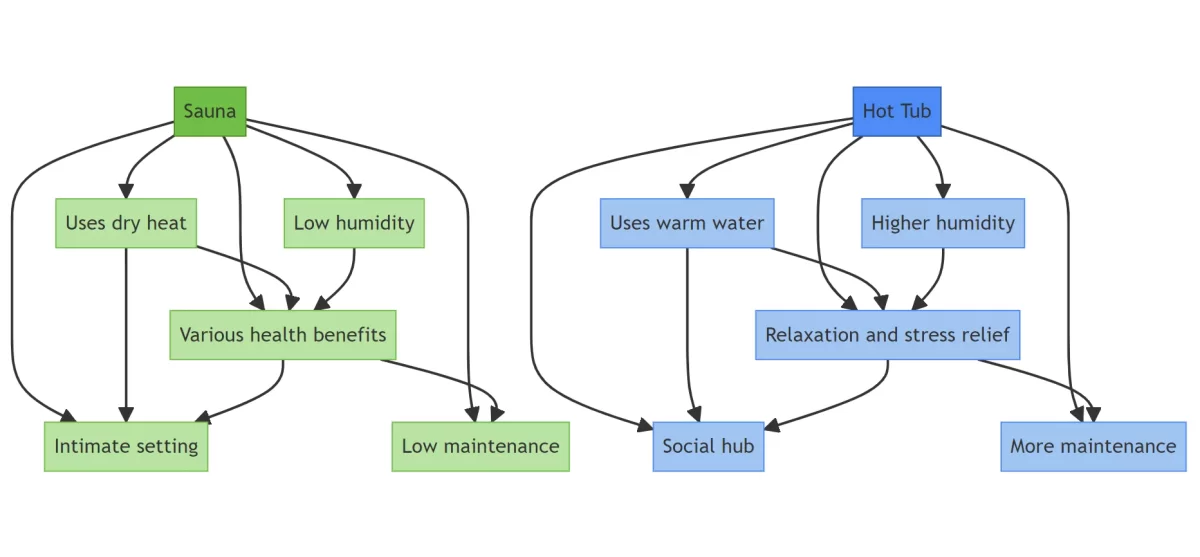
Sauna vs Hot Tub: Quick Answer
Choose a sauna if you prefer intense dry heat, shorter solo sessions, no standing water to sanitize, and a compact wellness space. Choose a hot tub if you want buoyancy and massage jets, room to socialize, or warm-water comfort for stiff muscles and joints.
Neither is automatically healthier, cheaper, or easier for every owner. The model, insulation, climate, local energy rates, installation, and how often you use it can change the answer.
Sauna vs Hot Tub at a Glance
| Factor | Sauna | Hot Tub or Spa |
|---|---|---|
| How it heats you | Hot air and heated surfaces | Warm water, buoyancy, and jets |
| Typical experience | Intense, dry heat and sweating | Gentler-feeling full-body warmth |
| Best fit | Quiet, focused heat sessions | Soaking, hydrotherapy, and social use |
| Routine care | Clean benches and surfaces; inspect heater and ventilation | Test and balance water; sanitize; clean filters and shell |
| Water use | Little or none during normal use | A filled vessel that needs ongoing water care |
| Space | Many compact indoor or outdoor options | Usually needs a larger base and service access |
| Social capacity | Often one to four people | Commonly designed for several bathers |
1. Heat and the Way It Feels
A traditional sauna heats the air and interior surfaces. Because the air can be much hotter than hot-tub water, the sensation is more intense even though your body is not submerged. Humidity is generally low, although pouring a small amount of water on sauna stones briefly raises it.
A hot tub transfers heat through water. The lower temperature can feel more enveloping, and jets add localized massage. Water also supports part of your body weight, which is one reason many people prefer a soak when they feel stiff or sore.
2. Relaxation, Muscles, and Joints
Both can be relaxing. A sauna suits people who enjoy quiet, uninterrupted heat and a cooling period afterward. A hot tub adds buoyancy and adjustable jets, making it the more practical choice when the main goal is a warm soak or targeted water massage.
Heat is not a substitute for medical treatment. If pain is new, severe, or persistent, get medical guidance instead of relying on either option.
3. Maintenance and Water Care
A sauna avoids the recurring work of managing a large volume of water. Routine care typically includes wiping benches, allowing the room to dry, cleaning surfaces, and following the heater manufacturer’s inspection schedule.
A hot tub needs consistent water testing, sanitizer, pH control, filter care, and periodic draining and refilling. That does not make a spa impractical, but it does create a more hands-on ownership routine. See our hot tub maintenance cost guide when budgeting.
4. Installation, Space, and Cost
Compact sauna kits can fit into a small indoor room or a backyard structure, but they still need correct clearances, ventilation, electrical work, and heat-safe materials. Hot tubs need a level, load-bearing base, electrical service, drainage planning, and enough access for maintenance.
Do not assume one always costs less to operate. A well-insulated sauna used for short sessions may consume energy only when heating, while a hot tub usually maintains water temperature between uses. However, heater size, water volume, insulation, weather, frequency, and utility rates determine the real difference.
5. Social Use and Lifestyle Fit
Saunas are usually quieter and more compact. They work well for a personal ritual or a small household. Hot tubs are often the stronger choice for conversation and gatherings because seating faces inward and the water temperature supports a slower-paced experience.
When a Sauna Is Better Than a Hot Tub
A sauna is often the better fit when:
- You prefer dry heat and do not enjoy sitting in water.
- You want a quiet, focused session rather than a social soak.
- You would rather clean dry surfaces than test and balance water chemistry.
- A smaller indoor footprint or compact backyard installation suits your space.
- You expect intermittent use and do not want to maintain a heated vessel of water between sessions.
These are practical advantages, not universal rules. Compare specific models and installation requirements before buying.
When a Hot Tub Is Better Than a Sauna
A hot tub is usually the better choice when buoyancy, massage jets, outdoor social time, and a slower soak are the priorities. It can also serve people who dislike the intensity of a hot sauna. The tradeoff is a larger maintenance commitment and regular attention to water quality.
What “Spa” Means in This Comparison
In product discussions, spa is often another word for a hot tub: a heated vessel with circulating water and jets. A day spa or wellness spa is a facility that may contain a sauna, hot tub, massage rooms, and other services. This guide compares a sauna with the hot-tub meaning of “spa.”
Can You Use a Sauna and Hot Tub Together?
Yes, but two heat exposures in one routine require extra caution. Cool down between them, drink water, keep each session conservative, and stop if you feel dizzy, weak, nauseated, or unusually uncomfortable. Our sauna and Jacuzzi routine guide covers sequence, timing, cooling breaks, and when to skip the second session.
Basic Heat-Safety Rules
- Keep hot-tub water at or below 104°F (40°C), as advised by the CDC.
- Hydrate before and after sauna use. Cleveland Clinic advises keeping sauna sessions around 15 to 20 minutes, with shorter sessions for beginners.
- Avoid alcohol before or during either heat session.
- Ask a healthcare professional first if you are pregnant, have heart or blood-pressure concerns, take medications that affect heat tolerance, or have another condition that could make heat risky.
- Leave immediately if you feel dizzy, faint, weak, nauseated, confused, short of breath, or otherwise unwell.
Frequently Asked Questions
Is a sauna cheaper to run than a hot tub?
Often, but not always. A sauna usually heats only for a session, while a hot tub commonly maintains water temperature. Actual cost depends on insulation, heater size, climate, energy prices, and use frequency.
Which requires less maintenance?
A sauna usually has the simpler routine because there is no standing water to sanitize. A hot tub needs ongoing water testing, chemical adjustment, filtration, and periodic draining.
Which is better after exercise?
That depends on your goal and how you feel. A hot tub provides buoyancy and jets; a sauna provides dry, whole-body heat. Rehydrate after exercise and avoid either if you are already overheated, dehydrated, dizzy, or unwell.
Bottom Line
Choose a sauna for dry heat, a compact personal ritual, and simpler water-free upkeep. Choose a hot tub for buoyancy, jets, social use, and a longer warm-water experience. If space and budget allow, owning both can work—as long as each serves a different purpose and you use them with sensible cooling and hydration.