Hot Tub Depreciation Explained, How Fast They Lose Value and Why

When you bought your hot tub, depreciation probably wasn’t on your mind. You were thinking about the jets, the heat, and that first long soak after a rough day.
Fast forward a few years, and you check resale prices out of curiosity. That’s when it hits. The numbers aren’t even close to what you paid, and you’re left wondering if this is just how hot tubs work or if you missed something along the way.
That’s exactly what we’re getting into here. We’ll walk through how hot tub depreciation really works, how age changes what your spa is worth, and why the value tends to drop faster than most owners expect.
What hot tub depreciation really means for you as an owner
Hot tub depreciation doesn’t mean you made a bad purchase. It means hot tubs deliver most of their value through use, not resale.
Unlike cars or electronics, a hot tub’s worth is tied to:
- Water-tight components
- Ongoing maintenance
- Buyer trust in what they can’t see
Once ownership transfers, buyers immediately discount for risk. Looking at broader hot tub market insights helps explain why resale prices behave the way they do across regions and seasons.
How quickly do hot tubs depreciate after purchase
The fastest depreciation happens early.
Most hot tubs lose a large chunk of their resale value in the first year alone, even if they’re barely used. From a buyer’s perspective, “used” is no longer new, and warranty coverage is often reduced or gone.
This is why timing matters so much. Understanding the best time to buy a hot tub also helps explain why resale prices drop quickly after purchase.
Hot tub depreciation by age, what your spa is worth year by year
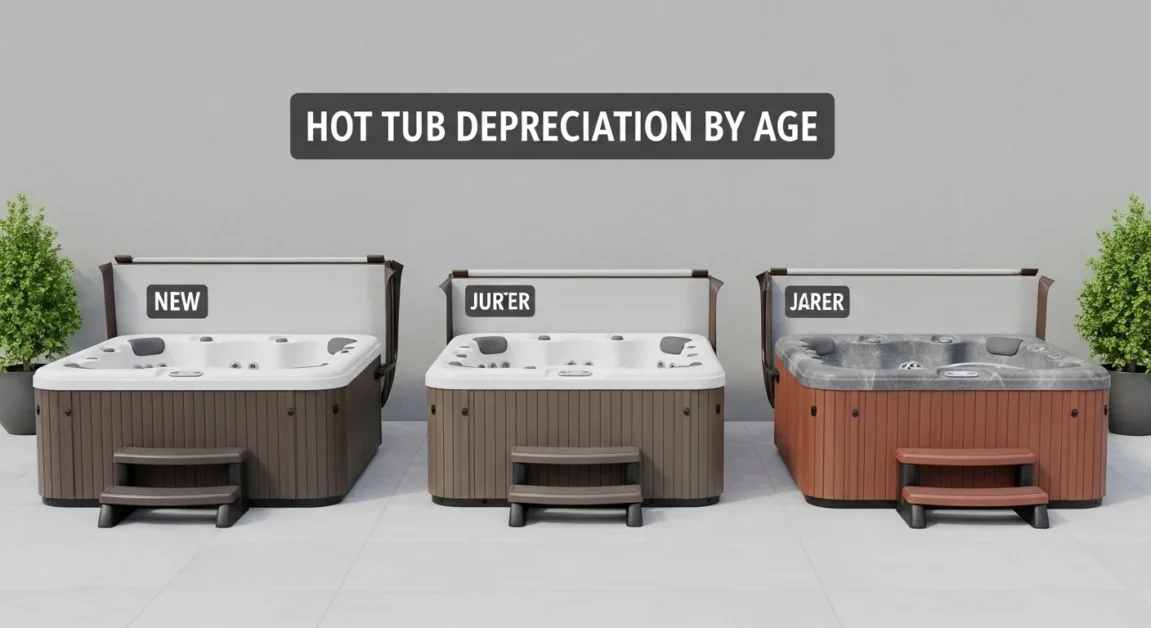
Age plays a bigger role than brand once a hot tub enters the resale market.
- New to 2 years, big value drop, limited buyer pool
- 3 to 5 years, condition matters more than brand
- 6 to 10 years, buyers expect repairs and discounts
- 10+ years, value becomes situational or near zero
Instead of guessing, a used hot tub value calculator gives a clearer picture based on age and condition.
Why hot tubs lose value faster than most people expect
Buyers aren’t just paying for the tub. They’re factoring in:
- Removal and transport costs
- Electrical setup risks
- Hidden leaks or failing components
That uncertainty pushes prices down fast. This is why many buyers frame the decision as repair vs replacement, which is covered clearly in this hot tub repair vs replacement guide.
The biggest factors that speed up or slow down depreciation
Not all hot tubs age the same.
Depreciation slows when a tub has:
- Strong insulation
- Consistent maintenance
- Moderate, regular use
It speeds up when lifespan is shortened, which is why understanding how long hot tubs last is critical when thinking about value over time.
How long a hot tub holds meaningful resale value
For most owners, meaningful resale value exists within a limited window.
Early on, buyers still see a hot tub as an upgrade. Later, it’s viewed as a liability. That shift explains why adding a spa doesn’t always translate into resale gains, something explored in increasing home value with a hot tub.
New vs used hot tubs, where depreciation hits the hardest
Buying new means taking the biggest depreciation hit, but it also means full warranty and peace of mind.
Used buyers avoid early depreciation but accept higher risk. If you’re weighing that tradeoff, this hot tub buying guide lays out where value still exists on both sides.
When repairing a hot tub stops making financial sense
Not every repair adds value.
Leaks, pumps, and heaters can quickly cost more than buyers are willing to pay. Seeing real numbers around hot tub leak repair cost often helps owners recognize when depreciation has reached the tipping point.
How to estimate your hot tub’s current value realistically
Original purchase price no longer matters once the tub is used.
What matters is:
- Age
- Condition
- Local buyer demand
Using a hot tub value calculator gives you a market-based estimate instead of a hopeful one.
Ways to slow depreciation and protect resale value
You can’t stop depreciation, but you can soften it.
Buyers care about:
- Clean water history
- Maintenance records
- Proof the tub works today
Following practical hot tub maintenance for sellers steps helps your spa stand out when it’s time to sell.
When selling a hot tub makes more sense than keeping it
Selling earlier often preserves more value than waiting.
If repairs are stacking up or usage has dropped, proper prep matters. This guide on preparing a hot tub for sale helps avoid common mistakes that scare buyers away.
Key takeaways:
Hot tubs depreciate fast, but that doesn’t mean they aren’t worth owning.
If you enjoy your spa, the real value comes from years of use, not resale. And if you want to learn more about ownership, maintenance, and smarter decisions, the full set of hot tub free resources can help.
Frequently asked questions about hot tub depreciation
How quickly do hot tubs depreciate?
Most hot tubs lose a large portion of their resale value in the first year. After that, depreciation slows, but value continues to drop steadily as the tub ages.
Why do hot tubs lose value so fast?
Hot tubs lose value quickly because buyers factor in hidden risks like leaks, worn components, and removal or installation costs they can’t see upfront.
How long does a hot tub hold resale value?
A hot tub usually holds meaningful resale value for about 5 to 7 years. After that, buyer demand drops sharply unless the tub is exceptionally well maintained.
Does brand matter for hot tub depreciation?
Brand matters early on, but as a hot tub gets older, condition and maintenance history matter far more than the name on the shell.
Is it better to buy a used hot tub to avoid depreciation?
Buying used avoids the steep first-year depreciation, but it comes with higher risk. A used hot tub only makes sense if its condition and service history are solid.
When is a hot tub no longer worth repairing?
A hot tub often isn’t worth repairing when repair costs approach or exceed its resale value, especially for major issues like leaks, pumps, or heaters.