How to Enjoy a Hot Tub Without Itchiness (Complete Guide)

Hot tubs are supposed to help you relax, not leave you scratching your skin afterward. If you’ve ever stepped out of your tub feeling itchy, irritated, or dealing with red bumps, you’re not alone. It’s one of the most common issues hot tub owners run into.
The good news is, this is almost always fixable. Once you understand what’s actually causing the irritation, it becomes pretty easy to prevent.
In this guide, you’ll learn exactly why hot tub itchiness happens, how to fix it fast, and how to make sure it doesn’t come back.

Why Does a Hot Tub Make You Itchy?
Let’s keep this simple. There isn’t just one cause. It’s usually a mix of a few things happening at the same time.
Chemical Irritation (Chlorine and Bromine)
Sanitizers like chlorine or bromine keep your water safe, but when levels get too high or too low, they can irritate your skin.
- Too much sanitizer → dry, burning skin
- Too little → bacteria growth
That imbalance is one of the biggest reasons people feel itchy after soaking.
Bacteria and Hot Tub Rash
If your water isn’t properly maintained, bacteria can grow quickly in warm water.
This can lead to something called hot tub rash, which shows up as:
- Red bumps
- Itchy patches
- Sometimes even mild infection
If you’re unsure about your water quality, it’s worth reviewing this hot tub water care guide to get things back on track.
Dry Skin from Hot Water
Hot water pulls moisture out of your skin. Even perfectly clean water can leave your skin feeling tight and itchy if you stay in too long.
This gets worse if:
- You already have dry skin
- You soak frequently
- You skip moisturizing afterward
Skin Sensitivity or Conditions
If you have eczema or sensitive skin, your body reacts more strongly to:
- Heat
- Chemicals
- Bacteria
Even small imbalances can trigger irritation.
The #1 Cause Most People Miss (Water Chemistry)
Here’s the truth. Most itchiness problems come down to water balance.
If your chemistry is even slightly off, your skin will notice before your eyes do.
Ideal Hot Tub Water Levels
Keep your water in these ranges:
- pH: 7.2 to 7.8
- Alkalinity: 80 to 120 ppm
- Sanitizer: within recommended levels
When these are balanced, your water feels smooth and safe.
What Happens When Levels Are Off
When things drift out of range, problems start fast:
- Low pH → acidic water that irritates skin
- High pH → sanitizer stops working
- Low sanitizer → bacteria grows
- High sanitizer → skin dries and burns
If you’re not sure how to fix these, you can use hot tub calculation tools to get exact chemical amounts without guessing.
5 Simple Ways to Prevent Hot Tub Itchiness
This is where things get practical. These steps alone solve most itchiness problems.
1. Balance Your Water Weekly
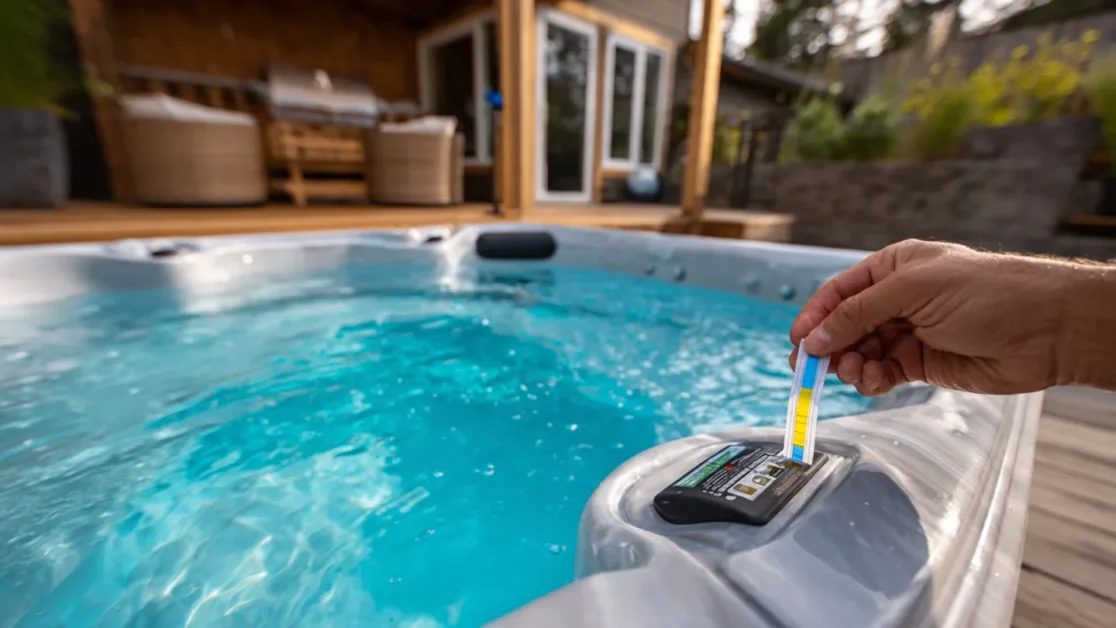
Test your water 2 to 3 times a week. It only takes a minute.
Make small adjustments instead of big ones. That keeps things stable and prevents sudden irritation.
2. Keep Your Hot Tub Clean
Dirty tubs = itchy skin. Simple as that.
Focus on:
- Cleaning filters regularly
- Wiping down surfaces
- Removing debris
If you’re not sure what tools help most, check out these essential hot tub cleaning tools that make maintenance easier.
3. Shower Before and After Soaking
This is one of the most underrated habits.
Before soaking:
- Removes sweat, oils, and bacteria
After soaking:
- Washes off chemicals
It makes a huge difference in skin comfort.
4. Avoid Lotions and Oils
Lotions, perfumes, and oils don’t belong in your hot tub.
They:
- Disrupt water chemistry
- Feed bacteria
- Cause foam and irritation
Stick to clean skin before entering.
5. Stay Hydrated and Moisturize
Hot water dries you out. Counter that by:
- Drinking water before and after
- Using a fragrance-free moisturizer
If dry skin is your main issue, these best hot tub additives for dry skin can help make soaking more comfortable.
Signs Your Hot Tub Is Causing Skin Problems
Sometimes it’s obvious. Other times, it sneaks up on you.
Watch for these signs:
- Itchy skin right after soaking
- Red bumps or rash
- Burning or stinging sensation
- Strong chemical smell in water
If you notice these, your water needs attention.
How to Fix Itchy Skin After Using a Hot Tub
Already dealing with irritation? Here’s what actually helps.
Rinse Immediately
Take a quick shower with clean, lukewarm water. This removes leftover chemicals from your skin.
Use a Cool Compress
A cool cloth can calm irritation fast, especially if your skin feels hot or inflamed.
Apply Moisturizer
Use something simple and fragrance-free. This restores moisture and reduces itching.
Take Antihistamines if Needed
If itching is intense, over-the-counter antihistamines can help calm your body’s reaction.
Hot Tub Rash (Folliculitis) – What You Need to Know
This is a step beyond normal itchiness.
What It Looks Like
- Small red bumps
- Pimple-like spots
- Itchy or tender skin
What Causes It
Usually bacteria from poorly maintained water.
Warm water + low sanitizer = perfect environment for bacteria.
How to Treat It Fast
- Stop using the hot tub temporarily
- Keep the area clean
- Use topical treatments if needed
If it doesn’t improve, see a doctor.
You can also learn how to prevent it by reviewing how to get rid of hot tub bacteria.
Common Hot Tub Mistakes That Cause Itchiness
A lot of this comes down to habits. Here are the biggest mistakes people make.
- Letting too many people use the tub at once
- Not testing water regularly
- Ignoring filter cleaning
- Adding too many chemicals at once
- Keeping water too hot
Even small mistakes add up over time.
Best Hot Tub Options for Sensitive Skin
If you’re upgrading or buying a new tub, some systems are much gentler on skin.
Low-Chlorine or Saltwater Systems
Saltwater systems produce softer-feeling water and reduce harsh chemical exposure.
Ozone and UV Systems
These reduce the amount of sanitizer needed, which helps prevent irritation.
Advanced Filtration Systems
Better filtration means fewer contaminants and cleaner water.
If you’re exploring options, browsing different types of hot tubs can help you choose something that fits your needs.
How to Prevent Itchiness Long-Term
Think of this like a routine, not a one-time fix.
Weekly Maintenance Routine
- Test water
- Adjust chemicals
- Clean filters
Staying consistent prevents most problems.
Regular Water Changes
Old water builds up contaminants over time.
A good rule:
- Change water every 3 to 4 months
If you’re unsure how, follow this step-by-step guide to refilling your hot tub.
Keep It Simple
You don’t need complicated routines.
Just:
- Clean water
- Balanced chemicals
- Good habits
That’s it.
Frequently Asked Questions
Can chlorine cause itching in hot tubs?
Yes, especially if levels are too high. Chlorine can dry out your skin and cause irritation when not properly balanced.
How do I know if my hot tub is causing a rash?
If you notice red bumps, itching, or irritation shortly after soaking, your hot tub water may be the cause.
How often should I change hot tub water?
Most hot tubs should be drained and refilled every 3 to 4 months to keep water clean and balanced.
Is a saltwater hot tub better for sensitive skin?
Many people find saltwater systems gentler because they use lower chlorine levels and feel softer on the skin.
What’s the fastest way to stop itching after soaking?
Rinse off immediately, apply moisturizer, and use a cool compress if needed to calm the skin.







2 Comments
Comments are closed.