

Infrared Sauna Benefits: Evidence, Limits & Common Myths

Infrared saunas expose the body to heat at a lower cabin-air temperature than many traditional saunas. People commonly report warmth and relaxation, but consumer marketing often turns early or indirect findings into claims that are much stronger than the evidence.
This page examines infrared-sauna benefits, research quality, and limits. For technology, choosing a unit, and general use, start with the infrared sauna guide.
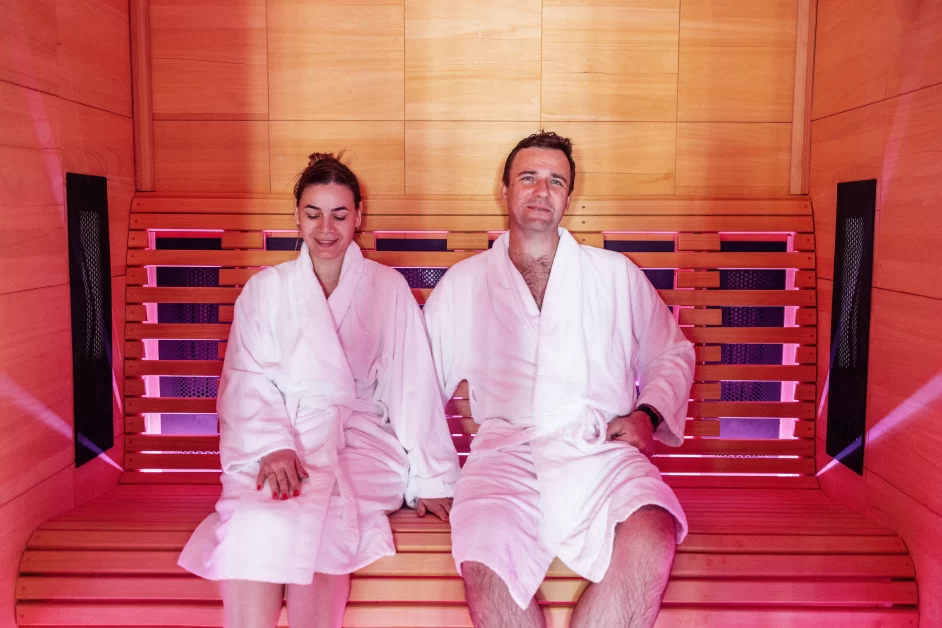
What Happens During an Infrared Sauna Session?
Radiant energy is absorbed at the skin and converted to heat. Body temperature and heart rate may rise, skin blood flow increases, and sweating helps regulate temperature. Those are physiological responses to heat—not proof that the session treats disease or reproduces the effects of exercise.
Evidence at a Glance
| Claim | Evidence-aware interpretation |
|---|---|
| Relaxation and comfort | A common subjective experience and reasonable wellness use, but not a treatment for anxiety, depression, or chronic stress disorders. |
| Exercise recovery | Small studies report possible improvements in soreness or selected performance measures. Results are not broad proof for every athlete or routine. |
| Cardiovascular effects | Heat changes heart rate and circulation acutely. Clinical infrared heat programs have been studied in selected supervised patients, but home sauna use is not cardiovascular treatment. |
| Pain or stiffness | Warmth may feel soothing. Small or combined-intervention studies cannot establish a cure or a substitute for diagnosis and treatment. |
| Sleep | Some users find an evening heat routine relaxing, but infrared-sauna evidence for treating insomnia is limited. |
| Skin health | Sweating and warmth change skin moisture temporarily. Claims about treating acne, eczema, psoriasis, aging, or “opening pores to remove toxins” are not established. |
What the Research Review Found
A 2018 systematic review of repeated dry-sauna studies included infrared and Finnish-style saunas. It found potential benefits across several outcomes, but only 13 of 40 included studies were randomized trials, many samples were small, interventions differed substantially, and the authors found insufficient evidence to prescribe a particular sauna type, frequency, or duration for a clinical condition.
That distinction matters because evidence from medically supervised far-infrared programs, small patient groups, or traditional Finnish-sauna cohorts cannot automatically be transferred to every consumer infrared cabin.
Infrared Sauna and Workout Recovery
One randomized crossover study involved 16 male basketball players and compared a single post-exercise infrared-sauna session with passive recovery. It reported less subjective soreness and better preservation of selected explosive-performance measures after the sauna condition. The sample was small and athlete-specific, so the result is promising rather than definitive.
See the published study and the practical workout sauna timing guide. Heat adds physiological strain and does not replace sleep, nutrition, hydration, medical care, or a training plan.
Claims the Evidence Does Not Support
- Detoxification: Sweat is mainly water and electrolytes used for cooling. Sweating does not replace the liver, kidneys, lungs, or medical treatment for toxic exposure.
- Fat loss: Short-term scale changes are mostly fluid loss. A temporary rise in heart rate or energy expenditure is not equivalent to losing body fat.
- Immune boosting: Heat responses do not prove fewer infections or better immune function in everyday users.
- Hormone or cortisol regulation: Acute hormone measurements do not establish treatment for a hormonal disorder or chronically “high cortisol.”
- Superior wavelength benefits: Near, mid, far, and full-spectrum labels do not by themselves demonstrate better clinical outcomes.
- Disease treatment: A consumer infrared sauna is not a treatment for cancer, heart disease, arthritis, chronic pain, skin disease, depression, or another medical condition.
Observational Association Is Not Causation
Some widely reported long-term sauna associations come from Finnish populations using traditional saunas. People who sauna frequently may also differ in fitness, health care, income, social habits, and other factors. Those studies can identify associations but cannot prove that an infrared sauna caused a lower disease risk.
Benefits Must Be Weighed Against Risk
Heat exposure can cause dehydration, lightheadedness, low blood pressure, burns, falls, and overheating. Risk may be higher with alcohol, acute illness, impaired sensation, pregnancy, unstable cardiovascular disease, some medicines, or cancer treatment. Read the infrared-sauna risks guide before using benefit claims to make a decision.
Practical Recommendation
Choose an infrared sauna for a heat and relaxation experience—not because a seller promises detoxification, calorie burning, deeper healing, or disease prevention. Use a certified product according to its manual, start conservatively, and discuss heat exposure with a clinician when a medical condition or treatment could change your risk.