

Which Sauna is Right for Me?

If you like strong, dry heat and want the classic sauna feel, a traditional sauna will fit you best. If you need something gentler, especially for muscle or joint pain, an infrared sauna feels easier on the body and heats you from the inside out.
If you want humid warmth for your skin and sinuses, a steam room is the better pick. Your ideal sauna comes down to heat preference, budget, space, and how much maintenance you’re willing to handle.
Quick Decision Tree to Find Your Sauna
If you want strong, classic heat, go traditional. If you need gentle warmth and deeper muscle comfort, go infrared. If you want a humid spa feel, go steam. And if you love heritage-style heat, go smoke sauna.
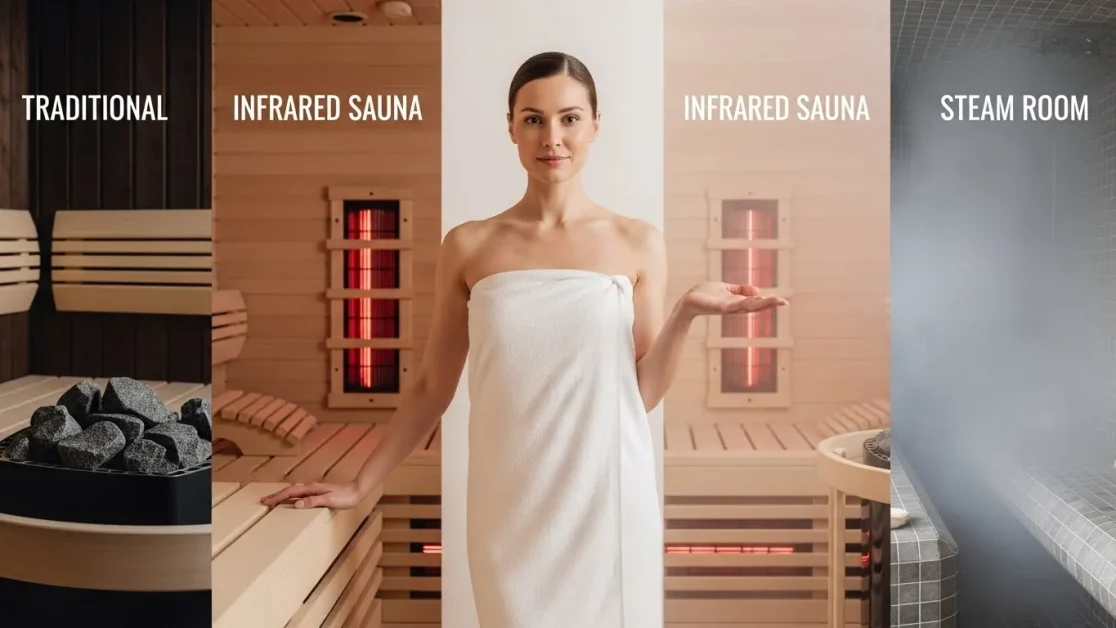
Use this simple path to see which sauna fits your goals, space, and comfort level. Just follow the choices that match you best.
1. How much heat do you enjoy?
- I like strong, intense heat → Go to Step 2
- I prefer mild, gentle warmth → Choose Infrared Sauna
- I like warm, humid air → Choose Steam Room
2. Do you want dry heat or some steam?
- Dry heat only → Choose Traditional Sauna
- A little burst of steam is fine → Choose Traditional Sauna
- Full humidity for skin and breathing → Choose Steam Room
3. How much space do you have?
- Very little space → Choose Infrared or Portable Sauna
- A medium-sized room indoors → Traditional or Infrared
- Plenty of outdoor space → Traditional Outdoor Sauna or Smoke Sauna
4. What’s your main wellness goal?
- Deep sweat and detox → Traditional Sauna
- Pain relief or muscle recovery → Infrared Sauna
- Sinus or skin hydration → Steam Room
- Cultural, rustic experience → Smoke Sauna
5. What’s your budget range?
- Under 1,000 dollars → Portable Sauna
- 1,000 to 6,000 dollars → Infrared Sauna
- 4,000 to 12,000 dollars → Traditional Sauna
- 5,000 to 15,000 dollars → Steam Room
- 8,000 to 15,000 dollars → Smoke Sauna
Saunas, Types, and Features
Choosing the right sauna depends on your preferences, health goals, and practical considerations. Here’s a structured guide to help you decide:
1. Traditional Sauna (Finnish Sauna)
- Heat & Humidity: 70–100°C (158–212°F), low humidity (10–20%).
- How It Works: Heated rocks (wood-burning, electric, or gas) create dry heat; water can be added for steam.
- Pros:
- Authentic, social experience.
- Cardiovascular benefits, relaxation, and muscle recovery.
- Compatible with aromatherapy (eucalyptus oils).
- Cons:
- High energy use; longer heat-up time (30+ mins).
- Intense heat may not suit everyone.
- Best For: Sauna purists, social users, and those seeking proven cardiovascular benefits.
2. Infrared Sauna
- Heat & Humidity: 50–60°C (122–140°F), no added humidity.
- How It Works: Infrared panels directly warm the body (penetrates deeper tissues).
- Pros:
- Gentle heat; quicker sessions (15–30 mins).
- Energy-efficient; portable or compact options.
- May aid muscle/joint pain and chronic conditions.
- Cons:
- Less traditional “sauna feel.”
- Limited social use (often 1–2 people).
- Best For: Solo users, chronic pain relief, and those with lower heat tolerance.
3. Steam Room (Turkish Bath)
- Heat & Humidity: 40–50°C (104–122°F), 100% humidity.
- How It Works: Steam generator creates moist, humid air.
- Pros:
- Hydrates skin; clears respiratory congestion.
- Relaxing for muscles and joints.
- Cons:
- High maintenance (mold prevention, slippery floors).
- Can feel claustrophobic.
- Best For: Respiratory issues, humid heat lovers, and skincare.
4. Smoke Sauna (Savusauna)
- Heat & Humidity: 70–90°C (158–194°F), low humidity.
- How It Works: Wood-fired, with smoke infusion (no chimney).
- Pros:
- Unique, cultural experience.
- Soft, natural heat.
- Cons:
- Rare; requires outdoor space and setup.
- Best For: Traditionalists and cultural enthusiasts.
Key Factors to Consider
Health Goals:
- Cardio/Detox: Traditional sauna.
- Muscle/Joint Pain: Infrared.
- Respiratory/Congestion: Steam room.
Heat Tolerance:
- Prefer intense, dry heat? → Traditional.
- Sensitive to heat? → Infrared.
- Enjoy humid warmth? → Steam room.
Space & Budget:
- Limited space/budget: Infrared (portable units start at ~$1,000).
- Outdoor space: Traditional barrel sauna.
- High budget/permanent install: Custom steam room.
Maintenance:
- Low upkeep: Infrared.
- High upkeep: Steam room (mold prevention).
Social vs. Solo:
- Social: Traditional or steam room.
- Solo: Infrared.

Quick Sauna Comparison Table
| Sauna Type | Heat Level | Humidity | Best For | Avg Cost | Space Needed | Why People Choose It |
|---|---|---|---|---|---|---|
| Traditional Sauna | Hot, 150–195°F | Low, can add steam | Detox, heart health, social use | 4,000–12,000 | Indoor or outdoor, ventilated room | Strong heat, classic feel |
| Infrared Sauna | Mild, 120–140°F | Dry | Pain relief, low heat tolerance, daily use | 1,000–6,000 | Small indoor space | Deep muscle warmth, energy-efficient |
| Steam Room | Warm, 110–120°F | 100 percent humidity | Skin hydration, congestion relief | 5,000–15,000 | Fully waterproof indoor room | Moist heat and spa-like experience |
| Portable Sauna | Varies | Dry or steam | Small spaces, low budget, renters | 200–800 | 4–6 sq ft | Easy setup, budget-friendly |
| Smoke Sauna | Hot, 160–194°F | Low | Cultural sauna fans | 8,000–15,000 | Outdoor only | Rustic, traditional ritual experience |
If you’re planning regular sessions, the guide on how long you should stay in a sauna helps you pick safe times that fit your heat tolerance.
Sauna Cost Breakdown
| Sauna Type | Typical Price Range | Operating Cost per Session | Installation Needs | Why People Choose It |
|---|---|---|---|---|
| Traditional Sauna | 4,000 to 12,000 | 1 to 3 dollars | Ventilation, 240v power, indoor or outdoor setup | Strong heat, classic sauna feel, great for social use |
| Infrared Sauna | 1,000 to 6,000 | 15 to 60 cents | Standard outlet, small indoor space | Deep muscle warmth, energy-efficient, gentle heat |
| Steam Room | 5,000 to 15,000 | 2 to 5 dollars | Waterproofing, tiling, steam generator | Spa-like humidity, skin hydration, helps congestion |
| Portable Sauna | 200 to 800 | Very low, standard outlet | No install, fits small rooms | Budget-friendly, fast setup, great for renters |
| Smoke Sauna | 8,000 to 15,000 | 3 to 6 dollars (firewood) | Outdoor space, wood storage | Rustic, traditional heat experience |
Which Sauna is Right for Me:
Which sauna might be your perfect match? Let’s dive into the wonderful world of saunas and find the one that suits you like a cozy, relaxing glove. Choosing a sauna made of high-quality materials such as solid wood or bamboo would be best, not cheap plywood or plastic.
It would be best to choose a sauna with patented heating technology that delivers consistent and optimal infrared energy without emitting harmful electromagnetic fields (EMFs) or volatile organic compounds (VOCs).
Choosing the Right Sauna for You
Finding the perfect sauna can be an exciting yet challenging task. With various types and features available, it’s essential to understand what suits your needs best. Here’s a guide to help you make an informed decision.
Types of Saunas
- Traditional Finnish Saunas
- Description: A heater is used to warm up rocks and heat the air.
- Temperature: 150-195°F.
- Humidity is low, but water can be poured onto the rocks to create steam.
- Experience: Intense heat with adjustable steam levels.
- Infrared Saunas
- Description: Uses infrared light to heat the body directly without warming the air.
- Temperature: 120-140°F.
- Humidity: Dry.
- Experience: Gentle heat, good for a longer session.
- Steam Saunas
- Description: Uses steam to create a humid environment.
- Temperature: 110-120°F.
- Humidity: Very high.
- Experience: Wet heat is excellent for the skin and respiratory system.
- Portable Saunas
- Description: Compact, often foldable saunas that can be set up easily.
- Temperature: Varies by type (infrared or steam).
- Humidity: Varies.
- Experience: Convenient and space-saving.
If you want a better sense of how each sauna actually feels, this guide on sauna temperature ranges breaks down the heat levels most people find comfortable.
Key Factors to Consider
Space and Installation
- Indoor vs. Outdoor: Decide if you want an indoor sauna for privacy or an outdoor sauna to enjoy nature.
- Size: Ensure you have enough space for the sauna you choose. Measure the area and consider the sauna’s dimensions.
Health Benefits
- Cardiovascular Health: Traditional and infrared saunas can help improve circulation.
- Detoxification: Infrared saunas are particularly effective at promoting detox through sweating.
- Relaxation and Stress Relief: All saunas offer relaxation benefits, but the method of heat delivery can affect your comfort.
Cost and Maintenance
- Initial Investment: Traditional saunas often have higher upfront costs than infrared or portable saunas.
- Operating Costs: Infrared saunas are generally more energy-efficient, reducing ongoing costs.
- Maintenance: Steam saunas require more upkeep due to the high humidity.
When I first decided to install a sauna at home, I was overwhelmed by the choices. After considering my small space and need for easy maintenance, I opted for a portable infrared sauna. It was affordable, easy to set up, and provided the health benefits I sought without high operating costs.
Understanding Your Sauna Needs
Regarding saunas, the options can be as steamy as the experience itself! So, let’s start by asking: What do you seek in a sauna? Is it all about that deep, sweat-inducing heat or a more gentle, soothing warmth? Are you after a traditional sauna or an infrared one that targets your muscles with a more subtle approach?
Traditional Saunas: Embracing the Classic Heat
If you love that classic, intense heat and the occasional splash of water on hot rocks for that sizzling steam, a traditional sauna might be your match in heat heaven. With wood-fired or electrically heated stoves, these saunas bring the temperatures soaring for a detoxifying and invigorating experience.
Infrared Saunas: A Subtle Heat Embrace
Now, if you prefer a milder heat penetrating deeper into your muscles while lowering the overall sauna temperature, the infrared sauna could be just the ticket. These infrared heaters directly warm your body without significantly heating the surrounding air, providing a gentle, soothing sensation.
Best Sauna Choice for Your Situation
Sometimes the easiest way to pick a sauna is to see what works for people in situations similar to yours. These real examples make the decision clearer and help you match your goals, space, and budget.
If You Want the Strongest Sweat
A traditional sauna fits best because it reaches 150 to 195°F. Studies from Finland show regular high-heat sessions can support heart health and improve circulation. Most people who want a deep, detox-style sweat stick with this classic dry heat.
If You Have Muscle or Joint Pain
Infrared saunas tend to be the go-to choice. The heat stays around 120 to 140°F but reaches deeper layers of muscle. Many users with soreness or stiffness say the warmth feels easier to tolerate and helps them recover faster after workouts.
If You Struggle With Congestion
Steam rooms help more because the humidity hits 100 percent. The warm moisture can open airways, loosen mucus, and hydrate dry sinuses. People with seasonal allergies or stuffy noses usually notice relief within a few minutes.
If You Live in a Small Apartment
Infrared or portable saunas are the safest bet. You only need about 12 to 18 square feet of space, and most plug into a standard outlet. A portable unit even folds up when you’re not using it.
If You Want a Spa Feel at Home
Steam rooms give the closest match to a spa session. The warm fog, soft heat, and skin hydration create that calm, relaxed vibe you get at wellness centers. Just keep in mind that steam setups require waterproofing and more upkeep.
If You Want Social Sauna Time
Traditional saunas work better because they heat the whole room evenly and fit more people comfortably. Outdoor barrel saunas are popular for this, especially when you want friends or family to join you.
If You’re on a Tight Budget
Portable saunas run between 200 and 800 dollars, which makes them an easy entry point. They heat fast, use very little electricity, and still give you the sweat and relaxation benefits without a major investment.
If You Prefer Outdoor Relaxation
A traditional outdoor sauna or barrel sauna fits nicely. These hold heat well even in cold weather and create a quiet retreat right in your backyard. Most people place them near a deck or garden path for easy access.
If You Want the Gentlest Experience
Infrared is the softest on your body. It warms you directly instead of heating the air first, so you can stay in longer without feeling overwhelmed. Many beginners start here to build heat tolerance.
If You Want a Cultural or Rustic Feel
Smoke saunas are rare but unforgettable. The wood-fired heat and natural scent create a grounded, old-world style experience. They stay hot for hours and feel softer than you’d expect from such high temperatures.
Space Requirements and Setup Needs
Picking the right sauna gets easier once you know how much room each type needs and what the setup looks like. A quick breakdown helps you see what fits your home without guesswork.
Basic Space Guidelines
Most full-size saunas need 12 to 30 square feet. Outdoor models usually need more clearance, especially around the heater and door. Steam rooms always need waterproof walls and flooring.
How Much Space Each Sauna Needs
| Sauna Type | Minimum Space Needed | Power Requirements | Setup Notes |
|---|---|---|---|
| Traditional Sauna | 16 to 30 sq ft | 240v (electric) or wood-burning | Needs ventilation, works indoors or outdoors, heavier build |
| Infrared Sauna | 12 to 18 sq ft | Standard 110v outlet | Lighter panels, quick to install, great for tight indoor spots |
| Steam Room | 20 to 35 sq ft | 240v steam generator | Must be waterproof, tiled, and sealed to prevent moisture leaks |
| Portable Sauna | 4 to 6 sq ft | Standard 110v outlet | Folds up when not in use, no special setup |
| Smoke Sauna | 25 to 40 sq ft | No electricity, wood-burning | Outdoor-only, requires fire-safe surface and smoke ventilation |
Indoor vs Outdoor Fit
Indoor setups work well when you want privacy and year-round use. Infrared models fit best here because they run on a normal outlet and don’t need heavy ventilation.
Outdoor setups shine when you want more space and a natural vibe. Barrel saunas and smoke saunas fit perfectly outside, especially if you already have a patio or garden corner available.
Ceiling Height
Most saunas need a minimum ceiling height of 6.5 to 7 feet. Traditional saunas benefit from a bit more height because hot air rises and improves circulation.
Flooring
Infrared and traditional saunas can sit on tile, concrete, or vinyl. Steam rooms require a slip-resistant, waterproof surface with a slight slope toward a drain.
Deciding Between Indoor and Outdoor Saunas
Indoor Saunas: Cozy Comfort Within Reach
Picture this: you step from your bedroom straight into a sauna. Indoor saunas offer convenience and year-round access, shielded from the whims of weather. Whether it’s a compact corner in your bathroom or a dedicated room, indoor saunas blend seamlessly into your home’s cozy embrace.
Outdoor Saunas: Nature’s Steamy Sanctuary
Embrace the outdoor sauna experience surrounded by nature’s charm! Placed in your garden or patio, outdoor saunas offer a serene escape. Imagine soaking in the heat while birds chirp and trees sway—a blend of relaxation and natural beauty.
Considering Space and Setup
Let’s talk about your space! Do you have ample room for a standalone sauna, or are you looking for a more compact option that fits snugly into a corner? Infrared saunas, typically lighter and easier to install, might be more suitable for smaller spaces than bulkier traditional ones.
Scientific Evidence and Helpful Stats
Sauna research keeps growing, and a few solid studies make it easier to understand what each type offers. These numbers help you choose based on real benefits, not guesswork.
Heart Health and Circulation
Regular traditional sauna use has been linked to better cardiovascular health. A long-term Finnish study found that people who took 4 to 7 sauna sessions a week had a 63 % lower risk of fatal heart events compared with once-a-week users. The higher heat triggers stronger blood flow, which helps overall circulation.
Muscle and Joint Relief
Infrared saunas reach deep into soft tissue with lower temperatures. Small clinical studies report that infrared sessions may reduce muscle soreness by about 20 to 30 % after exercise. Many people with chronic joint stiffness also say the gentle heat feels easier to handle than classic dry heat.
Calorie Burn and Metabolism
Your heart rate rises during a sauna session, which slightly boosts calorie burn. Traditional saunas typically increase heart rate by 30 to 50 percent, which leads to burning roughly 150 to 300 calories per session depending on your size and heat tolerance.
Skin and Hydration
Steam rooms bring 100 percent humidity, which softens dead skin cells and helps hydration. People dealing with dry skin, sinus congestion, or seasonal irritation often notice relief within 5 to 10 minutes because the warm moisture opens pores and loosens mucus.
Recovery and Stress Relief
Heat exposure helps lower cortisol levels. In small human trials, both infrared and traditional sauna users showed measurable drops in stress hormones after short sessions. The warmth also supports circulation, which helps bring oxygen-rich blood to tired muscles.
Immune Support
Short bursts of heat may help activate immune responses. Research shows that sauna use can temporarily increase white blood cell count by up to 40 percent, especially after high-heat sessions. This doesn’t prevent illness, but it may help your body respond faster.
Breathing and Airway Relief
Steam rooms help the most with congestion. Moist heat can expand airway passages and reduce dryness. People with temporary congestion often report easier breathing during the session because humidity loosens mucus and hydrates irritated nasal passages.
If burning calories matters to you, the breakdown of how many calories you burn in a sauna gives you real numbers that help you compare each style.
Health Benefits Tailored for You
Saunas offer a plethora of health benefits beyond relaxation. From stress reduction to improved circulation and detoxification, each type of sauna brings unique perks. For instance, traditional saunas are renowned for their intense sweat sessions, while infrared saunas often tout benefits like better skin rejuvenation and pain relief.
Your Wellness Journey
Ultimately, the perfect sauna for you boils down to personal preference. If you fancy the robust heat of a traditional sauna or the subtler embrace of infrared rays, it’s all about finding the one that resonates with you on your wellness journey.
Anyone choosing a sauna for pain relief should skim the detailed list of infrared sauna benefits because it explains why the gentler heat works so well for sore muscles and stiff joints.
Feeling the heat? Let’s find that perfect sauna for you! Cheers to your sauna-national journey!
NOTE
The preference for sauna type varies from person to person based on individual health conditions and preferences. Always consult with a healthcare professional before starting sauna sessions, especially if you have underlying health concerns.

Check out the Healing in Style for more reading by Hot Tub Patio and more information about Saunas.
Transform Your Home Oasis Now!
🔥 Elevate your relaxation game with our premium portable steam saunas! Click below to explore the ultimate in-home spa experience and start your journey to rejuvenation. 🌿
Discover Your SaunaFinal Recommendations
- For Intense Heat & Socializing: Traditional sauna.
- For Chronic Pain & Efficiency: Infrared sauna.
- For Congestion & Skin Hydration: Steam room.
- For Cultural Experience: Smoke sauna.
Always consult a health care provider before use if you have medical conditions (e.g., heart issues, pregnancy). Stay hydrated and limit sessions to 10–20 minutes.
FAQs
If you have any questions or comments, please leave a message below. I would love to hear from you and provide assistance. Thank you for reading, and have a happy sweating!




2 Comments