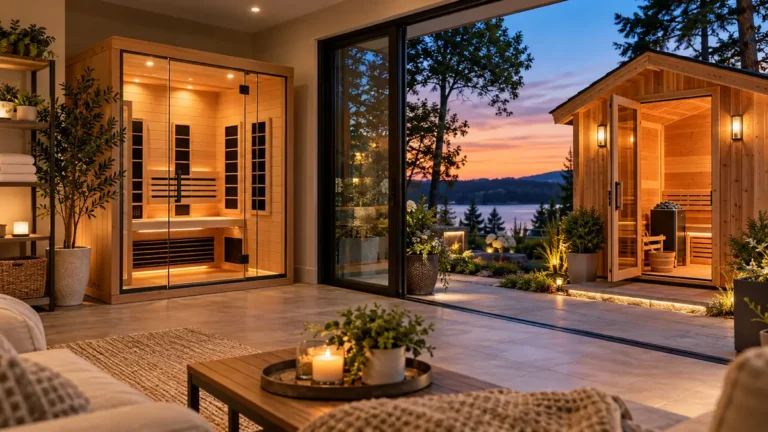
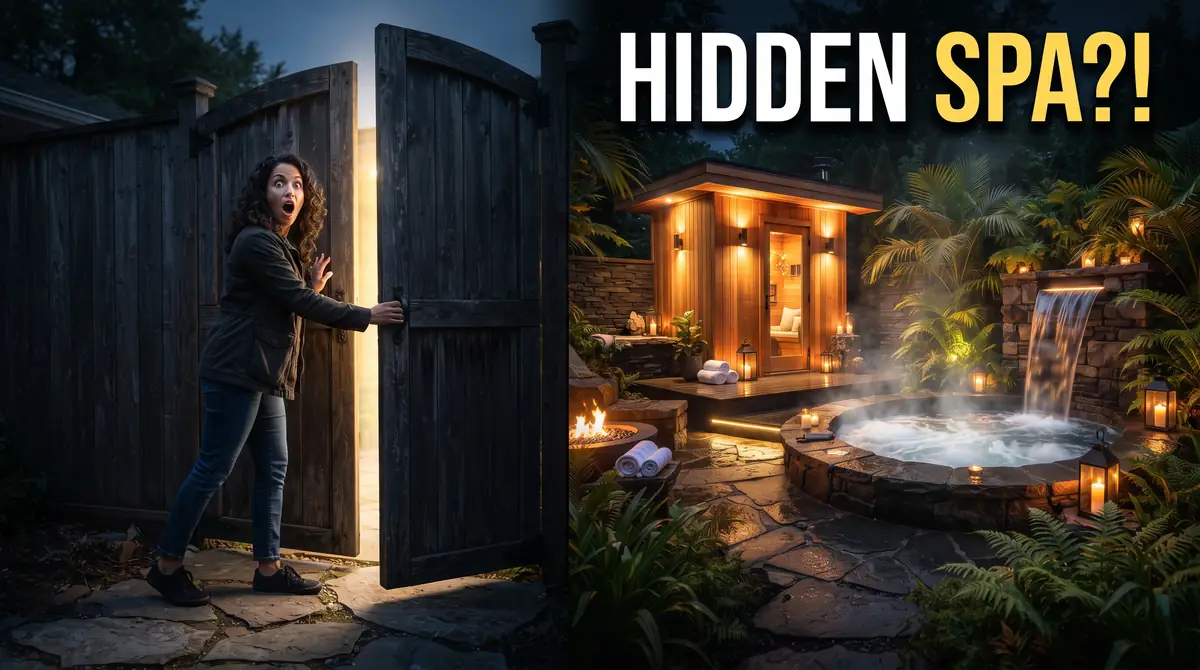
The Wellness Hut: How to Build the Ultimate Backyard Spa Retreat in

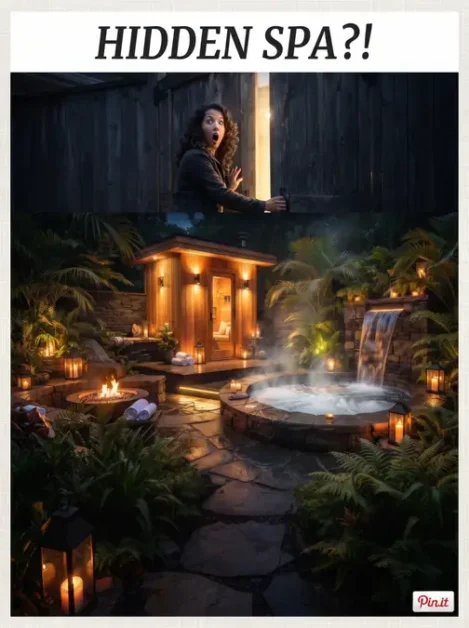
A wellness hut is a dedicated backyard wellness space that typically combines:
- A hot tub for relaxation and hydrotherapy
- A cold plunge for contrast therapy and post-heat recovery
- A sauna for dry heat sessions
- Optional additions like a pergola, privacy screens, outdoor shower, storage bench, or fire feature
Most homeowners can build a functional wellness hut for $7,000 to $25,000, (estimated) depending on the equipment selected and whether existing patio space and electrical service are already available.
What Is a Wellness Hut?
A wellness hut isn’t necessarily a separate building. Instead, it’s a carefully planned outdoor area where several wellness features work together to create a spa-like experience at home. For related planning, see Greenville SC's Finest Hotels for a Soak and Stay Experience.
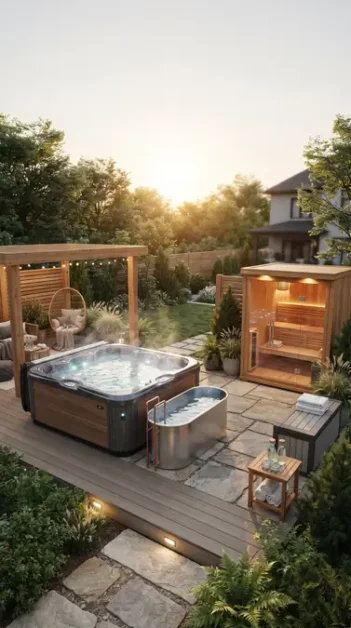
The idea is simple: keep your wellness equipment close enough together that moving between each station feels natural and comfortable. For related planning, see Hot Tub Accessories That Actually Improve Your Soak (2026 Guide).
A typical setup includes three primary elements:
Hot Tub
The hot tub serves as the centerpiece of most wellness huts. For related planning, see The Ultimate Guide to Redneck Hot Tubs.
It provides:
- Hydrotherapy for sore muscles
- Warm-water relaxation
- Stress reduction
- Social seating
- Year-round enjoyment
Most homeowners spend the majority of their time here, making it the foundation of the entire backyard retreat.
If you’re still deciding which spa fits your space, start with our Hot Tub Buying Guide to compare different types, features, and sizes before making a purchase.
Cold Plunge
Cold plunge tubs have become increasingly popular as more homeowners incorporate contrast therapy into their wellness routines. For related planning, see The Best Green Bay Hotels with Hot Tub Luxuries.
Most residential cold plunges operate between 39°F and 55°F, allowing users to alternate between heat and cold exposure.
Benefits may include:
- Faster post-workout recovery
- Reduced muscle soreness
- Improved alertness
- A refreshing cooldown after sauna sessions
Portable ice baths, insulated tubs, and self-chilling plunge systems all work well depending on your budget. For related planning, see How to prevent hot tub itchiness.
Sauna
The third piece completes the wellness cycle.
Homeowners generally choose between:
- Infrared saunas
- Traditional electric saunas
- Wood-burning outdoor saunas
Infrared models continue to be popular because they:
- Heat quickly
- Require less space
- Consume less electricity
- Install more easily on existing patios
Traditional cedar saunas remain a favorite for homeowners seeking an authentic Nordic-style experience.
Why Backyard Wellness Spaces Are So Popular
The growing popularity of backyard wellness spaces isn’t simply a design trend. Several lifestyle changes have made these compact outdoor retreats more practical than ever. For related planning, see 10 Swimming Pool Games to Make a Splash This Summer.
Year-Round Outdoor Living
Unlike swimming pools that often sit unused during colder months, a hot tub and sauna can be enjoyed throughout the year.
Many homeowners actually use their spa more frequently during fall and winter than in summer, making wellness spaces one of the most versatile backyard upgrades available.
If you’re comparing options, our guide to affordable hot tubs can help you find models that fit both your budget and your backyard.
Smaller Lots Require Smarter Design
New homes often include smaller backyards than they did a decade ago.
Rather than trying to fit a large swimming pool into limited space, homeowners are choosing compact wellness zones that deliver multiple experiences within a relatively small footprint.
An area measuring roughly 10 × 16 feet is often enough for:
- A four-person hot tub
- A compact cold plunge
- A two- or three-person sauna
- Walking space between each feature
Before choosing a spa, check our Hot Tub Size and Dimensions Guide to make sure your layout has enough clearance for installation and maintenance.
Wellness Has Become Part of Everyday Life
Many people now prioritize stress management, recovery, and relaxation at home.
Instead of traveling to a spa or wellness center every week, homeowners can enjoy:
- Evening hot tub sessions
- Morning cold plunges
- Weekend sauna routines
- Quiet outdoor relaxation
Having these features just steps from the back door makes healthy habits easier to maintain.
Outdoor Spaces Are Becoming More Personalized
Today’s patios aren’t designed only for entertaining large groups.
Many homeowners now prefer outdoor spaces built around daily use by one or two people.
A wellness hut creates a peaceful environment for reading, stretching, relaxing, or unwinding after work without requiring a large backyard or expensive landscaping project.
For more backyard inspiration, explore our ideas for creating a patio with a hot tub and fire pit.
Wellness Hut vs. Swimming Pool
If you’re deciding between building a pool or creating a wellness retreat, comparing long-term use is helpful.
| Feature | Wellness Hut | Swimming Pool |
|---|---|---|
| Typical footprint | 100–200 sq. ft. | 500+ sq. ft. |
| Year-round use | Yes | Depends on climate |
| Heating costs | Lower | Higher |
| Installation | Faster | Longer |
| Daily maintenance | Moderate | Higher |
| Relaxation | Excellent | Good |
| Hydrotherapy | Yes | Limited |
| Recovery features | Yes | No |
Pools remain a fantastic option for families who enjoy swimming, but many homeowners find themselves using a hot tub, sauna, or cold plunge far more often because they’re comfortable in every season.
Benefits of Combining Heat and Cold
One reason wellness huts have gained attention is the ability to move easily between warm and cool environments.
Many homeowners enjoy alternating between:
- Sauna
- Hot tub
- Cold plunge
- Relaxation period
This style of contrast therapy has become increasingly popular among athletes and wellness enthusiasts because it provides a refreshing recovery experience while encouraging dedicated relaxation time.
The ideal routine depends on personal preference, fitness level, and any medical conditions. If you have cardiovascular concerns or other health conditions, speak with your healthcare provider before using prolonged heat or cold exposure.
You can also read our complete guide to hot tub therapy to learn how hydrotherapy supports relaxation and muscle recovery.
Planning Your Wellness Hut Before Buying Anything
One of the biggest mistakes homeowners make is purchasing equipment before planning the layout.
Instead, start with the available space.
Ask yourself:
- How much patio area do you have?
- Will the equipment fit through gates or side yards?
- Where is your electrical service located?
- Is drainage already available?
- Will neighbors have a direct view?
- Do you want everything covered by a pergola or only the hot tub?
Sketching your layout first often prevents expensive changes later.
When planning your space, leave enough room to:
- Remove spa covers
- Open sauna doors fully
- Walk safely around equipment
- Perform routine maintenance
- Move comfortably between each wellness station
Wellness huts work best when every element feels connected without making the space feel crowded.
If you’re designing a new outdoor space, our Hot Tub Deck and Patio Building Guide walks through the planning process from base preparation to final layout.
Choosing the Best Location
Before purchasing equipment, evaluate your backyard carefully.
The best locations usually offer:
- A level surface
- Convenient electrical access
- Good drainage
- Privacy from neighboring homes
- Easy access from the house
- Space for future upgrades
Many homeowners place their wellness hut close to the back door so it remains inviting even during colder weather.
If you’re planning additional features like a pergola, outdoor shower, towel storage, or privacy wall, reserve space for those now rather than trying to add them later.
You may also find our guide to outdoor furniture materials helpful when selecting weather-resistant seating, storage benches, and accessories for your wellness retreat.
3 Wellness Hut Layouts That Fit Real Patios
One of the biggest advantages of a wellness hut is that it can fit almost any backyard. Whether you have a compact patio or a spacious outdoor living area, careful planning allows you to combine a hot tub, cold plunge, and sauna without making the space feel crowded.
The goal is to keep each feature close enough together that moving between them feels effortless while still leaving enough room for maintenance and safe walking paths.
Layout 1: Small Patio Wellness Hut (8 × 12 Feet)
Best for:
- Townhomes
- Small patios
- Compact decks
- Side yards
- Portable spa setups
Even a small patio can become a relaxing wellness retreat with the right equipment.
A typical layout includes:
- 2-person plug-and-play hot tub
- Portable cold plunge tub
- 2-person infrared sauna
- Small towel rack or storage bench
Suggested Layout
Sauna
│
Cold Plunge
│
Hot Tub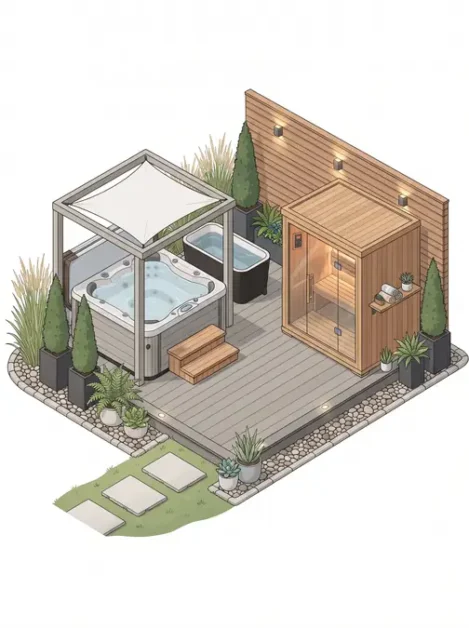
Keeping the cold plunge between the sauna and hot tub minimizes walking distance during contrast therapy.
Why This Layout Works
- Requires less than 100 square feet
- Lower installation costs
- Simple electrical requirements
- Easy to expand later
If you’re working with limited space, our guide to 2-person inflatable hot tubs can help you find compact models designed for smaller patios.
Layout 2: Medium Backyard Wellness Hut (10 × 16 Feet)
Best for:
- Most suburban homes
- Average patios
- Families
- Couples
This is the layout we recommend for most homeowners because it provides enough room for movement without requiring a large backyard.
A typical setup includes:
- Four- or five-person hot tub
- Chest-style cold plunge with chiller
- Three-person infrared or traditional sauna
- Outdoor bench
- Towel hooks
- Storage cabinet
Suggested Layout
Sauna      Bench

Cold Plunge

Hot Tub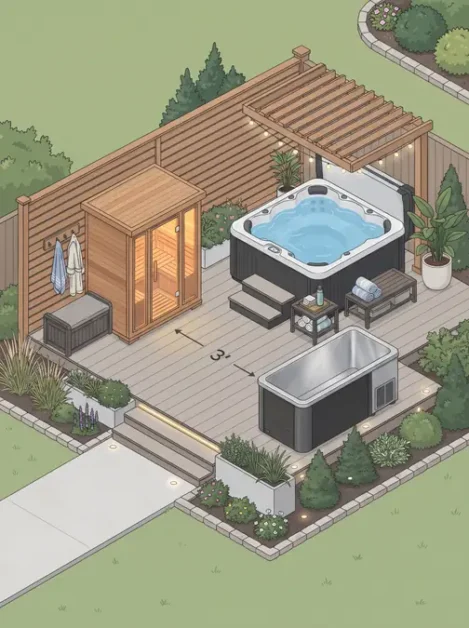
Leave approximately three feet of open walking space in the center to improve accessibility and maintenance.
Benefits
- Comfortable movement between stations
- Plenty of room for accessories
- Space for landscaping
- Easy to add privacy screens later
Before choosing your spa, compare different hot tub sizes and dimensions to make sure each component fits comfortably.
Layout 3: Luxury Wellness Retreat (12 × 20 Feet)
Best for:
- Large backyards
- Luxury outdoor living
- Dedicated wellness spaces
If you have more available space, you can create an outdoor retreat that feels similar to a boutique spa.
Typical features include:
- Six-person premium hot tub
- Built-in cold plunge
- Four-person cedar sauna
- Outdoor shower
- Covered pergola
- Storage wall
- Fire feature
- Lounge chairs
- Towel station
Suggested Layout
Pergola

Sauna        Outdoor Shower

Cold Plunge

Hot Tub

Fire Pit & Seating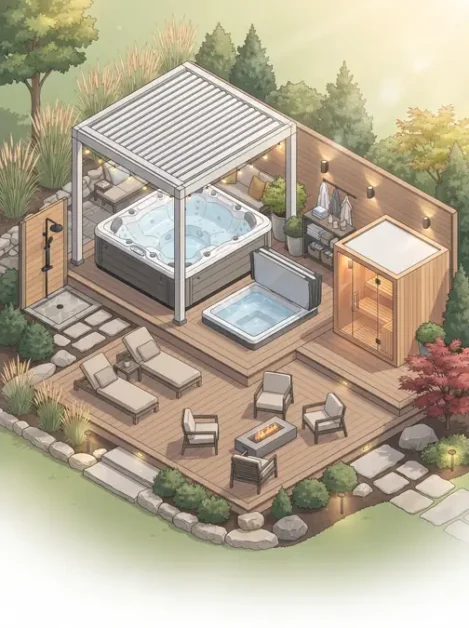
This design naturally separates wet and dry zones while creating a relaxing atmosphere for everyday use.
For more inspiration, explore our ideas for a patio with a hot tub and fire pit.
Choosing the Best Surface
Your wellness hut is only as good as the surface underneath it.
The foundation must safely support heavy equipment while providing good drainage and slip resistance.
Concrete Patio
Concrete remains one of the best options because it is:
- Extremely durable
- Easy to clean
- Level for heavy equipment
- Long lasting
- Compatible with most spa installations
It’s also ideal for permanent cold plunge systems and larger saunas.
Paver Patio
Pavers offer a high-end appearance while allowing water to drain between joints.
Benefits include:
- Attractive finish
- Easy repairs
- Excellent drainage
- Many design options
Proper compaction underneath is essential before placing heavy equipment.
Composite Decking
Composite decking creates a warm, modern appearance and requires very little maintenance.
However, the deck must be engineered to support the full weight of a filled hot tub.
If you’re building on a deck, read our Hot Tub Deck and Patio Building Guide before installation.
Gravel Base
A compacted gravel base works well for:
- Portable hot tubs
- Inflatable spas
- Budget-friendly wellness huts
It provides good drainage but should always be properly leveled.
Add Privacy to Create a True Retreat
A wellness hut should feel peaceful and secluded.
Even simple privacy upgrades can dramatically improve the experience.
Popular options include:
- Cedar privacy screens
- Horizontal wood fencing
- Decorative metal panels
- Tall ornamental grasses
- Evergreen hedges
- Bamboo screening (where appropriate)
- Outdoor curtains
- Retractable privacy walls
Many homeowners combine privacy screens with subtle landscape lighting to create a spa-like atmosphere after sunset.
Add a Pergola for Comfort
A pergola instantly makes a wellness hut feel like an outdoor room.
Besides improving appearance, it provides practical benefits throughout the year.
Advantages include:
- Partial shade during summer
- Shelter from light rain or snow
- Space for outdoor lighting
- Mounting point for speakers or heaters
- Greater sense of privacy
Louvered pergolas are especially popular because adjustable roof panels allow you to control sunlight and ventilation.
Don’t Forget an Outdoor Shower
One feature appearing frequently in modern backyard wellness retreats is an outdoor shower. Many inspiration projects include a shower alongside the sauna and cold plunge, making it easy to rinse off before or after each session.
Benefits include:
- Rinsing before entering the hot tub
- Cooling down naturally after the sauna
- Cleaning off before using the cold plunge
- Reducing dirt and debris in spa water
- Creating a more complete spa experience
A simple freestanding outdoor shower connected to a garden hose works for many homeowners, while permanent installations can be tied into existing plumbing during larger backyard renovations.
Design Tips That Make a Wellness Hut Feel Larger
You don’t need a huge backyard to create a luxurious outdoor retreat.
These design ideas help maximize both space and comfort:
- Keep equipment grouped together instead of spreading it across the yard.
- Use matching materials for decking, privacy screens, and storage to create a cohesive look.
- Install warm LED lighting for safe nighttime use.
- Include weather-resistant storage for towels, robes, and spa supplies.
- Add planters with evergreen shrubs or ornamental grasses to soften hard surfaces.
- Choose durable outdoor furniture materials for benches and seating that can withstand year-round exposure.
With thoughtful planning, even a modest patio can feel like a private backyard spa retreat rather than simply a collection of outdoor equipment.
How Much Does a Wellness Hut Cost?
Building a wellness hut doesn’t have to happen all at once. Many homeowners start with a hot tub, then add a cold plunge, sauna, pergola, or outdoor shower as their budget allows.
The total cost depends on several factors, including the brands you choose, your location, labor rates, existing patio or deck, and whether you need new electrical service or site preparation.
The table below shows estimated price ranges based on typical U.S. market pricing in 2026. These figures are intended for budgeting purposes only and should not be considered exact quotes.
| Setup Level | Hot Tub | Cold Plunge | Sauna | Estimated Total Budget* |
|---|---|---|---|---|
| Budget-Friendly | $3,500 to $6,000 | $800 to $2,500 | $2,000 to $4,000 | $6,300 to $12,500 |
| Mid-Range | $7,000 to $11,000 | $3,500 to $5,000 | $4,500 to $8,000 | $15,000 to $24,000 |
| Luxury | $12,000 to $18,000 | $6,000 to $10,000 | $9,000 to $15,000 | $27,000 to $43,000 |
*These prices are estimates only. Actual costs vary depending on the products you choose, installation requirements, contractor rates, permits, electrical work, decking, landscaping, and your location.
If you’re still deciding which type of spa fits your budget, try our Hot Tub Cost Calculator to estimate your total project cost.
Additional Costs to Consider
Beyond the main equipment, it’s important to budget for site preparation and installation. These expenses can vary widely, but they often have a significant impact on the overall project cost.
| Item | Estimated Cost* |
|---|---|
| Concrete pad or patio | $800 to $3,500 |
| Deck reinforcement | $500 to $3,000 |
| Electrical installation | $1,000 to $3,500 |
| Dedicated subpanel | $500 to $2,000 |
| Privacy screens or fencing | $300 to $2,000 |
| Pergola | $2,000 to $8,000 |
| Outdoor lighting | $300 to $1,500 |
| Landscaping | $500 to $5,000 |
*These are estimated ranges based on typical residential projects. Your actual costs may be higher or lower depending on material choices, local labor rates, and the complexity of the installation.
One of the easiest ways to manage your budget is to build your wellness hut in phases. Starting with a hot tub gives you a functional outdoor retreat right away, and you can add features like a cold plunge, sauna, pergola, or outdoor shower over time as your budget allows.
Planning Electrical Before You Buy
Electrical planning is one of the most important parts of building a wellness hut, but it’s often overlooked until installation begins. Taking the time to understand your power requirements before purchasing equipment can help you avoid unexpected expenses and delays.
Different wellness products have different electrical needs. For example, many plug-and-play hot tubs operate on a standard 120-volt outlet, while larger hot tubs, traditional saunas, and some cold plunge chillers require a dedicated 240-volt circuit.
Here’s a general comparison of common power requirements.
| Equipment | Typical Power Requirement* |
|---|---|
| Plug-and-play hot tub | 120V |
| Premium acrylic hot tub | 240V |
| Infrared sauna | 240V |
| Traditional electric sauna | 240V |
| Cold plunge chiller | 120V or 240V |
*Power requirements vary by manufacturer and model. Always verify the specifications before purchasing.
If you’re installing multiple pieces of equipment, it’s often more cost-effective to have a licensed electrician install a dedicated subpanel during the initial project instead of adding new circuits later.
Don’t Overlook Drainage
Every wellness hut uses water, which means every wellness hut also needs a drainage plan.
Water will need to be managed when you:
- Drain the hot tub
- Empty or clean the cold plunge
- Rinse off in an outdoor shower
- Wash spa filters
- Experience heavy rain around covered structures
Without proper drainage, standing water can create slippery surfaces, damage patios, and affect nearby landscaping.
Common drainage solutions include:
- French drains
- Gravel drainage beds
- Sloped concrete patios
- Channel drains
- Dry wells
Planning drainage before installation is much easier than correcting water problems after everything is in place.
How Much Does It Cost to Run a Wellness Hut?
Besides installation costs, it’s important to think about monthly operating expenses.
Your actual utility costs will depend on factors such as:
- Local electricity rates
- Climate
- Frequency of use
- Equipment efficiency
- Water temperature
- Insulation quality
- Cover quality
A modern, well-insulated hot tub with a properly fitted cover generally costs less to operate than older models with poor insulation.
Cold plunge chillers and electric saunas also contribute to monthly electricity usage, although actual costs vary depending on how often they’re used.
If you’d like a personalized estimate, use our Energy Savings Calculator for Hot Tubs or read our guide to Annual Hot Tub Running Costs.
8 Common Wellness Hut Mistakes to Avoid
Careful planning helps prevent expensive mistakes and ensures your backyard retreat remains enjoyable for years to come.
1. Buying Equipment Before Measuring
Always measure your available space before ordering equipment.
Remember to account for:
- Gates
- Side yard access
- Doorways
- Patio dimensions
- Maintenance clearance
- Spa cover removal
A hot tub that fits your patio still needs a clear path for delivery.
2. Placing Equipment Too Far Apart
Contrast therapy works best when moving between the sauna, hot tub, and cold plunge is quick and convenient.
Keeping these features within a few steps of each other creates a more comfortable and practical layout.
3. Ignoring Privacy
A wellness hut should feel relaxing and secluded.
Simple additions such as privacy screens, fencing, shrubs, or pergolas can make a significant difference without requiring a major renovation.
4. Forgetting About Drainage
Without proper drainage, water can collect around your equipment, creating slippery conditions and increasing maintenance.
Always decide where water will flow before installation begins.
5. Underestimating Electrical Requirements
Many homeowners discover too late that their existing electrical system cannot support multiple wellness products.
Planning for future upgrades during the initial installation is usually more affordable than adding circuits later.
6. Choosing the Wrong Size Hot Tub
Bigger isn’t always better.
Choose a spa that fits your available space while leaving enough room to walk safely around it and perform routine maintenance.
Our Hot Tub Size and Dimensions Guide can help you compare different spa sizes before making a decision.
7. Buying a Low-Quality Cover
A well-insulated cover helps retain heat, improve energy efficiency, and protect your spa from dirt and debris.
Although premium covers cost more initially, they often reduce operating costs over time.
8. Forgetting Storage
Small details help keep your wellness space organized.
Consider adding storage for:
- Towels
- Robes
- Spa chemicals
- Water testing supplies
- Cleaning equipment
- Sandals
- Extra spa accessories
Weather-resistant storage benches or cabinets help keep everything within easy reach.
Wellness Hut Maintenance Checklist
Keeping your backyard wellness retreat in excellent condition doesn’t require a lot of work, but regular maintenance is essential.
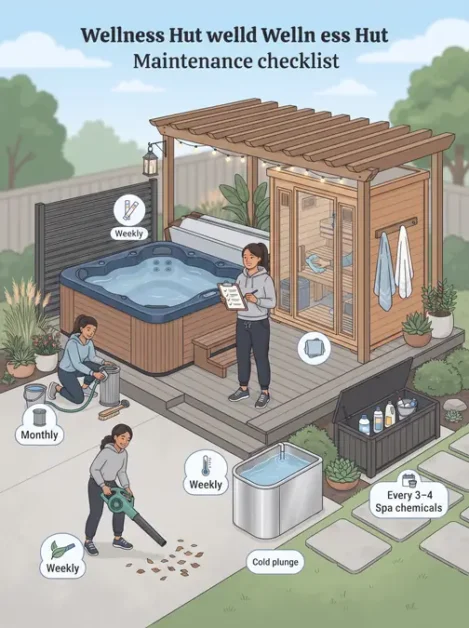
Weekly
- Test hot tub water chemistry
- Check sanitizer levels
- Remove debris from the water
- Wipe down seating surfaces
- Inspect the cold plunge
Our Hot Tub Water Testing Routine explains each step in detail.
Monthly
- Clean or rinse filters
- Inspect electrical connections
- Clean sauna benches
- Check spa cover condition
- Clean the cold plunge according to the manufacturer’s recommendations
Every 3 to 4 Months
- Drain and refill the hot tub
- Deep clean or replace filters if needed
- Inspect pumps and heaters
- Check seals and fittings
- Clean the entire wellness area
If you notice cloudy water, unusual odors, or scaling, our Hot Tub Water Care Troubleshooting Guide can help identify the cause.
Build Your Wellness Hut in Phases
You don’t need to install everything at once.
Many homeowners build their wellness retreat over time, adding new features as their budget and space allow.
Phase 1
Start with the essentials:
- Hot tub
- Patio or base
- Basic seating
Phase 2
Expand the space by adding:
- Cold plunge
- Privacy screens
- Storage bench
- Outdoor lighting
Phase 3
Complete your backyard retreat with:
- Sauna
- Pergola
- Outdoor shower
- Landscaping
- Decorative lighting
Building in phases allows you to spread out costs while enjoying your wellness space throughout the process.
Frequently Asked Questions
Do I need a permit to build a wellness hut?
Permit requirements vary by city and county. Portable hot tubs and some infrared saunas may not require permits, while permanent structures, new electrical circuits, plumbing, and large pergolas often do. Check with your local building department before starting your project.
Can I install a hot tub and sauna on the same deck?
Yes, provided the deck is properly engineered to support the combined weight of the equipment, water, and occupants. If your deck is older or you’re unsure of its capacity, consult a structural engineer or qualified contractor before installation.
How much space do I need?
Most backyard wellness retreats fit comfortably within 100 to 200 square feet, although larger luxury designs require additional room for seating, storage, and landscaping.
Which feature should I buy first?
If you’re building in stages, a hot tub is usually the best place to start because it provides year-round relaxation and can easily become the centerpiece of your wellness space. You can then add a cold plunge, sauna, pergola, or outdoor shower as your budget allows.
Are wellness huts worth the investment?
For homeowners who enjoy spending time outdoors, a thoughtfully designed wellness hut can provide daily relaxation, recovery, and year-round enjoyment. While every project is different, many people find they use a backyard wellness retreat far more often than other outdoor features.