
Sauna for Arthritis Pain Relief: Benefits, Risks & Tips

Sauna therapy may help ease arthritis stiffness, improve relaxation, and support temporary pain relief when used safely and consistently. Many people find regular sauna sessions help them move more comfortably and unwind after physically stressful days.
The key is starting slowly, staying hydrated, and paying attention to how your body responds. Moderate heat and shorter sessions are usually more effective than pushing through extreme temperatures.
What Is Sauna Therapy for Arthritis?
Sauna therapy uses heat exposure to warm the body, increase circulation, and encourage muscle relaxation. In most home sauna setups, temperatures usually range between 120°F and 195°F depending on the sauna type.
For people with arthritis, the warmth may help reduce joint stiffness and make movement feel easier for a short time after the session.
Many first-time sauna users notice the heat builds gradually rather than instantly. During the first few minutes the warmth feels mild, but after about 10 minutes sweating typically increases noticeably.
Sauna therapy is commonly used alongside other wellness habits like:
- gentle stretching
- physical therapy
- hydration
- low impact exercise
- recovery routines
A common mistake beginners make is expecting sauna sessions to permanently remove arthritis pain. In reality, sauna heat is usually best viewed as supportive symptom relief rather than a replacement for medical treatment.
If you’re new to sauna use, this beginner friendly guide to sauna benefits and usage can help you understand how sauna sessions typically work.
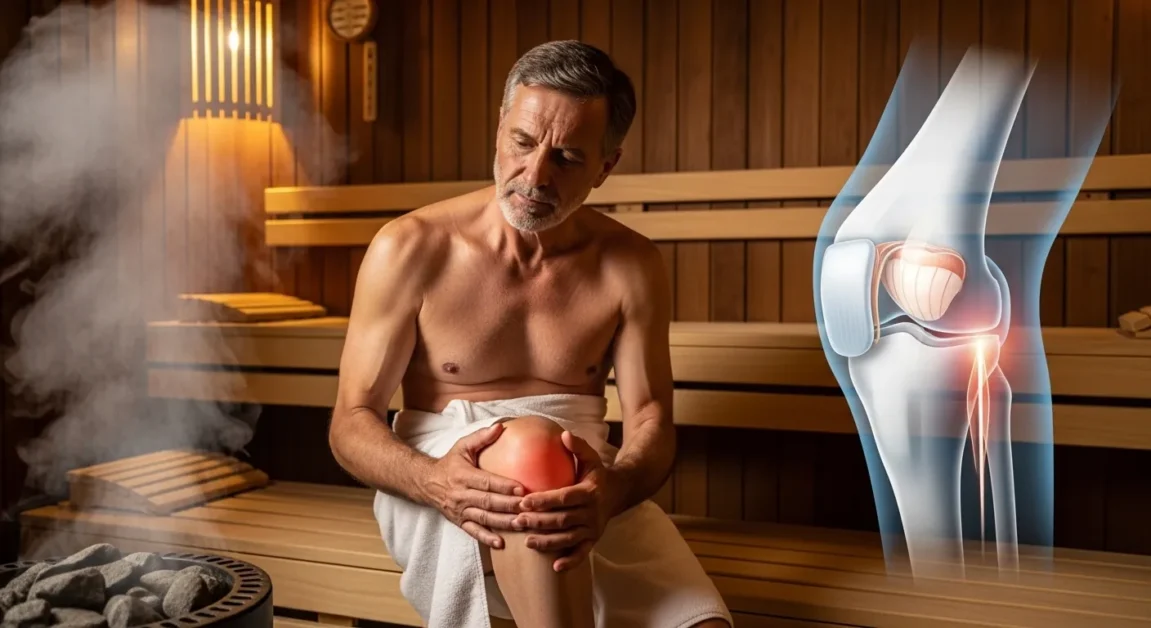
According to the National Institute of Arthritis and Musculoskeletal and Skin Diseases (NIAMS), osteoarthritis is a wear-and-tear condition that affects cartilage over time:
https://www.niams.nih.gov/health-topics/osteoarthritis
- Common after 40
- Pain worsens with movement
- Stiffness after inactivity
How Sauna Heat May Help Arthritis Pain
Heat therapy has been used for decades to help ease aching joints and stiffness. Sauna heat may support arthritis comfort in several ways.
Improved Circulation
When the body heats up, blood vessels widen and circulation increases. Better blood flow may help muscles around painful joints relax more easily.
Regular sauna use is commonly associated with improved circulation and muscle relaxation. This becomes noticeable after a few sessions for many people.
Reduced Joint Stiffness
Many people with arthritis struggle most in the morning or after sitting too long. Warm sauna air may help loosen stiff joints temporarily.
If you’ve ever used a sauna before, you’ve probably noticed movement often feels easier afterward because muscles and connective tissues feel less tight.
Muscle Relaxation Around Joints
Joint pain often causes surrounding muscles to tense up. Sauna heat helps the body relax, which may reduce pressure around sore areas like:
- knees
- hips
- hands
- lower back
- shoulders
Stress Reduction and Better Sleep
Chronic pain can increase stress and affect sleep quality. Some users report better sleep after evening sauna sessions because the heat promotes relaxation.
People who sauna regularly often describe a calming post session feeling that helps them unwind after physically demanding days.
What Type of Sauna Is Best for Arthritis?
Not every sauna feels the same. The best option often depends on your comfort level, heat tolerance, and arthritis symptoms.
Infrared Sauna
Infrared saunas use radiant heat to warm the body directly rather than heating the surrounding air heavily.
Many people with arthritis prefer infrared sauna sessions because:
- temperatures feel gentler
- breathing feels easier
- sessions can feel more comfortable
- lower heat may be easier on sensitive joints
Infrared sauna temperatures usually range between 120°F and 150°F.
Many beginners expect hotter always means better, but gentler heat often feels easier for people dealing with chronic pain or fatigue.
You can learn more about the different types of infrared saunas if you’re comparing options for home use.
Traditional Dry Sauna
Traditional saunas use heated air and sauna stones to create intense dry heat.
Benefits may include:
- deeper sweating
- fast warm up
- stronger heat exposure
- classic sauna experience
However, some people with arthritis find the higher temperatures overwhelming during longer sessions.
In everyday sauna use, experienced users often alternate shorter heat exposure with cooling breaks to stay comfortable.

The Arthritis Foundation (.org) explains rheumatoid arthritis as an autoimmune inflammatory disease:
https://www.arthritis.org/diseases/rheumatoid-arthritis
- Flare-based pain
- Swelling and warmth in joints
- Fatigue and systemic symptoms
Steam Room vs Sauna for Arthritis
Steam rooms use moist heat while saunas use dry heat.
Some arthritis sufferers prefer steam because humidity may feel gentler on breathing and skin. Others prefer dry sauna heat because it feels less heavy and easier to tolerate.
| Option | Heat Type | Best For | Possible Drawback |
|---|---|---|---|
| Infrared sauna | Gentle dry heat | Chronic stiffness | Slower heating |
| Traditional sauna | Intense dry heat | Deep sweating | Can feel overwhelming |
| Steam room | Moist heat | Relaxation and breathing comfort | High humidity discomfort |
If you’re unsure which option fits your comfort level, this comparison of infrared vs steam sauna health benefits explains the differences clearly.
How to Use a Sauna Safely for Arthritis Relief
Using a sauna correctly matters just as much as the heat itself. Most first-time users underestimate how important hydration and pacing are.
Step by Step Sauna Routine
- Drink water before entering the sauna
Dehydration can make dizziness and fatigue worse. - Start with lower temperatures
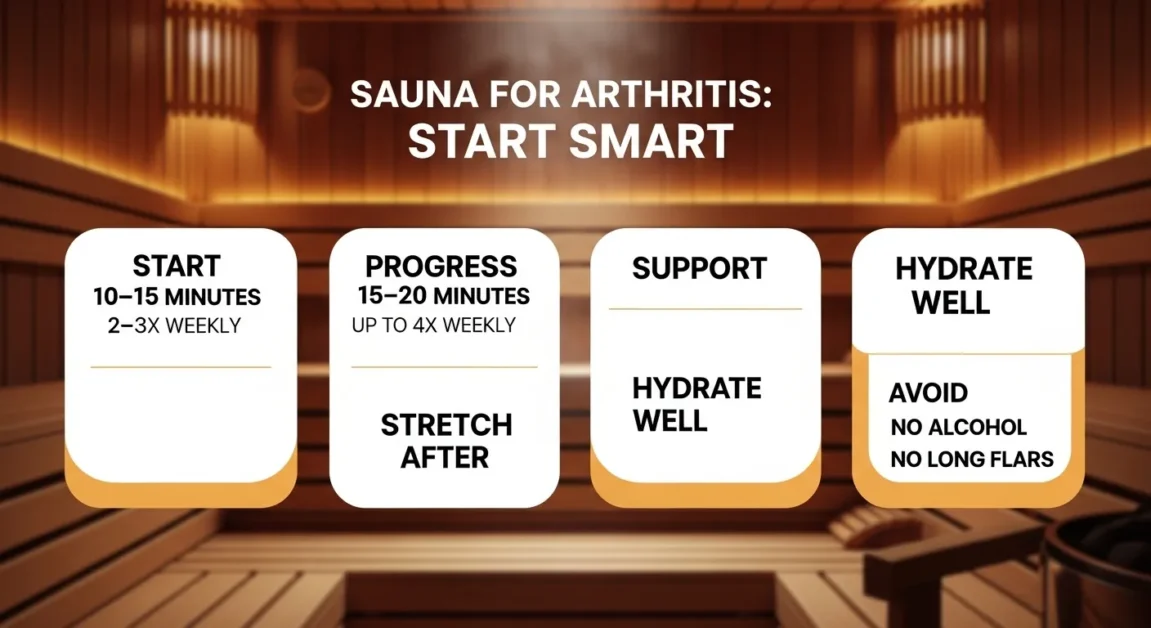
Many people begin around 120°F to 140°F in an infrared sauna. - Limit early sessions to 10 to 15 minutes
Longer sessions are usually built gradually rather than immediately. - Sit on lower benches if the heat feels intense
Heat rises quickly in traditional saunas. - Cool down slowly afterward
Avoid sudden cold exposure if your joints feel sensitive. - Rest and hydrate again after the session
This helps your body recover comfortably.
One practical tip is to start with shorter sessions several times a week instead of one extremely long session.
Many experienced users also keep a towel nearby for comfort and support during longer sits.
If you’re unsure about safe session timing, this guide explains how long should you stay in a sauna based on experience level.

👉 National Institute of Arthritis and Musculoskeletal and Skin Diseases (NIAMS):
https://www.niams.nih.gov/health-topics/psoriatic-arthritis
- Inflammatory
- Can involve joints and skin
- Variable severity
When Sauna Use May Not Be Safe
Sauna therapy is not appropriate for everyone.
You should use caution if you have:
- uncontrolled high blood pressure
- serious heart conditions
- severe inflammation flare ups
- dehydration issues
- dizziness problems
- heat sensitivity
Some rheumatoid arthritis flare ups may feel worse with intense heat exposure, especially when swelling is severe.
If the heat feels overwhelming, stepping out briefly helps regulate body temperature safely.
You should also talk with a healthcare provider if you:
- take medications affected by dehydration
- have cardiovascular conditions
- are pregnant
- experience severe swelling regularly
A common issue many beginners face is staying inside too long because they assume sweating means the therapy is working better. Overheating usually creates more stress on the body instead.
For additional precautions, review these important sauna safety tips before starting regular sessions.
Sauna vs Other Heat Therapy for Arthritis
Saunas aren’t the only heat therapy option available.
| Therapy | Heat Type | Best For | Drawbacks |
|---|---|---|---|
| Infrared sauna | Gentle dry heat | Long comfortable sessions | Higher upfront cost |
| Traditional sauna | Intense dry heat | Deep heat exposure | Heat can feel aggressive |
| Steam room | Moist heat | Relaxation and breathing comfort | Heavy humidity |
| Heating pad | Local heat | Small joint areas | Limited coverage |
| Warm bath | Gentle moist heat | Full body relaxation | Heat cools quickly |
From a practical standpoint, many people combine multiple heat therapy methods depending on the situation. For example, a heating pad may help quick flare ups while sauna sessions support full body relaxation.
Practical Tips That Make Sauna Sessions More Comfortable
Small adjustments can make a noticeable difference during sauna use.
Here are some practical tips:
- bring water into the cooldown area
- use towels for extra seating comfort
- avoid large meals immediately before sessions
- stretch gently afterward
- start with consistent shorter sessions
- monitor how your joints respond over time
Over time, most sauna users discover consistency matters more than extreme heat.
Many people also pair sauna use with light stretching or massage for additional comfort. This guide on massage and sauna recovery explains how people often combine both for relaxation.
Common Mistakes People Make When Using a Sauna for Arthritis
Staying Too Long
New sauna users often stay too long during their first session. This increases dehydration risk and may leave you feeling exhausted instead of relaxed.
Using Extremely High Temperatures
Many beginners assume hotter temperatures create better results. In reality, moderate consistent heat is usually easier on sensitive joints.
Ignoring Hydration
The easiest way to avoid dehydration is drinking water before and after sessions.
Expecting Instant Long Term Relief
Sauna sessions may help temporary comfort and relaxation, but arthritis management usually requires multiple healthy habits together.
Using Sauna During Severe Inflammation
If joints are visibly swollen or extremely inflamed, intense heat may feel uncomfortable instead of soothing.
FAQs
What kind of sauna is best for arthritis?
Many people with arthritis prefer infrared saunas because the lower temperatures often feel gentler and easier to tolerate during longer sessions.
Are saunas good for aching joints?
Sauna heat may temporarily reduce stiffness, relax muscles, and improve comfort for aching joints when used safely.
Is infrared sauna better for rheumatoid arthritis?
Some people with rheumatoid arthritis find infrared sauna sessions more comfortable because the heat feels less intense than traditional saunas.
How long should you stay in a sauna for arthritis relief?
Beginners usually start with 10 to 15 minute sessions and slowly increase duration based on comfort and heat tolerance.
Can sauna heat make arthritis worse?
Excessive heat or very long sessions may worsen discomfort for some people, especially during severe inflammation flare ups.
Is a steam room better than a sauna for arthritis?
It depends on personal comfort. Some people prefer moist steam heat while others find dry sauna heat easier to tolerate.