
Pros and Cons of Owning a Spa: Is a Home Spa Really Worth It?

It sounds like pure relaxation, until the bills, upkeep, and time commitment show up.
Owning a spa can be incredibly relaxing and convenient, but it also comes with real costs, maintenance, and responsibility. If you’re thinking about adding a spa at home or turning one into a small business, the decision comes down to how much value you’ll actually use versus the money and time you’ll put in.
The Real Appeal of Owning a Spa
A home spa represents comfort, privacy, and control over your wellness routine. Instead of booking appointments or driving across town, everything is right outside your door. For some people, that alone makes it worth it. For others, the hidden downsides can turn the dream into a chore.
Many homeowners start by exploring the difference between salons and spas to understand how professional spa experiences translate into a more private, at-home setup.

Pros of Owning a Spa
Daily Access to Relaxation
Having a spa at home means relief is always available. No scheduling. No crowds. Just step in when your body needs it.
- Warm water helps loosen tight muscles
- Hydrotherapy can ease joint stiffness
- Heat promotes better sleep and stress reduction
Many owners say short, regular sessions feel more beneficial than occasional luxury spa visits.
Long-Term Cost Control
While the upfront cost is high, frequent spa users often spend less over time compared to repeated professional spa visits.
- One-time installation vs recurring appointment fees
- No tipping or travel expenses
- Family members can use it too
If you already enjoy spa treatments, ownership can eventually balance out financially.
Fully Personalized Experience
Your spa, your rules.
- Water temperature set exactly how you like it
- Choice of jets, seating, lighting, and scents
- Use it solo or socially
You’re not adapting to someone else’s setup, it’s built around your comfort.
Potential Income Opportunity
Some owners turn spas into side businesses or small wellness services.
- Private sessions for friends or clients
- Short-term rentals or wellness add-ons
- Increased appeal for certain property listings
If business is part of the plan, understanding spa ownership basics from resources like the hot tub buying guide can prevent costly mistakes early on.
Cons of Owning a Spa
High Upfront Costs
This is the biggest barrier for most people.
- Spa unit purchase
- Electrical upgrades
- Site prep or patio reinforcement
- Permits or inspections
Even modest setups can reach several thousand dollars quickly.
Ongoing Maintenance
A spa isn’t set-it-and-forget-it.
- Weekly water testing
- Chemical balancing
- Filter cleaning or replacement
- Occasional repairs
Skipping maintenance leads to cloudy water, skin irritation, or equipment damage. Many new owners underestimate this part.
Time and Energy Commitment
Relaxation still requires effort.
- Draining and refilling water
- Monitoring temperatures
- Winterizing in colder climates
If you already feel short on time, this can become stressful instead of soothing.
Regulations and Liability
If you plan to let others use your spa for paid services, regulations matter.
- Health and safety standards
- Insurance coverage
- Local licensing requirements
Before going further, it’s smart to understand broader spa history and safety standards, which are rooted in the history of the hot tub and how modern regulations evolved.
Who Owning a Spa Makes Sense For
A spa is usually worth it if you:
- Use heat therapy or relaxation several times a week
- Enjoy hands-on maintenance
- Want privacy over public spa visits
- Plan long-term use, not a short-term luxury
It may not be ideal if you’re looking for low effort or occasional use only.

A Common Mistake New Spa Owners Make
Many first-time owners assume they’ll use the spa “when they have time.” In reality, the happiest owners treat it like a routine, not a luxury.
- Short 15–20 minute sessions
- Same time each day or week
- Simple setup, not overcomplicated features
Those habits turn a spa from an expensive purchase into a daily wellness tool.
Quick Decision Check (Ask Yourself This)
If you answer “yes” to most of these, spa ownership usually makes sense:
- Do I already spend money on relaxation or recovery?
- Will I realistically use it multiple times per week?
- Am I okay with basic maintenance?
- Do I value privacy over professional services?
If most answers are “no,” occasional spa visits may be the better fit.
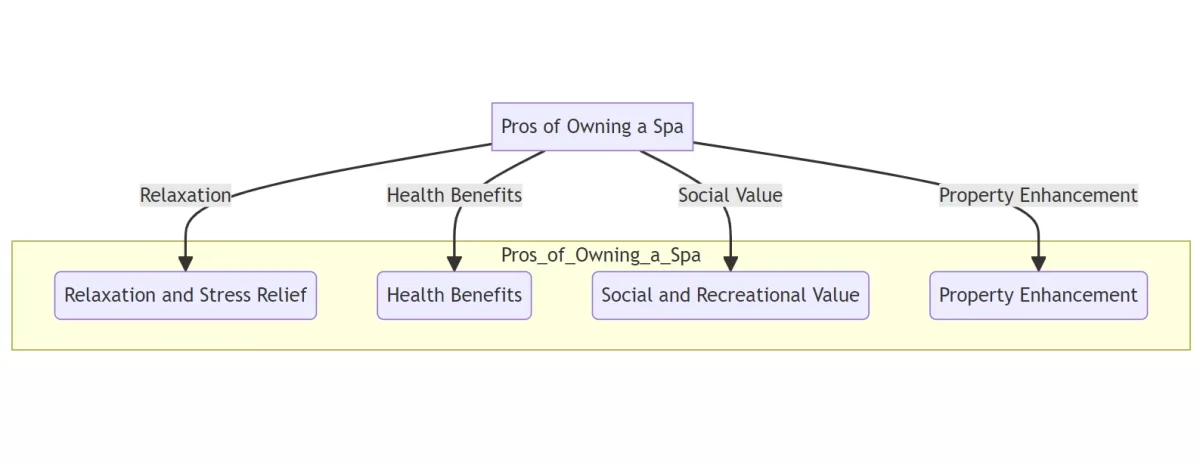
Quick Pros vs Cons Snapshot
Pros
- Instant access to relaxation
- Custom comfort and privacy
- Long-term savings for frequent users
- Potential income or property value boost
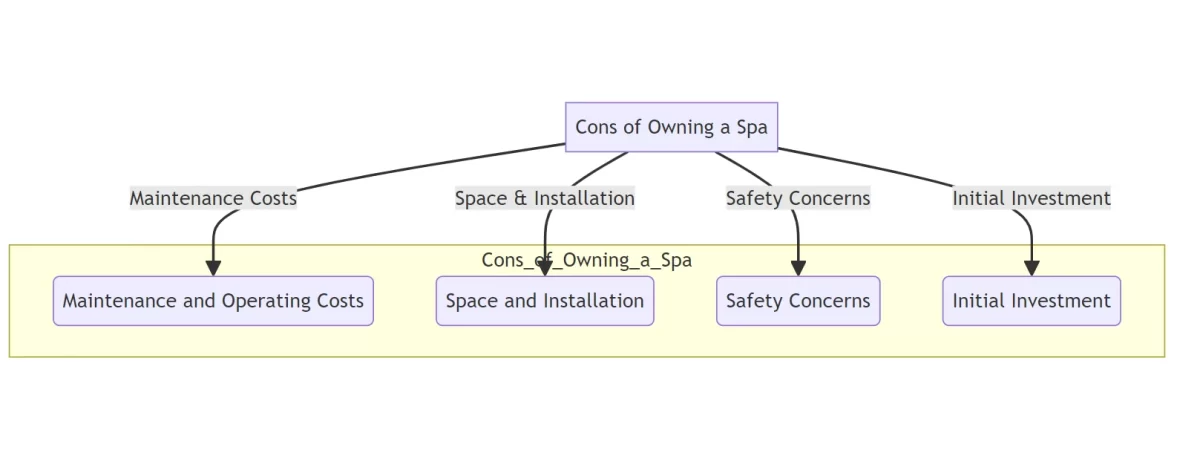
Cons
- High initial cost
- Regular maintenance required
- Time commitment
- Possible permits and liability
If your main goal is stress relief after long days, learning how to relax in your hot tub to unwind and rejuvenate can help you get real wellness benefits instead of just occasional comfort.
Spa Ownership by the Numbers (What the Data Really Shows)
Most people decide emotionally, but the numbers tell a clearer story.
- Regular spa users often spend $100–$200 per visit, and many go 2–4 times a month. That’s roughly $2,400–$7,200 per year.
- A mid-range home spa typically costs $4,000–$8,000 upfront, with $40–$70 per month in electricity, water care, and supplies.
- Owners who use their spa 3+ times per week usually break even within 2–4 years, depending on local energy costs.
- Surveys across wellness and home-improvement spaces consistently show that daily or weekly use is the biggest factor in satisfaction, not luxury features.
If you’re an occasional user, spa ownership rarely makes financial sense. If relaxation is part of your weekly routine, the math starts working in your favor.
Home Spa vs Professional Spa: Quick Comparison
A home spa wins on convenience and long-term value. A professional spa wins when you want specialized treatments without any responsibility.
Home Spa
- One-time setup cost, ongoing low monthly expenses
- Available anytime, no booking or travel
- Full privacy, personalized settings
- Requires maintenance and hands-on care
Professional Spa
- Pay per visit, costs add up fast
- No maintenance or responsibility
- Access to trained therapists and specialty treatments
- Appointments, travel time, and limited availability
Benefits of Using a Hot Tub in the Morning
Using a hot tub in the morning isn’t just relaxing, it can set the tone for your whole day.
- Loosens stiff muscles after sleep, especially in the lower back, neck, and hips
- Improves circulation, helping oxygen reach muscles and joints faster
- Reduces morning stress, easing anxiety before work or responsibilities
- Boosts mental clarity, many people report feeling more focused afterward
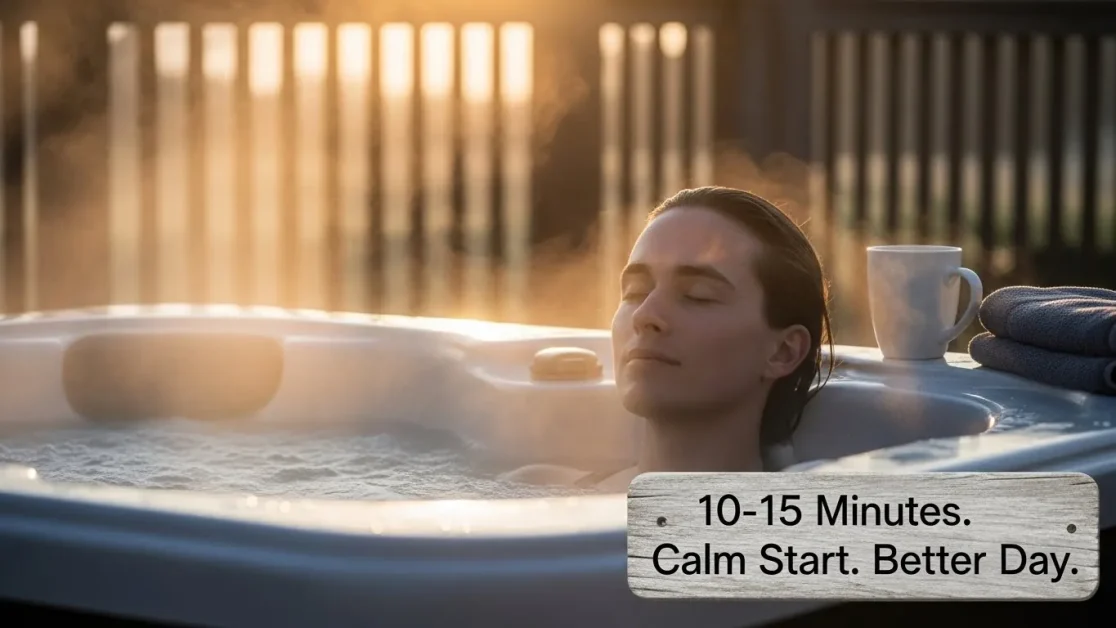
A short 10–15 minute soak is usually enough. Longer sessions in the morning can make some people feel sleepy instead of energized.
Are Hot Tubs Bad for Your Heart?
Hot tubs are not bad for a healthy heart when used properly, but they do affect your cardiovascular system.
Here’s what happens:
- Heat causes blood vessels to widen
- Heart rate increases slightly, similar to light exercise
- Blood pressure may temporarily drop
For healthy adults, this response is generally safe and can even support circulation.
For people with heart conditions, the heat can be risky if sessions are too long or too hot.
Key rule:
If you feel dizzy, lightheaded, or short of breath, get out immediately.
Who Should Not Use a Hot Tub
Hot tubs aren’t for everyone. You should avoid or limit use if you fall into one of these groups, unless cleared by a doctor:
- People with serious heart disease or uncontrolled blood pressure
- Anyone who is pregnant, especially during the first trimester
- Individuals with fainting disorders or heat sensitivity
- People under the influence of alcohol or sedatives
- Anyone with open wounds or active infections
Who Should Avoid Hot Tubs
Certain conditions make hot tub use unsafe
For older adults or those with medical conditions, shorter sessions and lower temperatures are safer.
Jacuzzi vs Sauna: Benefits Comparison
Both offer relaxation and health perks, but they work differently. This table helps readers choose fast.
Jacuzzis are better for muscle and joint relief, while saunas are better for sweating and heat conditioning.
| Feature | Jacuzzi (Hot Tub) | Sauna |
|---|---|---|
| Heat Type | Moist heat with water | Dry or steam heat |
| Muscle Relaxation | Excellent due to buoyancy and jets | Good, but less targeted |
| Joint Relief | Very effective for arthritis and stiffness | Limited joint support |
| Heart Response | Mild heart rate increase | Stronger cardiovascular stress |
| Detox via Sweating | Moderate | High |
| Ease of Use | Easy, passive relaxation | Can feel intense for beginners |
| Best For | Pain relief, stress, sleep | Detox, endurance, heat tolerance |
Jacuzzi vs Sauna
Two popular heat therapies, very different experiences
Jacuzzi (Hot Tub)
Sauna
Practical Safety Tips (Quick Scan)
- Keep water temperature below 104°F (40°C)
- Limit sessions to 15–20 minutes
- Hydrate before and after
- Avoid using a hot tub alone if you have health concerns
🔍 Want more info? Head over to Hot Tub Patio 🛁 or check our Guides 📖 for extra reading!
FAQs
Is owning a spa cheaper than going to a spa regularly?
If you use it multiple times a week over several years, ownership can cost less than frequent professional visits.
How much maintenance does a home spa really need?
Expect light weekly care and deeper monthly cleaning to keep water safe and clear.
Does a spa increase home value?
It can, but mostly for buyers who already want one. It’s not guaranteed value for every market.
Can I run a spa business from home?
Sometimes, but it depends on local laws, insurance, and zoning rules. Always check first.