Is It Safe to Use a Hotel Jacuzzi? Cleanliness, Germs & Safety

A hotel jacuzzi can be a relaxing part of your trip as long as you know what to look for. Check the water, shower before and after, keep your soak time reasonable, and trust your instincts if something feels off. For related planning, see 2 Person Inflatable Hot Tubs.
With these habits in place, you can enjoy the soak without spending the whole time wondering what’s in the water. For related planning, see 7 Reasons Why You Need a Smart Touch Digital Hot Tub.
You check into your hotel, spot the jacuzzi in the corner of the pool area, and start wondering: is it actually safe to get in? It’s a fair question. For related planning, see 10 Essential Hot Tub Accessories for Maximum Relaxation.
Shared hot tubs see a lot more bathers than the one in your backyard, and you have no idea how well it’s been maintained. For related planning, see 7 Seat Hot Tub Installed on the White House Lawn.
What Makes Hotel Jacuzzis Different From Home Hot Tubs
Your home hot tub only sees a handful of people, and you’re the one keeping the water balanced. A hotel jacuzzi is a different story. Dozens of guests may use the same water in a single day, and the sanitizer has to work much harder to keep up. For related planning, see 7 Proven Steps.
Maintenance also depends entirely on hotel staff. Some properties test and treat their water multiple times a day. Others fall behind, especially during busy weekends or holidays. For related planning, see 110v Hot Tub.
This is something many new hot tub owners overlook when comparing their own tub to a public one. Understanding this difference is the first step in knowing how to safely use a hot tub away from home. For related planning, see Are Hot Tubs Good for Anxiety.

What Germs Can Actually Live in a Hotel Jacuzzi
Warm water is a comfortable environment for people, and unfortunately, it can also be comfortable for certain germs if sanitizer levels drop. Here are the ones worth knowing about. For related planning, see Relax and Unwind in the Luxurious Comfort of the Cyclone Hot Tub. For more on STI concerns and hot-tub exposure, see our guide to whether you can contract an STD from a hot tub.
To put the risk in perspective, the CDC has tracked outbreaks linked to treated recreational water like hotel pools and hot tubs for years. For related planning, see Best Hot Tub Fragrances.
Hotel hot tubs and pools account for a meaningful share of these outbreaks nationally, which is exactly why the CDC publishes maintenance guidelines for hotel and public facilities in the first place. For related planning, see 3 Person Hot Tub Spa.
This doesn’t mean every hotel jacuzzi is risky. It means the ones that fall behind on upkeep are where problems tend to show up. For related planning, see 2-person hot tub 220 volt compact energy-efficient relaxation.
Pseudomonas (Hot Tub Rash)
Pseudomonas is the most common culprit behind what’s often called hot tub rash. It shows up as red, itchy bumps, usually in areas covered by your swimsuit. It’s uncomfortable but typically clears up on its own within a few days.
Legionella (Legionnaires’ Disease)
Legionella bacteria can grow in warm water systems, including jacuzzi jets and pipework. Breathing in contaminated water droplets from the steam, rather than swallowing the water, is how infection typically happens. This is rare, but it’s the reason well-maintained hot tubs are cleaned and disinfected regularly. For related planning, see 4 Easy Steps to Saluspa Troubleshooting Hot Tub.
Cryptosporidium and Other Stomach Bugs
This parasite spreads when contaminated water is accidentally swallowed. It’s more resistant to chlorine than most germs, which is why avoiding swallowing pool or hot tub water is always good practice.
None of this means you should assume the worst about every hotel jacuzzi. Most are properly treated. But knowing what you’re dealing with helps you make a smart decision when you walk up to one, the same way understanding general hot tub safety guidelines helps you use your own tub with confidence.What Germs Can Actually Live in a Hotel Jacuzzi
Warm water is a comfortable environment for people, and unfortunately, it can also be comfortable for certain germs if sanitizer levels drop. Here are the ones worth knowing about. For related planning, see must-know facts about green mountain hot tubs reviews insights.
To put the risk in perspective, the CDC has tracked outbreaks linked to treated recreational water like hotel pools and hot tubs for years. For related planning, see Exploring the Art of Romantic Retreats.
Hotel hot tubs and pools account for a meaningful share of these outbreaks nationally, which is exactly why the CDC publishes maintenance guidelines for hotel and public facilities in the first place. For related planning, see Hot Tub Party.
This doesn’t mean every hotel jacuzzi is risky. It means the ones that fall behind on upkeep are where problems tend to show up. For related planning, see Is 110 Too Hot For A Hot Tub? Safety Insights.
Pseudomonas (Hot Tub Rash)
Pseudomonas is the most common culprit behind what’s often called hot tub rash. It shows up as red, itchy bumps, usually in areas covered by your swimsuit. It’s uncomfortable but typically clears up on its own within a few days.
Legionella (Legionnaires’ Disease)
Legionella bacteria can grow in warm water systems, including jacuzzi jets and pipework. Breathing in contaminated water droplets from the steam, rather than swallowing the water, is how infection typically happens. This is rare, but it’s the reason well-maintained hot tubs are cleaned and disinfected regularly. For related planning, see 5 Surprising Benefits of Broccoli in Hot Tub.
Cryptosporidium and Other Stomach Bugs
This parasite spreads when contaminated water is accidentally swallowed. It’s more resistant to chlorine than most germs, which is why avoiding swallowing pool or hot tub water is always good practice.
None of this means you should assume the worst about every hotel jacuzzi. Most are properly treated. For related planning, see Sauna and Fertility.
But knowing what you’re dealing with helps you make a smart decision when you walk up to one, the same way understanding general hot tub safety guidelines helps you use your own tub with confidence.
Signs a Hotel Jacuzzi Might Not Be Safe to Use
You don’t need special equipment to spot a poorly maintained hot tub. Your senses will usually tell you enough. For related planning, see 5 Ways To Make The Most of Your Costco Inflatable Jacuzzi.
- A strong, sharp chemical smell (this is often chloramines, a sign of overworked sanitizer, not a sign of too much chlorine)
- Cloudy, hazy, or discolored water
- Slimy or slippery steps, handrails, or seating areas
- No visible test strips, chemical logs, or maintenance signage nearby
- Water that feels noticeably colder or hotter than posted temperature signs For related planning, see Hot Tub Depreciation Explained, How Fast They Lose Value and Why.
If your water looks murky or smells off, trust that instinct. A common mistake hot tub owners make is assuming clear water always means clean water, but the same applies to hotel jacuzzis.
If something feels wrong, it’s fine to skip it and mention it to front desk staff.
How to Protect Yourself When Using a Hotel or Public Jacuzzi
A few simple habits go a long way toward keeping your soak safe and enjoyable. For related planning, see Greenville SC's Finest Hotels for a Soak and Stay Experience.
- Shower before getting in to rinse off lotions, sweat, and body oils, since these are exactly what react with sanitizer to create that harsh chemical smell
- Avoid submerging your head or face in the water, which lowers your chance of inhaling contaminated steam or accidentally swallowing water
- Never swallow the water, even accidentally, since some germs like Cryptosporidium survive normal chlorine levels
- Keep soak time to around 15 minutes at a time to avoid overheating, regardless of how clean the water looks
- Skip the jacuzzi if you have an open cut, scrape, or recent tattoo, and review these tattoo safety precautions before soaking, since broken skin gives bacteria an easy way in
- Remove contact lenses before getting in, since bacteria in the water can cling to the lens and lead to eye infections
- Ask a staff member when the water was last tested if you don’t see a posted log nearby. Most hotels keep this information on hand even if it isn’t displayed
- Shower again afterward to rinse off any chemical residue and reduce skin irritation
These steps take only a few extra minutes but significantly lower your risk.
If you want to build habits like these into your regular routine, our guide on hot tub rules for guests covers similar etiquette that applies just as well on vacation.
Who Should Be Extra Careful (or Skip It Entirely)
Certain groups face higher risk in shared hot tub water and should think twice before getting in.
Pregnant women should be cautious because of the risk of overheating, and should check with a doctor first. Young children overheat faster than adults and should always be supervised.
People with weakened immune systems, recent surgery, or chronic skin conditions like eczema face a higher chance of infection from shared water.
If you fall into one of these groups, it’s worth reviewing our guide on hot tub use for pregnant women before your trip, so you know exactly what precautions apply to your situation.
Common Mistakes People Make in Hotel Jacuzzis
Most hot tub related illness comes down to a few avoidable habits rather than bad luck.
- Skipping the pre soak shower
- Staying in for 30 minutes or longer
- Ignoring an obvious chemical smell or cloudy water
- Letting kids use the jacuzzi unsupervised
- Getting in with an open wound or fresh piercing
If you notice red, itchy bumps a day or two after a soak, it’s usually mild and short lived. You can learn more about what to watch for in our guide on early signs of hot tub folliculitis.
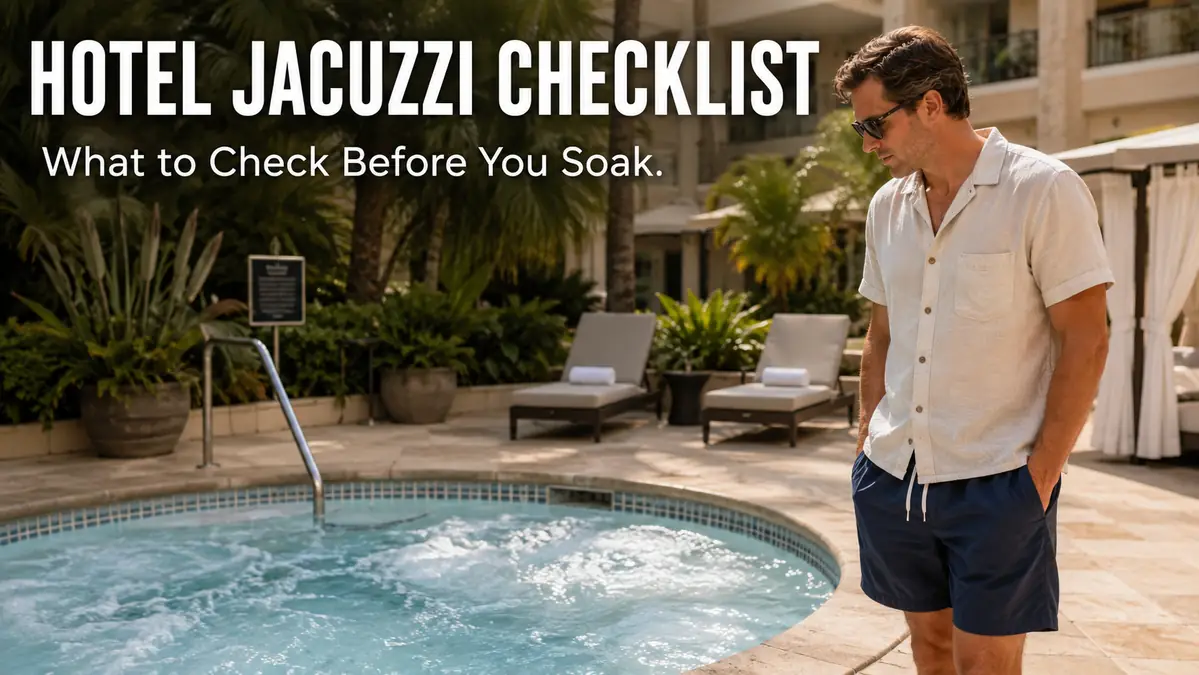
Free Download: Hotel Jacuzzi Safety Checklist
Want a quick way to check a hotel jacuzzi before you get in? Download this printable checklist and keep it handy on your next trip. It covers what to look for before soaking, how to protect yourself while you’re in the water, and when it’s best to skip it altogether.
Download the Hotel Jacuzzi Safety Checklist (PDF)
For more everyday safety guidance, visit our free hot tub resources page for additional printable guides.
Frequently Asked Questions
Can I get sick from a hotel hot tub?
It’s possible, but uncommon. Most illnesses linked to hotel hot tubs happen when sanitizer levels are low or maintenance has been skipped, not from normal, well kept water.
How long is it safe to sit in a hotel jacuzzi?
Around 15 minutes is a good guideline for most healthy adults. Longer sessions increase the risk of overheating, regardless of how clean the water is.
Do hotels clean their hot tubs every day?
Reputable hotels test and treat their water multiple times daily and follow a regular draining schedule. Standards vary by property, which is why checking for visible signs of upkeep is worthwhile. For related planning, see Pros and Cons of Owning a Spa.
Is it safe to use a hotel jacuzzi if I have a cut or scrape?
It’s best to wait until it heals. Open skin gives bacteria in the water an easier way to cause infection.
Why does the hotel jacuzzi smell so strongly of chemicals?
A strong chemical smell usually means chloramines have built up from sweat, oils, or urine reacting with the sanitizer, which can actually signal the water needs fresher treatment rather than too much chlorine.
Can kids use a hotel jacuzzi safely?
Yes, with supervision and shorter soak times. Children overheat more quickly than adults, so limiting their time in the water is important.