5 Best Hot Tub Chemicals for Sensitive Skin

The best hot tub chemicals for sensitive skin are chlorine- or bromine-free alternatives, like mineral sanitizers, oxygen-based shock, and natural enzyme treatments.
These options clean the water without harsh irritation, making them gentler for those prone to dryness or rashes. Regular testing and balanced pH also help keep your spa safe, comfortable, and skin-friendly.
Harsh chemicals often cause redness or itchiness, which is the opposite of relaxing. The good news? With regular water testing, balanced pH, and gentle products, you can enjoy a fresh, sanitized hot tub while keeping your skin calm and comfortable.
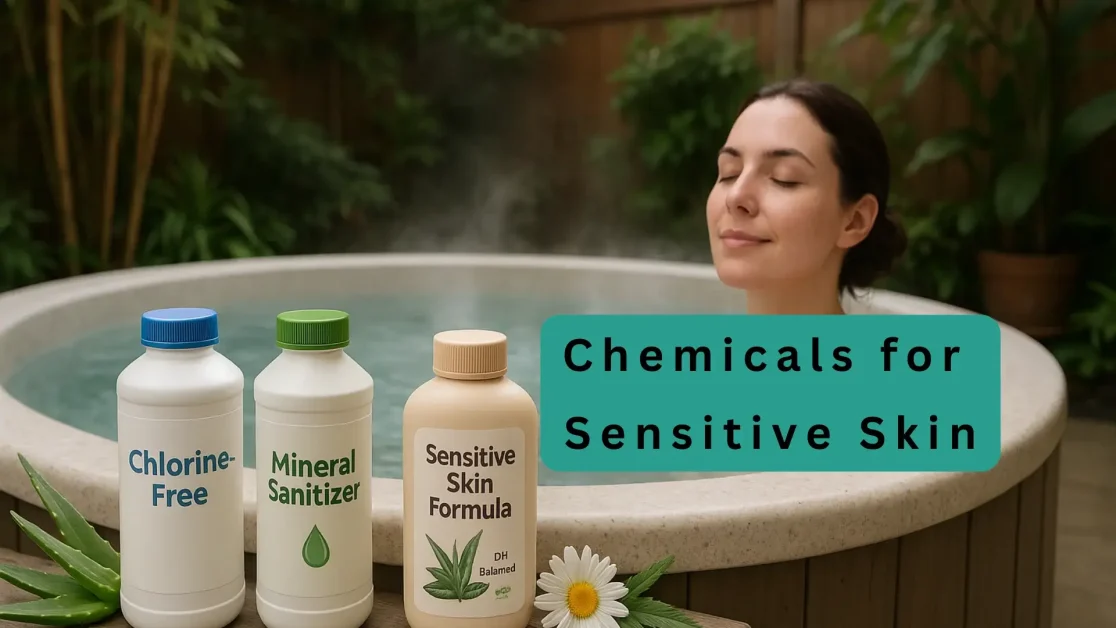
Best Hot Tub Chemical Options for Sensitive Skin at a Glance
Sensitive skin does not automatically mean you need a completely chemical-free hot tub. Safe spa water still needs an effective sanitation system. The better approach is to find a system that keeps the water sanitary while reducing unnecessary chemical exposure and avoiding ingredients that trigger your skin.
| Water-Care Option | Best Fit | What It Does | Important Limitation |
|---|---|---|---|
| Bromine sanitizer | People looking for an alternative to chlorine | Provides ongoing hot tub sanitation | Bromine can still irritate sensitive skin |
| Mineral + approved sanitizer system | People trying to reduce traditional sanitizer use | Minerals support water care while a compatible sanitizer maintains sanitation | Most systems still require another sanitizer or oxidizer |
| PHMB/biguanide system | People who need a halogen-free system | Uses a different EPA-registered sanitizer chemistry | Requires compatible products and should not be mixed with chlorine systems |
| Salt chlorine system | People who want automated, steady sanitizer production | Converts salt into chlorine inside the spa | It is not chlorine-free and requires a compatible hot tub |
| Enzyme-supported water care | People trying to reduce oils and organic buildup | Helps break down body oils and other organic material | Enzymes are not a replacement for a primary sanitizer |
The safest choice depends on your hot tub, current water-care system, skin reaction, and product compatibility. Never mix sanitation systems unless the manufacturers specifically say they can be combined.
Before You Switch Chemicals, Find the Cause of the Irritation
A rash or itchy skin after soaking does not always mean you are allergic to chlorine. Water temperature, pH, sanitizer concentration, shock products, long soak times, or poorly sanitized water can cause similar symptoms.
Check the water and your routine before replacing the entire sanitation system.
| What You Notice | Possible Cause | What to Check First |
|---|---|---|
| Dry or tight skin after soaking | Hot water, long soak time, sanitizer exposure | Temperature and time in the tub |
| Burning or stinging while soaking | Water chemistry imbalance or excessive chemical level | pH and sanitizer level |
| Strong irritation after shocking | Reaction to shock ingredients | Product label and active ingredient |
| Itchy bumps appearing later | Irritation or possible hot tub folliculitis | Sanitation and rash pattern |
| Irritation after switching to bromine | Possible sensitivity to the new sanitizer | Bromine level and recent product changes |
| Problems only when using one spa | Water chemistry or sanitation problem | Test that specific hot tub |
For hot tubs, CDC recommends maintaining pH between 7.0 and 7.8, with at least 3 ppm chlorine or 4 to 8 ppm bromine when those disinfectants are being used.
If your water chemistry is outside the recommended range, correct that first. Changing sanitizers without fixing the underlying imbalance may leave the skin problem unchanged.
Sanitizer, Shock, or Supplement: Know What Each Product Actually Does
One of the most confusing parts of sensitive-skin hot tub care is that products marketed for “clean,” “natural,” or “gentle” water do not all perform the same job.
Primary Sanitizers
A primary sanitizer controls microorganisms in the water.
Common systems include:
- Chlorine
- Bromine
- EPA-registered PHMB/biguanide spa systems
- Salt systems that generate chlorine
A saltwater hot tub is still using chlorine. The difference is that compatible salt systems generate chlorine gradually from salt instead of relying entirely on manually added chlorine products.
Supplemental Water-Care Products
These products can support a sanitation system but should not automatically be treated as replacements for one:
- Enzymes
- Ozone systems
- Many mineral cartridges
- Clarifiers
- Water conditioners
Some registered mineral systems have specific manufacturer-approved sanitation protocols. Follow that product’s label and your spa manufacturer’s instructions instead of assuming every mineral cartridge works the same way.
Shock and Oxidizers
Shock treatments help deal with contaminants and organic waste, but an oxidizer is not automatically a sanitizer.
A product labeled as an oxidizer or shock-oxidizer may improve water clarity without providing ongoing microbial control. Check the product label before relying on it for sanitation.
Which Sensitive-Skin Hot Tub System Should You Choose?
The right system depends on what is actually causing the irritation.
If Standard Chlorine Seems to Dry Your Skin
First check your pH, chlorine concentration, water temperature, and soak duration.
If those are correct and irritation continues, compare a properly maintained bromine system, a compatible mineral-assisted system, or an automated salt chlorine system.
If You React to Both Chlorine and Bromine
A compatible PHMB/biguanide system may be worth discussing with your hot tub dealer or manufacturer.
Changing to PHMB is not as simple as adding a new bottle to your existing water. These systems have compatibility requirements, so follow the complete conversion instructions for the product you choose.
If You Mainly Want to Use Less Sanitizer
Mineral cartridges, ozone, and enzymes can reduce the workload placed on the primary sanitizer in some systems.
They should not be treated as universal sanitizer replacements.
If You Want Less Manual Chemical Dosing
An automated cartridge system or compatible salt chlorine generator may make water care easier.
Salt systems still generate chlorine, so they are not suitable for someone specifically trying to eliminate chlorine exposure.
If Your Skin Problems Started After Changing Shock Products
Check the active ingredient before changing your entire sanitizer system.
The sanitizer may not be the problem.
Can Non-Chlorine Shock Irritate Sensitive Skin?
Yes. “Non-chlorine” does not mean irritation-free.
Many non-chlorine spa shocks use potassium peroxymonosulfate, also called potassium monopersulfate or MPS. MPS is an oxidizer used to break down contaminants without adding chlorine.
It can be useful in compatible water-care systems, but allergic contact dermatitis from potassium peroxymonosulfate has been documented.
If skin irritation started after you introduced a new non-chlorine shock, check whether MPS is listed as an active ingredient.
Do not assume you need to replace your chlorine or bromine system until you have considered the shock product as a possible trigger.
Top Recommended Chemicals and Systems
1. Bromine
Type:
Halogen sanitizer (tablets or granules) Check Bromine hot tub maintenance full guide.
Benefits:
- Less irritating than chlorine;
- stable in hot water;
- doesn’t evaporate quickly in sunlight;
- softer on skin with no strong odor.
Drawbacks:
- Requires a floater/dispenser;
- can build up if not monitored.
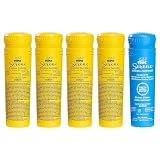
Products: FROG™ cartridges (for Hot Spring spas); bromine tablets from AquaDoc.
As an Amazon Associate, we earn from qualifying purchases. This post may contain affiliate links, which means we may receive a small commission at no additional cost to you.
2. Mineral Sanitizers
Type: Mineral-based (silver/copper ions via cartridges)
Benefits:
- Reduces need for chlorine/bromine by up to 50–78%
- Gentle ions control bacteria without harsh chemicals
- Leaves water feeling silky and soft
Drawbacks:
- Cartridge needs monthly replacement
- Still requires pairing with a low-dose sanitizer
Products: O-Care mineral sticks; Nature2 or similar cartridges

As an Amazon Associate, we earn from qualifying purchases. This post may contain affiliate links, which means we may receive a small commission at no additional cost to you.
3. Enzyme-Based Treatments
Type: Natural enzymes (with optional low chlorine)
Benefits:
- Breaks down organics without toxins
- Non-drying, moisturizing for skin
- Chlorine-free options available
- Helps prevent rashes and irritation
Drawbacks:
- May need an initial drain and refill
- Less effective alone in high-use spas
Products: Spa Marvel Water Treatment; Natural Spa by Clarity for Spas; Clear Choice Drops

As an Amazon Associate, we earn from qualifying purchases. This post may contain affiliate links, which means we may receive a small commission at no additional cost to you.
4. Ultra-Low Chlorine Systems
Type: Patented mineral/chlorine hybrid
Benefits:
- Uses tap-level chlorine (very low amount)
- No rashes, itching, or dryness
- Clear water with minimal additives
Drawbacks:
- Not completely chlorine-free
- Incompatible with bromine or enzyme systems
Products: iONRx (4 oz per 100 gallons)

As an Amazon Associate, we earn from qualifying purchases. This post may contain affiliate links, which means we may receive a small commission at no additional cost to you.
5. Natural Cleaners (Biguanide or Ozone-Enhanced)
Type: Non-halogen (PHMB or mineral flocculants)
Benefits:
- Soft on skin and allergy-friendly
- Removes buildup without drying
- Extends water life and reduces harsh maintenance
Drawbacks:
- Higher upfront cost
- Requires specific filter cleaning and upkeep
Products: Lotus Fresh (chlorine-free flocculant); Ahh-Some purge for startup

As an Amazon Associate, we earn from qualifying purchases. This post may contain affiliate links, which means we may receive a small commission at no additional cost to you.
Tips for Implementation and Prevention
These options can make hot tubbing enjoyable again without the itch. If you have a specific hot tub model or current setup, more tailored advice is possible!
- Start Fresh: Drain and clean your hot tub with a natural cleaner like citric acid-based products to remove chemical residue before switching systems.
- Combine for Best Results: Pair a mineral system with enzymes for ultra-low chemicals—many users report no irritation this way.
- Personal Care: Shower before/after soaking, apply moisturizer post-use, and limit soak time to 15-20 minutes if sensitivity persists.
- Maintenance Schedule: Weekly filter cleaning, monthly cartridge swaps, and test strips are key to avoiding imbalances that worsen irritation.
- When to See a Pro: If rashes continue, it could be Pseudomonas (hot tub folliculitis) from poor sanitation, test for bacteria and adjust.
7 Easy Ways to Make Your Hot Tub Gentler on Skin
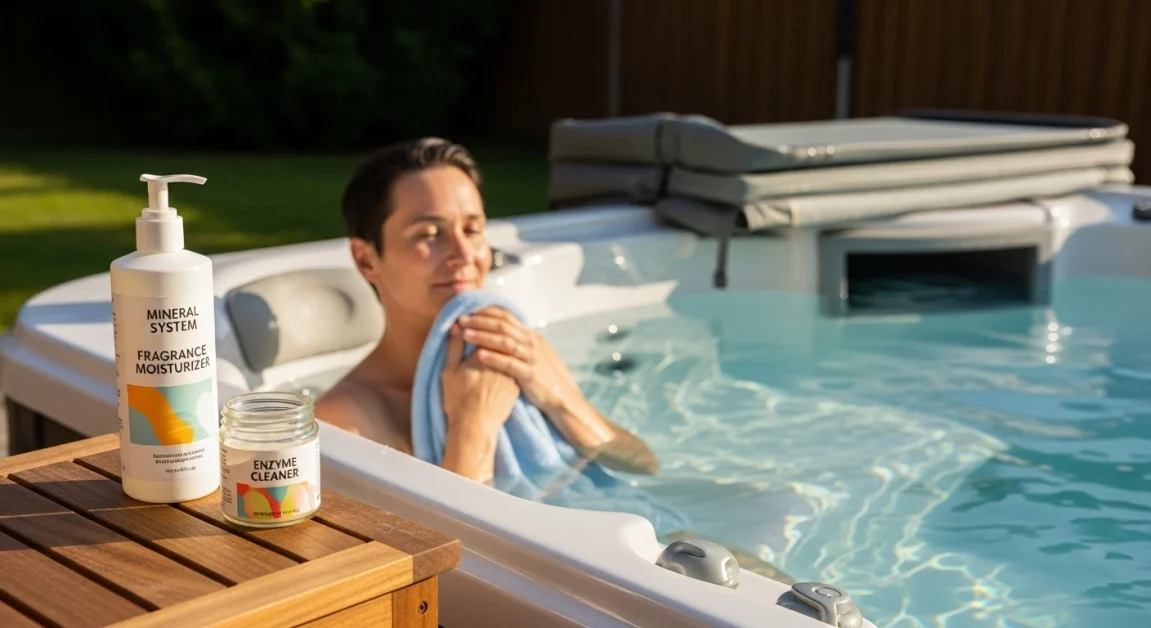
1. Choose Gentler Sanitizers
- Mineral Systems (silver or magnesium) reduce chemical levels, paired with low-dose chlorine.
- Ozone or UV-C devices kill bacteria, cutting chemical use by up to 90%.
2. Keep pH Balanced
Aim for pH 7.2–7.6 and alkalinity 80–120 ppm. Test weekly to prevent dryness or rashes.
3. Use Enzyme Cleaners
Break down oils and debris naturally, reducing sanitizer workload without affecting pH.
4. Switch to Low-Chlorine Shock
Non-chlorine shock (MPS) clears contaminants without boosting chlorine levels.
5. Rinse Before & After
- Before: Shower to remove sweat, lotions, and makeup.
- After: Rinse with mild soap, then moisturize.
6. Maintain Water Purity
Drain and refill every 3–4 months, skim daily, and clean filters monthly.
7. Try Skin-Friendly Products
- Leisure Time Renew (chlorine-free shock)
- Spa Marvel (enzyme conditioner)
- Nature2 Mineral Sanitizer (silver-ion system)
Understanding the Problem
What causes my skin to feel irritated after using a hot tub?
- Standard culprits: Chlorine and bromine as sanitizers can cause dryness and sometimes allergic reactions. High or low pH in the water can further disrupt your skin’s natural balance.
- The heat factor: Hot water strips away protective oils, making skin more vulnerable to any chemicals present. Prolonged soaking further emphasizes this drying effect.
- Individual sensitivities: Pre-existing skin conditions like eczema or psoriasis can be aggravated by the combination of heat, chemicals, and water immersion.
How do I know if my skin is particularly sensitive to hot tub chemicals?
- Minor irritation: Temporary redness or slight itchiness after hot tub use might be normal for some, but it’s a sign to be mindful.
- Moderate reactions: Persistent itchiness, rashes, or bumps that develop after hot tub use and last for more than a few hours signal stronger sensitivity.
- Severe sensitivity: Experiencing immediate discomfort, burning sensations, or worsening of existing skin conditions requires avoiding traditional hot tub chemistry.
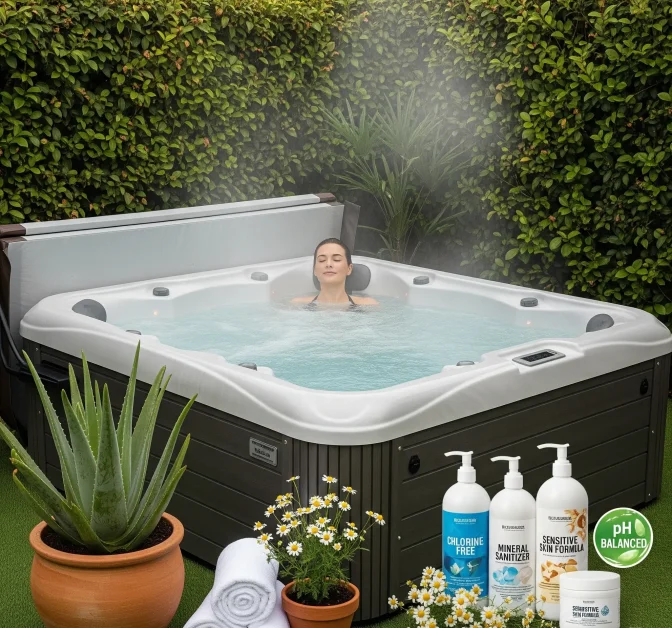
Are there certain types of skin conditions that make people more prone to hot tub irritation?
- Eczema and psoriasis: These conditions already compromise your skin’s barrier function, making it more vulnerable to irritants.
- Dry Skin: People with naturally dry skin are more susceptible to further drying caused by hot tubs.
- Allergies: Some individuals have sensitivities or allergies specifically to bromine or chlorine.
NOTE
Important Note: If you’re experiencing anything beyond mild irritation, it’s wise to consult a dermatologist for personalized advice.
Find out our Best Hot Tub Chemical Calculator App.
Solutions Beyond Just Chemicals
How important is showering before and after hot tub use for skin health?
- Before: Removes sweat, lotions, cosmetics, etc., that can react with hot tub chemicals, creating harsh byproducts and consuming sanitizer. This lessens the need for strong chemical levels.
- After: Rinses off any lingering sanitizers and other residues that can continue to irritate the skin.
Does the temperature of hot tub water influence skin irritation?
- Yes, significantly! Very hot water strips your skin’s natural oils, compromising its protective barrier and making it more vulnerable to chemicals.
- Recommendation: Lower the temperature slightly (even a few degrees can help!) Aim for a comfortable soak rather than scalding.
Can using moisturizer before or after hot tubbing offer protection?
- After: Definitely! A thick, fragrance-free moisturizer replenishes the skin’s moisture and helps strengthen its barrier function. Apply immediately after patting yourself dry.
- Before: Can be tricky. Some moisturizers might make the water oily or contribute to buildup. However, a thin layer of a barrier-style product (e.g., some diaper rash creams) might be experimented with cautiously.
Extra Tips: Shorter soaks: Consider limiting your time in the hot tub, especially initially, to gauge your skin’s reaction. Cool down rinse: After getting out of the hot tub, a quick cool-water shower can close pores and further soothe your skin.
Alternative Sanitizers
If skin comfort is your top concern, biguanides and bromine are often better tolerated than chlorine. Enzymes, ozone, and mineral systems can make water gentler but work best as supplements, not replacements.
Not all sanitizers feel the same on your skin. Here’s how the main options stack up:
| Sanitizer | Skin Sensitivity | Effect on pH | Notes on Effectiveness |
|---|---|---|---|
| Chlorine | Can be harsh, drying, itchy, strong odor | Tends to raise pH, frequent adjustment needed | Very effective, but not the gentlest option |
| Bromine | Gentler than chlorine, lighter odor, some sensitivities exist | More stable than chlorine | Works well, though weaker in direct sunlight |
| Biguanides (Baquacil, Soft Soak) | Least irritating, no harsh fumes | Needs close pH and alkalinity monitoring | Effective if maintained carefully |
| Natural Enzymes | Gentle, supplement only | Minimal effect on pH | Not a standalone sanitizer, reduces chemical load |
| Ozone (with generator) | Reduces need for harsh sanitizers | Neutral effect on pH | Excellent supplement, but still requires low sanitizer levels |
| Mineral Systems (copper/silver) | Generally gentle | Neutral effect on pH | Helps control bacteria, not a full replacement |
NOTE
Important Note: Even gentle sanitizers can still cause irritation in some individuals. Always patch-test new products on a small area of skin before full hot tub use.
Minimizing Chemical Use
Smart Habits:
- Pre-Soak Shower: Wash off oils, lotions, and cosmetics so sanitizer lasts longer.
- Test Often: Check pH, alkalinity, and sanitizer levels at least twice a week to keep things balanced.
- Shock Strategically: Use higher doses only when water is cloudy or has issues, not all the time.
- Keep It Covered: A cover blocks debris and sunlight, cutting down sanitizer loss.
Helpful Products:
- Pre-Filters: Clean water going in makes balancing easier and lowers sanitizer demand.
- Mineral Systems: Copper and silver ions reduce bacteria, so you can use less chlorine or bromine.
- Ozone Generators: Break down contaminants, minimizing but not eliminating the need for sanitizers.
- Enzyme Clarifiers: Digest oils and waste, easing the load on your sanitizer.
NOTE
Even if you follow these practices, you will still need some amount of sanitizer to maintain a safe hot tub. Product effectiveness can differ, so it’s important to do thorough research on specific brands and reviews.
Water Conditioning for Skin Comfort
Sanitizers are still essential, but these steps can make water feel gentler:
- pH Balance: Keep between 7.4–7.6. High pH dries skin, low pH stings.
- Water Softeners: Reduce calcium hardness to prevent harsh, itchy water.
- Moisturizing Additives: Products like Spa Silk can add a silky feel (check reviews).
- Sensitive-Skin Brands: Options like Spa Marvel or Soft Soak are worth exploring.
Hard Water & Skin
- Hard water leaves mineral deposits that dry and itch.
- Test hardness with strips and lower calcium with spa-safe softeners.
Natural Options?
- Baking Soda: Only raises pH, no skin benefits.
- Essential Oils: Risky unless spa-safe, can clog filters and irritate skin.
Gentler Sanitizing Alternatives
- Bromine: Softer than chlorine, less odor.
- Mineral Systems: Silver and copper reduce chemical use.
- Ozone Systems: Cuts down sanitizer needs (not a stand-alone).
- Enzymes: Break down oils and lotions, easing chemical load.
Use our free hot tub chemical calculator.
Tips for Sensitive Skin Care
- Regular Testing: Ensure the water’s pH and sanitizer levels are within the recommended ranges. Imbalances can cause skin irritation.
- Shower Before and After: Rinsing off before entering the tub removes contaminants, reducing the need for chemicals. Showering afterward helps remove any residual chemicals from the skin.
- Stay Hydrated: Hydration is key to maintaining healthy skin. Drink plenty of water before and after your hot tub session.
Advice on Managing Sensitive Skin
- Shower Smart: Rinse off before soaking to remove irritants, then take a cool or lukewarm shower after to wash away sanitizer residue.
- Cool It Down: Set your tub on the lower end of the temp range to help prevent dryness and irritation.
- Moisturize After: Apply a rich, fragrance-free cream or ointment right after your shower to lock in moisture.
Soak Time Matters
Stick to shorter sessions (10–15 minutes) and see how your skin reacts. If you notice redness or itching, hop out.
Best Moisturizers
- After soaking: Humectants (glycerin, hyaluronic acid), ceramides, and occlusives (petroleum jelly, shea butter).
- Before soaking: A very thin layer of barrier cream may help, but most lotions just make the water oily, so skip it if possible.
Check out Troubleshooting & Maintenance Guide.
Sensitive Skin Irritation or Hot Tub Folliculitis?
Chemical irritation and hot tub folliculitis can look similar at first, but they have different causes.
Chemical irritation can be related to water chemistry, heat, sanitizer exposure, or another treatment product.
Hot tub folliculitis is an infection associated with Pseudomonas aeruginosa bacteria in contaminated water.
| Sign | Chemical or Heat Irritation | Hot Tub Folliculitis |
|---|---|---|
| Dry or tight feeling | Common | Less typical |
| Burning or stinging during soaking | Possible | Less typical |
| General redness | Possible | Possible |
| Itchy red bumps | Possible | Common |
| Pus-filled bumps around hair follicles | Less typical | Common |
| Appears a few days after soaking | Less typical | Can occur |
| Worse underneath a swimsuit | Not specific | Common pattern |
Do not diagnose a rash based on appearance alone.
Stop using the hot tub if you develop a persistent or worsening rash. Seek medical advice if symptoms become severe, recur repeatedly, or do not improve.
Proper sanitation also matters even for people with very sensitive skin. CDC recommends removing your swimsuit, showering with soap after using a hot tub, and washing the swimsuit before wearing it again.
Frequently Asked Questions
Is bromine better than chlorine for sensitive skin?
Not for everyone. Some hot tub users prefer bromine, but either sanitizer can irritate sensitive skin when the concentration, pH, temperature, or exposure time is unsuitable. Check your water chemistry before assuming chlorine itself is the problem.
Can non-chlorine shock cause a rash?
It can in susceptible people. Many non-chlorine shocks contain potassium peroxymonosulfate, or MPS, which has been associated with allergic contact dermatitis. If irritation started after changing shock products, check the ingredient list.
Can I run a hot tub without chlorine or bromine?
Some EPA-registered alternative systems, such as compatible PHMB/biguanide systems, can provide non-halogen sanitation. Products such as enzymes, clarifiers, and most supplemental water conditioners should not automatically be treated as standalone sanitizers.
Are mineral sanitizers enough by themselves?
It depends on the specific registered system and its label instructions. Many mineral systems are designed to work with another sanitizer or oxidizer rather than completely replace water sanitation. Follow the instructions for the exact product you use.
Is a saltwater hot tub chlorine-free?
No. A salt chlorine generator converts dissolved salt into chlorine. It can provide steadier chlorine production with less manual dosing, but chlorine is still the active sanitizer.
Why does my skin itch when my hot tub chemicals test correctly?
Heat, long soaking sessions, MPS shock, individual sensitivity, skin conditions, or contaminated water can all contribute. Lowering the temperature and soak time can help identify whether heat exposure is part of the problem.
What pH should a hot tub have?
CDC recommends a hot tub pH between 7.0 and 7.8. Water outside that range can reduce sanitizer performance and may also make the soaking experience less comfortable.
How can I tell whether my rash is hot tub folliculitis?
Hot tub folliculitis often causes itchy red bumps and may produce pus-filled bumps around hair follicles. CDC notes that it often appears a few days after exposure to contaminated hot tub water and can be worse underneath areas covered by a swimsuit. Persistent, worsening, or recurring rashes should be evaluated by a healthcare professional.





3 Comments
Comments are closed.