Infrared Sauna Buying Guide for Norman, Oklahoma Homeowners

Buying an infrared sauna in Norman, OK comes down to matching size and heater type to your space, planning for the right electrical setup, and budgeting for both the purchase price and ongoing running costs. For related planning, see Keep Your Hot Tub Water Clear. If you want to test the experience before building a permanent cabin, try our DIY home sauna guide.
Take the time to compare a couple of models in person or read detailed specs before buying, since the difference between a budget dome and a mid-range cabin is significant in daily comfort.
Once you’ve narrowed down a type and price range, the next step is simply measuring your space and confirming your electrical setup can support it. For related planning, see Mobile Sauna Insurance.
What to Consider Before Buying an Infrared Sauna
Before comparing specific models, work through a few basics. How many people will typically use it, just you, or you and a partner or family? Do you have a dedicated indoor spot (spare room, garage, finished basement) or will it live outdoors? For related planning, see Sauna Sand Timer.
Most home infrared saunas run on a standard 120V outlet, but larger multi-person cabins often need a dedicated 240V circuit, which may mean an electrician visit. Factor that into your budget early rather than after delivery. For related planning, see Sauna and Fertility.
Ventilation and moisture also matter more in Oklahoma than in drier climates. Humid summer air can slow evaporation and make a poorly ventilated sauna room feel stuffy, so plan for airflow whether the unit sits indoors or out.
Types of Infrared Saunas to Choose From
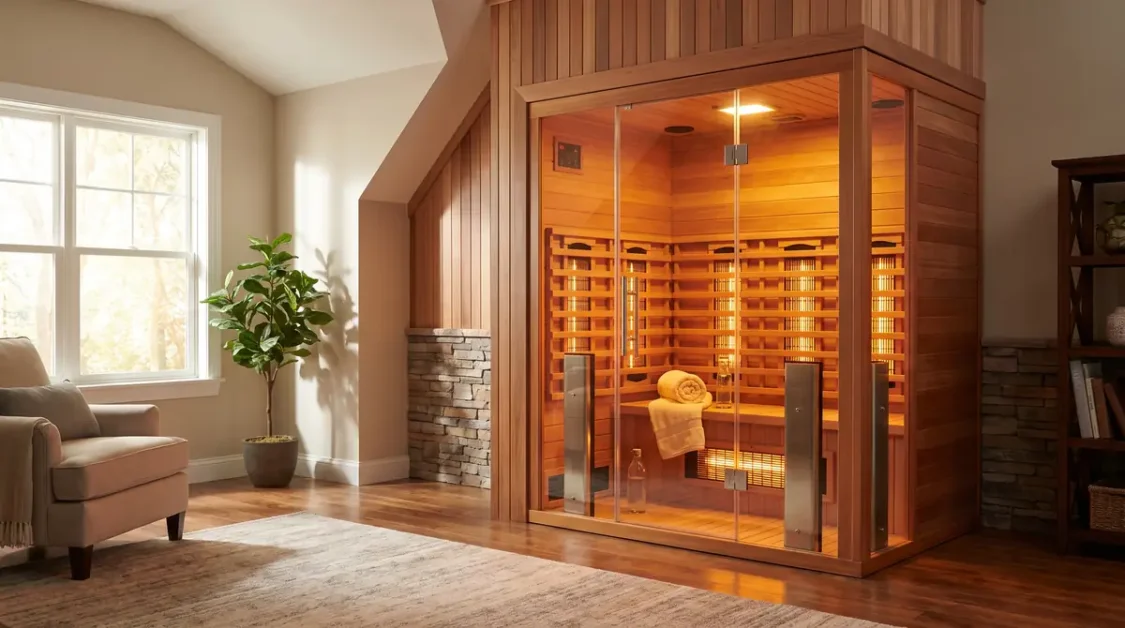
Infrared saunas generally fall into a few categories: portable dome or blanket units, one- to two-person cabins, and larger multi-person cabins built for families or couples.
Heater technology also varies between near, mid, and far infrared, each penetrating the body slightly differently and suited to different goals.
If you want a deeper breakdown of how these technologies differ, this guide to near, mid, and far infrared saunas walks through the practical differences before you commit to a category.
Key Features to Compare Before You Buy
Once you’ve settled on a size and type, compare the details that affect comfort and long-term satisfaction:
- Heater panel material (ceramic vs. carbon fiber) and how evenly it distributes heat
- Interior wood, typically cedar, basswood, or hemlock, which affects scent and durability
- Control options: simple dial controls vs. app or Bluetooth-enabled panels For related planning, see Is 110 Too Hot For A Hot Tub? Safety Insights.
- Interior lighting or chromotherapy options, if that matters to you
- Warm-up time and maximum temperature range For related planning, see 10 Essential Hot Tub Accessories for Maximum Relaxation.
EMF (electromagnetic field) output is another detail worth checking, especially if you plan to use the sauna daily.
Reputable manufacturers publish EMF ratings, and it’s worth understanding why some buyers specifically look for low EMF saunas before making a final decision.
Price Ranges: What You’ll Actually Pay
Budget portable domes or sauna blankets typically run $200 to $600 and work well for one person with no dedicated space. Mid-range one- to two-person cabins land between roughly $1,500 and $3,500, and this is where most first-time home buyers end up.
Premium multi-person cabins with upgraded wood, advanced heaters, and smart controls generally run $4,000 to $9,000 or more. For related planning, see Exploring the Art of Romantic Retreats.
Purchase price is only part of the picture. Ongoing electricity costs depend on your unit’s wattage and how often you use it, and understanding what it actually costs to run a sauna before you buy helps you budget realistically rather than getting surprised by your utility bill later.
Common Mistakes First-Time Buyers Make
A few patterns show up again and again with new sauna owners:
- Underestimating electrical requirements, then discovering the unit needs a dedicated circuit after delivery
- Buying a one-person unit when two people will regularly want to use it together
- Ignoring ventilation, which matters more during Oklahoma’s humid summer months
- Overlooking basic fire safety around heaters, clearances, and electrical connections
- Skipping a maintenance plan, which shortens the lifespan of both the wood and the heater
On the safety front, it’s worth reading through general sauna fire safety guidelines before your first session, and keeping up with routine cleaning extends the life of the unit considerably. A simple infrared sauna cleaning routine covers what to wipe down and how often.
Indoor vs. Outdoor Placement
Indoor placement is simpler for wiring and year-round convenience, but it takes up interior square footage and needs decent ventilation. Outdoor placement gives you more flexibility on size and keeps humidity out of the house, but it requires weather-resistant construction and a stable, level base.
If you’re weighing a backyard installation, this outdoor sauna guide covers insulation and setup considerations specific to outdoor units.
Some Norman homeowners also pair a sauna with an existing or planned hot tub for a hot-cold or dual-relaxation setup. If that’s on your radar, it’s worth reading how a sauna and hot tub combination works in practice before you commit to a layout.
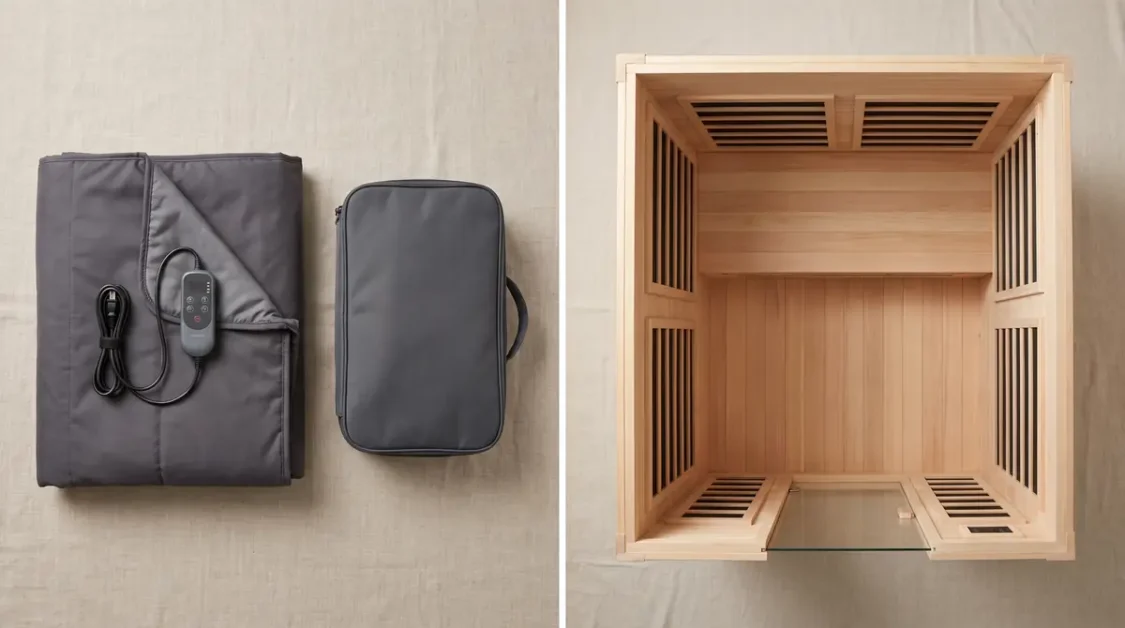
Quick Comparison: Budget vs. Mid-Range vs. Premium
| Tier | Typical Price | Best For | Trade-Offs |
|---|---|---|---|
| Budget (portable dome/blanket) | $200–$600 | Solo use, small spaces, renters | Lower heat output, less durable, no cabin experience For related planning, see 7 Proven Steps. |
| Mid-range (1–2 person cabin) | $1,500–$3,500 | Most home buyers, couples | May still need a dedicated 120V outlet nearby |
| Premium (multi-person cabin) | $4,000–$9,000+ | Families, frequent daily use | Often needs a 240V circuit and more floor space |
Frequently Asked Questions
What is the downside to an infrared sauna?
The main downsides are cost, the electrical work some models require, and the fact that benefits like relaxation and muscle relief are well supported, while more dramatic health claims are not. Some people also find the enclosed heat uncomfortable, and certain health conditions call for a doctor’s clearance before regular use. For related planning, see 2-person hot tub 220 volt compact energy-efficient relaxation.
Is an infrared sauna worth it?
For people who plan to use it consistently for relaxation, muscle recovery, or as part of a wind-down routine, many owners find it worth the investment. If you’re unsure how often you’d actually use one, trying sessions at a local studio first is a reasonable way to test the habit before buying.
What toxins do infrared saunas remove?
Sweat produced during a sauna session is made up mostly of water, sodium, and other electrolytes. Claims that infrared saunas remove significant amounts of toxins from the body go beyond what current research supports, so it’s worth treating “detox” marketing claims with some skepticism.
Does an infrared sauna help lower cortisol?
Some small studies suggest heat exposure can support relaxation and stress reduction, which may indirectly affect stress hormone levels. The research here is still limited, so it’s more accurate to think of a sauna as a relaxation tool than a proven cortisol-lowering treatment.
Is an infrared sauna covered by insurance?
Coverage is uncommon and depends heavily on your specific insurer and whether a doctor documents medical necessity.
For a closer look at when reimbursement is possible, see this breakdown of infrared sauna insurance coverage.