

Feeling Dizzy After Sauna? Here’s What Your Body Is Telling You

Feeling dizzy after a sauna almost always comes down to your blood vessels widening and your fluid levels dropping faster than your body can immediately adjust to. For related planning, see Keep Your Hot Tub Water Clear.
For most people, sitting down, cooling off, and sipping water is enough to feel steady again within minutes.
The best way to avoid it next time is simple: hydrate beforehand, keep sessions reasonable, and stand up slowly when you’re ready to leave. For related planning, see Sauna and Fertility.
If dizziness keeps happening or comes with more serious symptoms like fainting or chest pain, that’s your cue to check in with a doctor rather than just adjusting your routine. For related planning, see Mobile Sauna Insurance.
NOTE
This article is for general information and isn’t a substitute for personalized medical advice. If you have an underlying health condition, check with your doctor before adding regular sauna sessions to your routine. For related planning, see 2 Person Inflatable Hot Tubs.
Heat safety matters even more in warmer months, when your body is already working harder to cool itself. For more on this, see our guide to summer sauna mistakes beginners make.
Why Do You Feel Dizzy After a Sauna?
Feeling dizzy after a sauna is usually caused by a temporary drop in blood pressure, known as orthostatic hypotension, combined with fluid loss from sweating. For related planning, see Sauna Sand Timer.
Heat makes your blood vessels dilate to help cool you down, which means more blood pools near your skin and less circulates back to your heart and brain. For related planning, see Exploring the Art of Romantic Retreats.
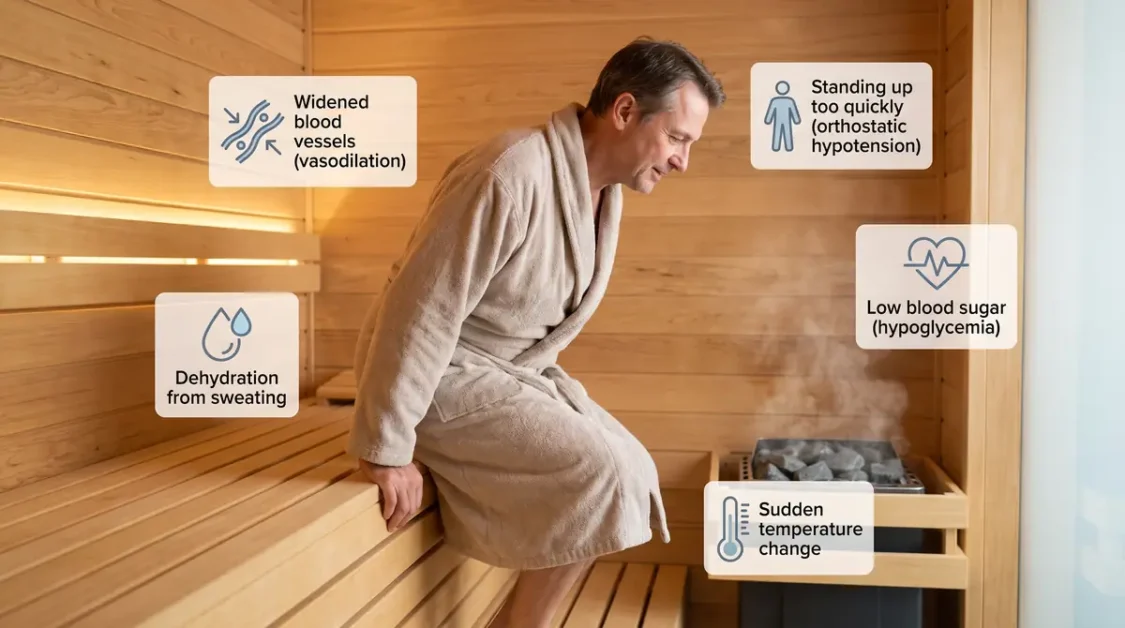
According to Mayo Clinic, the most common symptom of orthostatic hypotension is lightheadedness or dizziness when standing after sitting or lying down, and occasional episodes triggered by mild dehydration, low blood sugar, or overheating are usually minor and not a cause for concern.
A sauna session checks several of those boxes at once: it’s hot, it makes you sweat out fluid, and you’re often sitting still before standing up quickly to leave. For related planning, see 10 Essential Hot Tub Accessories for Maximum Relaxation.
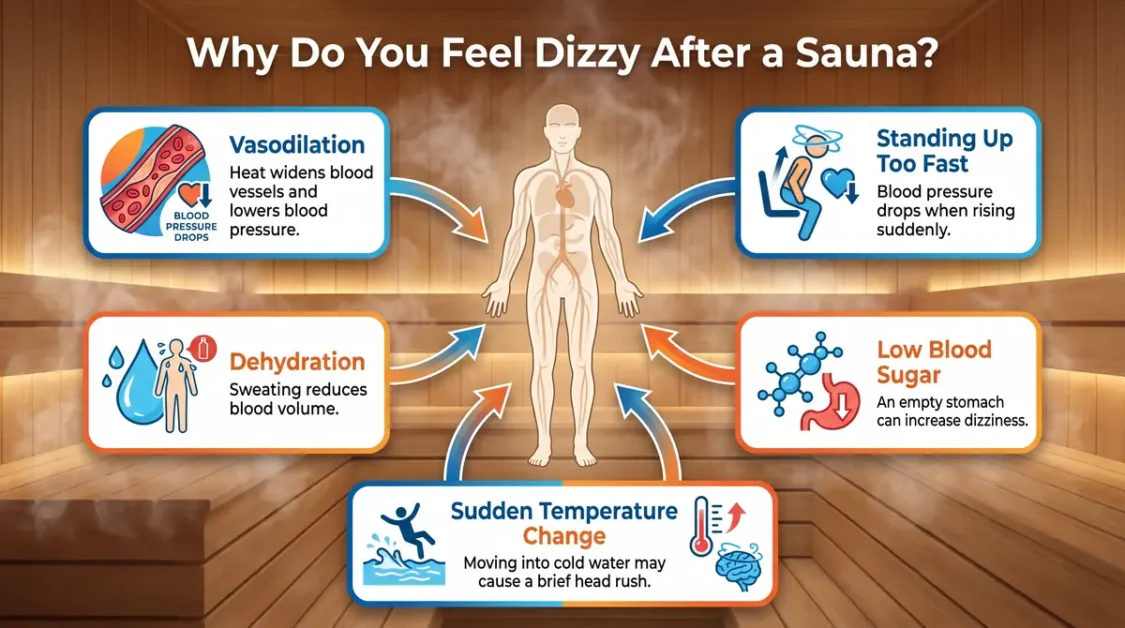
The Main Physical Causes
- Vasodilation: Heat widens your blood vessels so more blood flows to your skin, which lowers your overall blood pressure.
- Dehydration: Sweating reduces your blood volume, so your heart has less fluid to pump, which can drop blood pressure further.
- Standing up too fast: Cleveland Clinic notes that orthostatic hypotension is a large drop in blood pressure that occurs when you stand up after sitting or lying down, and a sauna bench is exactly the kind of seated position that sets this up.
- Low blood sugar: If you sauna on an empty stomach, a dip in blood sugar can add to the lightheaded feeling. For related planning, see Sauna and Exfoliation.
- Sudden temperature change: Moving straight from a hot sauna into a cold plunge or cold shower makes your blood vessels constrict rapidly right after they were dilated, which some people feel as a head rush. For related planning, see 110v Hot Tub.
What to Do the Moment You Feel Dizzy
If you start feeling lightheaded in or after a sauna, the goal is to get your blood pressure and body temperature back to normal safely, without falling.
- Sit or lie down immediately. Don’t try to power through it standing up. If you’re still inside the sauna, get low to the ground or sit with your head between your knees.
- Leave the heat. Step out into cooler air as soon as you’re steady enough to move.
- Elevate your legs if you can. Lying down with your feet slightly raised helps blood return to your heart and brain faster.
- Sip water slowly. Small sips of cool (not ice-cold) water help rehydrate without shocking your system.
- Cool your skin gradually. A cool, damp cloth on your neck or forehead helps, but avoid jumping straight into a cold plunge while you’re still dizzy.
- Wait it out before standing. Give yourself a few minutes of stillness before you try to stand or walk again.
- Have a small snack if you skipped a meal. A little food can help if low blood sugar is part of what’s going on.
Most people feel back to normal within 10 to 15 minutes once they cool down, rehydrate, and stop moving around.
This is especially worth keeping in mind if you’re combining a sauna with a cold plunge as part of a backyard wellness routine, since alternating heat and cold puts extra demand on your cardiovascular system.
Tips to Prevent Dizziness Next Time
- Hydrate before, not just after. Drink water in the hour before your session, not only once you’re already dizzy.
- Keep sessions shorter, especially at first. Many sauna guides recommend starting with sessions of around 10 to 15 minutes rather than pushing for long stays right away.
- Stand up slowly. Sit on the edge of the bench for a moment before standing, and pause again before walking.
- Avoid alcohol before a sauna. Alcohol already lowers blood pressure and increases fluid loss, which stacks on top of the sauna’s effects.
- Don’t sauna on an empty stomach. A light snack beforehand helps stabilize blood sugar.
- Skip strenuous exercise right before. Working out hard and then heading straight into a sauna compounds fluid loss and blood pressure changes.
- Ease into temperature contrasts. If you like cold plunges, warm up gradually afterward rather than shocking your system straight from the sauna.
If you’re building or using an outdoor sauna, wind exposure can cool you faster than you expect, so it’s worth checking in with how you feel more often during a session.
Common Mistakes That Make Sauna Dizziness Worse
- Jumping up too fast. This is the single biggest trigger for the head-rush feeling, since your blood pressure doesn’t have time to adjust. For related planning, see Is 110 Too Hot For A Hot Tub? Safety Insights.
- Staying in far longer than planned. Losing track of time in the heat increases both dehydration and heat strain.
- Chugging ice water immediately after. Large amounts of very cold water fast can add to the shock your body is already managing; smaller, slower sips work better.
- Going straight into a cold plunge while lightheaded. Save the cold exposure for after you feel steady again.
- Ignoring the warning signs. Pushing through nausea or a racing heart instead of stepping out and sitting down.
Sauna heat behaves differently than hot tub heat in how it affects your body, which is one reason the dizziness can feel different too. Our sauna vs. hot tub comparison breaks down those differences in more detail.
When Sauna Dizziness Might Mean Something More
Occasional, mild lightheadedness that resolves quickly with rest and water is common and usually not a medical concern.
But according to Mayo Clinic, frequent symptoms of orthostatic hypotension are worth discussing with a health care provider, and losing consciousness even briefly requires seeing a provider right away.
Talk to a doctor before your next sauna session, or right away if symptoms are severe, if you notice:
- Fainting or coming close to passing out
- Chest pain, a racing or irregular heartbeat, or shortness of breath
- Dizziness that happens every single time you use a sauna, not just occasionally
- You take blood pressure medication, diuretics, or heart medication
- You are pregnant, most clinicians advise avoiding saunas and hot tubs during pregnancy For related planning, see Best Hot Tub Fragrances.
- You have a history of low blood pressure, diabetes, or a heart condition
Frequently Asked Questions
Is it normal to feel a little dizzy after a sauna?
Yes, occasional mild lightheadedness after a sauna is common and usually harmless. It typically comes from a temporary drop in blood pressure caused by heat and fluid loss. It should ease within a few minutes of cooling down and rehydrating. If it happens every time or comes with fainting, chest pain, or a racing heartbeat, mention it to a doctor.
What should you not do after a sauna?
Avoid standing up quickly, jumping straight into a cold plunge while you feel lightheaded, chugging large amounts of ice-cold water at once, or driving before you feel fully steady. It’s also best to skip alcohol right after a session, since it can add to the blood pressure drop your body is already managing.
What toxins are released after a sauna?
Sweat is mostly water, salt, and trace minerals. Small amounts of substances like certain heavy metals have been detected in sweat in some studies, but your liver and kidneys handle the large majority of your body’s detoxification, not your sweat glands. Sweating heavily is more about cooling your body down than “flushing out toxins.”
What is the 200 rule for saunas?
The “200 rule” is an informal guideline, not a medical standard, and two versions are commonly used: one adds the sauna’s temperature in Fahrenheit to your session length in minutes, aiming for a total near 200; the other adds temperature in Fahrenheit to humidity percentage, aiming to keep that combined number under 200. Either way, the idea is to balance heat intensity with time or moisture so a session stays comfortable rather than overwhelming.
Keep in mind the 200 rule applies mainly to traditional saunas rather than infrared models, our guide to traditional saunas covers what to expect from that style of heat.
Why do I feel dizzy after a sauna and cold plunge?
Going from a hot sauna into a cold plunge asks your blood vessels to widen and then constrict again very quickly, on top of the blood pressure changes the heat already caused. For some people, that fast swing feels like an extra head rush. Warming up gradually after a cold plunge, rather than doing it back-to-back with the sauna, can help. For related planning, see 2-person hot tub 220 volt compact energy-efficient relaxation.