
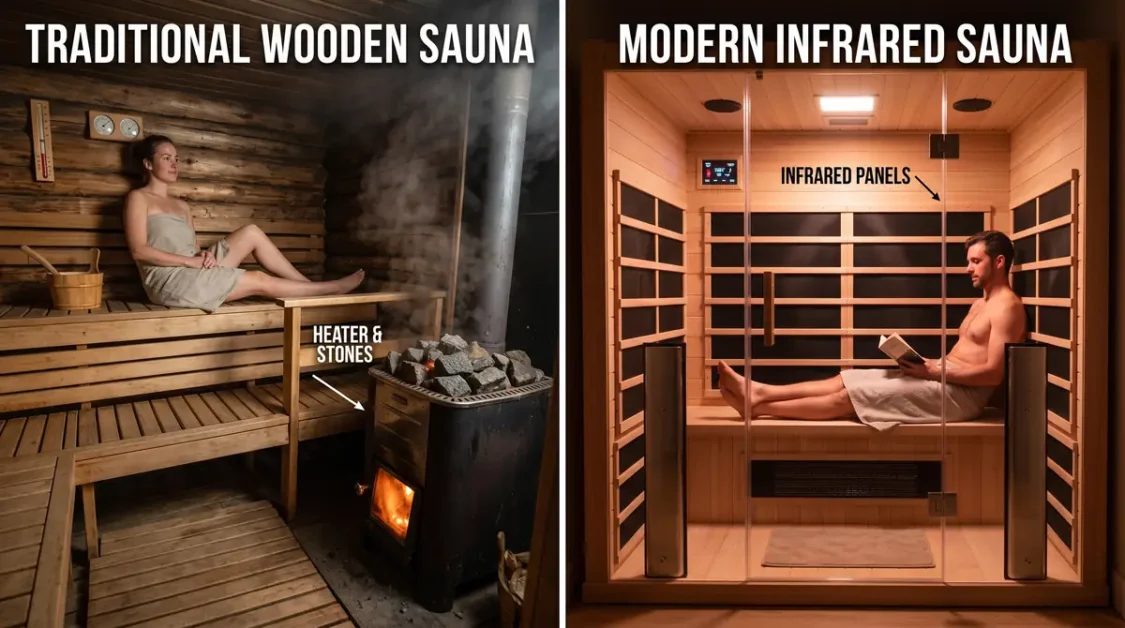
Traditional vs. Infrared Sauna Design

The best sauna design depends on your available space, budget, and the experience you’re looking for.
If you want the classic sauna atmosphere with steam, intense heat, and long-term customization potential, a traditional sauna is hard to beat. If convenience, smaller footprints, and easier installation matter most, an infrared sauna may be the better fit.
Taking time to evaluate your home layout, electrical capacity, and personal preferences will help you choose a sauna you’ll enjoy for years.
Quick Answer: Traditional vs. Infrared Sauna Design
| Feature | Traditional Sauna | Infrared Sauna |
|---|---|---|
| Heat Source | Heater and sauna stones | Infrared heating panels |
| Temperature | 150°F to 194°F | 110°F to 140°F |
| Humidity | Dry heat with optional steam | Dry heat only |
| Installation | More complex | Easier |
| Space Needed | Moderate to large | Compact |
| Warm-Up Time | 30 to 45 minutes | 10 to 20 minutes |
| Outdoor Use | Excellent | Less common |
| Custom Design Options | Extensive | Limited |
For homeowners wanting an authentic sauna experience with higher temperatures and steam, a traditional sauna is usually the better choice. For smaller homes and easier installation, an infrared sauna often makes more sense.
What Is a Traditional Sauna Design?
A traditional sauna uses a heater and sauna stones to heat the air inside the sauna room. Water can be poured over the stones to create steam and increase humidity.
Key Design Features
Traditional sauna designs typically include:
- Sauna heater
- Sauna stones
- Cedar or other heat-resistant wood interiors
- Multi-level bench seating
- Ventilation system
- Insulated walls and ceiling
If you’re exploring different traditional layouts, these modern sauna design ideas can help you visualize how traditional sauna elements fit into contemporary homes.
What Living With a Traditional Sauna Is Really Like
Many first-time sauna users notice the heat feels different than expected. The air itself becomes intensely hot, creating a deep sweating experience.
During the first few minutes, the warmth may feel manageable. After about 10 minutes, sweating typically increases significantly.
Most experienced sauna users enjoy the ability to adjust humidity by adding water to the stones. This flexibility is one reason traditional saunas remain the gold standard for sauna enthusiasts.
What Is an Infrared Sauna Design?
An infrared sauna uses infrared heating panels instead of a heater and stones. Rather than heating the surrounding air, infrared panels emit radiant heat that warms the body directly.
Key Design Features
Infrared sauna designs commonly include:
- Infrared panels
- Compact cabin structure
- Digital controls
- Standard electrical connection
- Minimal ventilation requirements
For homeowners comparing technologies, this guide on different types of infrared saunas explains how panel configurations and heating systems vary.
What Living With an Infrared Sauna Is Really Like
Many beginners expect the heat to feel instant, but infrared heat builds gradually.
One thing people often overlook is that the lower temperature can make sessions feel more comfortable for heat-sensitive users.
Because infrared saunas operate at lower temperatures, they often fit easily into spare bedrooms, basements, and wellness rooms without requiring major renovations.
Traditional vs. Infrared Sauna Design Comparison
Space Requirements
Infrared saunas generally require less space.
Most home infrared models are designed for:
- 1 person
- 2 people
- 4 people
Traditional saunas often need:
- Larger footprints
- Ventilation space
- Heater clearances
- Additional insulation
In smaller homes, space limitations often become the deciding factor.
Installation Complexity
Traditional sauna installation typically requires:
- Dedicated electrical circuits
- Ventilation planning
- Moisture management
- Additional insulation
Many DIY sauna builders underestimate how important ventilation and insulation become during installation.
If you’re considering a full home project, this story about a home sauna installation adventure highlights some practical planning considerations.
Infrared saunas are often delivered as pre-built kits that can be assembled relatively quickly.
Energy Use and Operating Costs
Infrared saunas usually consume less electricity because they operate at lower temperatures and heat up faster.
Traditional saunas require more energy to heat the air and maintain higher temperatures.
For a deeper look at ongoing expenses, homeowners often compare their expected sauna operating costs before making a purchase.
Heat Experience and Comfort
This is where personal preference matters most.
Traditional sauna:
- Intense ambient heat
- Steam options
- Authentic Finnish sauna feel
Infrared sauna:
- Lower temperature
- Dry radiant heat
- Gentler sessions
Many people discover that their preferred heat experience matters more than installation costs.
Maintenance Requirements
Traditional saunas typically require:
- Heater maintenance
- Stone inspection
- Ventilation checks
Infrared saunas generally need:
- Panel inspection
- Interior cleaning
- Electrical component monitoring
Both designs benefit from routine cleaning and proper airflow.
Appearance and Home Integration
Traditional sauna designs often become architectural features within the home.
They can include:
- Custom benches
- Glass walls
- Luxury wood finishes
- Outdoor structures
Infrared saunas typically prioritize convenience and compact design.
Lifespan and Long-Term Value
Well-built traditional saunas often last for decades with proper maintenance.
Infrared saunas can also provide long service life, but component replacement may become necessary over time.
From a practical standpoint, long-term durability often depends more on build quality than sauna type.
Which Sauna Design Works Best for Different Homes?
Small Apartments and Condos
Infrared sauna designs usually work best because they:
- Need less space
- Require less ventilation
- Heat quickly
Dedicated Wellness Rooms
Either option can work well.
Homeowners focused on wellness often compare the benefits of infrared saunas against traditional systems before making a final decision.
Basements and Spare Rooms
Infrared models are commonly chosen because installation is simpler and moisture concerns are lower.
Outdoor Backyard Installations
Traditional saunas dominate this category.
In backyard sauna setups, weather protection becomes important, but traditional designs often create the most authentic experience.
If you’re considering an exterior build, an outdoor sauna may provide more flexibility than indoor installation.
Luxury Home Spa Designs
Custom traditional sauna installations often offer:
- Greater design freedom
- Premium materials
- Larger capacities
- Higher-end finishes
Pros and Cons of Traditional Sauna Design
Advantages
- Authentic sauna experience
- Steam capability
- Higher temperatures
- Excellent resale appeal
- Extensive customization options
Drawbacks
- Higher installation costs
- Longer warm-up times
- Greater energy consumption
- More ventilation requirements
Pros and Cons of Infrared Sauna Design
Advantages
- Easier installation
- Lower energy use
- Faster startup
- Smaller footprint
- Lower entry cost
Drawbacks
- No steam capability
- Less traditional sauna feel
- Fewer customization options
- Lower operating temperatures
Which Sauna Should You Choose?
| If You Want… | Better Choice |
|---|---|
| Authentic sauna experience | Traditional |
| Steam and humidity | Traditional |
| Outdoor installation | Traditional |
| Luxury spa design | Traditional |
| Small footprint | Infrared |
| Faster heat-up time | Infrared |
| Easier installation | Infrared |
| Lower energy usage | Infrared |
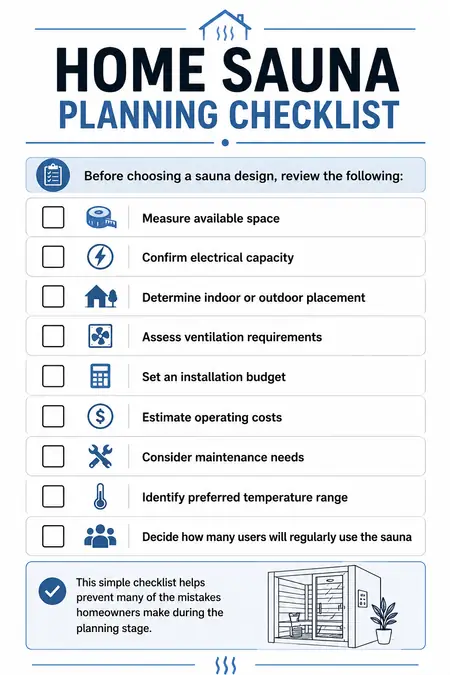
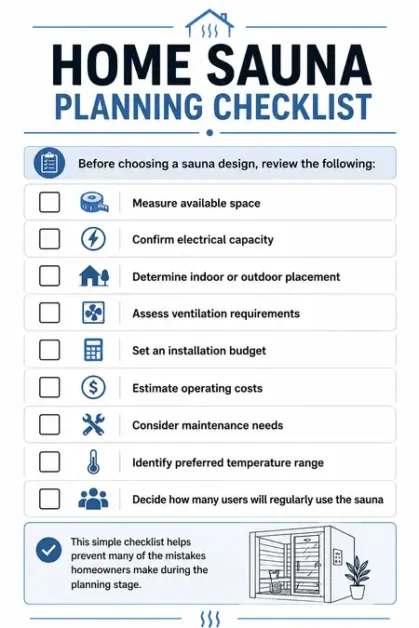
Home Sauna Planning Checklist
Before choosing a sauna design, review the following:
- Measure available space
- Confirm electrical capacity
- Determine indoor or outdoor placement
- Assess ventilation requirements
- Set an installation budget
- Estimate operating costs
- Consider maintenance needs
- Identify preferred temperature range
- Decide how many users will regularly use the sauna
Download free Check list for future use to easy planning.
This simple checklist helps prevent many of the mistakes homeowners make during the planning stage.
Common Mistakes Homeowners Make When Choosing a Sauna
A common mistake beginners make is focusing only on health benefits while ignoring practical installation concerns.
Other frequent mistakes include:
- Choosing the wrong size
- Ignoring ventilation requirements
- Underestimating electrical needs
- Selecting a sauna based solely on price
- Forgetting future maintenance costs
Over time, most sauna owners discover that daily usability matters more than marketing claims.
FAQs
Should I get an infrared or traditional sauna?
Choose a traditional sauna if you want high heat and steam. Choose an infrared sauna if you prefer lower temperatures and easier installation.
What is the downside to an infrared sauna?
The biggest downside is the lack of steam and the lower temperature range compared to traditional sauna systems.
Is a traditional sauna more expensive to install?
In most cases, yes. Traditional saunas usually require additional electrical work, ventilation, and insulation.
Can an infrared sauna go in a bedroom or basement?
Many infrared sauna models are designed specifically for indoor spaces such as spare rooms, basements, and home gyms.
Which sauna design adds more value to a home?
Custom-built traditional saunas generally contribute more to perceived home value because they are often considered permanent luxury features.