
What Is a Hot Tub and How Does It Work?

Hot tubs combine heated water, filtration systems, and massage jets to create a relaxing and enjoyable soaking experience. While they may seem complicated at first, modern systems are designed to be beginner friendly and much easier to maintain than many new owners expect. If you’re learning the Spanish term for hot tub, see our hot tub in Spanish guide.
The best hot tub for you depends on your space, budget, comfort preferences, and long term goals. Once you understand the basics, it becomes much easier to compare models and choose the right setup for your home.
If you want to continue researching options, this collection of hot tub guides and reviews can help you compare different styles, features, and accessories.
What Is a Hot Tub Used For?
Most people buy a hot tub for relaxation, hydrotherapy, and creating a comfortable outdoor space at home. Hot tubs combine warm water with massage jets to help users unwind physically and mentally.
Relaxation and Stress Relief
Warm water naturally helps the body relax. Many hot tub owners use their spa after work, before bed, or during weekends to disconnect from daily stress.
The combination of heat, buoyancy, and water movement creates a calming environment that feels similar to a spa retreat in your own backyard.
Many homeowners also build hot tubs into outdoor living spaces with lighting, landscaping, and seating areas to create a relaxing atmosphere year round.
Muscle Recovery and Pain Relief
Hot tubs are commonly used after workouts or long days on your feet. The warm water may help loosen tight muscles and temporarily ease stiffness.
Hydrotherapy jets add gentle pressure that many users find soothing for sore backs, shoulders, and legs.
If you’re interested in the wellness side of soaking, these benefits of hot tub therapy explain how many owners use hot tubs for recovery and relaxation.
Social and Family Use
Hot tubs are also popular for entertaining and spending time with family. Some people use them during gatherings, while others enjoy quiet evening soaks with a partner or family members.
In colder climates, outdoor hot tubs become a favorite place to relax during winter evenings.
How Does a Hot Tub Work?
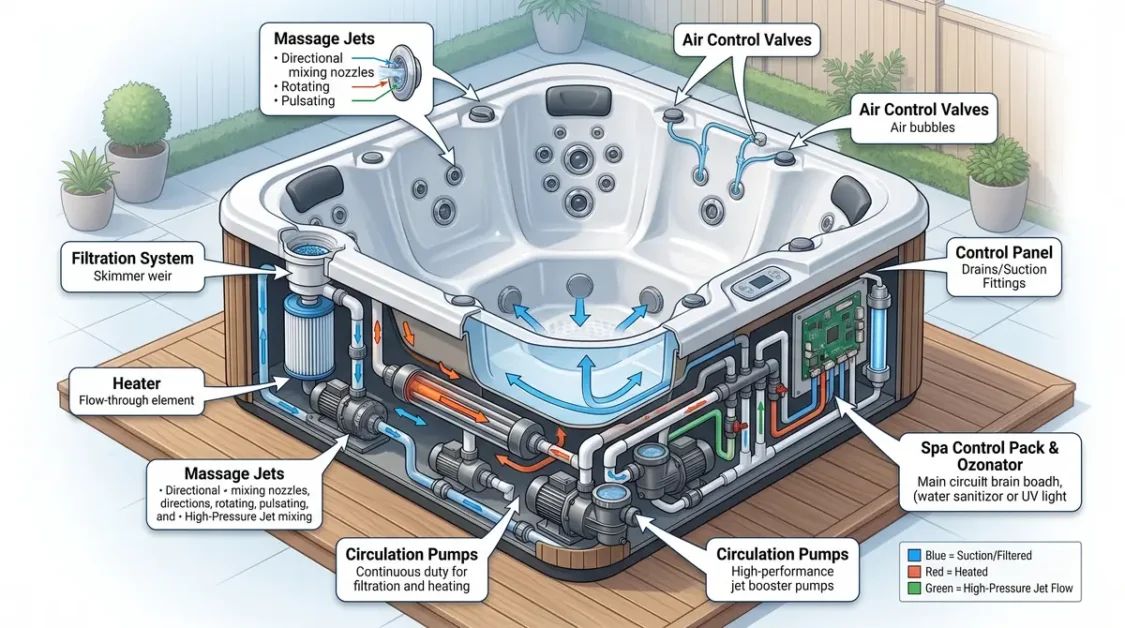
A hot tub works by heating water and circulating it through pumps and jets. The system continuously filters the water while the jets create pressure for massage and hydrotherapy.
Modern hot tubs combine several components that work together automatically.
Heating System
The heater warms the water to your selected temperature. Most hot tubs operate between 100°F and 104°F.
Electric heaters are the most common option in residential hot tubs. Once the water reaches the target temperature, the thermostat keeps it stable automatically.
Well insulated tubs hold heat better and reduce monthly electricity costs.
Jets and Massage System
Hot tub jets push water through openings inside the tub to create massage pressure.
Some jets focus on strong pressure for deep muscle relief, while others create gentler bubbling effects for relaxation.
Many hot tubs allow you to adjust:
- jet pressure
- water flow
- jet direction
- massage zones
The jets work through pumps that move water continuously through the plumbing system.
Filtration and Water Circulation
The filtration system keeps the water clean by removing dirt, oils, and debris.
Most hot tubs include:
- circulation pumps
- cartridge filters
- sanitizers like chlorine or bromine
- scheduled filtration cycles
Without filtration and water balancing, hot tub water can quickly become cloudy or unsafe.
This hot tub water care guide explains the basics of keeping water clean and balanced.
Control Panels and Smart Features
Modern hot tubs often include digital control systems that make operation easier.
Popular smart features include:
- touchscreen controls
- smartphone app controls
- LED lighting
- energy saving modes
- automated filtration schedules
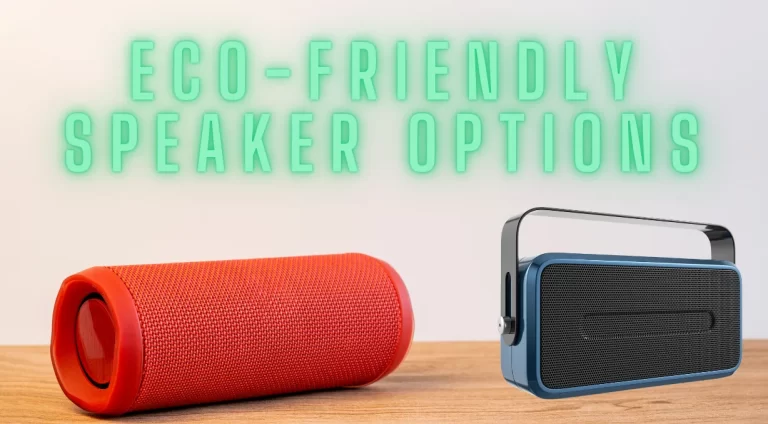
- Bluetooth speakers
Some premium models can even notify you when water temperature or maintenance levels need attention.
Different Types of Hot Tubs
There are several different hot tub styles available depending on your budget, space, and installation needs.
Acrylic Hot Tubs
Acrylic hot tubs are the most common premium option.
They typically include:
- durable acrylic shells
- strong insulation
- powerful jets
- advanced seating layouts
- longer lifespan
These tubs are usually installed permanently on patios or decks.
Many homeowners choose acrylic models because they retain heat efficiently and offer the widest feature selection.
Inflatable Hot Tubs
Inflatable hot tubs are a popular entry level option for beginners.
They are:
- budget friendly
- portable
- easier to set up
- ideal for renters
- simpler to move or store
While they usually have fewer jets and less insulation than acrylic tubs, they still provide a relaxing soaking experience for many homeowners.
This ultimate guide to inflatable hot tubs covers what to expect before buying one.
Rotomolded Hot Tubs
Rotomolded hot tubs use a molded plastic shell instead of acrylic.
They are known for:
- lightweight construction
- durability
- lower maintenance
- simpler designs
These tubs are often more affordable than acrylic models while still offering good performance.
Plug and Play Hot Tubs
Plug and play hot tubs are designed to work with standard 110V household outlets.
They’re beginner friendly because they:
- avoid major electrical installation
- set up faster
- work well for smaller spaces
Most models are smaller and heat more slowly than 220V systems, but they remain a popular option for first time buyers.
This plug and play hot tub guide explains how these systems work.
Wood Fired Hot Tubs
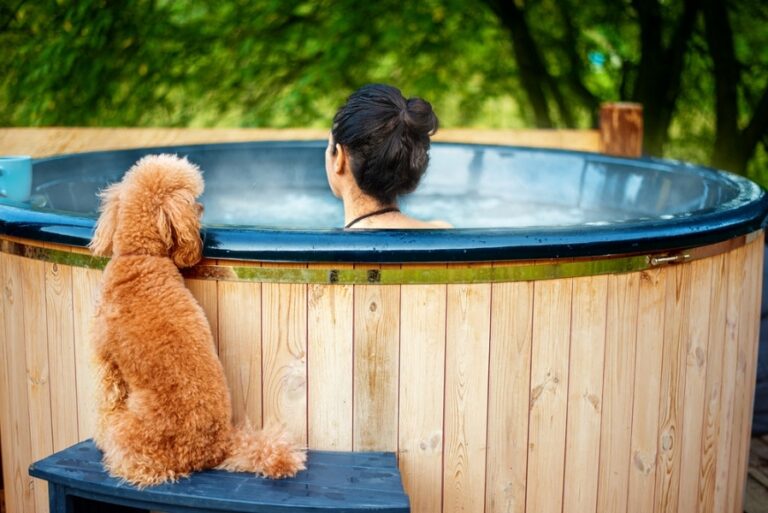
Wood fired hot tubs use fire heated water instead of electric heaters.
They are often used for:
- rustic backyard setups
- cabins
- off grid properties
- traditional soaking experiences
These tubs have a unique look and atmosphere but usually require more manual heating work.
Hot Tub vs Jacuzzi: What’s the Difference?
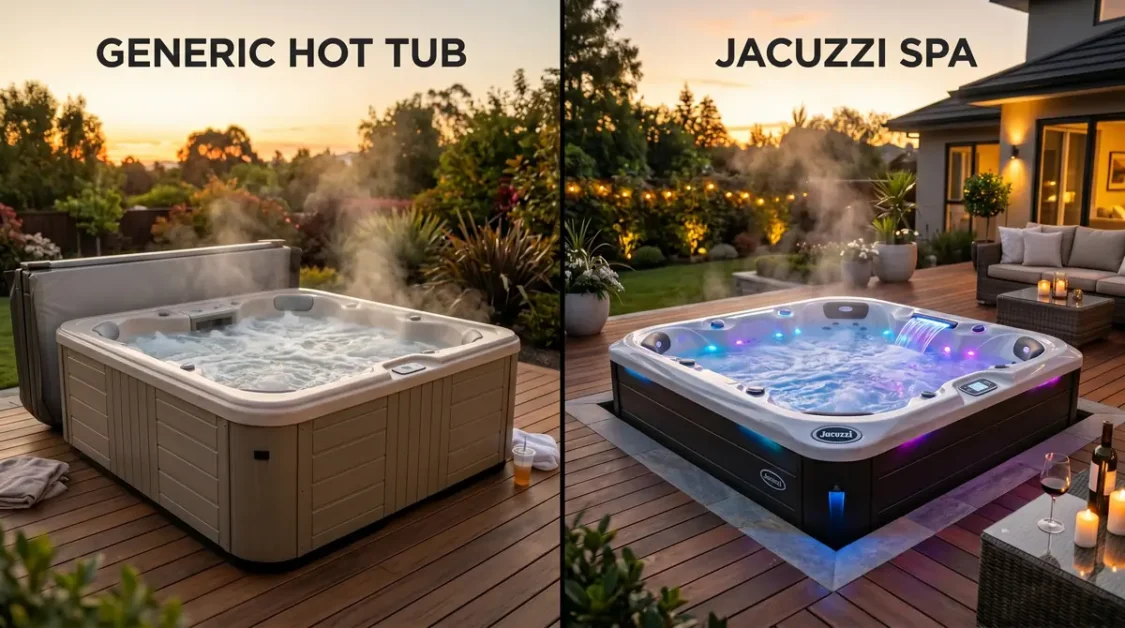
A hot tub is a general product category, while Jacuzzi is a specific brand name.
Many people use the words interchangeably, similar to how people say “Kleenex” instead of tissues.
Jacuzzi became one of the most recognized spa manufacturers in the world, so the brand name eventually became associated with hot tubs in general.
In simple terms:
- all Jacuzzis are hot tubs
- not all hot tubs are Jacuzzis
This guide on the difference between a hot tub and Jacuzzi explains the comparison in more detail.
Hot Tub vs Spa
The terms “spa” and “hot tub” are also commonly mixed together.
In many situations, they mean nearly the same thing. Still, there are some differences depending on the context.
| Feature | Hot Tub | Spa |
|---|---|---|
| Main Use | Relaxation | Relaxation or therapy |
| Installation | Portable or permanent | Often built in |
| Water Temperature | Heated | Heated |
| Jets | Yes | Usually yes |
| Common Location | Homes | Homes, hotels, resorts |
In the home market, “spa” often refers to premium or built in systems, while “hot tub” is the more common everyday term.
Commercial spas may also refer to wellness facilities or treatment centers, which creates additional confusion for beginners.
Health Benefits of Hot Tubs
Many people buy hot tubs because of the comfort and wellness benefits they may provide.
While hot tubs are not medical treatments, many users report positive experiences from regular soaking.
Better Sleep
Warm water before bedtime may help your body relax and prepare for sleep.
Many hot tub owners use evening soaks as part of their nighttime routine.
Stress Reduction
The combination of heat, massage jets, and quiet outdoor settings can support relaxation and help reduce daily stress.
Improved Circulation
Warm water may temporarily improve circulation by helping blood vessels relax and expand.
Temporary Muscle Relief
Hydrotherapy jets and warm water can help soothe sore muscles after exercise or physical activity.
Relaxation After Exercise
Athletes and active homeowners often use hot tubs after workouts to unwind and recover.
This guide on hot tub health benefits explores more wellness related uses.
Are Hot Tubs Expensive to Run?
Hot tubs do use electricity, but modern energy efficient models are usually less expensive to operate than many beginners expect.
Average monthly operating costs often range from:
- $20 to $80 per month
Your actual costs depend on:
- climate
- insulation quality
- water temperature
- hot tub size
- energy rates
- frequency of use
A quality insulated cover helps reduce heating costs significantly.
Using this hot tub running cost calculator can help estimate monthly expenses for your setup.
Hot Tub Maintenance Basics
Hot tub maintenance becomes much easier once you understand the routine.
Most owners spend a small amount of time each week checking water and cleaning filters.
Water Care
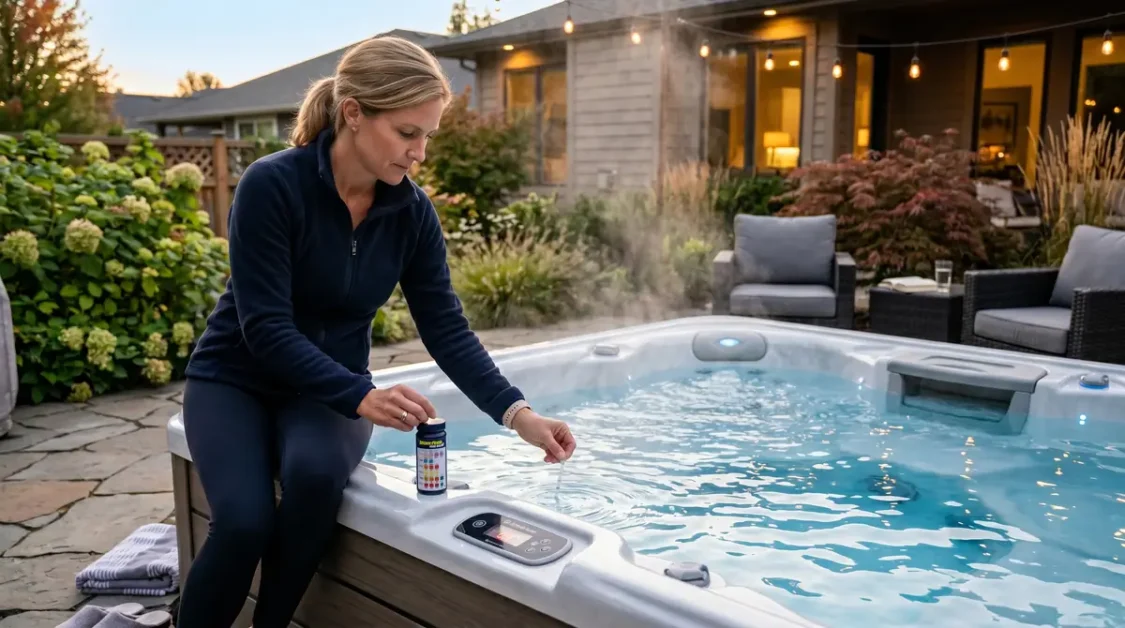
Hot tub water needs balanced chemistry to stay clean and safe.
You’ll regularly monitor:
- pH
- sanitizer levels
- alkalinity
- calcium hardness
Test strips make this process simple for beginners.
Cleaning Filters
Filters collect dirt, oils, and debris from the water.
Most filters should be rinsed every few weeks and deep cleaned regularly.
Draining and Refilling
Most hot tubs need fresh water every 3 to 4 months depending on usage.
Draining helps remove buildup that filtration alone cannot eliminate.
Winter Maintenance Tips
Cold weather requires extra attention to prevent freezing and heat loss.
Many homeowners use insulated covers and energy saving settings during winter.
This complete hot tub maintenance guide walks through the basics step by step.
Indoor vs Outdoor Hot Tubs
Both indoor and outdoor hot tubs have advantages depending on your home and lifestyle.
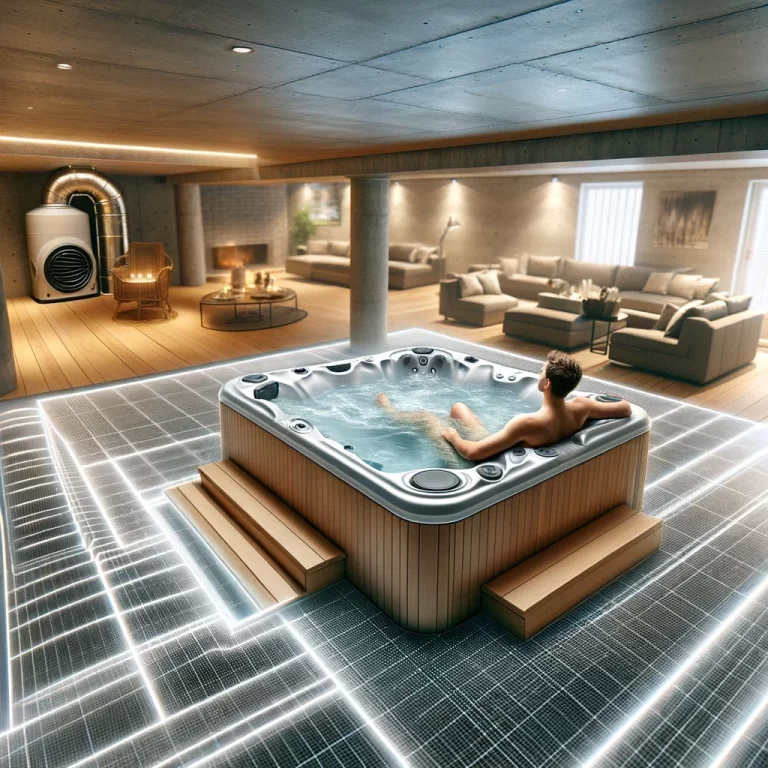
Indoor Hot Tub Pros and Cons
Indoor hot tubs provide:
- privacy
- year round use
- weather protection
However, indoor setups require:
- strong ventilation
- moisture management
- proper flooring support
Humidity can become a problem if ventilation is poor.
Outdoor Hot Tub Pros and Cons
Outdoor hot tubs are more common for homeowners.
Benefits include:
- backyard atmosphere
- open views
- easier installation
- more flexible placement
The downside is exposure to weather, debris, and seasonal temperature changes.
If you’re planning a backyard setup, these hot tub patio ideas can help inspire your space.
What Features Should You Look For in a Hot Tub?
Hot tub features vary widely between models.
Some of the most important features to compare include:
- jet count
- seating layout
- lounger seats
- LED lighting
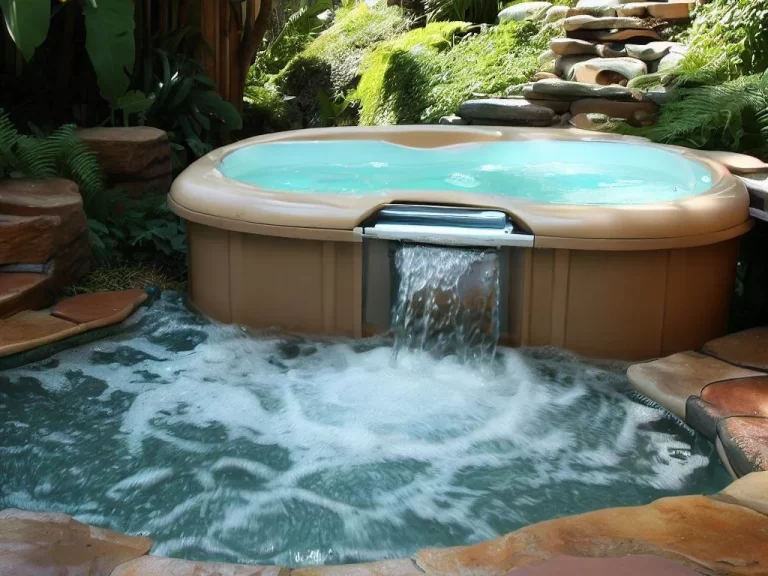
- waterfalls
- Bluetooth speakers
- smart controls
- insulation quality
- saltwater systems
A larger jet count does not always mean better performance. Placement and pump strength matter just as much.
If you want to better understand how water flow and massage pressure work, this guide explains the different types of hot tub nozzles and what they do.
Comfortable seating and strong insulation are usually more important long term than flashy extras.
These best hot tub accessories can also improve your soaking experience.
Who Should Buy a Hot Tub?
Hot tubs work well for many different lifestyles.
They’re especially popular with:
- families
- athletes
- homeowners who entertain outdoors
- cold climate homeowners
- wellness focused buyers
- people creating backyard relaxation spaces
Some buyers want hydrotherapy and recovery support, while others simply want a comfortable place to relax at home.
If you’re comparing models, this hot tub buying guide for first time buyers explains what to consider before purchasing.
Frequently Asked Questions
What’s the difference between a Jacuzzi and a hot tub?
A hot tub is the general product category, while Jacuzzi is a specific brand name. Many people use the terms interchangeably.
How hot should a hot tub be?
Most hot tubs are kept between 100°F and 104°F depending on comfort and weather conditions.
How long can you stay in a hot tub?
Most adults should limit soaking sessions to around 15 to 30 minutes at higher temperatures.
Are hot tubs hard to maintain?
Modern hot tubs are easier to maintain than many beginners expect. Weekly water testing and basic cleaning handle most maintenance needs.
How often should hot tub water be changed?
Most hot tubs need fresh water every 3 to 4 months depending on usage and water care habits.
Do hot tubs use a lot of electricity?
Energy use depends on insulation, temperature settings, climate, and usage frequency. Many efficient hot tubs cost less than expected to operate monthly.
Can you use a hot tub in winter?
Yes. Many homeowners enjoy hot tubs most during winter, especially in snowy or cold climates.
What size hot tub should I buy?
The best size depends on your space, budget, and how many people will use the tub regularly.
You can use this hot tub size calculator to estimate the right fit for your space.