
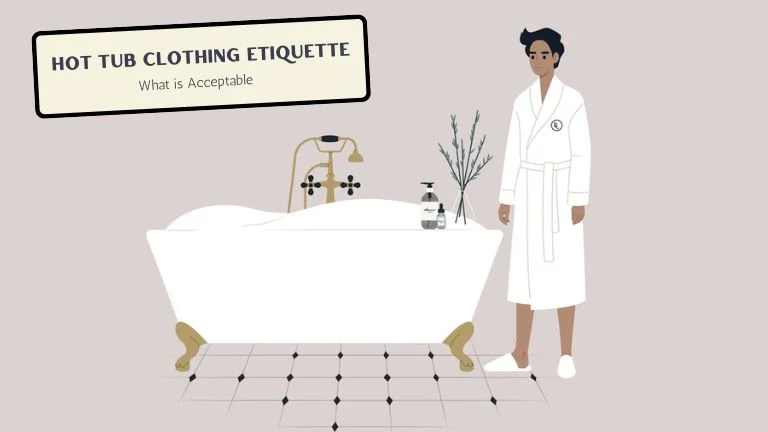
Hot Tub Clothing Etiquette: What to Wear & Avoid

Hot tub clothing etiquette is simple once you separate two questions: what works well in hot water and what the host or facility expects. In most shared, hotel, resort, and public hot tubs, clean swimwear designed for water is the safest social default.
The bigger mistake is not choosing the wrong style. It is bringing detergent, lotion, street-clothing fibers, or a poorly rinsed swimsuit into a small body of warm water. Those contaminants can contribute to foam and make water care harder.
Quick answer: wear clean, well-rinsed swimwear made for pools or spas. Shower before entering, skip regular clothes, remove loose accessories, and keep a robe, towel, and slip-resistant sandals nearby for when you get out.
7 Rules for Hot Tub Clothing Etiquette
1. Wear Swimwear Designed for Water
For a shared hot tub, a swimsuit, swim trunks, board shorts, tankini, or swim-specific rash guard is the practical choice. Swimwear is lighter in the water, stays closer to the body, and is designed to handle repeated wet use better than street clothes.
Polyester and nylon blends are common because they dry quickly and generally hold up better than natural-fiber clothing. Spandex adds stretch, but high-spandex suits can wear faster with repeated exposure to hot, sanitized water.
2. Shower Before You Get In
The CDC recommends showering before using a hot tub. A quick rinse removes some sweat, lotion, sunscreen, cosmetics, and other residue before it reaches the spa water.
This matters even when your swimsuit is clean. Personal-care products can add to the bather load and make the sanitizer and filter work harder. You can review the broader hot tub rules for guests and families before hosting a group.
3. Keep a Dedicated Hot Tub Swimsuit When Practical
A dedicated spa suit solves one of the most common owner complaints: foam that appears after guests use freshly laundered swimwear. Caldera and Hot Spring both warn that laundry detergent can remain in a swimsuit and transfer into hot tub water.
Owner discussions show the same pattern. Many people report little or no foam during normal family use, then see heavy bubbles after guests arrive in swimsuits washed with regular laundry detergent.
For a household spa, keep one suit for hot-tub use, rinse it in clean water after soaking, and let it air-dry. If you machine wash it, use the care label and rinse it thoroughly so detergent residue is minimized.
4. Avoid Street Clothes and Heavy Cotton
Jeans, sweatshirts, cotton T-shirts, underwear used as swimwear, and other everyday clothes are poor choices. They can become heavy when soaked, carry more laundry residue, shed lint or fibers, and take much longer to dry.
A fitted swim shirt or rash guard is different because it is made for water. If modesty or sun coverage matters, choose water-specific clothing rather than regular cotton layers.
5. Remove Loose Jewelry and Accessories
Leave dangling jewelry, watches that are not water-rated, loose hair accessories, and bulky items outside the tub. Hot water and sanitizer can be hard on some finishes, and loose items are easier to lose or snag when you are moving around seats and jets.
6. Use Robes, Towels, and Sandals Outside the Water
A robe or towel is useful for the walk between the tub and the house, while slip-resistant sandals help on a wet patio. These belong outside the water, not in it.
For cold-weather soaking, a long absorbent robe is usually more useful than adding extra clothing in the hot tub itself. Our updated hooded hot tub robe guide compares terry, Turkish cotton, waffle terry, and fleece options.
7. Follow the Host or Facility Rules
A private backyard spa, a hotel hot tub, a gym, and a clothing-optional property may all have different expectations. Posted rules and the host’s instructions come before general etiquette advice.
If the rules are unclear, ask before entering. That avoids awkward assumptions about swimwear, nudity, children, food, drinks, or guest behavior.
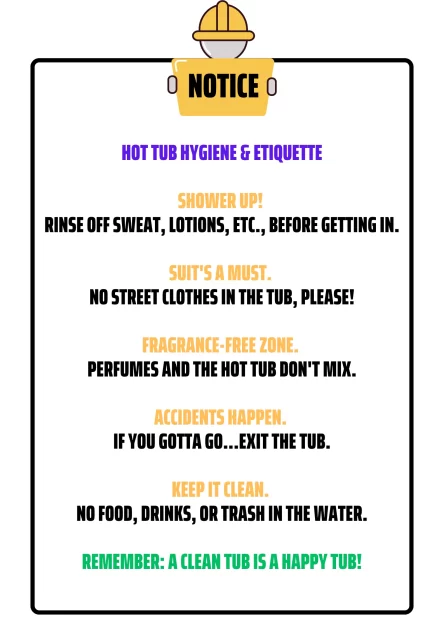
Hot Tub Clothing Quick-Check
| Situation | Good choice | Avoid |
|---|---|---|
| Home hot tub with guests | Clean swimsuit, trunks, or swim-specific rash guard | Freshly detergent-heavy clothing, street clothes |
| Hotel or resort hot tub | Standard swimwear that meets posted rules | Assuming private-home rules apply |
| Cold-weather soaking | Normal swimwear in the tub, warm robe and sandals outside | Heavy clothing in the water |
| Need more coverage | Tankini, swim dress, rash guard, modest swimwear | Regular T-shirts, leggings, underwear |
| Foam-prone home spa | Dedicated, well-rinsed hot-tub swimsuit | Suit with detergent or fabric-softener residue |
| Private adults-only tub | Follow the host’s agreed rules | Assuming everyone is comfortable with the same level of coverage |
Why Laundry Detergent in Swimwear Can Cause Foam
Hot tub jets mix air into the water, so even a small amount of surfactant residue can become very visible as foam. Laundry detergent and fabric softener can remain trapped in swimsuit fibers after washing.
Hot Spring advises that detergent can linger in swimwear and may foam during the next soak. Its maintenance guidance recommends keeping detergent and soap residue out of the spa and using the rinse cycle instead of routinely laundering a hot-tub suit.
If foam has already become a problem, clothing residue is only one possible cause. Body oils, lotions, water balance, and old water can contribute too. Use our guide to finding the cause of hot tub foam rather than assuming every bubble came from a swimsuit.
What Should You Not Wear in a Hot Tub?
- Jeans and denim: heavy, slow-drying, and full of seams and hardware.
- Regular cotton shirts or sweatshirts: absorb large amounts of water and can carry detergent residue.
- Underwear as a substitute for swimwear: everyday underwear is not designed for repeated exposure to hot sanitized water and often carries laundry residue.
- Loose scarves or oversized clothing: extra fabric is unnecessary in the water and can get in the way around seats and jets.
- Bulky metal jewelry: remove items you do not want exposed to heat, sanitizer, or water.
- Shoes in the tub: keep outdoor footwear on the patio and use clean water sandals only for walking around the spa area.
Private Hot Tub vs Hotel or Public Hot Tub Etiquette
At a private home
The owner sets the house rules. Guests should ask what to wear, whether the owner prefers a pre-soak shower, and whether they have a rule about freshly washed swimsuits. A host who has struggled with foam may ask guests to rinse their suits before entering.
At a hotel, gym, resort, or rental
Wear normal swimwear unless the property states otherwise, and follow all posted rules. Shared spas have more users and more varied water-care practices, so the facility’s policy matters more than what you do at home.
CDC guidance also says to shower before entering, stay out if you are sick with diarrhea, and avoid swallowing hot tub water. For a broader checklist, see our hot tub safety and usage guide.

Can You Use a Hot Tub Without a Swimsuit?
In a private hot tub, that is a household or host decision as long as everyone involved is comfortable and the setting allows it. In a shared, hotel, gym, resort, apartment, or public spa, follow the facility’s posted clothing policy.
Do not assume that a private owner’s preference applies elsewhere. Clothing-optional properties and traditional bathing settings may have their own established rules, so check the specific venue instead of relying on broad cultural assumptions.
What to Wear Before and After the Hot Tub
The clothing around the soak matters more in winter than the clothing in the water. Keep the in-tub outfit simple, then make the transition outside more comfortable.
- Robe: terry or Turkish cotton if you want absorbency, fleece if you towel dry first and mainly want warmth.
- Towel: keep one within easy reach so you are not searching for it on a cold deck.
- Sandals or slides: use a pair with a grippy sole on wet surfaces.
- Warm dry clothes: keep them indoors or in a protected dry area rather than beside splashing water.
If cold weather is your main concern, use our dedicated guide to what to wear around a hot tub in winter for the full seasonal setup.
A 60-Second Guest Clothing Checklist
- Ask guests to bring a normal swimsuit or swim trunks.
- Tell them to avoid street clothes in the water.
- If your spa is foam-prone, ask guests to rinse their swimsuit thoroughly before arriving or provide a clean spare suit.
- Ask everyone to shower or rinse before entering.
- Set out clean towels or robes before the soak starts.
- Put sandals near the exit path so nobody has to cross a wet patio barefoot.
- Share any household rules before people are already standing at the tub.
This small preparation is easier than trying to correct foam, find towels, or explain boundaries after everyone is already in the water. For other comfort and convenience ideas, see our useful hot tub accessories.

How to Care for a Hot Tub Swimsuit
- Rinse the suit in clean, non-chlorinated water after soaking.
- Air-dry it completely instead of leaving it wet in a bag.
- Follow the garment care label when it needs a deeper wash.
- If you use a washing machine, use a gentle cycle and rinse thoroughly.
- Use as little detergent as practical for the garment and avoid leaving fabric-softener residue in a dedicated spa suit.
- Rotate more than one swimsuit if repeated hot-tub use is wearing the fabric quickly.
Hot Spring specifically recommends gentle care because repeated washing, dryer heat, and lingering detergent can shorten swimsuit life or contribute to foam in the spa. See Hot Spring’s swimsuit-care guidance.
Frequently Asked Questions
What should you wear in a hot tub?
Wear clean swimwear designed for pools or spas, such as a swimsuit, swim trunks, tankini, or swim-specific rash guard. In shared or public hot tubs, follow the facility’s posted rules.
Can you wear regular clothes in a hot tub?
Regular clothes are not a good choice. Cotton shirts, jeans, underwear, and other street clothes can become heavy, carry detergent residue, and take much longer to dry.
What swimsuit material is best for a hot tub?
Durable synthetic swim fabrics such as nylon and polyester blends are practical choices. Check the manufacturer’s care instructions because hot water and sanitizer can wear any swimsuit over time.
Can laundry detergent in a swimsuit make a hot tub foam?
Yes. Detergent residue can remain in swimsuit fibers and contribute to foaming when jets add air to the water. A dedicated, well-rinsed hot-tub swimsuit can reduce that source of contamination.
Should you shower before getting into a hot tub?
Yes. The CDC recommends showering before entering a hot tub. Rinsing off sweat, lotion, sunscreen, and other residue helps reduce what enters the water.
Is nudity acceptable in a hot tub?
It depends on the setting. In a private spa, follow the host’s rules and everyone’s comfort level. In hotels, gyms, resorts, rentals, and public facilities, follow the posted dress code.
What should you wear around a hot tub in winter?
Wear normal swimwear in the water, then use a warm robe, towel, and slip-resistant sandals when you get out. Keep dry clothing protected from splash and weather.
Keep the Clothing Simple
The easiest hot tub clothing rule is to use garments designed for water and keep everything else outside the spa. Clean swimwear, a pre-soak shower, and a well-rinsed dedicated suit solve most of the practical issues before they start.
For shared spaces, add one more rule: follow the host or facility policy. That keeps the water cleaner and removes the guesswork about what is appropriate.
Sources: CDC hot tub health guidance; Caldera swimsuit guidance; Hot Spring swimsuit-care guidance.







7 Comments
Comments are closed.