

Hot Tub Patio: Design, Base, Privacy & Setup Guide

A good hot tub patio starts with practical decisions, not decorations. Your spa needs a stable, level foundation, safe access, enough room for maintenance, sensible drainage, and privacy where you actually need it.
Once those basics are handled, the fun parts become much easier. Lighting, seating, landscaping, a pergola, privacy screens, and other upgrades can turn a simple installation into a backyard space you will want to use year-round.
The goal is to build around how you will actually use and maintain the hot tub, rather than designing a beautiful patio that becomes awkward once the spa is installed.
Can You Put a Hot Tub on a Patio?
Yes, a hot tub can sit on a patio when the surface is level, stable, and capable of supporting the filled spa. Concrete is a common permanent choice, while properly prepared pavers and compacted bases can work for some installations.
The important detail is filled weight.
A hot tub that looks manageable when empty becomes much heavier after you add hundreds of gallons of water and several people. The base needs to support that weight without settling, cracking, shifting, or creating an uneven surface.
Before placing a spa on an existing patio, check:
- Hot tub dimensions
- Empty weight
- Water capacity
- Estimated filled weight
- Condition of the patio
- Whether the surface is level
- Manufacturer foundation requirements
- Drainage around the proposed location
If you are still deciding what type of foundation to build, this guide to the best base for a hot tub covers the main options in more detail.
What Is the Best Base for a Hot Tub Patio?
The best hot tub patio base is strong, level, stable, well-drained, and compatible with the spa manufacturer’s installation requirements.
Concrete is often the simplest permanent solution, but it is not your only choice.
| Base Type | Stability | Drainage | Relative Cost | Best Use |
|---|---|---|---|---|
| Concrete | Excellent | Moderate | $$ | Permanent installations |
| Pavers | Very good when prepared correctly | Good | $$ | Decorative patios |
| Compacted gravel | Good when properly prepared | Excellent | $ | Simple or budget setups |
| Reinforced deck | Depends on structure | Good | $$$ | Raised installations |
Concrete Slab
Concrete provides a flat, solid surface and is one of the easiest base types to plan around.
It works especially well when you are building the patio at the same time as the hot tub installation because the slab can be planned around the spa dimensions and site conditions.
An existing slab deserves a closer look. Cracking, settlement, major slopes, or an unknown sub-base can make an old patio less suitable than it appears.
Paver Patio
Pavers can give a hot tub area a more finished backyard look while still providing good drainage.
The important part is underneath them. A decorative paver surface is only as dependable as the compacted base supporting it.
Loose, rocking, or uneven pavers should be corrected before the tub is placed.
Compacted Gravel Base
A properly prepared gravel base can be useful for simple backyard installations, especially when drainage is a priority.
It should not feel loose or uneven underfoot. The finished pad needs to stay level and resist settling once the spa is filled.
Reinforced Deck
A deck is different from a ground-level patio because the structure underneath must carry the entire load.
Never assume an existing deck can hold a filled spa just because it feels sturdy when you walk across it.
For raised installations, structural support should be verified before the tub arrives. Our hot tub deck guide explains the planning issues that deserve attention.
Is Concrete Better Than Pavers for a Hot Tub?
Concrete is usually the simpler choice when you want a permanent, easy-to-evaluate hot tub foundation. Properly installed pavers can work well too and may offer better drainage and more design flexibility.
The better option depends on:
- The hot tub’s filled weight
- Soil and ground conditions
- How the base was prepared
- Drainage
- Patio design
- Manufacturer requirements
- Long-term maintenance plans
Do not choose between concrete and pavers based on appearance alone.
A beautifully finished patio that settles after installation creates a much bigger problem than choosing a simpler base from the beginning.
How to Choose the Best Hot Tub Patio Location
Hot tub placement affects how often you use the spa.
A tub tucked into the farthest corner of the yard may look attractive in summer, but that long walk feels very different on a cold January night.
Keep the Walking Route Practical
Think about the route from your house to the spa.
Look for:
- A short walking distance
- Stable footing
- Good lighting
- Minimal stairs
- No muddy areas
- Easy winter access
Try walking the proposed route after dark before making the final decision.
Problems that are easy to miss during daytime planning become obvious when you imagine walking outside barefoot or in sandals after a soak.
Check Privacy From the Tub, Not Just the Patio
Stand or sit where the hot tub will go and look around.
Check sightlines from:
- Neighboring windows
- Nearby decks
- Upper floors
- Side yards
- Streets
- Walking paths
Privacy screens can be added later, but positioning the spa well from the beginning usually produces a cleaner layout.
Think About Wind and Weather
Wind can make getting out of warm water uncomfortable very quickly.
A fence, wall, pergola, landscaping, or screen may help create a more sheltered soaking area.
Shade matters too, especially if the patio receives strong afternoon sun.
How Much Space Should You Leave Around a Hot Tub?
Leave enough space around the hot tub for safe entry, cover operation, normal walking, and equipment servicing.
Do not design the patio around the shell dimensions alone.
Your layout may also need room for:
- Hot tub steps
- Cover lifter
- Service panel access
- Handrail
- Towel hooks
- Small side table
- Seating
- Privacy screen
- Walking path
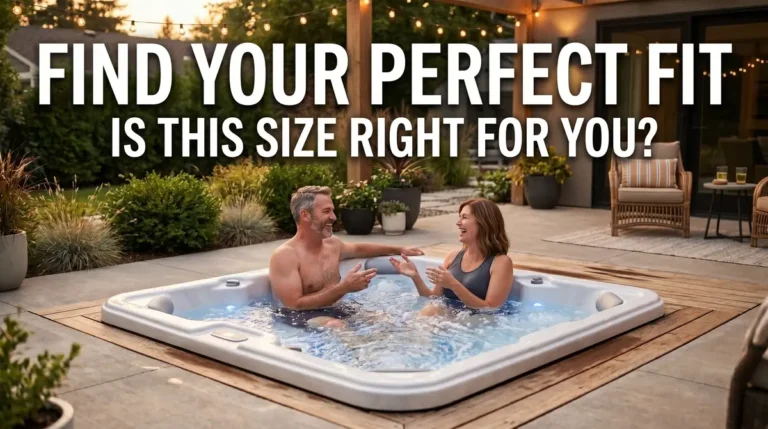
Hot tub dimensions vary considerably, so measure the actual model before finalizing the patio.
If you are still comparing spa sizes, use our hot tub size and dimensions guide before marking out the installation area.
A common planning mistake is surrounding the spa so tightly that opening the equipment panel later becomes difficult.
Service access is not exciting during patio design, but you will appreciate having it the first time the tub needs maintenance.
10 Hot Tub Patio Ideas for Real Backyards
A useful hot tub patio does not need to resemble a luxury resort. The best design is one that fits your space, climate, privacy needs, and budget.
1. Simple Concrete Hot Tub Patio
A basic concrete patio gives you a clean foundation that works with almost any backyard style.
Add:
- Spa steps
- Two outdoor chairs
- Towel hooks
- Low-voltage lighting
- A privacy screen
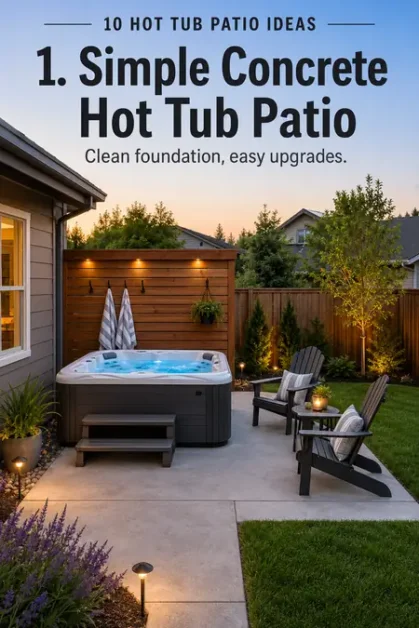
This setup keeps installation simple while leaving room for future upgrades.
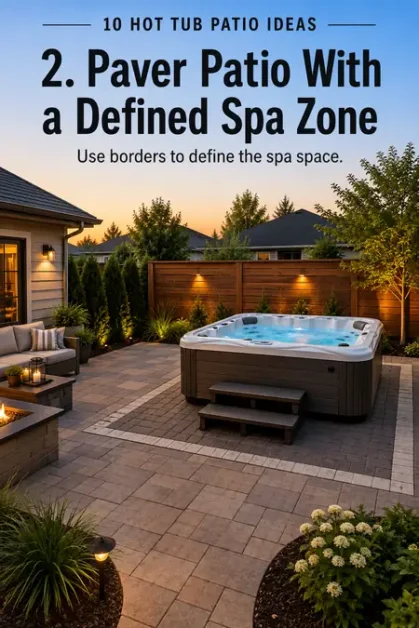
2. Paver Patio With a Defined Spa Zone
Use contrasting pavers or a border to visually separate the hot tub from the rest of the patio.
This can make the spa feel intentional without building a separate deck or enclosure.
3. Small Hot Tub Patio
Small yards benefit from vertical design.
Instead of filling valuable floor space with large furniture, consider:
- Narrow benches
- Wall-mounted hooks
- Vertical privacy panels
- Tall planters
- Compact steps
- Corner lighting
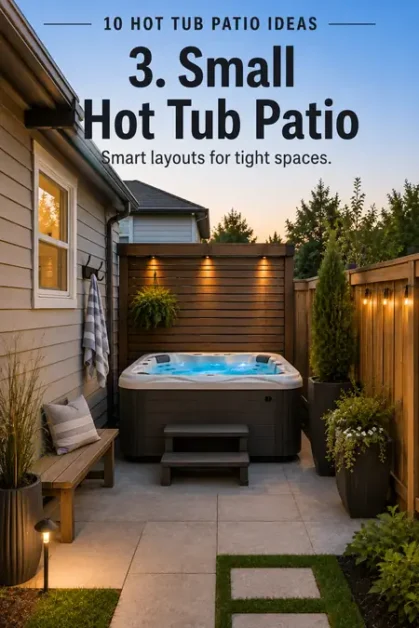
For more layouts that work in tight spaces, see these small backyard hot tub ideas.
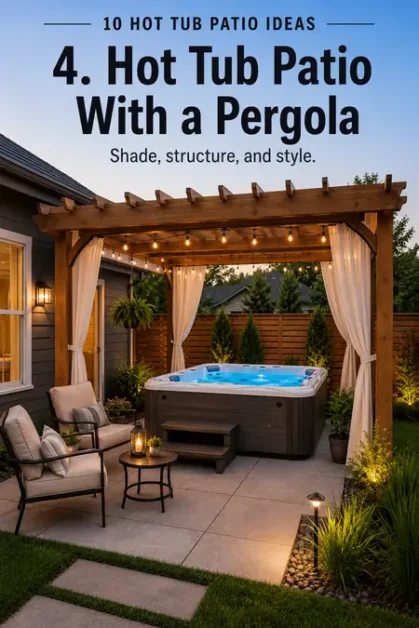
4. Hot Tub Patio With a Pergola
A pergola gives the spa area a clear visual boundary while creating opportunities for shade, curtains, and lighting.
Plan the structure around access to the cover and equipment rather than positioning posts wherever they look best.
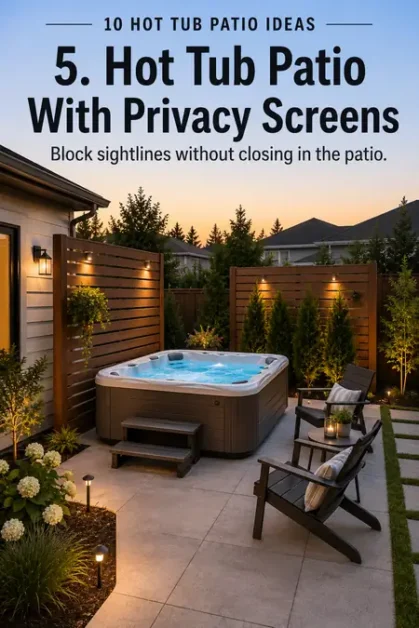
5. Hot Tub Patio With Privacy Screens
Slatted wood or composite screens can block specific sightlines without making the entire patio feel enclosed.
Place screens where privacy is actually needed instead of surrounding all four sides automatically.
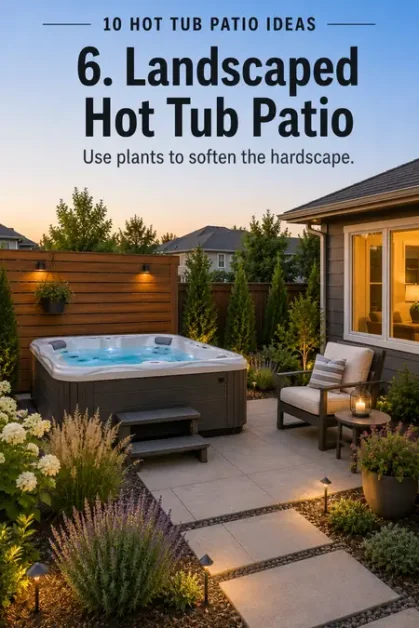
6. Landscaped Hot Tub Patio
Plants soften the hard edges of concrete, pavers, fencing, and spa cabinets.
Choose landscaping carefully around the water.
Trees and plants that constantly drop leaves, flowers, berries, or seeds can turn into extra cleaning work.
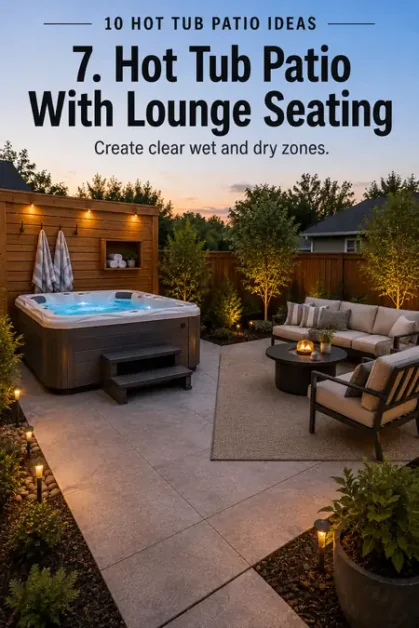
7. Hot Tub Patio With Lounge Seating
Treat the patio as two zones:
Wet zone: hot tub, steps, towel storage, and walking space.
Dry zone: chairs, loungers, tables, and conversation seating.
Keeping these areas slightly separated helps reduce clutter around the spa.
8. Hot Tub and Fire Pit Patio
A fire feature can make the patio useful even when nobody is soaking.
The layout needs enough separation that heat, sparks, and smoke do not interfere with the hot tub area.
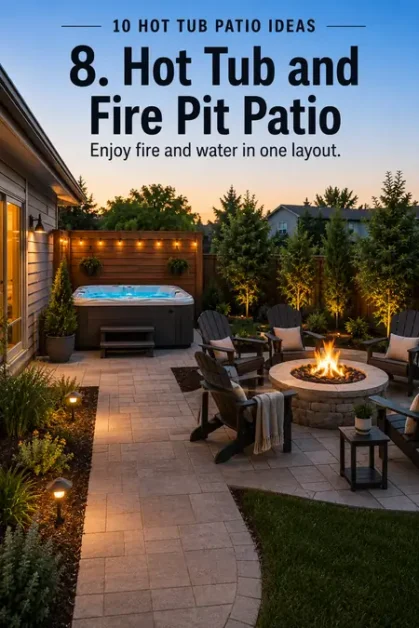
Our guide to designing a patio with a hot tub and fire pit has additional layout ideas.
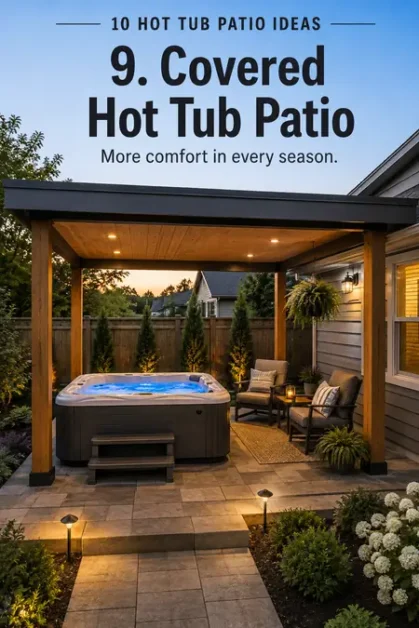
9. Covered Hot Tub Patio
A roof, gazebo, pergola, or other cover can make the space more comfortable during rain, snow, or intense sun.
A covered setup is especially useful when the hot tub is used frequently throughout the year.
Avoid making the enclosure so tight that ventilation, maintenance access, or cover operation becomes difficult.
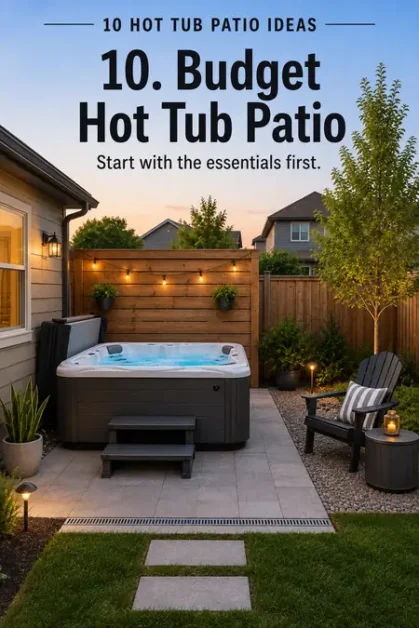
10. Budget Hot Tub Patio
Spend your first dollars on the parts that are difficult to change later:
- Stable foundation
- Proper electrical setup
- Safe access
- Drainage
- Basic privacy
- Lighting
Furniture and decorative landscaping can come later.
For affordable design ideas, see our DIY hot tub patio ideas on a budget.
Hot Tub Patio Privacy Ideas That Actually Work
Good privacy depends on where people can see you from.
That means the right solution might block one side of the patio while leaving the rest open.
| Privacy Problem | Practical Solution |
|---|---|
| Neighbor close to property line | Solid privacy panel or fence |
| Small patio | Vertical slatted screen |
| Temporary setup | Freestanding screen |
| Natural backyard style | Evergreen planting |
| Need privacy and shade | Pergola with curtains |
| Upper-story views | Overhead structure or strategic positioning |
Tall planters can work particularly well when you only need to block one narrow sightline.
For larger yards, layered landscaping can create privacy without making the hot tub feel boxed in.
Plan for Drainage Before Installing the Hot Tub
Water around a hot tub comes from more than draining the spa.
Expect:
- Splashing
- Wet feet
- Rain
- Snowmelt
- Cover runoff
- Cleaning water
The spa itself needs to remain level, but the surrounding patio should manage water instead of allowing puddles to collect around the cabinet or walking areas.
Think about where water will go before installation.
Avoid directing runoff toward:
- House foundations
- Basement entrances
- Neighboring property
- Electrical equipment
- Areas that regularly become muddy
You should also plan how the spa will be drained during water changes.
A clear drainage route makes routine maintenance much easier.
Plan Electrical Access Before Patio Construction
Electrical planning should happen before you finish the patio, landscaping, screens, or permanent structures around the spa.
Some hot tubs use standard 120V connections while larger installations commonly have different electrical requirements.
Follow your spa manufacturer’s specifications and applicable local requirements.
Avoid positioning decorative structures where they interfere with electrical access or required service areas.
Permanent hot tub wiring is one area where professional installation makes sense. Our guide to hiring a professional hot tub electrician explains what to consider when choosing someone for the job.
Do You Need a Permit for a Hot Tub Patio?
Permit requirements vary by location and installation.
Your city or county may have requirements related to:
- Electrical work
- Hot tub installation
- Deck construction
- Barriers or fencing
- Setbacks
- Permanent structures
- Gazebos or patio covers
Check with your local building department before starting major construction.
It is much easier to verify requirements before pouring concrete, building a deck, or running electrical service than to correct a problem afterward.
You can also review our guide to hot tub permit requirements before contacting your local authority.
Common Hot Tub Patio Planning Mistakes
Most patio problems start before the spa arrives.
1. Designing Around Appearance First
Start with weight, access, drainage, power, and maintenance.
Decor comes afterward.
2. Leaving No Equipment Access
Hot tub components eventually need inspection or service.
Do not permanently block removable panels with decking, walls, planters, or built-in seating.
3. Putting the Tub Too Far From the House
Distance can reduce how convenient the spa feels during rain, snow, or cold weather.
4. Forgetting Cover Clearance
A cover and cover lifter need room to move.
Measure before positioning fences, pergola posts, or landscaping.
5. Adding Privacy After Everything Else
Privacy usually works better when it is part of the initial layout.
6. Ignoring Drainage
A puddle beside the spa quickly becomes annoying and may create slippery walking conditions.
7. Filling the Splash Zone With Furniture
Give bathers room to enter and leave the spa without squeezing around chairs and tables.
8. Using Uncomfortable Walking Surfaces
Think about how the surface feels on bare feet, not just how it photographs.
9. Forgetting Night Lighting
Hot tubs are often used after sunset.
Light paths, steps, and entry areas without creating harsh glare over the water.
10. Planting High-Debris Landscaping Beside the Spa
A beautiful tree directly over your hot tub can become a steady source of leaves and debris.
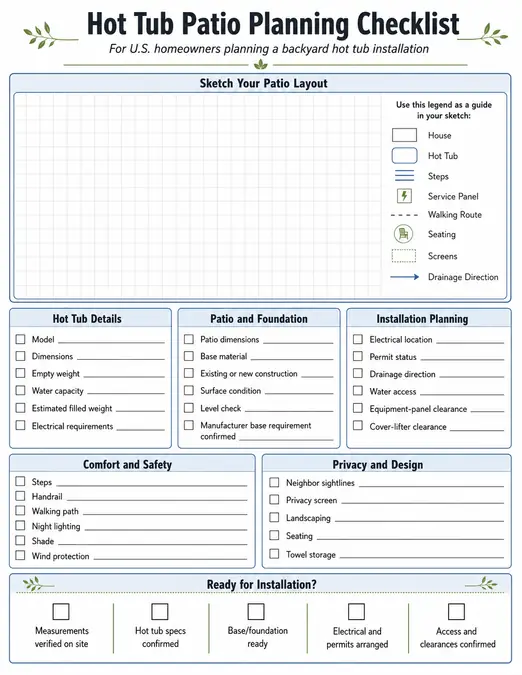
Hot Tub Patio Planning Checklist
Run through this list before scheduling installation.
- Confirm the exact hot tub model
- Measure the spa dimensions
- Check empty weight
- Check water capacity
- Estimate total filled weight
- Confirm manufacturer foundation requirements
- Select the patio base
- Inspect existing concrete or pavers
- Plan electrical access
- Check local permit requirements
- Plan drainage
- Leave equipment-panel access
- Measure cover-lifter clearance
- Plan steps and handrails
- Check nighttime walking routes
- Identify neighbor sightlines
- Plan privacy
- Plan shade
- Choose outdoor lighting
- Mark furniture locations
- Choose low-debris landscaping
- Confirm hose access
- Plan where drained water can go
Taking an extra hour to mark these items on the ground can prevent expensive layout changes later.
Tailored Action Plan
If You Already Have a Patio
Start by inspecting the existing surface.
Confirm that it is:
- Stable
- Level
- In good condition
- Large enough for the spa and access
- Suitable for the manufacturer’s installation requirements
Do not buy privacy screens or patio furniture until the final hot tub position is confirmed.
If You Are Building a New Patio
Choose the hot tub first.
Use its dimensions, water capacity, filled weight, electrical requirements, equipment-panel location, and cover operation to determine the patio layout.
Building around a known spa model eliminates a lot of guesswork.
If You Have a Small Backyard
Protect walking space.
A practical small-yard priority list is:
- Hot tub
- Safe entry
- Maintenance access
- Vertical privacy
- Lighting
- Compact seating
Skip oversized furniture that makes the area harder to move through.
If Privacy Is Your Main Concern
Sit where bathers will actually sit and look toward neighboring properties.
Block the specific sightlines that matter instead of enclosing the entire patio.
This often creates better privacy while preserving airflow and an open backyard feel.
If You Are Working With a Limited Budget
Put most of the first-stage budget into things that are difficult to change:
- Foundation
- Electrical work
- Drainage
- Safe entry
- Basic privacy
Add upgraded furniture, landscaping, lighting, and decor over time.
Downloadable Resource
Frequently Asked Questions
Can I put a hot tub on my patio?
Yes, if the patio is stable, level, and suitable for the filled weight of your hot tub. Check the spa manufacturer’s foundation requirements before using an existing patio.
What is the best hot tub for a patio?
The best hot tub is one that fits the available space while leaving room for steps, cover operation, walking, and maintenance access. Measure your patio before choosing a model.
Is it better to put a hot tub on pavers or concrete?
Concrete is often the simpler permanent foundation, but properly prepared pavers can also work well. Base preparation and stability matter more than appearance alone.
What’s the best thing to put under a hot tub?
Use a stable, level, manufacturer-approved foundation. Concrete, properly prepared pavers, compacted bases, and appropriately designed structural platforms are common options.
How thick should concrete be for a hot tub?
There is no single concrete thickness that fits every installation. The correct slab design depends on the hot tub’s filled weight, ground conditions, reinforcement, manufacturer requirements, and local construction standards.
How much room should I leave around a hot tub?
Leave enough room for safe entry, walking, cover operation, and access to the equipment panel. Exact clearance depends on the spa model and the accessories surrounding it.
Will my deck support a 5 or 6 person hot tub?
Do not assume an existing deck can safely carry a filled hot tub. The deck structure should be evaluated for the actual spa load before installation.
Where should I put a hot tub for the best privacy?
Choose a location that limits direct sightlines from nearby windows, decks, streets, and neighboring yards. Strategic positioning can reduce how many privacy screens you need.
Do I need a permit to install a hot tub?
Possibly. Permit requirements vary by city and county and may depend on electrical work, barriers, setbacks, decks, or other construction. Check with your local building authority before installation.
A successful hot tub patio begins with the foundation, access, drainage, and daily usability. Once those pieces are right, privacy screens, lighting, seating, landscaping, and other design features become much easier to add.
Plan around the hot tub first and decorate around that plan. You will end up with a backyard setup that looks good and remains practical every time you soak, clean the spa, change the water, or need access for maintenance.



One Comment
Comments are closed.