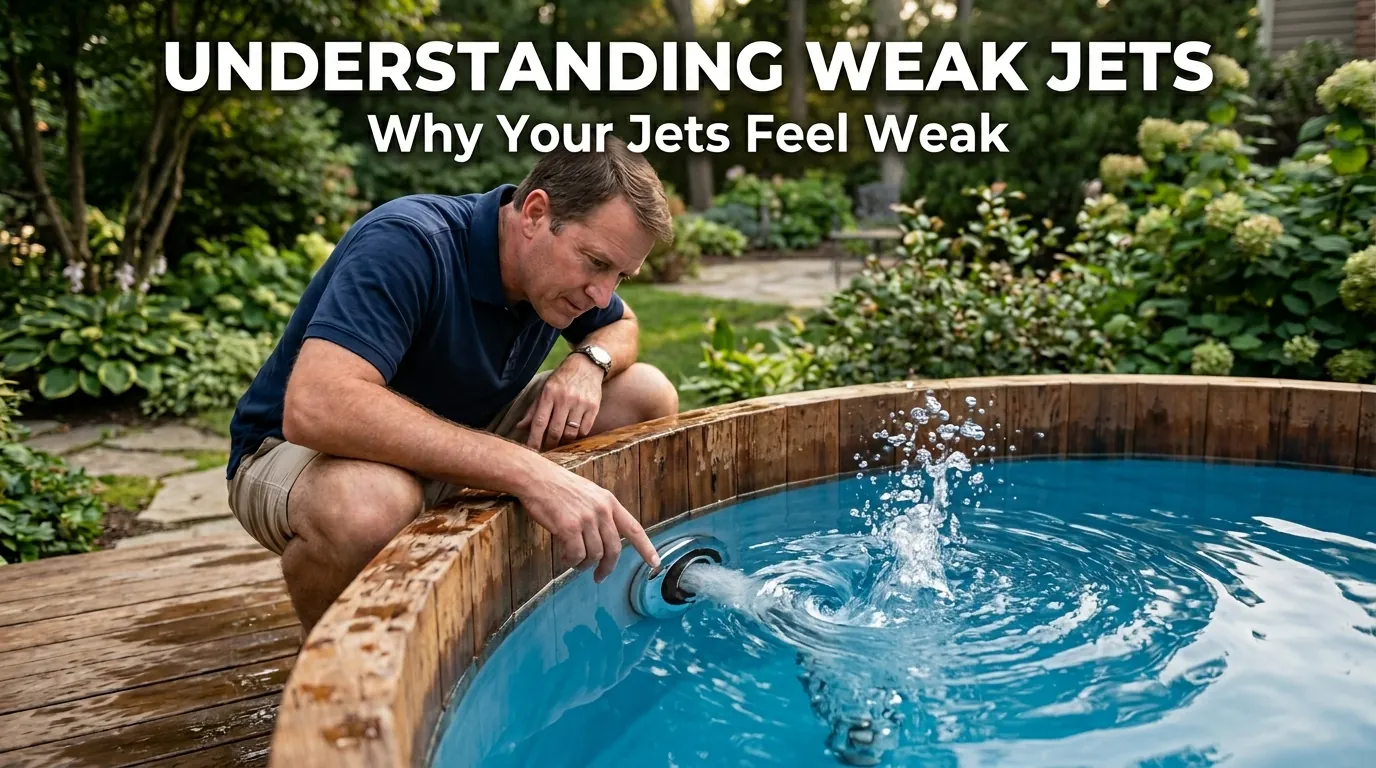
Hot Tub Nozzle Meaning: What It Is and Why It Matters

If you’ve ever looked at your spa and wondered what a “hot tub nozzle” actually means, you’re not alone. Most people see the shiny jet face and assume that’s the whole system.
In reality, the nozzle is one of the most important parts of your hot tub’s performance.
A hot tub nozzle is the internal opening inside a jet assembly that controls how water and air are released into the tub. It’s where pressure is shaped, direction is adjusted, and the massage experience is created.
Once you understand how nozzles work, everything makes more sense, from weak jets to better hydrotherapy and even why your tub needs less or more maintenance.
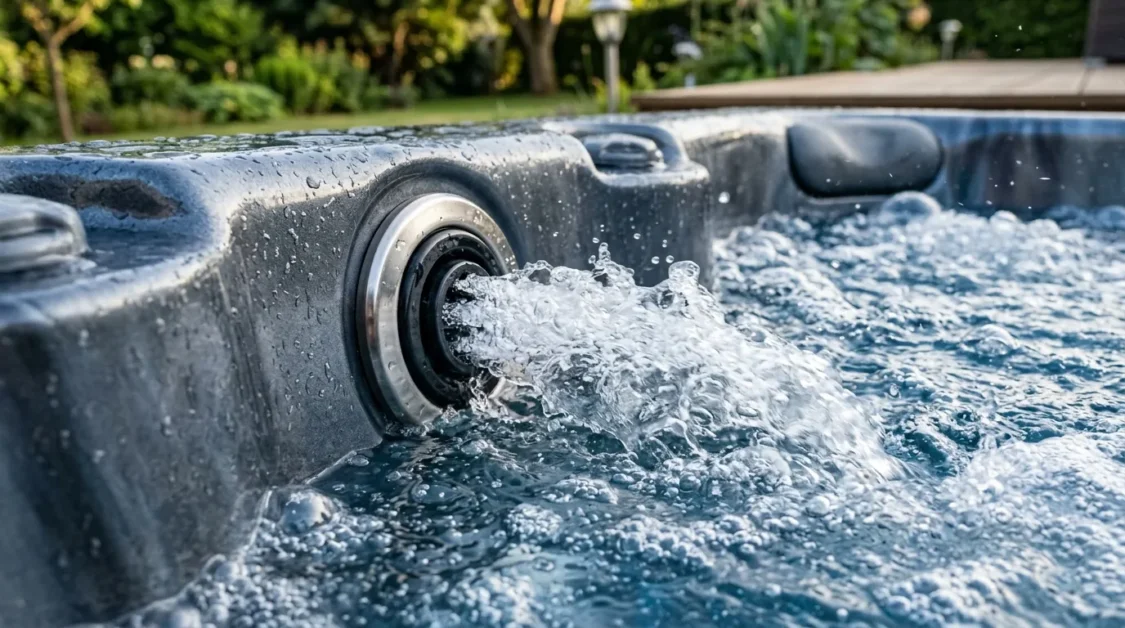
What Is a Hot Tub Nozzle? (Clear Definition)
A hot tub nozzle is the precision opening inside a jet that regulates water flow, air intake, and pressure output.
It’s often confused with other parts, so here’s a quick breakdown:
- Jet body: Built into the spa shell and connected to plumbing
- Jet face: The visible outer piece you can turn or adjust
- Nozzle: The internal outlet that actually shapes the water stream
So when people ask “what is a hot tub nozzle called,” they’re usually referring to the jet internal or jet insert, where the nozzle is built in.
This distinction matters because performance issues almost always trace back to the internal components, not just the visible parts.
What Do Hot Tub Nozzles Do?
At a basic level, nozzles control how water enters your hot tub.
At a deeper level, they control three critical things:
- Pressure intensity
- Flow direction
- Air-to-water ratio
This is what determines whether your hot tub feels like:
- A weak stream of water
- A relaxing bubble bath
- Or a deep-tissue massage
The nozzle is where all of that is engineered.
If your jets feel off, uneven, or weak, it’s often not the pump, it’s how the nozzle is delivering the flow.
If your jets aren’t performing like they used to, using a proper hot tub jet cleaner can help remove buildup inside the nozzle and restore strong water flow.
How Hot Tub Nozzles Work (The Science Made Simple)
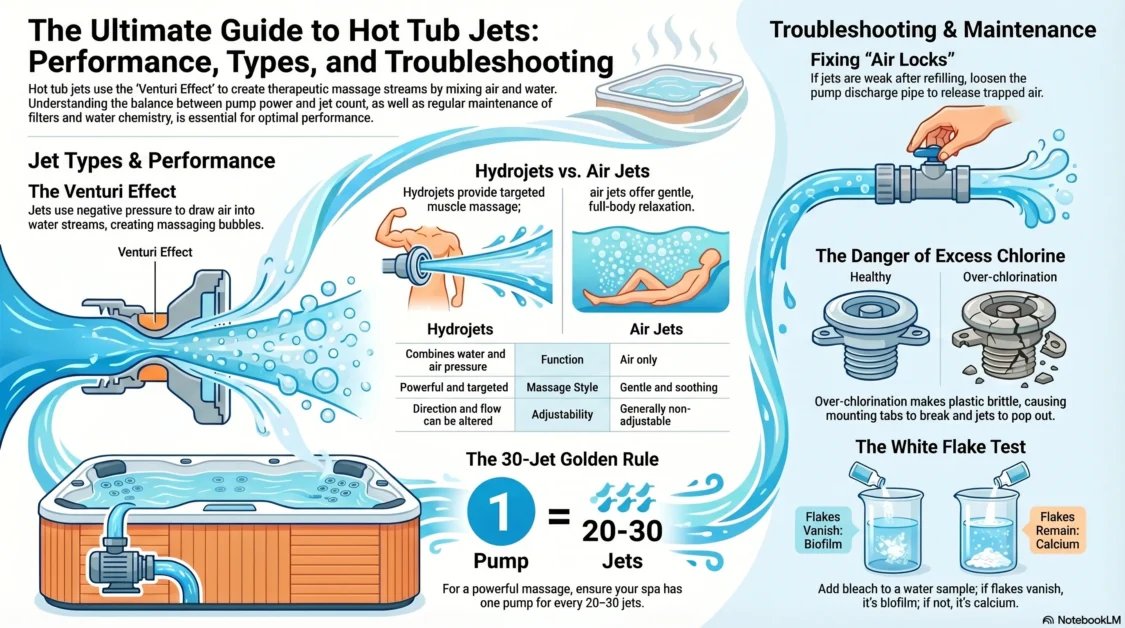
Hot tub nozzles rely on a principle called the Venturi effect, and once you understand it, the whole system clicks.
Here’s the simple version:
- Water is pushed through a narrow nozzle opening
- As the opening gets tighter, water speeds up
- Faster water creates low pressure
- That low pressure pulls in air
- Air mixes with water, creating bubbles and force
So the bubbles in your hot tub aren’t coming from a separate air pump. They’re created naturally through fluid dynamics.
This is why nozzle design matters so much.
A poorly designed nozzle:
- Reduces air intake
- Weakens pressure
- Creates uneven flow
A well-designed one:
- Maximizes velocity
- Pulls in consistent air
- Delivers strong, balanced jets
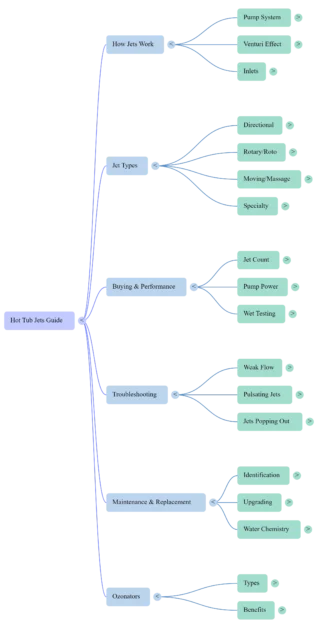
Types of Hot Tub Nozzles You Should Know
Not all nozzles are built the same. Each type is designed for a specific experience.
Directional Nozzles
These produce a steady stream of water that you can aim.
- Best for targeted muscle relief
- Common in back and shoulder jets
Rotating (Spinner) Nozzles
These spin or oscillate as water flows through them.
- Create a moving massage pattern
- Great for covering larger muscle areas
Pulsating Nozzles
These cycle pressure on and off.
- Mimic a rhythmic massage
- Help improve circulation
Air Jets vs Water Jets
- Water jet nozzles: Mix air + water for pressure
- Air jets: Push only air for a lighter, bubbling effect
Water jets are built for therapy.
Air jets are built for relaxation.
Most high-quality tubs combine both for a balanced experience.
If you’re dealing with jets that won’t stop running, this guide on why hot tub jets won’t turn off walks you through the most common causes and how to fix them quickly.
Why Nozzle Design Matters More Than Jet Count
A common mistake people make is focusing on how many jets a hot tub has.
But performance isn’t about quantity. It’s about hydraulic balance.
A well-designed system follows a simple principle:
- About 20–30 jets per pump
If you overload a system with too many nozzles:
- Pressure drops
- Flow weakens
- Massage becomes ineffective
This is why some tubs with 90 jets feel weaker than one with 40.
The nozzle only performs as well as the system feeding it.
Common Problems with Hot Tub Nozzles
When something feels off in your spa, the nozzle is often involved.
Weak or No Water Flow
Usually caused by:
- Dirty filters
- Pump issues
- Blocked nozzles
Clogged or Dirty Nozzles
Over time, buildup forms inside the nozzle:
- Calcium scale from hard water
- Biofilm from bacteria
If you’re seeing debris, check this guide on white flakes floating in your hot tub to identify the exact cause.
Nozzle Popping Out
This is a classic issue.
It usually happens when:
- Plastic tabs become brittle
- Chemical damage weakens components
Air Lock Issues
After refilling your tub, air can get trapped in the system.
Result:
- Jets hum but don’t push water
Fixing the air lock usually restores normal nozzle performance quickly.
How to Clean and Maintain Hot Tub Nozzles
Keeping nozzles clean is one of the easiest ways to improve performance.
Here’s a simple routine:
- Turn off the power
- Remove the jet inserts (if removable)
- Soak in a cleaning solution or vinegar mix
- Rinse thoroughly
- Reinstall and test
For full maintenance guidance, follow this complete hot tub maintenance routine to keep everything running smoothly.
How Chemicals Affect Your Hot Tub Nozzles
This is where a lot of long-term damage happens.
Sanitizers like chlorine and bromine are necessary, but they’re also oxidizers.
Over time, they can:
- Dry out plastic
- Cause brittleness
- Break mounting tabs
One of the biggest mistakes is using pool-grade chlorine in a hot tub.
Hot tubs run at higher temperatures, which makes chemicals more aggressive.
To avoid this, focus on balanced water using tools like the hot tub water care guide so your system stays protected.
Bonus: Do You Need an Ozonator for Better Performance?
If you want to reduce chemical wear on your nozzles, an ozonator helps a lot.
An ozonator:
- Uses UV light or electrical discharge
- Produces ozone (O₃)
- Breaks down contaminants naturally
Benefits:
- Less chlorine needed
- Cleaner water
- Longer-lasting components
It’s not required, but it’s one of the smartest upgrades for long-term maintenance.
How to Choose the Right Nozzle Replacement
If you need to replace a nozzle, don’t guess.
You’ll need to match:
- Brand and model
- Jet size and type
- Mounting mechanism
In many cases, replacing the full jet insert is easier than replacing just the nozzle.
If your system is aging, it’s also worth checking overall performance and cost using a hot tub maintenance cost calculator before investing in parts.
Final Thoughts
A hot tub nozzle might seem like a small detail, but it’s actually where the entire experience comes together.
It controls pressure, airflow, and how your body feels during a soak.
Once you understand how it works, you can:
- Fix weak jets faster
- Maintain your system better
- Get more out of your hot tub
And honestly, that’s what makes the difference between just owning a hot tub and actually enjoying it.
Frequently Asked Questions
What is a hot tub nozzle called?
It’s usually part of the jet internal or jet insert, which includes the nozzle that shapes water flow.
What do hot tub nozzles do?
They control water pressure, direction, and air mixing to create the massage effect in your hot tub.
Can you replace a hot tub nozzle?
Yes, but most of the time you replace the full jet insert rather than just the nozzle.
Why are my hot tub nozzles weak?
Common causes include clogged filters, air locks, buildup inside the nozzle, or pump issues.
How often should I clean hot tub jets?
Clean them every 1–3 months, depending on usage and water quality.