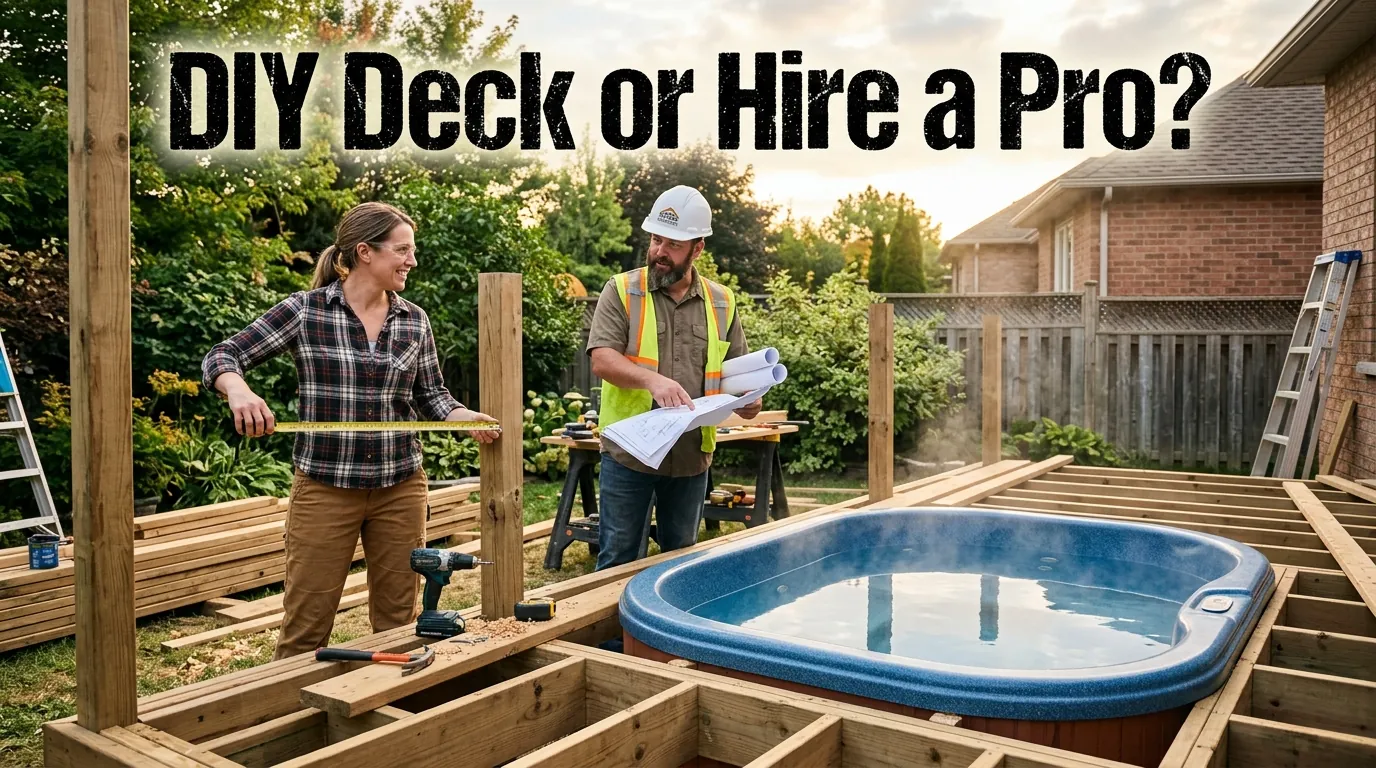
DIY Hot Tub Deck vs Hiring a Contractor

Adding a deck around your hot tub can completely transform your backyard. It creates a safer entry area, improves the look of your spa, and makes the whole space feel like a true relaxation zone.
But one question stops many homeowners before they even start: should you build the deck yourself or hire a contractor?
Both options can work. The right choice depends on your experience, budget, timeline, and how complex the deck design is. Some hot tub owners enjoy tackling the project themselves, while others prefer the speed and peace of mind that comes with hiring a professional.
If you’re still deciding, this guide will walk through the real differences between DIY hot tub decks and contractor-built decks, including costs, risks, and when each option makes the most sense.
DIY Hot Tub Deck vs Hiring a Contractor: Quick Comparison
Before diving deeper, here’s a quick overview of how the two options typically compare.
| Factor | DIY Deck Build | Hiring a Contractor |
|---|---|---|
| Cost | Lower upfront cost | Higher overall price |
| Time Required | Longer project timeline | Faster completion |
| Skill Level | Moderate to advanced DIY skills | Minimal homeowner effort |
| Risk of Mistakes | Higher if inexperienced | Lower with experienced builder |
| Permits and Inspections | Homeowner manages | Usually handled by contractor |
A DIY project can save money, but it requires time, tools, and a solid understanding of structural support. Hiring a contractor costs more but removes most of the heavy lifting and technical challenges.
If you’re planning your backyard setup from scratch, exploring ideas in this hot tub deck and patio building guide can help you understand how decks fit into a complete outdoor layout.
When Building a Hot Tub Deck Yourself Makes Sense
DIY projects can work well for the right homeowner. If the design is simple and you’re comfortable with construction basics, building your own deck can be a satisfying project.
You Have Basic Construction Skills
Deck framing requires accuracy and safety awareness. If you already know how to:
- measure and level framing
- cut lumber correctly
- install deck boards
- use common power tools
then a DIY project may be realistic.
Your Deck Design Is Simple
The easiest DIY decks are usually:
- ground-level platforms
- simple rectangular decks
- small surround decks around portable spas
Once designs include stairs, railings, or multiple levels, things become more complex quickly.
You Want to Reduce Labor Costs
Labor is often the largest part of a deck project.
Building the deck yourself means you’re mainly paying for:
- lumber or composite boards
- concrete footings
- hardware and fasteners
- tools if needed
This can cut project costs significantly.
You Enjoy DIY Backyard Projects
Many homeowners simply enjoy the process. A custom deck project can be rewarding when you see the finished result surrounding your spa.
If you’re exploring creative builds, browsing DIY hot tub projects and backyard upgrades can give you ideas for simple structures that pair well with home-built decks.
Pros and Cons of DIY Hot Tub Deck Projects
DIY construction has some clear benefits, but it also comes with real challenges.
Advantages of DIY Deck Building
Many homeowners choose DIY for several reasons:
- Lower overall project cost
- Full control over design and materials
- Flexible construction timeline
- Satisfaction of building your own backyard feature
You can also customize details more easily, such as steps, seating areas, or storage.
Disadvantages of DIY Deck Building
The biggest downside is risk.
Common DIY challenges include:
- Incorrect deck support for hot tub weight
- Improper spacing or framing
- Building code violations
- Longer construction timeline
- Physical labor requirements
Hot tubs filled with water and people can weigh 3,000 to 6,000 pounds or more, so structural strength matters. A poorly built deck could shift or fail over time.
When Hiring a Contractor Is the Better Choice
For many homeowners, hiring a professional builder is the safer option.
Complex Deck Designs
Decks that include these features are often better handled by professionals:
- multi-level platforms
- built-in hot tub surrounds
- wrap-around decks
- stairs and safety railings
- integrated lighting or pergolas
Complex structures require careful engineering and framing.
Structural Safety Concerns
Weight support is the biggest structural challenge.
Professional deck builders understand:
- load distribution
- proper beam spacing
- footing depth
- framing reinforcement
These details help ensure the deck safely supports your spa for many years.
Limited Time or Construction Experience
Building a deck can take several weekends or longer if you’re learning along the way.
Contractors often complete projects within a few days to two weeks, depending on design complexity.
Local Permit and Inspection Requirements
Many cities require permits for deck construction, especially when the structure supports heavy equipment like a hot tub.
Contractors usually handle:
- permit applications
- building inspections
- compliance with local codes
If your project involves electrical installation for the spa, working with someone experienced in hiring a hot tub electrician can also help ensure the wiring meets safety requirements.
Choosing a Reliable Contractor for a Hot Tub Deck
Not every deck builder has experience with spa installations. Taking time to choose the right contractor can prevent costly mistakes.
Verify Licensing and Insurance
Always confirm that the contractor has:
- proper licensing
- liability insurance
- worker’s compensation coverage
This protects you if accidents occur during construction.
Review Past Deck Projects
Ask to see photos or visit completed projects.
Look for:
- solid framing
- clean finishing
- good stair and railing installation
Experience with spa decks is especially valuable.
Ask About Hot Tub Deck Experience
Decks supporting hot tubs need stronger framing than typical backyard decks.
A qualified builder should understand:
- spa weight distribution
- reinforced joist spacing
- access panels for maintenance
Get Multiple Quotes
Before hiring anyone, compare several bids.
Each quote should clearly outline:
- materials
- labor
- project timeline
- warranty details
This helps you identify realistic pricing and avoid unusually low bids.
Typical Cost Differences: DIY vs Contractor Deck
Cost is often the biggest factor when choosing between DIY and professional construction.
DIY Deck Cost Estimate
DIY projects typically include material costs only.
Common materials include:
- pressure-treated lumber
- composite decking boards
- concrete footings
- fasteners and brackets
- sealant or stain
Most small hot tub decks cost roughly:
$1,500 to $5,000 depending on size and materials.
Composite materials can increase costs but require less long-term maintenance.
Contractor Deck Cost Estimate
Professional projects include both materials and labor.
Typical contractor deck projects may range between:
$5,000 and $15,000+
Costs depend on:
- deck size
- elevation
- material choice
- added features like lighting or pergolas
If you’re comparing budgets, this hot tub cost calculator can help estimate how deck construction fits into your overall spa investment.
Hidden Costs Homeowners Often Forget
Deck projects sometimes cost more than expected because certain items are overlooked during planning.
Common hidden expenses include:
- building permits
- structural reinforcements
- drainage improvements
- electrical access for the hot tub
- railings required by code
- landscaping adjustments
Ignoring these details early can lead to delays or expensive changes later.
If you’re preparing for a complete spa installation, reviewing the hot tub installation guide can help you understand the setup requirements before building your deck.
Free Deck Plans and Design Resources
Planning a hot tub deck becomes much easier when you start with a proven layout.
Many homeowners use online design tools or downloadable deck plans to visualize their project before buying materials. These plans typically include:
- structural framing layouts
- beam and joist spacing
- recommended deck sizes
- material lists
- step-by-step building guidance
Free deck plans are especially helpful for DIY builders who want to avoid structural mistakes.
If you want to explore detailed planning tools and layout ideas, this guide on how much a hot tub deck costs also includes helpful resources and budgeting tips for designing your deck project.
Using these resources early can prevent expensive design mistakes later.
Hybrid Option: DIY Deck With Professional Help
Some homeowners choose a middle-ground approach.
Instead of handling everything themselves or hiring a contractor for the full project, they combine both methods.
Examples include:
- hiring a contractor for the foundation while building the deck yourself
- building the deck frame but outsourcing railing installation
- consulting a contractor for structural planning before starting DIY work
This hybrid approach can reduce costs while still ensuring the deck structure is safe and code compliant.
Common Mistakes When Building a Hot Tub Deck
Even experienced DIY builders occasionally overlook important design details.
Here are some of the most common problems.
Not Reinforcing the Deck for Spa Weight
Standard residential decks are not always designed to support a filled hot tub.
Extra beams or joists may be required.
Blocking Access Panels
Hot tubs require access to pumps, plumbing, and electrical components.
Always leave enough space around service panels.
Poor Drainage Around the Spa
Water splashes and rain runoff must drain properly.
Standing water can damage deck materials and create slippery surfaces.
Building Too Close to Walls or Fences
Hot tubs require clearance for maintenance and safe entry.
Leave space for steps, cover lifters, and access pathways.
Avoiding these mistakes early can save time and money during construction.
How to Decide: DIY or Hire a Contractor
Still unsure which option is right?
Use this simple decision checklist.
DIY may be a good choice if:
- you have basic construction experience
- the deck design is simple
- you have time to complete the project
- saving money is a priority
Hiring a contractor is usually better if:
- the deck design is complex
- the deck is elevated or multi-level
- permits and inspections are required
- you want the project finished quickly
Choosing the right approach helps ensure your hot tub deck becomes a safe and comfortable part of your backyard.
Frequently Asked Questions
Is it cheaper to build a hot tub deck yourself?
Yes. DIY decks are usually cheaper because you avoid labor costs. Most DIY hot tub decks cost between $1,500 and $5,000 depending on materials and size.
How much weight must a hot tub deck support?
A filled hot tub with people inside can weigh 3,000 to 6,000 pounds or more. Decks must be reinforced with proper beams and joists to safely support this load.
Do I need a permit to build a hot tub deck?
Many cities require permits for decks, especially if the structure is elevated or supports heavy equipment like a hot tub. Always check local building regulations before starting.
Can an existing deck hold a hot tub?
Sometimes, but not always. Many standard decks were not designed for spa weight and may require reinforcement before placing a hot tub on them.
How long does it take to build a hot tub deck?
DIY decks may take several weekends to complete. A professional contractor can usually finish a typical hot tub deck within a few days to two weeks depending on complexity.