
Hot Tub Cleaner: What to Use and How to Clean Safely

There is no single hot tub cleaner that works on every part of a spa. A non-sudsing shell cleaner removes waterline residue; a cartridge cleaner handles filter oils; a plumbing purge is designed for accessible internal water lines; and a vacuum picks up sand and leaves. Using the wrong one can leave residue, damage a surface, or simply fail to solve the problem.
Quick answer: Match the cleaner to the job and your exact spa manual. For light waterline marks, start with a soft cloth and the approved shell-cleaning method. For debris on the floor, use a spa-safe skimmer or vacuum. For a scheduled deep clean, check whether your model calls for a plumbing purge before draining. Keep sanitizer and pH testing separate from cosmetic cleaning.
If the water itself is cloudy, slimy or has a strong odor, check your hot tub water-care routine before purchasing another spray. A clean-looking shell does not establish that the water is safe.
Which Hot Tub Cleaner Do You Need? Use This Selection Chart
Start with the symptom you can actually see. The best option is the product or tool intended for that surface, used according to the spa and cleaner manufacturer directions. This comparison is about cleaner types, not a ranking of untested brands.
| What needs cleaning | Right type of product or tool | What it does not do | Check before buying |
|---|---|---|---|
| Waterline film or light marks on the shell | Approved non-abrasive, low-suds shell cleaner and soft cloth | It does not disinfect dirty spa water or clean pipes | Shell material, finish, permitted ingredients and rinse directions |
| Sand, leaves, or dirt settled on the floor | Spa skimmer or vacuum suitable for your model | It does not sanitize water or remove biofilm | Safe use with water present, debris capacity and access to tight corners |
| Oily or restricted filter cartridge | Cartridge-specific cleaner plus thorough rinse | A shell spray may not remove oils inside filter pleats | Filter type, soak/rinse method and manufacturer approval |
| Plumbing deposits during a planned water change | Model-compatible spa plumbing purge | It is not a substitute for sanitizer or confirmed disease remediation | Required water level, operating cycle, PPE, draining and label precautions |
| Cover dirt or surface grime | Cleaner compatible with the cover material | Cover products may not be safe for the acrylic shell or water | Vinyl versus fabric cover, top/underside instructions |
| Cloudy water, low sanitizer or unpleasant odor | Water test kit, system-specific sanitizer and troubleshooting | A surface cleaner cannot correct a sanitizer failure | Current readings, product label, filter operation and cause |

What Works for the Shell, Filter, Cover, and Plumbing?
Shell and waterline: use the approved mild option
For acrylic and similar shells, a soft cloth and an approved non-abrasive, non-sudsing cleaner are common starting points. Hot Spring describes gentle cleaners and small-area baking soda use, but approval is model-specific. Some owner manuals restrict household products much more narrowly, so do not assume every manufacturer permits vinegar, baking soda, detergent or a generic bathroom cleaner.
Avoid abrasive pads, undiluted chemicals, fragrant sprays and products containing solvents unless the specific manual explicitly says otherwise. Rinse according to the cleaner directions so residue does not foam after refilling. If a stain does not lift with the approved method, ask the dealer about the stain type instead of scrubbing harder.
Filter cartridges: a different cleaning job
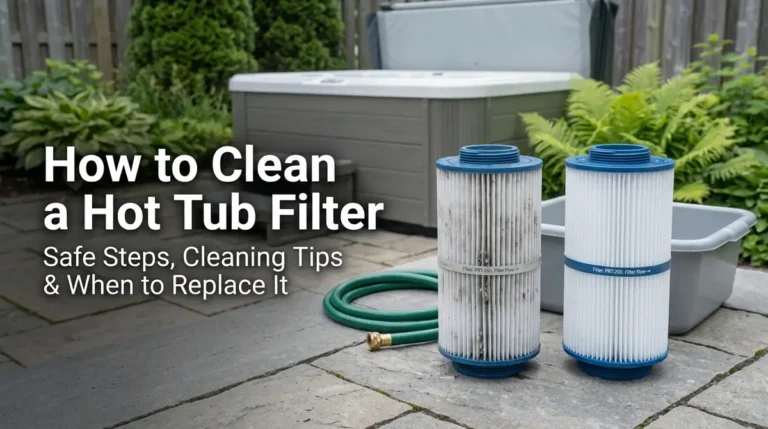
A filter cleaner is formulated for oils and debris trapped in cartridge pleats. Rinse, use only compatible products and follow the soak time, inspection and final rinse directions printed on the label. Do not put filter-cleaning solution directly into your spa as a water treatment.
If flow remains weak or the cartridge is damaged after cleaning, replace it according to the model instructions. Our hot tub filter cleaning guide explains which steps owners can safely perform. Hot Spring also recommends periodically rinsing filters and inspecting them for wear.
Covers and headrests: check material first
Vinyl, fabric, foam-backed covers and headrests do not all tolerate the same products. Follow the cover maker’s instructions for the top and underside, rinse as directed and let it dry appropriately before closing. The hot tub cover cleaning guide covers those material-specific decisions in more detail.
Plumbing: use a purge only when it is appropriate
A plumbing purge is meant to circulate through the spa’s water lines as instructed. Jacuzzi’s cleaning sequence places a plumbing flush before draining because the plumbing needs water and circulation for that process. Follow the exact cleaner label and spa manual, including any instructions for preparing the water, removing filters, running pumps and keeping people out.
A purge is a maintenance method, not an assured fix for persistent microbial contamination. If slime or serious sanitation problems continue, stop using the spa and ask a qualified dealer or water-care professional for a system-specific plan. Do not follow an improvised high-dose disinfection recipe.
Vacuums and skimmers: for visible debris
A fine-mesh skimmer catches floating leaves, while a spa vacuum picks up sediment from seats or the floor. Neither cleans plumbing or replaces water sanitizer. If you regularly track in sand, see our spa vacuum selection guide to compare debris-removal tools.
How to Clean a Hot Tub Without Draining It
A little waterline grime does not necessarily require a full water change. Use this short routine only when the water is otherwise properly treated and the manual allows cleaning with water present.
- Check the water first. Confirm circulation works, inspect the water for unusual cloudiness or slime, and test sanitizer and pH. If results are unsuitable, keep people out and resolve the water issue separately.
- Remove loose debris. Use a skimmer or suitable vacuum without damaging the liner or shell.
- Wipe the accessible waterline. Use a soft cloth and the shell manufacturer’s approved method. Do not spray unapproved chemicals over open spa water.
- Maintain the filter if needed. Follow the model’s power-off and filter-removal instructions before rinsing or cleaning a cartridge.
- Retest before soaking. Check sanitizer and pH after maintenance, and confirm no cleaning residue or unusual foam remains.
Routine care should also include water-quality troubleshooting when foam, strong odor or cloudy water persists. A cleaner cannot compensate for a low disinfectant reading or a malfunctioning pump.
How to Deep-Clean a Hot Tub: The Correct Order
If a full water change is due, organize the steps before you begin. Do not drain the tub first and then try to circulate plumbing cleaner through empty lines. Manufacturer instructions take precedence, including for saltwater systems and inflatable models.
- Read the spa manual and plan the water change. Check drain location, temperature or freeze restrictions, disposal rules and the cleaning products approved for your specific model.
- Consider a pre-drain plumbing purge. If your model and cleaner permit it and the water conditions allow safe operation, follow the labeled procedure while the tub still contains the required water. Keep bathers out. Do not run a severely malfunctioning spa to perform a purge.
- Switch off power before draining. Use the disconnect or breaker procedure specified by the manufacturer. Do not operate heaters or pumps while the water level drops.
- Drain through the approved outlet or pump method. Route water away from foundations and unsuitable discharge locations, and follow local rules for chemically treated wastewater.
- Wipe and rinse the exposed shell. Use a soft cloth and compatible cleaner around seats, the waterline, and accessible jet openings. Never open electrical equipment or dismantle plumbing for routine surface cleaning.
- Clean or replace filter cartridges and inspect the cover. Follow their separate instructions and make sure residues are rinsed away.
- Refill using the specified fill method. Follow the spa manual to avoid airlocks and bring the water to the required operating level before restoring power.
- Restart, sanitize and retest. Use your sanitizer-system product label, confirm circulation and suitable pH and disinfectant readings, and do not reopen the spa until the manufacturer’s return-to-use requirements are met.
For model-independent planning, our hot tub draining guide explains hose and pump methods, but your spa manual controls the actual shutoff, draining and refill procedure. Jacuzzi and Hot Spring both describe regular draining as part of conventional spa care, with timing depending on use and water system.
Which Household Cleaners Should You Avoid?
The fact that a product cleans kitchen or bathroom surfaces does not mean it belongs near hot tub water. Dish soap and many household sprays can leave residues that foam; abrasive cleaners may scratch the shell; and solvents or acidic cleaners can conflict with the manufacturer’s surface instructions. Do not pour vinegar or baking soda into spa water as a substitute for the proper treatment system.
A limited spot-cleaning use of baking soda or diluted vinegar may be allowed by some manufacturer instructions, but that is not permission to use those products on every shell, cover, filter or inflatable liner. Confirm the surface, dilution, contact time and rinsing instructions for your make and model first.
Chemical safety: Never mix chlorine products with acids, different sanitizers, cleaners or each other. Keep products in labeled containers, use only the protection specified on their labels and work in a ventilated area. The CDC warns that incompatible pool and spa chemicals can cause injuries.
When Cleaning Is Not Enough
| What you notice | Why a surface cleaner might fail | Better next step |
|---|---|---|
| Strong odor, slimy surfaces or cloudy water | The issue can involve sanitizer, filtration or biofilm rather than waterline dirt | Stop soaking, test water and follow your system’s recovery instructions; consider qualified help |
| Recurring foam after wiping the shell | Detergent residue, body products or water-care problems may remain | Check fill and bathing habits, filter condition and water chemistry |
| Brown or white mineral marks | Scale or source-water metals may need a different approved approach | Verify stain type and shell compatibility before treatment |
| Weak jets or a flow warning | Dirty filters or faulty circulation cannot be fixed with spray cleaner | Check owner-accessible items in the manual and seek service if errors persist |
| Faint stains on a sound cover | The cover may need material-specific care rather than shell cleaner | Use the cover manufacturer’s instructions |
If a bad smell keeps returning, the hot tub odor diagnosis guide separates cover, filter, water and plumbing causes. A cleaner that makes the spa look better is not proof that sanitation is restored.
Hot Tub Cleaner Buying Checklist: Check These Before Paying
- Intended job: Is the product for acrylic shells, a liner, filters, covers, pipes, or debris removal? A generic “all-in-one” label may hide important limitations.
- Model compatibility: Does the spa owner manual allow that product category and its ingredients or tools?
- Water present or drained: Must the cleaner be applied to an empty shell, a removed filter, or a filled spa with circulation?
- Residue and rinsing: What are the full rinse, flush and restart instructions?
- Protection and storage: Does the label require gloves, eye protection, ventilation or separate storage?
- Visible problem: Are you actually removing dirt, or are you trying to solve low sanitizer, slime, persistent odor or a faulty pump?
- Cost per use: Compare the size and number of labeled treatments, not just bottle price or an unverified “best cleaner” claim.
Save the answers in your cleaning log. Buying a second product is rarely the first useful step when the original issue has not been identified.
A Simple Cleaning and Retest Record
Use this worksheet beside your tub during the next cleaning session. It makes the difference between a cosmetic spot clean and a full water-change job visible, and it gives a dealer useful information if the problem returns.
| Record | Your notes |
|---|---|
| Spa model and shell or liner material | ____________________________ |
| Problem location: waterline / floor / cartridge / cover / pipes | ____________________________ |
| Product and manufacturer-approved purpose | ____________________________ |
| Water-change or filter-cleaning date | ____________________________ |
| Before cleaning: sanitizer, pH and any errors | ____________________________ |
| Cleaning steps and actual product-label directions | ____________________________ |
| After cleaning: sanitizer, pH, foam, odor and circulation | ____________________________ |
| Next action or dealer contact if not resolved | ____________________________ |
Go/no-go check: If the spa has unexplained slime, cloudy water, a strong irritating odor, unsuitable disinfectant or pH readings, or a circulation fault, keep people out and resolve that issue before using it. CDC hot tub guidance recommends at least 3 ppm free chlorine or 4–8 ppm bromine and pH 7.0–7.8; follow your exact sanitizer system and label for acceptable upper limits and reentry conditions.
How Often Should You Clean a Hot Tub?
There is no single cleaning interval that fits every spa. Use the manufacturer’s maintenance schedule, number of bathers, filter type, water-care system and observed buildup. Hot Spring describes regular filter care and conventional drain-and-clean intervals around three to four months, while noting that some saltwater systems have longer water-replacement intervals.
- After use or during regular checks: Remove visible debris, check water treatment and secure the cover as the manufacturer directs.
- During routine cartridge care: Rinse and inspect filters according to the model; use a compatible filter cleaner when the label calls for it.
- When a water change is due: Consider whether the approved system benefits from a pre-drain plumbing purge and a full shell cleaning.
- After contamination or persistent faults: Stop using the spa and get specific guidance rather than waiting for a preset calendar date.
Hot Tub Cleaner FAQs
What is the best cleaner for a hot tub shell?
Use a soft cloth with water or a non-abrasive, low-suds cleaner explicitly approved for your spa shell. Check the exact owner’s manual: products approved for one acrylic shell may not be approved for another.
Should I use a plumbing cleaner before or after draining?
If your spa manufacturer approves a plumbing purge, follow the purge product instructions while the spa contains the required water, then switch off power before draining. A drained spa generally cannot circulate a purge through its lines.
Can I use vinegar or baking soda to clean a hot tub?
Only where your particular manufacturer permits it and only for the stated surface and method. These are not universal substitutes for spa-approved cleaners, sanitizer or a plumbing purge.
Can a vacuum replace hot tub cleaner?
No. A spa vacuum collects visible dirt and sand; it does not disinfect the water, clean filter pleats or remove buildup from internal plumbing.
How often should I deep-clean and drain a hot tub?
Use the owner’s manual, water-care system and actual usage as your schedule. Many conventional spas are drained approximately every three to four months, but some systems have different intervals. Do not automatically drain in unsafe freezing weather.
Why does my hot tub still smell after cleaning the shell?
The source might be water chemistry, a dirty filter, damp cover material or plumbing buildup. Keep bathers out when the water smells strongly or tests out of range, test the water, and use a cause-based troubleshooting process instead of adding fragrances.
The Practical Choice
Use a soft cloth and approved shell cleaner for waterline marks, a skimmer or vacuum for debris, a cartridge cleaner for filter oils, and a model-compatible plumbing purge only as directed during an appropriate water change. If the problem is cloudy water or odor rather than surface dirt, diagnose the water before shopping for cleaner.
Source notes: Jacuzzi cleaning sequence; Hot Spring spa surface and filter care; Hot Spring maintenance schedule; CDC chemical safety; CDC disinfectant and pH guidance.