What Kind of Light Is Best for a Sauna?

The best sauna light is not simply the brightest or the cheapest. Choose a fixture or lighting system that is specifically suitable for its intended sauna location, then confirm the manufacturer’s temperature limits, moisture or location rating, installation instructions, and compatibility with the sauna and heater system.
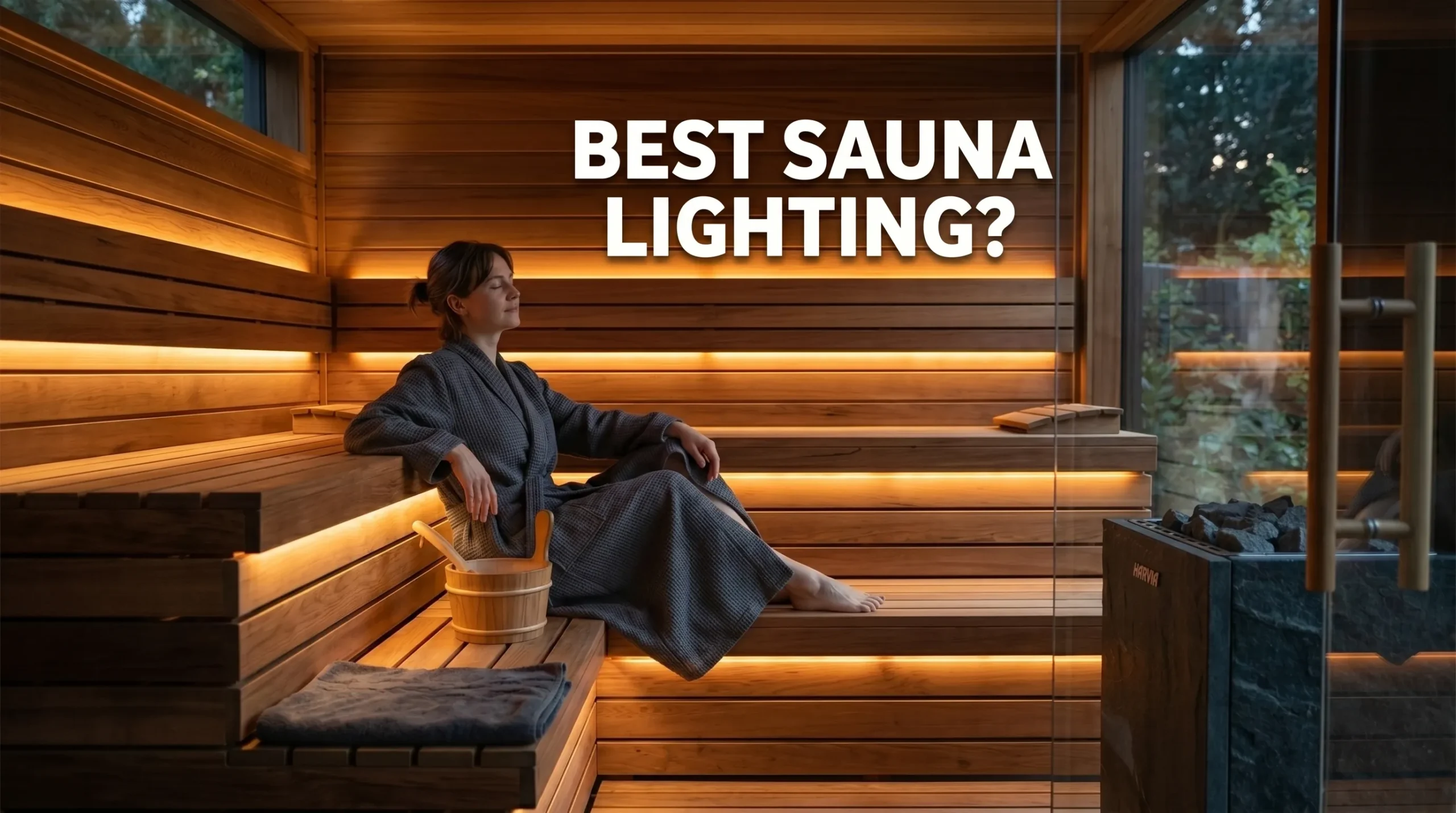
For most home projects, warm and indirect lighting is comfortable because it reduces glare. The final choice still depends on whether the light is in a traditional hot room, an infrared cabin, a changing area, or outside the sauna. When wiring, controls, or heater proximity are involved, use the product manual and a qualified electrician where required by the applicable code.
What to Check Before Buying
| Lighting need | What to check | Main risk | Best next step |
|---|---|---|---|
| Under-bench or backrest light | Fixture temperature rating, moisture/location rating, and mounting instructions | Heat exposure, glare, or a driver installed where it is not rated to operate | Confirm the complete system—not only the LED strip—is approved for that location |
| Wall or shaded fixture | Sauna suitability, shade materials, wiring method, and service access | Hot surfaces, condensation, or inaccessible connections | Follow the fixture and sauna manufacturer instructions |
| Ceiling or upper-wall light | Temperature rating at that exact location and heater-clearance instructions | The hottest part of the room may exceed the fixture’s rating | Ask the manufacturer or electrician before installation |
| LED strip system | Strip, enclosure, connectors, driver, controls, and cable ratings | A consumer strip or driver may not match the sauna environment | Use a complete compatible system with documented ratings |
| Doorway or exterior lighting | Outdoor/location rating, weather exposure, and safe power supply | Water ingress or unsuitable controls | Apply the product instructions and local electrical requirements |
LED, Incandescent, Halogen, and Fiber Optic Options
LED systems can offer efficient, controllable light, but “LED” alone does not prove sauna suitability. Check the rating for the complete fixture and its driver. Incandescent and halogen fixtures may create more heat, so their suitability must be confirmed for the exact installation. Fiber-optic systems can place the light engine outside the hot room, but the specific kit still needs correct installation.
Manufacturer documentation is more useful than a generic bulb label. For example, the SaunaLife LED manual and Finnleo/Sauna360 lighting manual provide product-specific installation and safety information. Use those kinds of instructions as the evidence for a recommendation, not a universal IP, voltage, or temperature rule.
Placement, Glare, and Controls
- Hide or shield the light source when possible so occupants see the illuminated wood rather than a bright point.
- Under-bench, behind-backrest, and carefully planned wall lighting can create indirect light, but the exact location must match the fixture instructions.
- Do not place a fixture near a heater unless the heater and lighting manufacturers provide compatible guidance for that location.
- Use dimming only when the lamp, driver, switch, and control system are compatible.
- Plan access to drivers, connectors, and service points before closing walls or benches.
Traditional Versus Infrared Saunas
Traditional saunas can expose upper locations to more intense heat and changing humidity. Infrared cabins may have different operating conditions, but that does not make every household fixture suitable. Compare the fixture’s documented operating environment with the actual location, and do not transfer a rating from one sauna type to another.
A Simple Selection Workflow
- Mark the proposed light location and identify the likely heat and moisture exposure.
- Shortlist complete fixtures or systems designed for that environment.
- Read the manufacturer’s temperature, moisture/location, wiring, driver, control, and clearance instructions.
- Check compatibility with the sauna heater and applicable electrical requirements.
- Have electrical work reviewed or completed by a qualified professional when the installation is outside your experience.
FAQs
Are all LED lights suitable for a sauna?
No. LED is a light source, not a sauna rating. Confirm the temperature, moisture/location, driver, wiring, and installation requirements for the complete system.
Is 2700K always the best color temperature?
No. Warm light is often chosen for a calm appearance, but color temperature is a comfort and design choice. Brightness, glare, color rendering, and the wood interior also matter.
Do sauna lights always need IP44 or IP65?
There is no single rating that applies to every sauna location. Use the fixture instructions, the actual moisture exposure, the sauna manufacturer’s guidance, and applicable electrical requirements.