
Can I Put a Hot Tub on My Patio? Base, Weight & Setup Guide

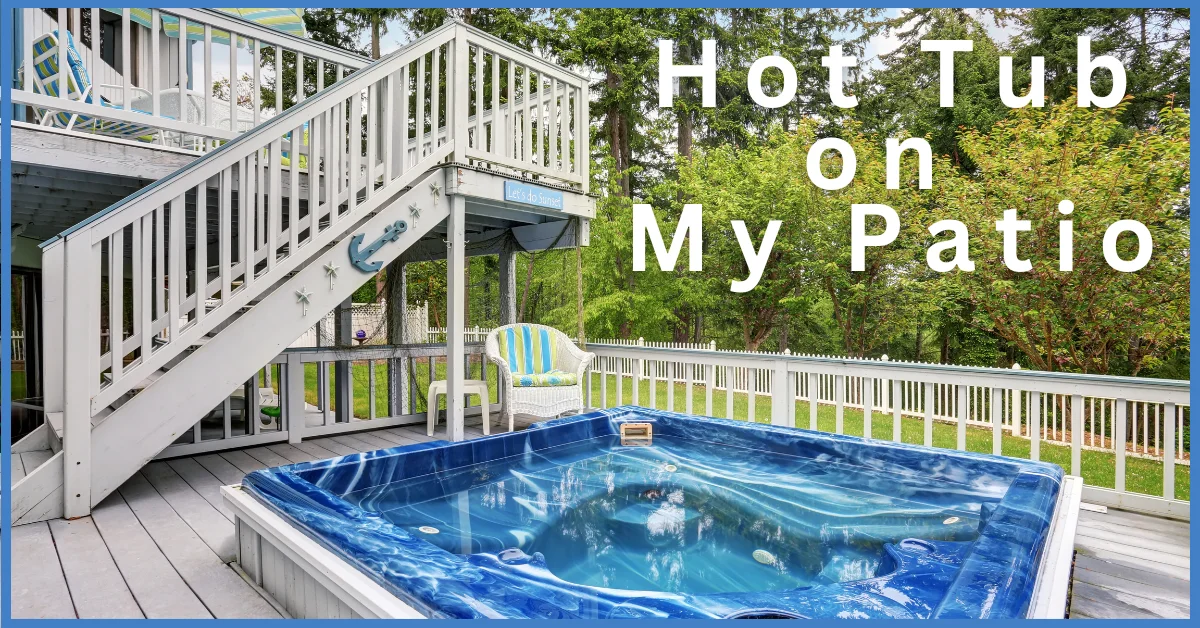
Yes, you can put a hot tub on a patio if the patio is level, structurally suitable for the filled spa, in good condition, and compatible with the hot tub manufacturer’s foundation requirements. The biggest mistake is assuming that any concrete or paver patio is automatically ready just because it feels solid under normal foot traffic.
A filled hot tub can weigh several thousand pounds. Before delivery, check the patio surface, slope, cracking, drainage, spa footprint, electrical access, service clearance, permits, and delivery route. If the patio is elevated, suspended, badly cracked, settling, or built over uncertain fill, get professional structural advice before placing the spa.
Can You Put a Hot Tub on an Existing Patio?
Often, yes. Jacuzzi’s current installation guidance says existing concrete can be a suitable hot tub foundation when it is level, in good condition, and large enough for the spa. The manufacturer also notes an important problem: many patios are intentionally pitched for drainage, which can make them unsuitable for a particular hot tub.
The answer therefore depends on the specific patio and specific spa, not simply whether the surface is made of concrete.
| Patio condition | Likely next step |
|---|---|
| Level concrete slab, sound condition, adequate size | Compare it with the spa manufacturer’s base requirements |
| Concrete with a noticeable drainage slope | Verify whether the slope is within the manufacturer’s tolerance |
| Large cracks, settlement, or uneven sections | Repair or evaluate before installation |
| Pavers on a stable, properly prepared base | Confirm the spa manufacturer accepts this support method |
| Raised patio, deck, balcony, or suspended slab | Get structural review for the filled load |
| Unknown base or soft ground under the patio | Investigate support and settlement risk before filling the spa |
The Patio Must Support the Filled Hot Tub, Not Just the Empty Spa
Hot tub shipping weight is only part of the load. Once filled, the foundation carries the spa shell, hundreds of gallons of water, equipment, and bathers.
This is why a surface that works for patio furniture may not be suitable for a hot tub. Use the filled weight listed by the manufacturer when evaluating the base. If the specification sheet gives only dry weight and water capacity, ask the dealer or manufacturer for the expected operating weight rather than guessing.
Ground-supported concrete is different from an elevated deck or suspended patio. If your patio is part of an elevated structure, use our hot tub deck guide and have the structure evaluated for the concentrated spa load.
Is a Concrete Patio Good for a Hot Tub?
Concrete is one of the most common hot tub foundations because it can provide broad, stable support. An existing concrete patio can work well when it meets the spa manufacturer’s requirements.
- Levelness: Check the slab in both directions, not just by eye.
- Condition: Look for major cracks, heaving, settlement, crumbling edges, or sections that have moved independently.
- Size: The entire spa base must be supported as the manufacturer requires.
- Drainage: Water should move away from the spa without leaving the hot tub sitting in a low spot.
- Access: Leave room for steps, cover movement, equipment service, and future draining.
A patio can be structurally sound but still too sloped for the spa. Do not try to solve a significant slope by wedging random shims under parts of the cabinet unless the hot tub manufacturer specifically allows that method.
Can You Put a Hot Tub on Patio Pavers?
Pavers can work for some hot tubs, but the visible paver surface is only part of the system. What matters is whether the underlying base is properly prepared, compacted, level, stable, and able to remain that way under the filled spa.
Jacuzzi lists concrete pavers among possible foundation options, but you should still follow the foundation instructions for your exact model. Uneven pavers, loose edging, poorly compacted fill, or a base that settles after rain can cause problems even when the pavers themselves are strong.
For a broader comparison of concrete, gravel, pads, pavers, and other support options, see our best hot tub base guide.
Check the Patio Slope Before Ordering the Spa
Patios are commonly built with some slope so rainwater moves away from the house. That is good for the home but may conflict with a hot tub manufacturer’s foundation tolerance.
Do not assume a slight-looking slope is acceptable. Check the installation manual or ask the manufacturer for the allowed base tolerance. This is especially important for large acrylic spas where the cabinet and shell are designed to be supported in a specific way.
If the patio is outside the allowed tolerance, the solution may be a properly designed level spa pad, a new slab, or another manufacturer-approved foundation rather than forcing the existing patio to work.
Drainage Around a Patio Hot Tub
Plan for more than rain. A patio hot tub also produces splash water, wet footprints, filter-rinse water, and periodic draining.
- Keep water from collecting around electrical equipment.
- Avoid sending drained spa water toward the house foundation.
- Do not create a slippery low spot at the entry steps.
- Check local rules before discharging treated water to a storm drain, street, landscape area, or sanitary sewer.
Your local utility or municipality may regulate where chlorinated or brominated water can be discharged, so the safest drainage plan depends on the property and jurisdiction.
Electrical Planning Comes Before Spa Placement
Do not choose the exact patio location and then try to make the electrical system fit afterward. The spa’s model-specific installation manual should guide circuit, disconnect, GFCI, grounding or bonding, and equipment-location requirements.
The old version of this article said most hot tubs require a 50-amp service. That is too broad. Hot tubs vary significantly. Some portable spas use 120V cord-and-plug connections, while many larger spas use 240V circuits with requirements that vary by model.
CPSC recommends qualified electrical inspection and installation around hot tubs and emphasizes GFCI protection for spa-related circuits and nearby electrical equipment.
If you are comparing electrical loads, see our hot tub amperage guide, but use the actual spa manual and locally adopted code for installation.
A Portable Hot Tub Usually Does Not Need Permanent Plumbing
Most self-contained portable hot tubs are filled with a garden hose and drained periodically. They do not normally require permanent water-supply or drain piping just because they are installed on a patio.
A direct plumbing connection changes the permit question in some jurisdictions. Portland, for example, currently requires a plumbing permit when a hot tub has a direct connection to the plumbing system, while a typical self-contained spa does not need that connection.
Do You Need a Permit for a Patio Hot Tub?
Permit and zoning rules vary by jurisdiction. The patio itself does not create one nationwide answer.
Current official examples show how different local rules can be:
- Portland, Oregon: a hot tub generally does not need a building permit, but electrical heating requires an electrical permit, gas heating requires a mechanical permit, and direct plumbing can require a plumbing permit.
- Prince William County, Virginia: zoning approval is required for hot tubs, and its current permit guidance applies building and electrical requirements based on the project.
Check your city or county before installation rather than copying another location’s rules. Our hot tub permit guide explains what to ask the permit office.
Leave Enough Space for Service and the Cover
A patio layout can technically fit the spa and still be a bad installation if the equipment panel is trapped against a wall or the cover cannot open.
- Identify the equipment-access side before delivery.
- Leave the service clearance required by the manufacturer.
- Plan the cover opening direction and cover-lifter movement.
- Leave safe room for steps or a handrail.
- Keep gates and pathways usable after the spa is installed.
Our updated hot tub setup guide walks through the full delivery-to-first-soak sequence.
Check the Delivery Route, Not Just the Patio
A perfect patio location is useless if the spa cannot reach it. Before delivery, measure gates, side yards, doors, turns, stairs, retaining walls, roof overhangs, gutters, and overhead obstructions.
Jacuzzi’s current delivery guidance tells buyers to prepare the route and foundation before delivery. Tight access may require special moving equipment or a crane.
Patio Hot Tub Red Flags
Pause the installation and get the issue checked if you find any of these:
- a slab that visibly slopes beyond the manufacturer’s allowed tolerance
- large cracks with vertical displacement
- settling or rocking pavers
- soft or washed-out material under the patio
- an elevated patio or deck with unknown load capacity
- no practical equipment-service access
- an electrical plan based on extension cords or improvised wiring
- drainage that sends water toward the home or electrical equipment
- uncertain setbacks, permits, HOA approval, or barrier requirements

Patio Hot Tub Pre-Delivery Checklist
- Exact spa model selected
- Filled operating weight confirmed
- Manufacturer foundation requirements reviewed
- Patio checked for slope and levelness
- Cracks, settlement, and paver stability checked
- Drainage plan confirmed
- Electrical requirements reviewed by the appropriate professional
- Permits and zoning checked
- HOA rules checked if applicable
- Equipment service clearance preserved
- Cover and steps have enough room
- Delivery route measured from street to patio
Frequently Asked Questions
Can a concrete patio support a hot tub?
It often can if the slab is level, in good condition, adequately supported, large enough, and compatible with the hot tub manufacturer’s foundation requirements. Cracking, settlement, or excessive slope should be evaluated before installation.
Can I put a hot tub on patio pavers?
Some manufacturers accept paver foundations, but the pavers need a stable, properly prepared base that will not settle under the filled spa. Follow the foundation requirements for the exact hot tub.
Does a patio have to be perfectly level for a hot tub?
The patio needs to be within the levelness tolerance specified by the manufacturer. Because many patios are intentionally sloped for drainage, verify the actual slope instead of assuming it is acceptable.
Do I need plumbing for a patio hot tub?
Most self-contained portable hot tubs are filled with a hose and do not require permanent plumbing. A direct water or drain connection can trigger additional permit requirements in some jurisdictions.
Do I need a permit to put a hot tub on my patio?
Possibly. Building, electrical, zoning, plumbing, barrier, and HOA requirements vary by location and installation. Contact the authority that serves your property before starting work.
Can I put a hot tub on a raised patio?
Only after confirming the structure can support the full operating load. Raised patios, decks, balconies, and suspended slabs should not be treated like ground-supported concrete without structural evaluation.
The Bottom Line
A patio can be an excellent hot tub location, but the answer depends on more than the surface material. The patio must meet the spa manufacturer’s requirements for support and levelness, handle drainage, leave service and cover clearance, and work with the required electrical and local-code setup.
If you already have a concrete patio, inspect it before assuming you need a new slab. If it is level enough, sound, properly supported, and large enough, it may already be a suitable foundation. If it is sloped, cracked, settling, elevated, or structurally uncertain, solve that issue before the spa is filled.
For manufacturer foundation guidance, see Jacuzzi’s existing slab guidance and Jacuzzi’s delivery and foundation guidance. For electrical safety, see the CPSC hot tub electrical safety guidance. For examples of how local permit rules differ, see the City of Portland hot tub permit guidance and Prince William County spa and hot tub requirements.







One Comment
Comments are closed.