
7 Incredible Ways to Relax In Your Hot Tub to Unwind and Rejuvenate

Most people own a hot tub but never use it in a way that actually melts stress away. One small change can turn a basic soak into a full-body reset.
Why Hot Tubs Are One of the Fastest Ways to Relax Your Body and Mind
If you searched for ways to relax in your hot tub, you’re probably not just looking to sit in warm water. You want your shoulders to drop, your mind to slow down, and that heavy end-of-day tension to finally ease up.
That’s exactly where hot tubs shine.
Warm water between 100°F and 104°F increases circulation, relaxes tight muscles, and triggers your nervous system to shift out of stress mode. Add buoyancy and targeted jets, and your body can let go in ways that don’t happen on a couch or in a shower.
Many people also notice better sleep after an evening soak, because the rise and fall of body temperature helps signal bedtime to your brain, something explored in more depth in this guide on relaxing in a hot tub.
The Real Benefits of Hot Tubbing (Beyond “It Feels Nice”)
Hot tubs aren’t just about comfort. There’s a reason doctors and physical therapists often recommend warm-water therapy.
Common benefits include:
- Stress relief: Warm water helps lower cortisol levels and calm racing thoughts
- Muscle relaxation: Jets loosen knots in the neck, back, and legs
- Joint support: Buoyancy reduces pressure on hips, knees, and spine
- Better sleep: A soak 60–90 minutes before bed often improves sleep quality
- Mental reset: Quiet soaking time helps your brain slow down and refocus
If you want a deeper breakdown of how soaking supports both physical and mental wellness, this overview of hot tub health benefits explains it clearly.
How to Set Up a Truly Relaxing Hot Tub Session
Quick takeaway: relaxation starts before you get in.
A few small tweaks can turn an average soak into something you actually look forward to.
Set the mood
- Dim outdoor lights or use soft LED lighting
- Skip bright overhead lights
- Choose calm music or nature sounds
Get the temperature right
- 100–102°F for longer, calming soaks
- 102–104°F for muscle relief and shorter sessions
Stay hydrated
Warm water can sneak up on you. Keep cold water nearby, especially for longer soaks.
If your tub is part of an outdoor setup, thoughtful hot tub patio placement can make these sessions feel more private and calming.
Relax In Your Hot Tub to Unwind and Rejuvenate
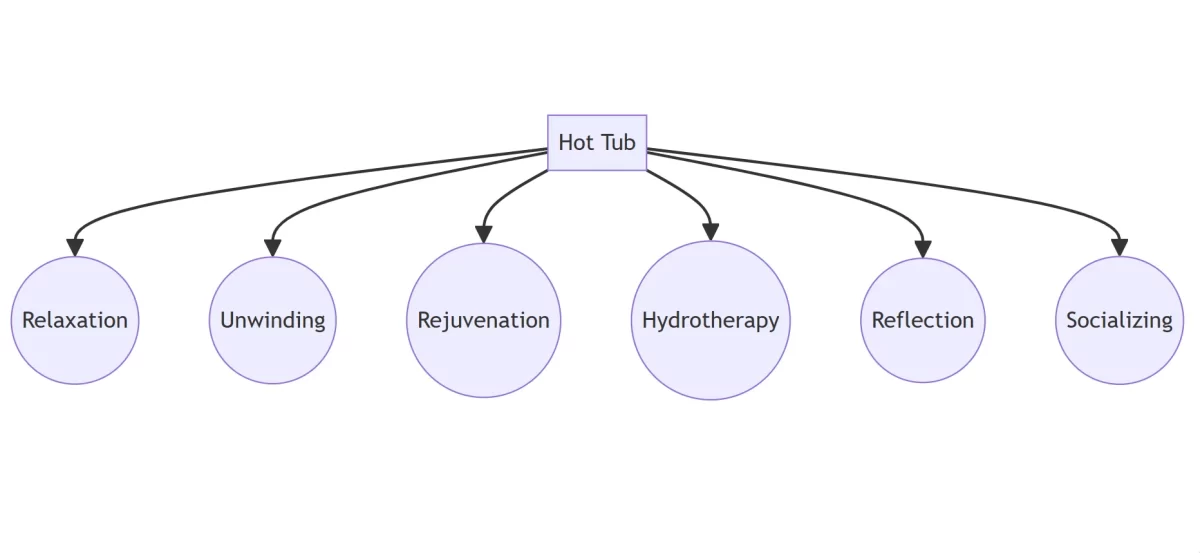
1. Meditate Under the Stars
Imagine this: You’re nestled in your hot tub, surrounded by soothing bubbles, with the night sky above you, lit up by a myriad of twinkling stars. It’s the perfect setting for meditation. Close your eyes, take deep breaths, and let go of all your worries. The warm water and the serene night ambiance can elevate the meditation experience to new heights.
2. Create a Spa-Like Experience
Transform the hot tub into a mini-spa by adding some Epsom salts, essential oils, and soft music. Epsom salts can help relax muscles, while essential oils like eucalyptus or lavender can provide aromatherapy benefits. Create a tranquil atmosphere by playing soothing tunes in the background, and you’ll feel like you’re at a high-end spa without ever leaving home.
3. Social Soaking
Hot tubs are not just for solitary relaxation. Invite friends or family over and create lasting memories. The warm water and the comfortable seating arrangement encourage conversation and laughter. Hot tub gatherings are excellent for bonding and making connections with loved ones.
4. Add Some Music
Music can have a powerful effect on your mood and emotions. It can help you calm down, cheer up, or get energized. Music can enhance your hot tub experience by creating a soothing or stimulating atmosphere.
You can choose a theme that matches your preference and mood, such as classical, jazz, rock, or pop. You can use a waterproof speaker or headphones to play your favorite tunes while you soak in the hot tub.
5. Use Aromatherapy
Aromatherapy uses natural plant scents like essential oils to improve your health and well-being. Aromatherapy can help you relax, reduce stress, improve mood, and boost your immune system.
You can enjoy the advantages of Aromatherapy in your hot tub by adding a few drops of essential oils to your spa water or using a diffuser to disperse them in the air. Some of the best essential oils for relaxation are lavender, chamomile, rose, and ylang-ylang.
6. Hydrotherapy for Pain Relief
Your hot tub can be your best ally if you suffer from muscle pain, joint discomfort, or chronic aches. The buoyancy of the water reduces the weight on your joints, while the hot water helps to raise blood flow and relieve muscle tension.
This hydrotherapy is especially effective for those with arthritis, fibromyalgia, or sore muscles. Bathing in a hot tub for 20-30 minutes can significantly improve pain levels.
7. Reflect and Journal
Sometimes, you only need a peaceful environment to gather your thoughts and reflect on your day. Your hot tub provides the perfect setting for journaling or simply thinking. The calm, serene atmosphere can help you tap into your creativity and bring about those ‘aha’ moments. Keep a waterproof journal nearby to jot down your thoughts and ideas.
Tips for relaxing in your hot tub:
- Create a spa-like atmosphere. Play some calming music, dim the lights, and light some candles. Add a few drops of essential oils to the water for a relaxing aromatherapy experience.
- Stretch and relax. Once you’re in the hot tub, take some time to stretch and relax your muscles. You can also try some gentle yoga poses.
- Meditate or practice deep breathing. Soaking in a hot tub is a great time to meditate or practice deep breathing exercises. These activities can help to calm your mind and reduce stress.
- Connect with loved ones. If you have a partner, family members, or friends to join you in the hot tub, take some time to connect and socialize. Talking and laughing with loved ones can assist in reducing stress and improving mood.
Relax and rejuvenate physically and mentally in a hot tub. Make the most of your desirable tub experience by following these tips.
How to Relax in Your Hot Tub Step by Step
You don’t need a long soak or fancy extras. A calm setup and a few intentional steps are enough to help your body and mind fully unwind.
Step 1: Prepare the hot tub environment
Lower the lights, reduce background noise, and set the water temperature between 100°F and 102°F. This range is warm enough to relax muscles without making you feel overheated.
Step 2: Enter the hot tub and settle in
Sit comfortably and give your body a few minutes to adjust to the warm water. Let your shoulders drop, unclench your jaw, and allow the tension to fade naturally.
Step 3: Focus on slow, steady breathing
Take slow breaths in through your nose and out through your mouth. This helps calm your nervous system and shifts your body out of stress mode.
Step 4: Use the jets to relax tight muscles
Adjust the jets toward areas that usually hold tension, like your lower back, shoulders, neck, or calves. Let the water pressure do the work instead of actively stretching.
Step 5: Stay hydrated and enjoy the moment
Keep water nearby and sip as needed. Stay in the hot tub for 15–30 minutes, listening to calming music or enjoying quiet time without distractions.
Step 6: Exit slowly and cool down
When you’re done, step out carefully and allow your body temperature to return to normal. This gentle cooldown helps you keep the relaxed feeling longer.
Simple Safety Tips for a Relaxing Soak
Relaxation works best when safety isn’t a concern.
- Keep water between 100°F and 104°F
- Limit soaking to 15–30 minutes
- Take breaks if you feel overheated
- Supervise children and pets
For a deeper look at best practices, this overview on hot tub safety is a helpful reference.
For additional information, visit Hot Tub Patio, or if you’re interested in more reading, see our Guides.
Final Thoughts:
A hot tub is more than just a luxury item. It can also be a source of relaxation, rejuvenation, and wellness. Adding music, Aromatherapy, hydrotherapy, meditation, and nature to your spa routine can enhance your hot tub experience and enjoy its many benefits.
Whether you want to relax in your hot tub to unwind and rejuvenate, soothe your muscles and joints, boost your immune system, improve your skin, or have fun, a hot tub can help you achieve your goals. So what are you waiting for? Grab a towel and hop into the hot tub today!
For more about hot tub accessories.
Common Questions:
How does a hot tub help you relax?
Warm water relaxes muscles, jets improve circulation, and buoyancy reduces joint pressure, which together calm both body and mind.
What’s the best temperature for relaxation?
Most people find 100–102°F ideal for longer, calming soaks without overheating.
Is a hot tub good for stress relief?
Yes. Regular soaking helps lower stress levels, quiet the mind, and improve sleep quality.
How long should you stay in a hot tub?
About 15–30 minutes is enough for relaxation without stressing your body.
Can hot tubs help with muscle pain?
Yes. Hydrotherapy is widely used for muscle soreness, joint stiffness, and chronic tension relief.






2 Comments