Muriatic Acid to Clean a Hot Tub: Is It Safe?

Muriatic acid is hydrochloric acid, and it is not a routine hot tub shell cleaner. Some spa manufacturers allow carefully measured acid for specific water-chemistry adjustments, while others recommend a spa pH decreaser such as sodium bisulfate instead. For cleaning acrylic or other spa surfaces, follow the cleaner list in your own owner’s manual rather than using a generic acid recipe.
That distinction matters because the old advice to dilute muriatic acid at one universal ratio and spray it onto a hot tub can damage surfaces, seals, or nearby components. It can also expose you to corrosive liquid and irritating fumes. The safer approach is to identify the job first: lowering pH, removing scale, or cleaning the shell all call for different products.
Can You Use Muriatic Acid to Clean a Hot Tub?
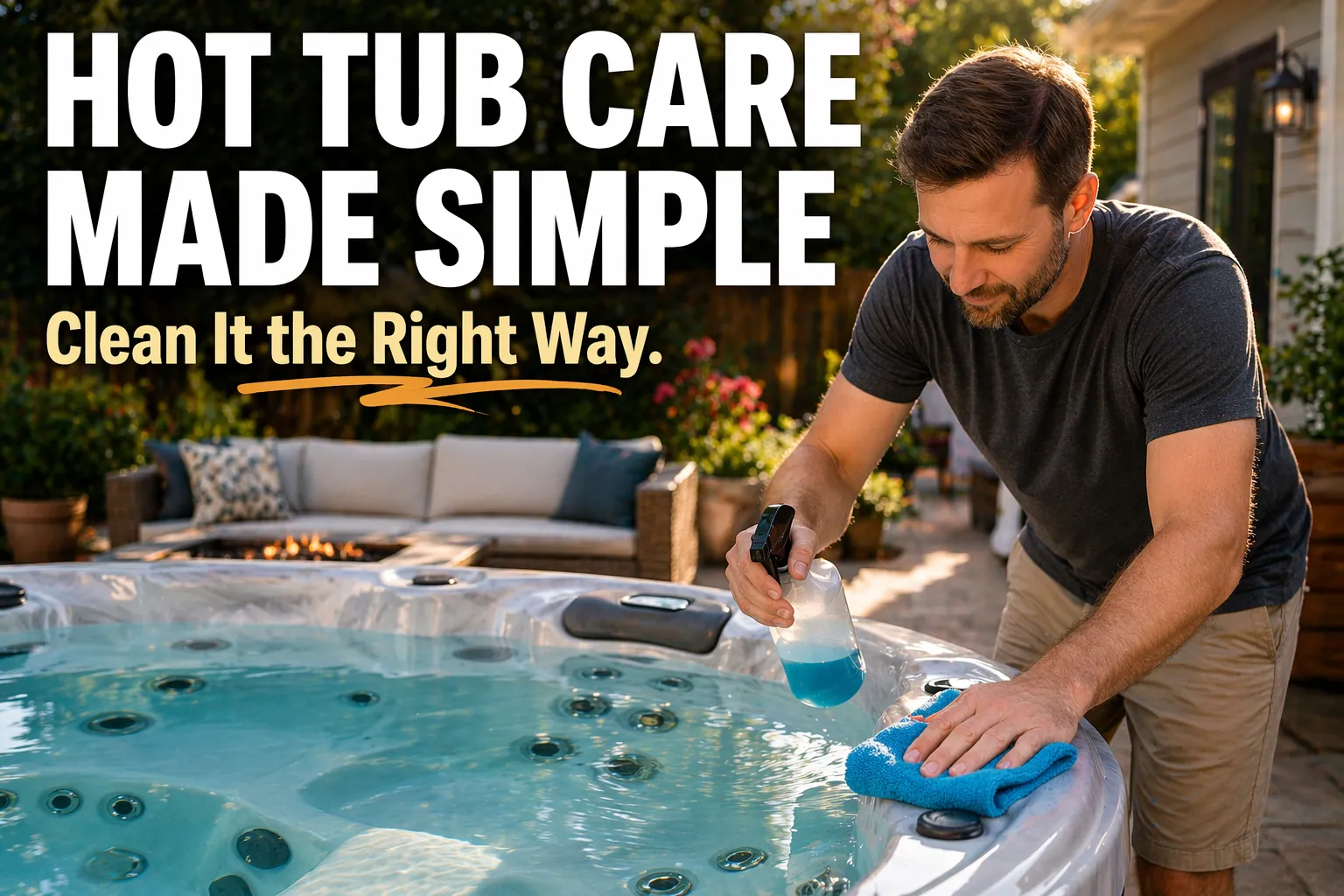
For routine shell cleaning, usually no. Hot Spring’s current maintenance guidance recommends a mild, non-abrasive, non-sudsing cleaner and a soft rag or nylon scrubber, with baking soda suggested only for minor surface cleaning. Its current owner documentation also warns against harsh chemicals on the spa shell.
Muriatic acid can appear in water-care instructions for certain spas, but that is a different use from wiping or spraying it onto the shell. Manufacturer guidance is not universal. For example, Jacuzzi’s Canadian guidance recommends sodium bisulfate as the safer and more predictable way to lower alkalinity and advises against muriatic acid for hot tubs, while Jacuzzi’s U.S. alkalinity guidance notes that muriatic acid may be used to lower high alkalinity. That difference is exactly why the instructions for your model and your chemical label should control the decision.
For routine cleaning methods that are designed around spa surfaces, see our hot tub cleaner guide.
Why Muriatic Acid Requires Extra Caution
Muriatic acid is an aqueous form of hydrochloric acid. NIOSH describes hydrochloric acid as corrosive and lists inhalation, skin contact, and eye contact as exposure routes. Reported effects include irritation of the nose and throat, coughing or choking, and burns to the eyes and skin.
- Surface compatibility: a cleaner that is acceptable for concrete or masonry is not automatically appropriate for acrylic, synthetic cabinet material, seals, metal trim, or spa plumbing.
- Fumes: concentrated hydrochloric acid can release irritating vapors, especially in poorly ventilated spaces.
- Concentration varies: retail muriatic-acid products are not all the same strength, so a universal cup, ounce, or dilution instruction is unreliable.
- Water chemistry varies: the amount of acid needed to change pH or total alkalinity depends on spa volume, current test results, total alkalinity, product concentration, and the manufacturer’s procedure.
That is why this page does not provide a one-size-fits-all muriatic-acid dose.
Never Mix Muriatic Acid With Chlorine or Bleach
Never mix concentrated muriatic acid or hydrochloric acid with chlorine bleach, sodium hypochlorite, or other chlorinating products. OSHA has documented incidents in which hydrochloric acid and sodium hypochlorite were accidentally combined and released chlorine gas, sending workers to hospitals with eye and respiratory symptoms.
Keep chemical containers separate, read every label before use, and never combine products in a bucket, measuring cup, feeder, or storage container unless the manufacturer explicitly instructs that exact procedure. If an accidental mixture produces a strong gas or causes coughing, burning eyes, breathing difficulty, or throat irritation, leave the area and contact emergency services or a poison center rather than trying to correct the mixture yourself.
Muriatic Acid vs. Spa pH Down
| Question | Muriatic acid | Spa pH decreaser |
|---|---|---|
| Typical form | Liquid hydrochloric acid | Often sodium bisulfate granules |
| Main spa use | Water-chemistry adjustment only when the spa/manual allows it | Lowering pH and/or alkalinity according to the product label |
| Routine shell cleaner? | No, not as a default | No; it is a water-balancing chemical |
| Handling | Corrosive liquid with irritating fumes | Still requires label precautions, but commonly formulated for spa water care |
| Best homeowner default | Check the exact spa manual before considering it | Use the labeled spa product specified by your manufacturer |
What to Use to Lower Hot Tub pH Instead
If your goal is to lower pH or total alkalinity, start with a water test and your spa owner’s manual. Many hot tub care systems use a labeled pH decreaser based on sodium bisulfate. Do not substitute a household or pool chemical solely because it is also acidic.
The dose should come from the product label or manufacturer instructions for your water volume and current test reading. If you use our hot tub pH Down calculator, enter the product information requested by the calculator and still treat the chemical label as the final authority.
If pH keeps rebounding, look at total alkalinity instead of repeatedly adding acid. Our hot tub water chemistry guide explains how pH and alkalinity influence each other.
What to Use for Scale or Mineral Deposits
If you were considering muriatic acid because of a white, rough deposit, first confirm that the problem is actually mineral scale. Light scale may respond to a spa-safe cleaner or scale-removal product that your manufacturer approves. Heavy deposits may require draining the spa and cleaning the affected surfaces with a product intended for that shell material.
Avoid improvising with strong acid on jets, heater parts, metal trim, grout, seals, or acrylic. The appropriate cleaner depends on the material and where the scale is located. Use our hot tub scale buildup guide to identify the deposit and choose a material-appropriate next step.
Quick Decision Guide
| Your goal | Better first choice | Why |
|---|---|---|
| Lower high pH | Manufacturer-approved spa pH decreaser | Label dosing is designed for water chemistry, not surface cleaning |
| Lower high total alkalinity | Follow the spa/manual procedure | Different manufacturers allow different products |
| Clean an acrylic shell | Mild, non-abrasive cleaner approved by the spa maker | Reduces the risk of etching, discoloration, or surface damage |
| Remove calcium scale | Spa-safe scale remover compatible with the affected material | Targets mineral buildup without assuming strong acid is safe |
| Sanitize the water | Approved chlorine, bromine, or other sanitizer system | Muriatic acid is not a substitute for a sanitizer |
If You Already Added Muriatic Acid
If muriatic acid was added according to a manufacturer-approved water-care procedure, follow that procedure for circulation, testing, and re-entry. If you are unsure how much was added, used a different concentration than the instructions specify, or poured it directly onto a surface, stop adding chemicals and check the spa and chemical manufacturer’s instructions before making another adjustment.
- Keep bathers out until the water has been tested and returned to the range specified for your spa.
- Do not add chlorine, bleach, or another chemical in an attempt to neutralize a concentrated acid spill or accidental mixture.
- Ventilate the area and avoid breathing fumes.
- If acid contacted skin or eyes, follow the product Safety Data Sheet and seek medical or poison-center advice as appropriate.
- If you suspect chlorine gas was released, leave the area and seek emergency help.
For water that has become difficult to correct after a chemical mistake, use our hot tub water care troubleshooting guide rather than adding several products at once.
Muriatic Acid Hot Tub FAQs
Is muriatic acid safe for a hot tub?
It depends on the intended use and the specific spa. Some manufacturers allow muriatic acid for certain water-chemistry adjustments, while others recommend against it and specify sodium bisulfate instead. It should not be treated as a universal hot tub shell cleaner.
Can muriatic acid lower hot tub pH?
Yes, hydrochloric acid lowers pH, but that does not mean it is approved for every spa. Use it only when your spa manufacturer and the acid product label support that use. Otherwise, use the spa pH decreaser specified by your water-care system.
Can muriatic acid damage an acrylic hot tub?
Strong acids can damage materials and nearby components when the concentration, exposure time, or application method is wrong. Follow your shell manufacturer’s approved-cleaner list instead of assuming a pool or masonry acid is safe on acrylic.
Can you mix muriatic acid with chlorine?
No. Concentrated hydrochloric acid and sodium hypochlorite can react and release toxic chlorine gas. Keep the products separate and follow their labels and your spa manufacturer’s chemical-addition procedure.
What should I use instead of muriatic acid to clean scale?
Use a scale remover or cleaner that is specifically approved for your spa’s shell and the affected component. For light surface cleaning, many manufacturers recommend a mild, non-abrasive cleaner rather than strong acid.
Bottom Line
Muriatic acid has legitimate chemical uses, but “acid cleans scale” is not enough reason to spray it on a hot tub. Treat shell cleaning and water chemistry as separate jobs. Use your spa manual to decide what is approved, use labeled spa products when possible, and never invent a dose from a generic online ratio.
For general shell, cover, filter, and plumbing-cleaning options, start with products and methods designed for hot tubs rather than adapting a strong pool or masonry acid to the job.





5 Comments
Comments are closed.