

How to Lift a Hot Tub for Repair Safely

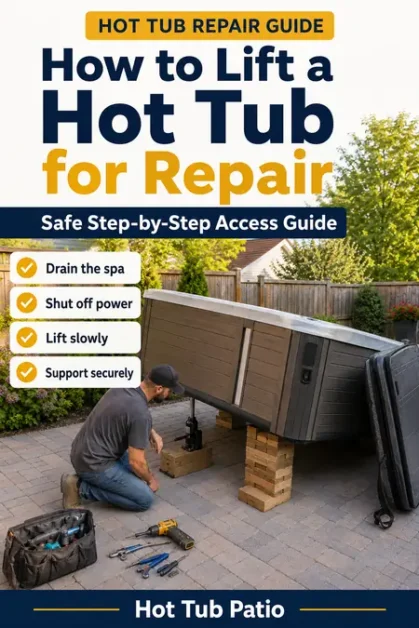
Lifting a hot tub for repair usually means raising one side or corner just enough to reach plumbing, inspect the base, find a leak, or repair something underneath. You normally do not need to move the entire spa.
The safest approach is to drain the hot tub, shut off its power, identify a strong lifting point, raise it gradually, and support the raised section with solid structural cribbing before starting repairs. Never depend on a jack alone to hold the hot tub while you work.
A little preparation makes a big difference here. Hot tubs are heavy even when empty, and their cabinets and shells are not designed to take concentrated lifting pressure in random spots.
Quick Answer: How Do You Lift a Hot Tub for Repair?
To lift a hot tub for repair:
- Turn off power to the hot tub.
- Drain all water from the spa.
- Remove the cover and loose accessories.
- Identify the area that needs repair.
- Find a strong part of the spa’s base or structural frame.
- Create enough clearance to position suitable lifting equipment.
- Raise the tub only a small amount at a time.
- Place solid structural cribbing beneath the supported portion.
- Check that the tub is stable before beginning the repair.
- Lower it gradually after the work is complete.
For many repairs, lifting the tub a few inches is enough. Raising it higher than necessary adds difficulty without giving you much extra benefit.
Do You Actually Need to Lift the Hot Tub?
Before bringing out a jack or pry bar, find out exactly where the problem is.
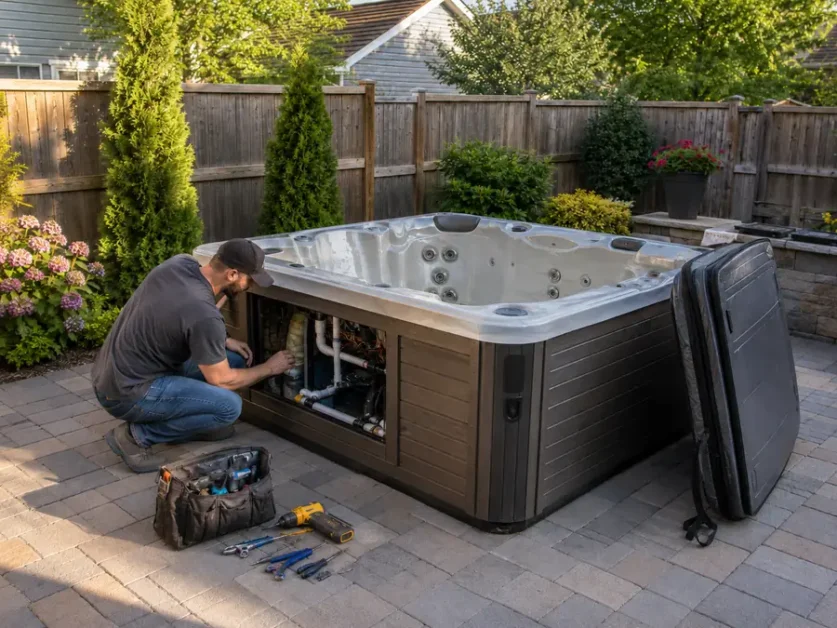
A common mistake is lifting the entire spa when the repair can be completed through a cabinet access panel.
Repairs That Usually Do Not Require Lifting
You can often reach these components from the side of the spa:
- circulation pump
- main jet pump
- heater assembly
- control pack
- plumbing unions
- valves
- some hose connections
- many equipment-bay leaks
Remove the appropriate cabinet panel and inspect the area first.
If water is appearing beneath the tub but you have not located the source yet, work through the hot tub leak troubleshooting process before raising the spa. Water can travel along plumbing or the base, so the wet spot on the ground is not always directly below the leak.
Repairs That May Require Lifting
Lifting becomes more useful when you need access to:
- plumbing beneath the spa
- the bottom of the shell
- a damaged or rotted base
- inaccessible underside fittings
- structural supports
- insulation hiding a bottom-side leak
- an uneven or damaged foundation
You may only need to raise one side rather than the whole hot tub.
Hot Tubs Recessed Into a Deck
Deck installations can make repairs harder when there is little room around the cabinet.
Sometimes the better solution is removing a deck access panel rather than lifting the spa. Good hot tub installations should leave enough service access around critical equipment.
If your spa is surrounded by decking, the hot tub deck planning guide can help you understand how access, support, and deck layout work together.
What Can You Use to Lift a Hot Tub?
The right equipment depends on the spa’s empty weight, construction, foundation, and how much clearance you need.
| Tool or Material | Purpose |
|---|---|
| Suitable hydraulic jack | Raises a section of the hot tub gradually |
| 4×4 lumber | Helps distribute loads and create working clearance |
| Structural wood cribbing | Supports the tub after it has been raised |
| Heavy pry bar | Helps create the first small lifting gap |
| Thick plywood or wood pad | Spreads lifting force over a larger area |
| Work gloves | Protects hands and improves grip |
| Flashlight or work light | Makes underside inspection easier |
| Helpers | Watch for movement and help stabilize the work area |
Use Structural Support, Not Improvised Blocks
The material supporting the raised hot tub needs to be solid, stable, and capable of handling the load.
Avoid relying on loose bricks, damaged lumber, stacked scrap material, or other makeshift supports that could shift or crumble.
The lifting equipment has one job:
Raise the hot tub.
The cribbing has another:
Securely support the raised hot tub.
Do not treat the jack itself as the permanent support while you perform the repair.
How Much Does an Empty Hot Tub Weigh?
An empty hot tub can still weigh several hundred pounds, and larger acrylic spas may weigh considerably more.
Actual weight depends on:
- hot tub size
- shell construction
- cabinet materials
- insulation
- pumps and equipment
- number of seats
- frame design
Check the manufacturer’s specifications for your specific model whenever possible. check hot tub weight calculator.
Never Try to Lift a Filled Hot Tub
Water adds enormous weight.
One U.S. gallon of water weighs about 8.34 pounds. A 400-gallon spa contains roughly 3,336 pounds of water before you even count the tub, equipment, cover, or people.
Drain the spa before lifting it.
For faster emptying, follow the step-by-step method for draining a hot tub quickly.
How to Prepare a Hot Tub Before Lifting It
Good preparation reduces the chance of damaging the cabinet, plumbing, electrical components, or foundation.
1. Shut Off the Power
Turn off the hot tub at its breaker before draining, opening equipment areas, or attempting to lift it.
Do not work around energized spa equipment.
Some repair situations may require more than simply switching off a breaker. If wiring, conduit, bonding, or the electrical supply must be disconnected, use a qualified professional. Our guide to hiring a professional hot tub electrician explains when electrical work should be left to someone trained for the job.
2. Drain the Hot Tub Completely
Remove all water before lifting.
This:
- dramatically reduces the weight
- reduces strain on the frame
- makes movement easier to control
- prevents water from shifting while the spa is tilted
- gives you better access to repair areas
Allow remaining water in seats and footwells to drain as well.
3. Remove the Cover and Accessories
Take off anything that adds unnecessary weight or could fall during lifting.
Remove:
- spa cover
- cover lifter components if necessary
- steps
- drink trays
- removable handrails
- exterior accessories
- items stored against the cabinet
Clear enough space around the hot tub for helpers to move safely.
4. Open the Repair Area Before Lifting
Remove the cabinet panel closest to the suspected problem whenever possible.
This saves a surprisingly common headache: getting the spa raised and supported, then discovering that a screw, trim piece, or panel cannot be removed because the support is blocking it.
Inspect first. Lift second.
5. Check the Ground and Hot Tub Base
Look closely at the area where the lifting equipment and supports will sit.
Check for:
- cracked concrete
- loose pavers
- soft soil
- rotten decking
- damaged spa framing
- deteriorated base panels
- slopes
- standing water
A jack sitting on unstable ground can shift as the load changes.
Use a solid, level surface capable of handling the weight.
How to Lift a Hot Tub for Repair Step by Step
The goal is controlled movement. Small lifts give you time to spot problems before they become serious.
Step 1: Decide How Much Clearance You Need
Start by determining what you actually need to reach.
You may need only:
- 2 to 4 inches for inspection
- several inches for plumbing access
- enough space to repair or replace base material
Avoid raising the hot tub higher just because you can.
Less height generally means less movement, less tilting, and easier support.
Step 2: Identify a Strong Lifting Area
Do not place concentrated lifting pressure directly against the acrylic shell, thin cabinet panels, siding, or decorative trim.
Look for a structural portion of the spa base or frame that can distribute the load.
Construction differs between manufacturers, so check the owner’s manual or manufacturer guidance when the safe lifting points are not obvious.
A thick wood pad or suitable board may help distribute pressure across a wider structural area rather than concentrating it at one small point.
Step 3: Create the Initial Gap
Getting the first inch of clearance is often the awkward part.
For some tubs, several capable helpers can carefully raise one edge slightly while another person slides a strong board beneath the structural base.
Another method is controlled leverage with a heavy pry bar against an appropriate structural point.
Do not pry against:
- acrylic shell edges
- plumbing lines
- cabinet siding
- unsupported trim
Once you have enough clearance, position your lifting equipment properly.
Step 4: Position the Jack
Place the jack on a firm, level surface.
Its lifting point should transfer pressure to a strong portion of the hot tub’s base or frame.
Before applying much load, check:
- the jack is vertical and stable
- its base cannot slide
- the contact point cannot slip
- the spa structure is not flexing
- no plumbing line is trapped between the jack and frame
Raise only enough to confirm everything is positioned correctly.
Step 5: Raise the Hot Tub Slowly
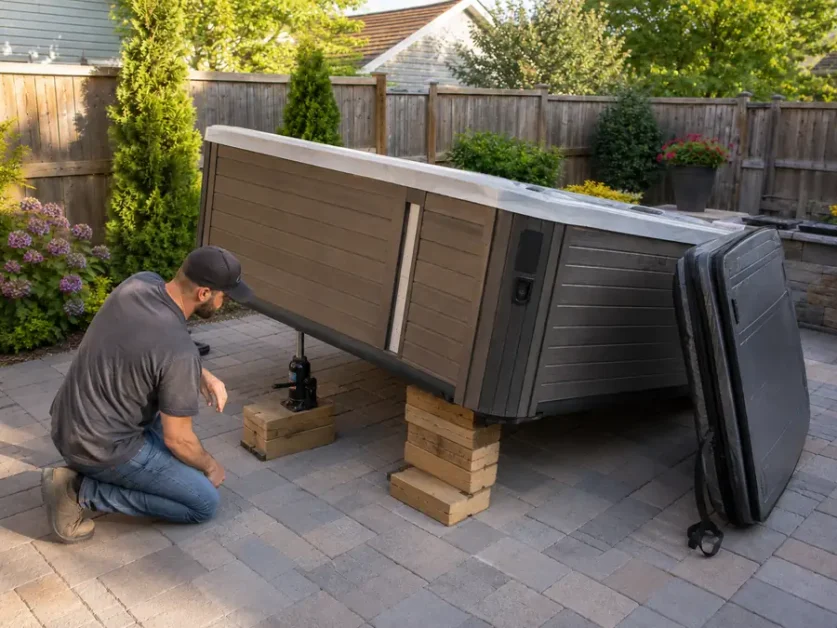
Lift a small amount at a time.
Someone should watch the opposite side and other corners while the jack is being operated.
Stop if you notice:
- cracking or popping
- severe cabinet distortion
- sudden movement
- plumbing being stretched
- the jack leaning
- supports shifting
- the hot tub twisting
Small adjustments are much easier to control than one large lift.
Step 6: Add Structural Cribbing
Once you have enough clearance, place solid cribbing beneath an appropriate structural area of the spa.
Lower the tub carefully onto the support.
The spa should sit firmly without rocking.
For additional height, use a properly built cribbing arrangement designed to remain stable under load. Avoid creating a tall, narrow stack.
Never crawl underneath a raised hot tub that is being held only by a hydraulic jack.
Step 7: Check Stability Before Repairing Anything
Before touching the plumbing or underside, check the entire setup.
The hot tub should:
- sit firmly on its supports
- not rock when lightly checked from the side
- have no visibly shifting cribbing
- have no stretched plumbing
- have no unstable jack or support points
- remain clear of people who are not helping
If anything looks questionable, lower the spa and correct the setup before continuing.
Step 8: Make the Repair
Once the spa is securely supported, complete the necessary work.
Common reasons for lifting include:
- locating a hidden leak
- replacing underside plumbing
- repairing damaged fittings
- removing wet insulation
- inspecting a damaged base
- repairing structural material
Avoid removing structural parts while they are carrying the raised load.
If the damage affects the actual frame or support structure of the spa, professional repair may be the safer choice.
How to Jack Up a Hot Tub
To jack up a hot tub, drain it completely, shut off power, position the jack beneath a strong structural section of the base, raise the spa gradually, and transfer the load onto stable structural cribbing before doing repair work.
The biggest mistake is thinking the jack should hold the spa for the entire repair.
It should not.
Think of the process as:
Lift → support → inspect → repair → lift slightly → remove support → lower.
That workflow keeps the lifting operation controlled and easier to reverse.
Can You Lift Just One Side of a Hot Tub?
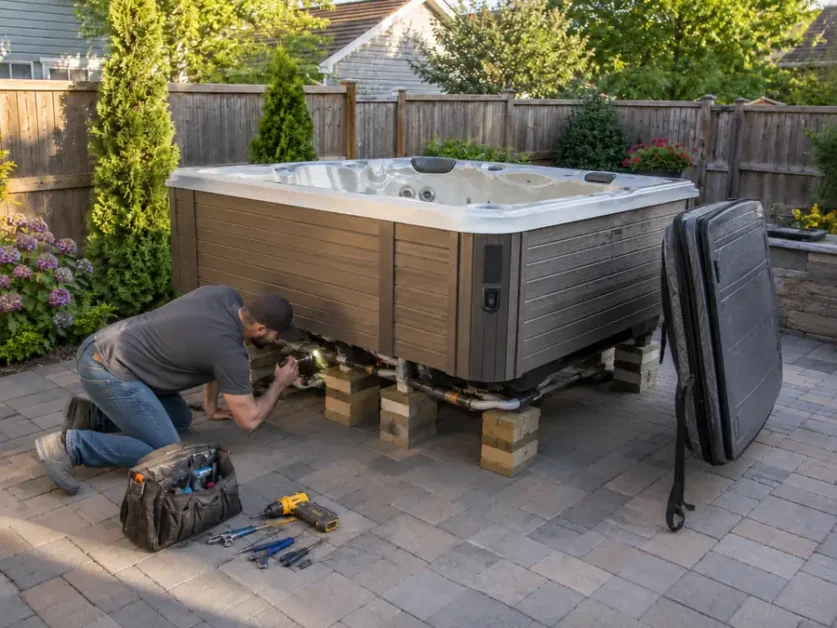
Yes. Many repairs only require raising one side of the hot tub.
Partial lifting can work well for:
- inspecting underside plumbing
- repairing a leak near one edge
- checking the base
- gaining access beneath a cabinet wall
- making a minor foundation correction
Raise the side gradually and watch the opposite side carefully.
Tilting the spa too far can put extra stress on:
- the frame
- shell
- plumbing
- cabinet
- remaining contact points
Only create the clearance required for the job.
Sundance Spas also recommends raising one side gradually and using a 4×4 to create safe clearance for lifting equipment. See their step-by-step hot tub lifting and moving guidance for additional manufacturer guidance.
How to Lift a Hot Tub Without a Jack
Some smaller or lighter empty hot tubs can be raised slightly using coordinated manual lifting and strong boards.
A basic approach is:
- Drain and disconnect the spa.
- Gather enough capable helpers.
- Agree on the lifting movement before starting.
- Raise one side only a small amount.
- Slide a suitable structural board beneath the base.
- Add stable support before anyone releases control.
Manual lifting becomes much less practical with large or heavy spas.
If your real goal is to relocate the tub instead of temporarily raising it for repair, use the separate guide to moving a hot tub safely and efficiently. Moving involves different equipment, weight distribution, paths, dollies, trailers, and handling techniques than a simple repair lift.