Hot Tub Leaking: How to Find and Fix the Problem

A hot tub leaking does not automatically mean a costly repair is coming. Most leaks originate from pumps, plumbing fittings, heaters, or gaskets, and many can be repaired once the source is identified.
Start with a careful inspection, follow moisture trails, and confirm the leak location before replacing parts. Catching a leak early is usually the best way to avoid larger repairs and get back to enjoying your next soak.
How Do You Know Your Hot Tub Is Actually Leaking?
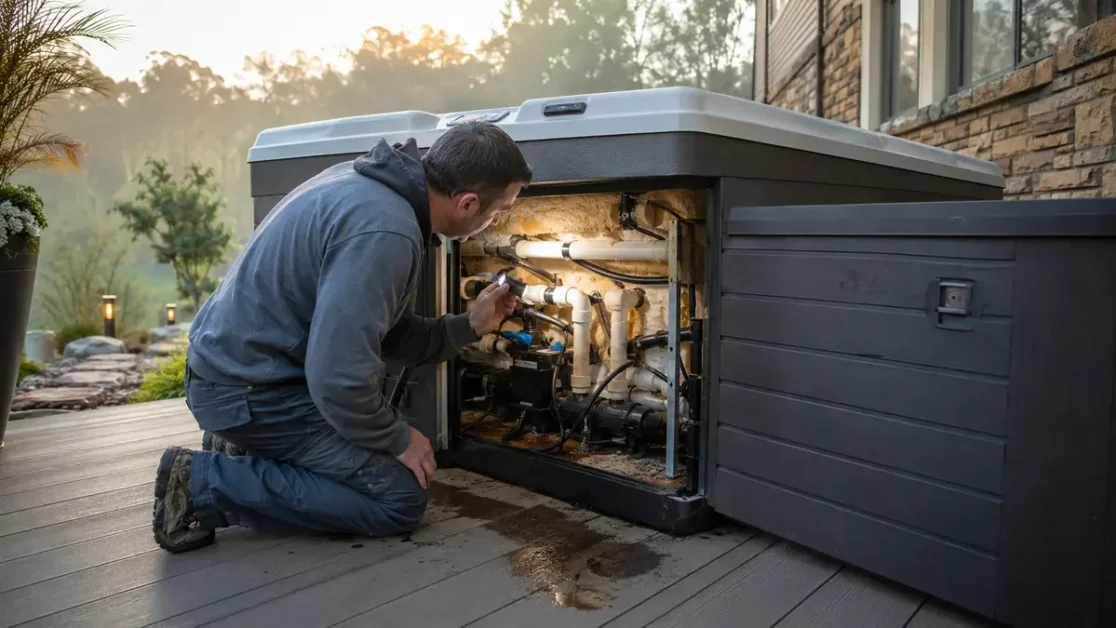
A hot tub is likely leaking if the water level drops consistently, wet spots appear around the spa, or you find water inside the cabinet that cannot be explained by splashing or rain.
Many owners mistake normal evaporation for a leak. Hot tubs naturally lose some water, especially during hot weather, windy conditions, or when the cover is left off.
Common Signs of a Leak
- Water level drops more than expected
- You need to refill the tub frequently
- Water appears under the spa
- Cabinet insulation feels wet
- Damp spots develop on nearby concrete or decking
- Equipment compartment contains standing water
Evaporation vs. Leak
| Normal Evaporation | Hot Tub Leak |
|---|---|
| Slow water loss | Noticeable daily water loss |
| No puddles nearby | Wet spots or puddles appear |
| More common in summer | Happens year round |
| No cabinet moisture | Moisture inside cabinet |
If you are unsure, our water care troubleshooting guide can help identify other common water-related issues.
What Causes a Hot Tub Leak?
Most hot tub leaks come from plumbing components, pumps, heaters, jets, or aging seals rather than the shell itself.
Over time, vibration, temperature changes, and normal wear can loosen fittings and damage gaskets.
Common Leak Causes
- Loose plumbing connections
- Failed pump seals
- Cracked jet bodies
- Worn gaskets
- Leaking heater unions
- Damaged drain valves
- Cracked plumbing lines
- Shell cracks
A common mistake hot tub owners make is assuming the shell is damaged first. In reality, shell leaks are less common than equipment or plumbing leaks.
Most Common Places a Hot Tub Leaks
Finding the exact location is the most important step before replacing any parts.
Pump Leaks
The pump is one of the most common leak locations.
Look for:
- Water dripping from the pump shaft
- Moisture around union fittings
- Cracks in the pump housing
If the pump is also acting up, these tips on how to reset your spa pump may help with diagnosis.
Heater Leaks
Heater assemblies often develop leaks around union fittings and seals.
Check for:
- Water around heater connections
- Corrosion
- Dripping beneath the heater tube
You can learn more about common heater problems in this guide to hot tub heaters.
Jet Leaks
Jets contain multiple seals and fittings that can deteriorate over time.
Signs include:
- Water around jet bodies
- Wet insulation behind the shell
- Leaks that stop when the water level falls below certain jets
Drain Valve Leaks
Drain valves are exposed to weather and repeated use.
Inspect for:
- Slow dripping
- Cracked valve bodies
- Damaged seals
Light Housing Leaks
Many owners overlook the underwater light assembly.
Check for:
- Moisture around the light fitting
- Damaged gaskets
- Cracked lens housing
Shell Cracks
Shell cracks are less common but can happen.
Look for:
- Visible cracks
- Water seeping through damaged areas
- Water level stopping at a specific point
Why Is My Hot Tub Leaking From the Bottom?
A hot tub leaking from the bottom often has a leak somewhere higher up in the plumbing system.
Water naturally follows gravity. A small leak near the pump, heater, or jets may travel through insulation before collecting underneath the spa.
This is why the actual leak location is often several feet away from where the water appears.
Common causes include:
- Pump leaks
- Heater leaks
- Plumbing line damage
- Jet body failures
- Loose fittings
Do not assume the lowest point is where the problem started.
How to Find a Hot Tub Leak Step by Step
Follow this process before purchasing repair parts.
Step 1: Turn Off Power
Always shut off power at the breaker before opening the cabinet.
Safety comes first whenever water and electrical components are involved.
Step 2: Remove Cabinet Panels
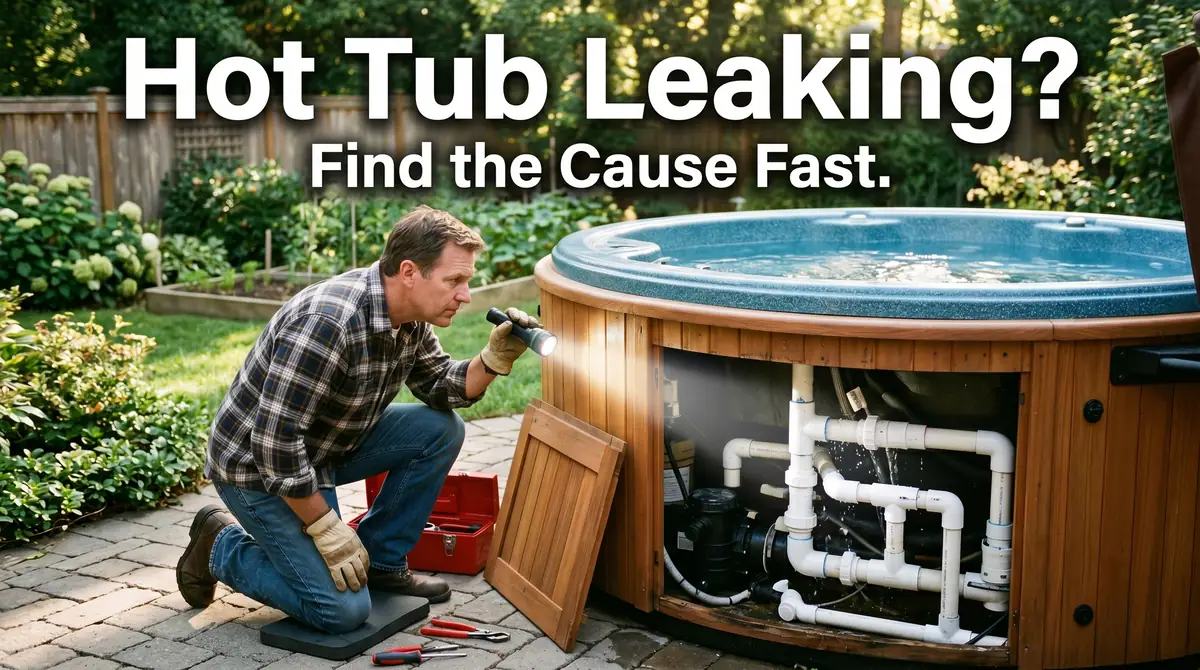
Open the side panels to access pumps, plumbing, and equipment.
Use a flashlight for better visibility.
Step 3: Inspect the Equipment Area
Start with:
- Pump
- Heater
- Plumbing unions
- Valves
Many leaks are visible immediately.
Step 4: Follow Moisture Trails
Water usually leaves clues.
Look for:
- Wet insulation
- Water stains
- Mineral buildup
- Damp plumbing lines
Step 5: Monitor Water Level
Allow the tub to sit unused for a day or two.
The level where the water stops dropping often helps identify the leaking component.
Step 6: Inspect Jets and Fittings
Check all visible jets, fittings, and seals.
Pay close attention to areas near the water line.
Step 7: Confirm the Leak Source
Before ordering replacement parts, verify the exact source.
Many owners replace components unnecessarily because they mistake where the water is coming from.
If access is difficult, this guide on how to lift a hot tub for repair may help.
Can You Fix a Hot Tub Leak Yourself?
Many leaks can be repaired without professional help.
DIY-Friendly Repairs
- Tightening loose unions
- Replacing drain valves
- Installing new gaskets
- Replacing accessible fittings
Repairs Best Left to Professionals
- Major shell cracks
- Plumbing buried in foam
- Electrical component leaks
- Structural damage
If the leak is difficult to locate, a professional may save time and money.
Hot Tub Leak Repair Cost
Repair costs vary depending on the source of the leak.
| Repair Type | Typical Cost |
| Tighten fitting | $0 to $50 |
| Replace gasket | $20 to $100 |
| Drain valve repair | $25 to $150 |
| Pump seal replacement | $100 to $300 |
| Jet repair | $100 to $400 |
| Plumbing repair | $200 to $800 |
| Shell repair | $300 to $1,500+ |
For a more detailed breakdown, see our guide to hot tub leak repair costs.
Common Mistakes Hot Tub Owners Make
Avoid these common errors:
- Assuming every water loss is a leak
- Replacing parts before diagnosing the source
- Ignoring small drips
- Using leak sealers as a permanent solution
- Running the spa while major leaks continue
Small leaks often become expensive repairs if left untreated.
When Should You Call a Professional?
Call a professional if:
- You cannot locate the leak
- Water reaches electrical equipment
- The plumbing is buried in foam
- Large shell cracks are present
- Repairs exceed your comfort level
If you need expert help, a reputable hot tub repair company can diagnose hidden leaks more quickly.
How to Prevent Future Hot Tub Leaks
Regular inspections can catch small problems before they become major repairs.
Monthly Inspection Checklist
- Check water level
- Inspect pump area
- Examine heater fittings
- Look for cabinet moisture
- Inspect drain valve
Annual Maintenance Tasks
- Replace worn gaskets
- Tighten accessible fittings
- Inspect plumbing connections
- Service pumps if needed
Following a regular hot tub maintenance routine can help extend the life of your equipment and reduce the risk of leaks.
Tailored Action Plan
If you suspect a leak, use this simple decision framework:
Water Loss Less Than 1 Inch Per Week
- Monitor for another week
- Compare against normal evaporation
- Check cover condition
Water Loss Every Day
- Turn off power
- Open cabinet
- Inspect equipment compartment
Water Under the Spa
- Follow moisture trails
- Check pumps and heaters first
- Look for wet insulation
Leak Hidden in Foam
- Document water loss
- Take photos
- Schedule professional diagnosis
DIY or Professional?
DIY may be appropriate when:
- Leak source is visible
- Parts are accessible
- Repair involves simple fittings
Professional help is recommended when:
- Plumbing is hidden
- Structural repairs are needed
- Electrical safety is a concern
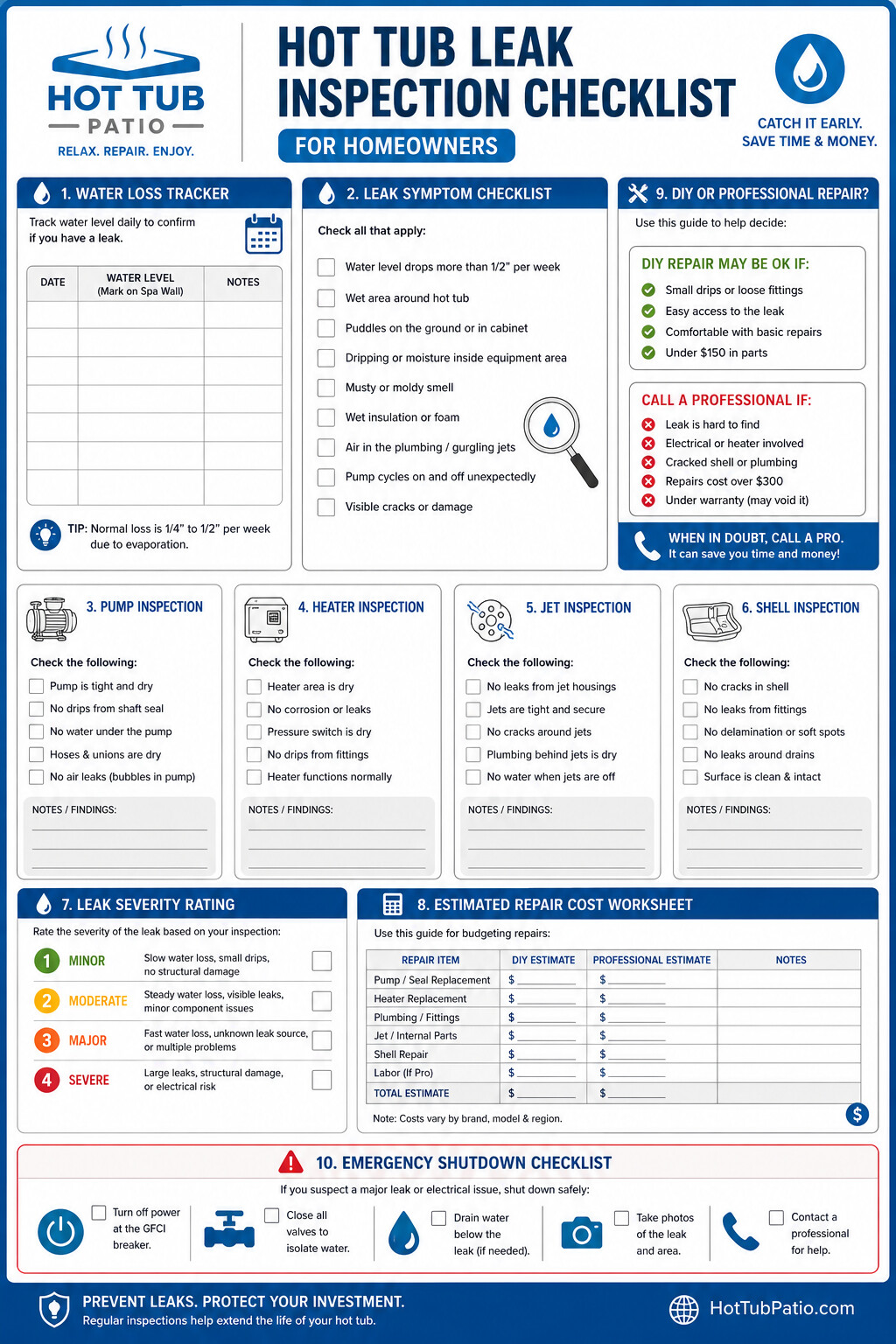
Downloadable Resource
Frequently Asked Questions
What is the most common leak in a hot tub?
Pump seals, union fittings, and plumbing connections are among the most common leak sources in hot tubs.
Why is my hot tub leaking from the bottom?
Water often travels downward from a leak higher in the plumbing system and collects underneath the spa.
Can a hot tub leak be repaired?
Yes. Most leaks can be repaired once the source is identified. Common repairs include replacing seals, fittings, valves, and plumbing components.
How much does hot tub leak repair cost?
Minor repairs may cost less than $100, while major plumbing or shell repairs can exceed $1,000.
Should I turn my hot tub off if it is leaking?
Yes. If the leak is significant or water is reaching electrical equipment, shut off power immediately until the issue is diagnosed.
Can evaporation look like a leak?
Yes. Hot tubs naturally lose water through evaporation, especially in warm or windy conditions. Monitoring water loss can help determine the difference.