Eco-Friendly Hot Tub: Solar, Ionizers & Thermal Covers

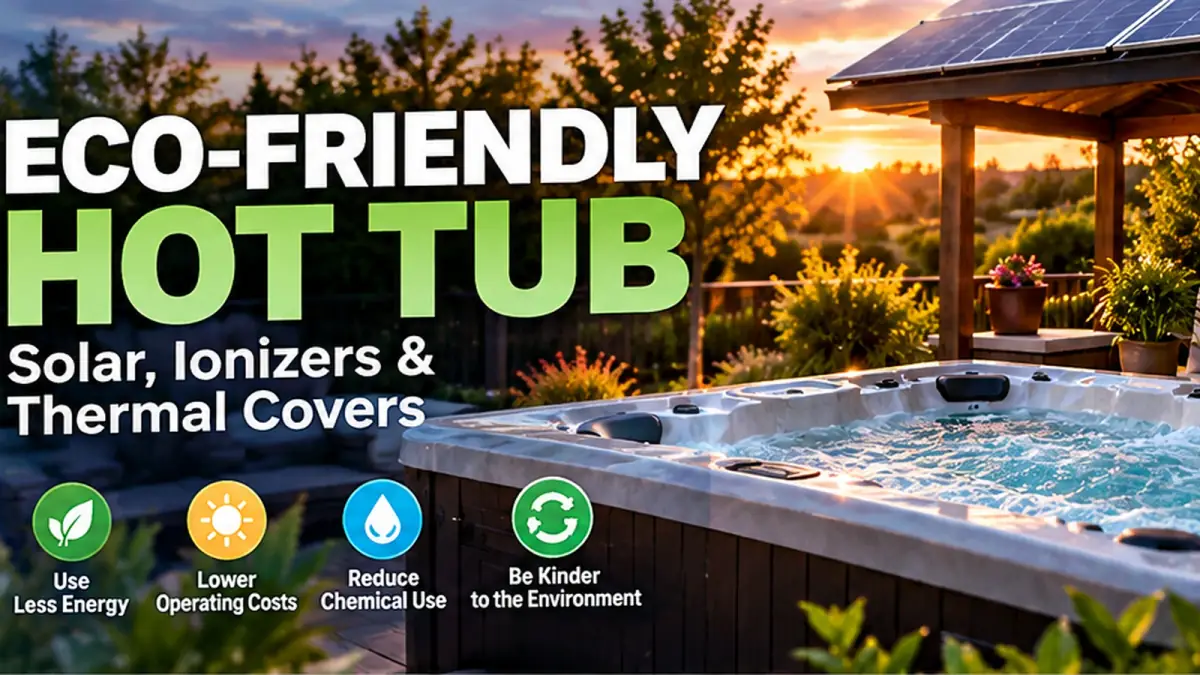
An eco-friendly hot tub is not the same thing as a sanitizer-free hot tub. The safest way to reduce your environmental impact is to cut wasted heat, use water longer when it remains manageable, reduce unnecessary chemical demand, and use supplemental systems such as minerals, ozone, UV, or salt only as directed.
Quick answer: start with the cover and insulation, then improve filtration and water-care efficiency, and only after that look at solar power or supplemental treatment systems. A solar ionizer can help reduce sanitizer demand in some setups, but it should not be treated as permission to run a hot tub with zero effective disinfectant.
What Makes a Hot Tub Eco-Friendly?
For most owners, the biggest environmental costs come from heating water, replacing water too often, and using more treatment products than the spa actually needs. That means an eco-friendly setup is usually a combination of better heat retention, sensible temperature settings, efficient circulation, careful water testing, and longer-lasting equipment.
- Use less energy: reduce heat loss through a tight, insulated cover and good cabinet insulation.
- Waste less water: keep water balanced and filtered so you are not draining early because of preventable problems.
- Use only the chemicals you need: test first instead of adding products by guesswork.
- Reduce sanitizer demand where appropriate: minerals, ozone, UV, or salt systems can support water care when used according to the spa and system instructions.
- Use renewable electricity when practical: a home solar PV system can offset some or all of the electricity your spa uses without modifying the spa’s plumbing.
Jacuzzi’s current eco-friendly hot tub guidance also focuses on insulation, cover performance, pump efficiency, controls, water care, and renewable electricity rather than one single “green” feature. See Jacuzzi’s eco-friendly hot tub guidance.
Can You Run a Hot Tub Without Chlorine or Bromine?
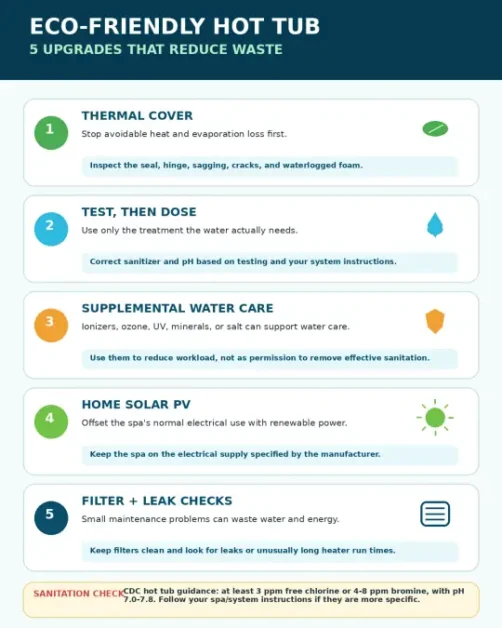
Do not assume that clear water is safe water. CDC guidance for hot tubs calls for an effective disinfectant level and proper pH because warm, aerated water can support germs when sanitation is inadequate. For hot tubs, CDC recommends at least 3 ppm free chlorine or 4 to 8 ppm bromine, with pH from 7.0 to 7.8. Your spa manufacturer or water-care system may specify its own operating range, so follow those instructions as well.
That does not mean every owner must use the same water-care method. Salt systems generate sanitizer from salt, while ozone, UV, mineral cartridges, and ionizers can reduce part of the workload. The key distinction is reduced chemical demand versus no sanitation.
For a deeper look at lower-chemical options, see our guide to eco-friendly hot tub water-care alternatives.
A Practical Eco Hot Tub Setup
1. Start with the thermal cover
A hot tub that loses heat continuously forces the heater to replace that energy continuously. Before buying an ionizer or solar accessory, inspect the cover for gaps, sagging, damaged hinges, waterlogged foam, and poor sealing around the shell.
Keep the cover closed whenever the spa is not being used. Wind exposure, open covers, and evaporative heat loss can all increase heating demand. Owner discussions about high winter electricity bills repeatedly point back to cover condition and insulation as practical first checks.
2. Reduce sanitizer demand without removing sanitation
Mineral systems and ionizers release metal ions, commonly copper, silver, or zinc, that can help control microorganisms. Ozone and UV systems treat water as it passes through the equipment loop. These systems can reduce how hard your primary water-care system has to work, but they should be installed and operated according to their labels and the hot tub manufacturer’s instructions.
Do not copy a “zero chlorine” routine from a forum, rental property, or pool setup. Hot tubs run hotter, hold less water, and experience a high bather load relative to their volume.
3. Use solar power in a way that does not compromise the spa
For most permanent hot tubs, the cleanest solar approach is to offset the spa’s normal electrical use with a properly designed home solar PV system. The hot tub still receives the voltage and amperage it was designed for, while your solar system supplies renewable electricity through the home’s electrical system.
Be cautious with DIY solar-water loops that pump spa water through unapproved external collectors. Added plumbing can create heat-loss, sanitation, freeze-protection, warranty, and flow problems. If you want a solar-assisted heater, use equipment specifically designed for your spa type and have electrical or plumbing changes reviewed by qualified professionals.
4. Make your existing water last by maintaining it correctly
Draining early because the water became cloudy or difficult to balance wastes both water and the energy used to heat the replacement fill. Consistent filtration, clean filters, controlled bather load, and proper sanitizer and pH make it easier to keep a fill cycle on schedule.
Our hot tub water chemistry guide covers the basic balance checks. If you are trying to control long-term ownership costs as well as waste, the seasonal hot tub maintenance cost calculator can help you estimate electricity, chemicals, filters, and routine upkeep.
How a Hot Tub Ionizer Fits Into the Plan
An ionizer is best thought of as a supplemental water-care device, not a magic replacement for testing and maintenance. Some systems release copper and silver or other mineral ions into the water to help control algae and bacteria. The exact output, target level, maintenance schedule, and compatible sanitizer depend on the product.
- Check compatibility: confirm the system is intended for hot tubs, not only swimming pools.
- Follow the label: use the manufacturer’s mineral and sanitizer targets rather than copying someone else’s numbers.
- Test for metals when required: excessive copper or other metals can contribute to staining or discoloration.
- Keep filtration working: an ionizer does not replace circulation or filter maintenance.
- Keep testing sanitizer and pH: clear water does not prove the water is adequately disinfected.
Current guidance increasingly makes the same distinction: ionizers, ozone, UV, and similar systems are better treated as ways to reduce sanitizer demand rather than eliminate routine sanitation.
Does a Thermal Cover Really Matter?
Yes. A cover is one of the simplest efficiency upgrades because it limits heat loss and evaporation whenever the spa is not being used. A good cover also keeps leaves, dust, and other debris out of the water, which reduces the load on the filter and sanitizer.
- Replace a cover that is waterlogged, badly cracked, sagging, or no longer sealing well.
- Keep the cover latched or secured when wind can lift it.
- Do not stack heavy objects on the cover or damage the foam core.
- Check the hinge and perimeter for obvious gaps.
- Use the model’s recommended cover or a replacement that matches the spa’s dimensions and insulation needs.
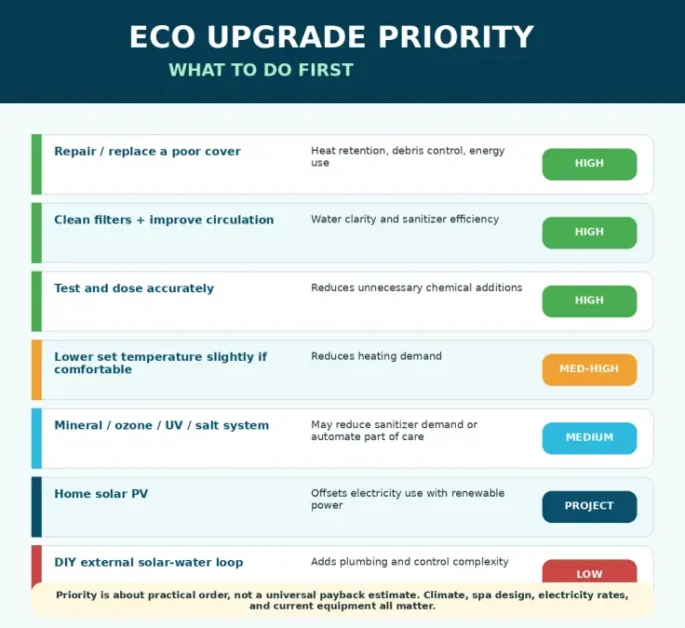
Eco Upgrade Priority: What to Do First
| Upgrade | What it can improve | Priority |
|---|---|---|
| Repair or replace a poor cover | Heat retention, debris control, energy use | High |
| Clean filters and optimize circulation | Water clarity and sanitizer efficiency | High |
| Test and dose accurately | Reduces unnecessary chemical additions | High |
| Lower the set temperature slightly if comfortable | Reduces heating demand | Medium to high |
| Mineral, ozone, UV, or salt system | May reduce sanitizer demand or automate part of water care | Medium |
| Home solar PV | Offsets electricity use with renewable power | Project dependent |
| DIY external solar-water loop | Possible heat input, but adds plumbing and control complexity | Low unless specifically engineered for the spa |
A Low-Waste Weekly Routine
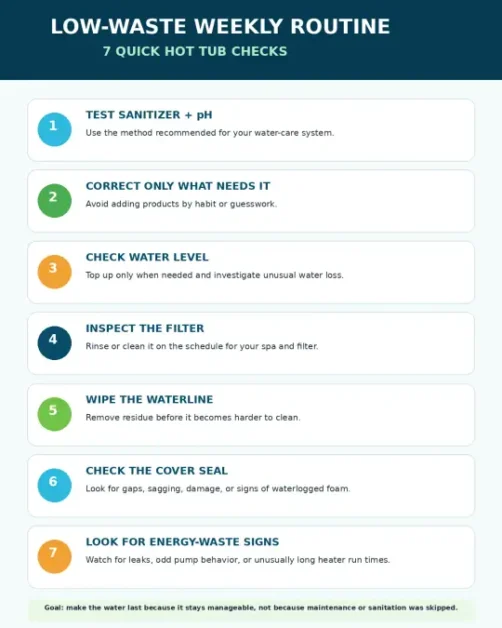
- Test sanitizer and pH using the method recommended for your water-care system.
- Correct only what actually needs adjustment.
- Check the water level and top up only when needed.
- Inspect the filter and rinse it on schedule.
- Wipe the waterline before residue becomes difficult to remove.
- Confirm the cover is sealing and dry enough to insulate properly.
- Look for leaks, unusually long heater run times, or changes in pump behavior.
Small maintenance problems can become energy and water problems. A leaking fitting wastes heated water, a clogged filter increases circulation problems, and a failed cover can raise heating demand every hour the spa sits outside.
How to Reduce Water Waste
The greenest refill is the one you do when the water actually needs replacement, not because avoidable maintenance problems ruined it early. Follow your spa manufacturer’s drain-and-refill schedule, then shorten the interval when heavy use, contamination, persistent foam, cloudiness, or unstable chemistry makes replacement necessary.
A longer fill cycle is only useful when the water remains properly sanitized and manageable. Do not extend old water just to save gallons.
Eco-Friendly Hot Tub FAQs
Can a hot tub be completely chemical-free?
For normal residential use, do not treat “chemical-free” as a safe default. Supplemental systems can reduce sanitizer demand, but hot tub water still needs an effective sanitation plan and regular testing.
Can an ionizer replace chlorine or bromine?
Not automatically. Ionizer requirements vary by product, and many systems are designed to work with a reduced level of an approved sanitizer rather than replace sanitation entirely. Follow the product label and your spa manufacturer’s water-care instructions.
Does a saltwater hot tub use chlorine?
Salt systems are not chlorine-free by definition. Many salt systems use an electrolytic cell to generate sanitizer from dissolved salt, so the owner adds less bottled sanitizer but still maintains disinfecting chemistry in the water.
Can solar panels run a hot tub?
They can offset some or all of a hot tub’s electricity use when the home solar system is properly sized and connected. The spa should still receive the electrical supply specified by its manufacturer, and electrical changes should be handled by qualified professionals.
What is the easiest eco upgrade for an existing hot tub?
Start with heat retention. A well-fitting insulated cover, good cabinet insulation, and sensible temperature settings usually make more sense than adding complicated equipment to a spa that is already losing heat.
Is lower chemical use always better?
No. The goal is correct treatment, not the smallest possible number. Using too little sanitizer can create a water-safety problem, while overdosing wastes product and can make the water harder to manage.
Build the Eco Setup Around Efficiency, Not a “No Chemicals” Claim
The most practical eco hot tub is one that wastes less heat, less water, and fewer treatment products while still keeping the water properly sanitized. A thermal cover and good insulation usually deserve attention first. Ionizers, ozone, UV, salt systems, and solar power can be useful upgrades, but each should solve a specific problem rather than replace basic water care.
Sources: CDC home hot tub water treatment and testing; CDC hot tub disinfectant and pH guidance; Jacuzzi eco-friendly hot tub guidance.