
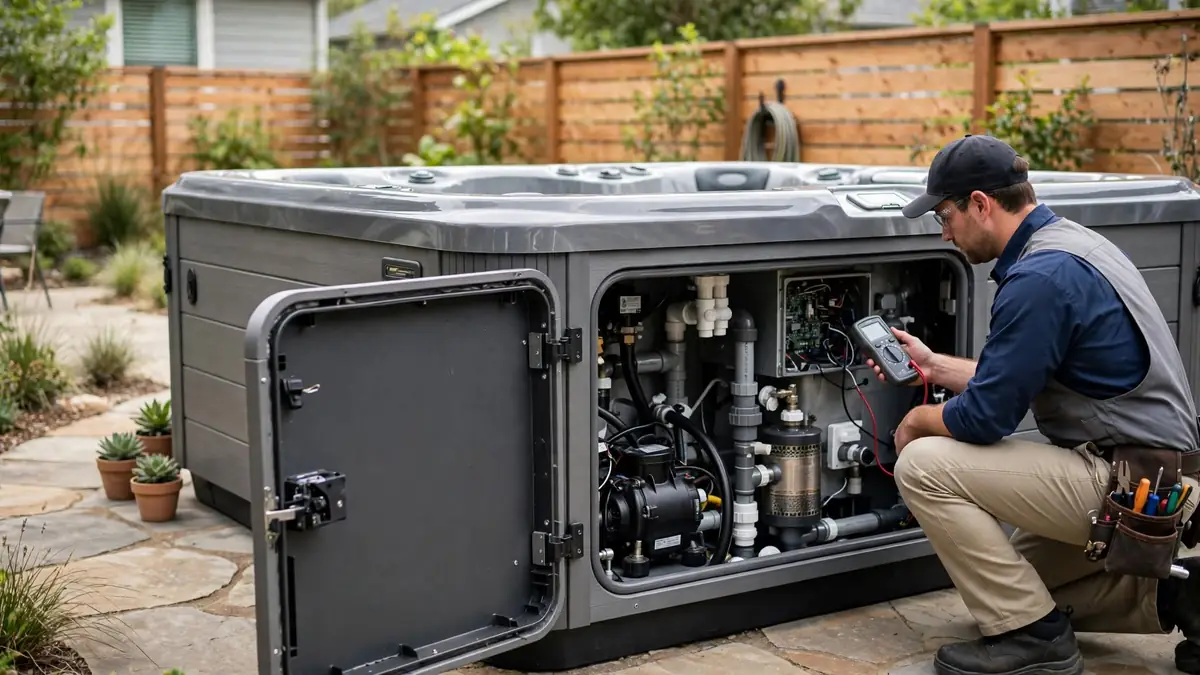
How Often Should a Hot Tub Be Serviced? Pro vs DIY

For a residential hot tub that you maintain yourself, an annual professional inspection is a sensible baseline. You may need a technician sooner if the spa develops a leak, repeated error codes, heating problems, unusual pump noise, weak circulation, or an electrical issue.
Professional servicing is different from routine hot tub maintenance. Water testing, filter care, cleaning, and periodic drain-and-refill work happen much more often. If you need a calendar for those owner tasks, use our hot tub maintenance schedule and printable checklist. This page focuses on when professional service makes sense and what you can reasonably handle yourself.
How Often Should a Hot Tub Be Professionally Serviced?
Most residential owners can use one professional inspection per year as a starting point, then schedule earlier service when symptoms appear or when the manufacturer, warranty, or service plan requires it. The Pool & Hot Tub Alliance (PHTA) advises owners to consider an annual professional inspection as part of regular hot tub care.
That annual visit is not a substitute for weekly and monthly owner maintenance. It is a deeper check intended to catch wear, leaks, equipment problems, or other issues that are easy to miss during normal cleaning. See the PHTA hot tub maintenance guidance for the current recommendation.
| Situation | Practical service approach |
|---|---|
| Typical residential spa with consistent DIY care | Consider a professional inspection about once a year |
| New spa under warranty or dealer service plan | Follow the manufacturer, dealer, and warranty requirements |
| Heavy-use spa or vacation rental | Use a more frequent written service schedule based on bather load and local requirements |
| Leak, heater problem, repeated error code, weak circulation, or unusual noise | Arrange service when the symptom appears rather than waiting for the annual visit |
| Electrical problem or repeated GFCI/breaker issue | Stop treating it as routine maintenance and have qualified electrical/service help inspect it |
A dealer may recommend quarterly or seasonal visits if you want them to handle water changes and cleaning for you. That is a convenience plan, not a universal rule that every residential hot tub requires professional service every three or four months.
What Does a Professional Hot Tub Service Include?
There is no single nationwide checklist for a residential service call. The exact scope depends on the technician, hot tub brand, service package, and the problem you report. Before booking, ask what is included in the visit and what would be billed separately.
- Inspecting accessible plumbing, unions, fittings, and the equipment area for leaks or moisture.
- Checking pump operation, circulation, jet performance, and unusual noise or vibration.
- Checking heater operation, controls, sensors, and visible equipment condition.
- Reviewing filter condition and signs of restricted water flow.
- Looking for worn seals, corrosion, damaged components, or other signs that deserve closer diagnosis.
- Reading error codes and testing the system when a specific fault has been reported.
If you are hiring someone for the first time, our guide to choosing a hot tub repair company explains what to ask before authorizing diagnostic work or repairs. PHTA also offers a directory of hot tub service professionals and explains its optional Certified Hot Tub Technician credential.
What Should You Do Between Professional Service Visits?
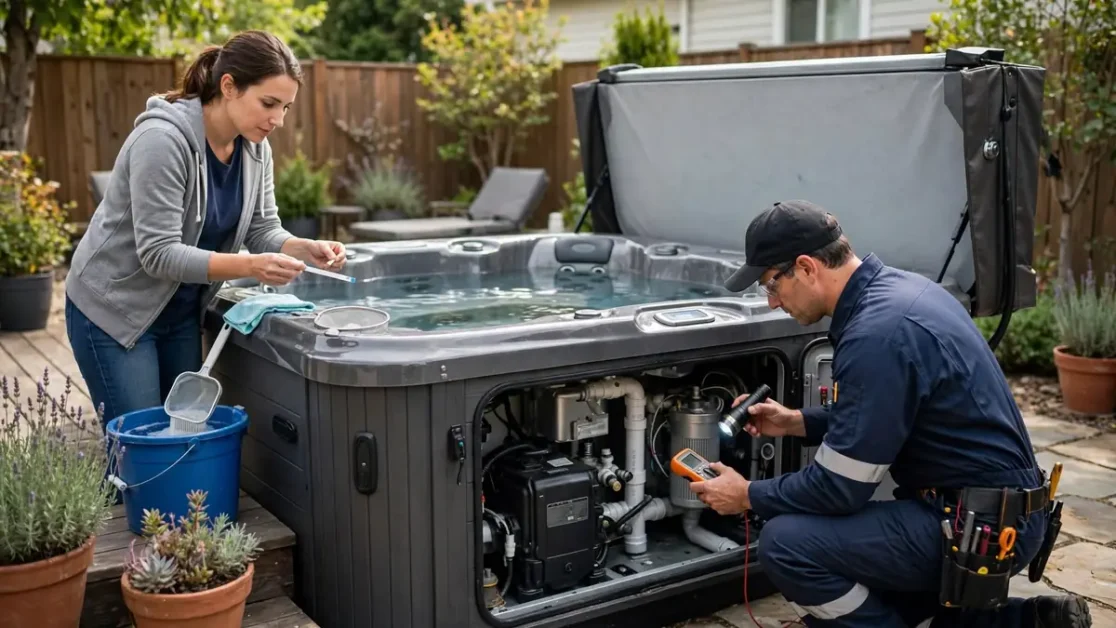
Most day-to-day hot tub care is owner maintenance, not technician work. Regular owner care helps you notice changes early and gives a technician useful maintenance history if a problem develops.
- Test and adjust water based on current results. Follow the sanitizer product label and your hot tub manufacturer’s water-care instructions rather than using a one-size-fits-all chemical dose.
- Inspect and clean the filter. Rinse away debris as needed and use the filter manufacturer’s cleaning and replacement guidance. Our hot tub filter selection guide helps you check fit and replacement choices.
- Keep the waterline, cover, and accessible surfaces clean. Watch for recurring residue, mold, damage, or moisture where it should not be.
- Watch how the spa behaves. Changes in heating time, jet strength, water level, pump sound, or recurring error messages can give you an early warning that service is needed.
- Drain and refill when your spa and water conditions call for it. Three to four months is a common manufacturer interval, but usage and manufacturer instructions matter. Use our step-by-step hot tub refill guide when it is time for fresh water.
Jacuzzi’s current owner guidance also uses a roughly three-to-four-month drain-and-refill interval depending on usage, while keeping weekly water care separate from professional inspection. That distinction matters: changing water is routine maintenance, not proof that a technician must visit every quarter.
Signs You Should Call a Technician Before the Annual Visit
A calendar should never override a developing equipment problem. Call sooner when the spa is telling you something has changed and the basic checks in your owner’s manual do not solve it.
- A leak that keeps returning or drops the water level. Persistent water loss can point to plumbing, pump, heater, gasket, or fitting problems that need diagnosis.
- The water will not reach or hold the set temperature. A dirty filter or low flow may be simple to correct, but persistent heating problems can involve the heater, sensors, circulation, or controls.
- Repeated flow or sensor error codes. Record the exact code and model before you call so the technician has a useful starting point.
- New grinding, squealing, humming, or vibration. A change in pump or motor sound deserves attention, especially if circulation has also weakened.
- Weak jets or poor circulation that continue after safe basic checks. If the water level and filter are not the cause, deeper equipment troubleshooting may be needed.
- Electrical warning signs. Repeated GFCI trips, damaged wiring, burning odors, or suspected electrical faults are not DIY repair jobs.
The Electrical Safety Foundation International (ESFI) recommends an annual spa or hot tub electrical inspection by a qualified electrician, and advises that wiring and electrical repairs be handled by qualified electricians. That is a separate safety check from a standard spa cleaning or equipment-service visit; confirm what any quoted inspection covers. If you suspect an electrical fault, keep people out of the water and use qualified help rather than opening or modifying energized equipment yourself. See ESFI’s water and electrical safety guidance.
How Much Does Professional Hot Tub Service Cost?
There is no reliable national flat rate because a maintenance visit, diagnostic call, annual inspection, and repair appointment are different services. Travel, local labor rates, hot tub brand, access, required parts, and the amount of troubleshooting can all change the bill.
As one current manufacturer reference, Jacuzzi lists optional professional service at about $75 to $150 per visit in its U.S. maintenance-cost guide. Treat that as a planning example, not a guaranteed quote; parts, repairs, specialty diagnostics, and local labor may cost more. Price reference checked October 2026. See Jacuzzi’s current maintenance cost guide.
For your broader ownership budget, the Hot Tub Maintenance Cost Calculator can help you separate recurring maintenance expenses from occasional service and repair costs.
Professional Service vs DIY Maintenance: Who Should Handle What?
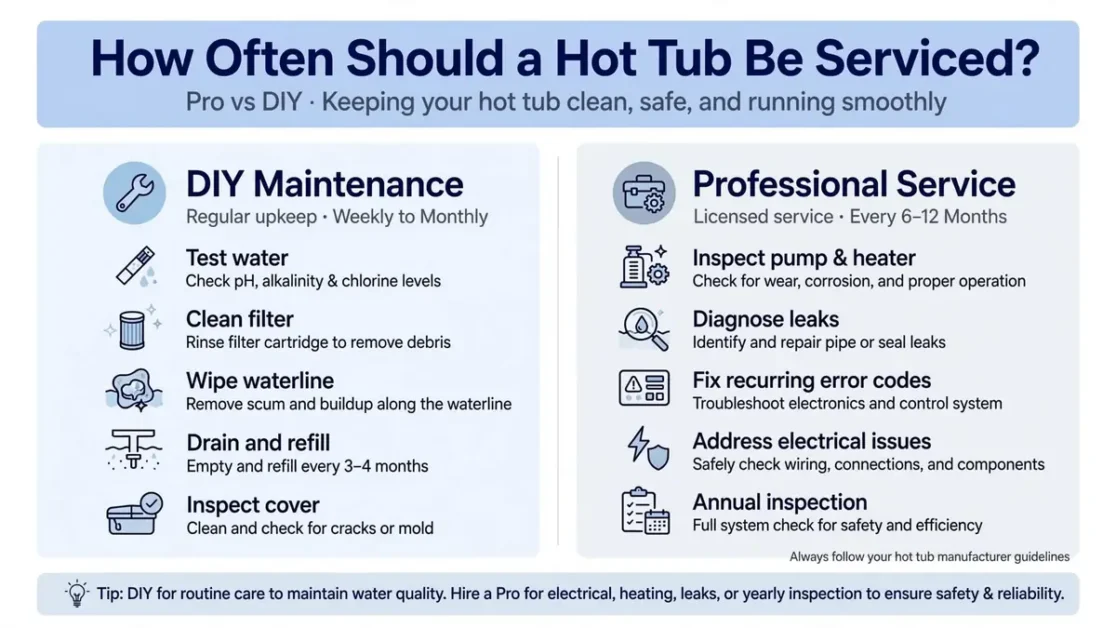
| Task | Usually DIY | Usually professional |
|---|---|---|
| Routine water testing and normal adjustments | Yes, using test results, product labels, and the owner’s manual | Optional if you buy a maintenance plan |
| Filter rinsing and routine filter care | Yes | Optional |
| Waterline, cover, and shell cleaning | Yes | Optional |
| Drain and refill | Often, if the manufacturer procedure is clear and safe for your setup | Useful if access, winterization, or system problems make the job difficult |
| Persistent leak diagnosis | Basic visual inspection only | Yes when the source is not obvious or repair requires equipment access |
| Heater, pump, sensor, or control diagnosis | Follow only safe owner-manual checks | Usually |
| Wiring, GFCI, or electrical repair | No | Qualified electrician or properly qualified service professional |
The owner’s manual should win whenever its maintenance or warranty instructions differ from a general schedule. Some manufacturers require specific procedures or authorized service for certain warranty work.
A Simple Hot Tub Service Plan for Most Homeowners
- Handle routine care consistently. Keep up with water testing, filter care, cleaning, and water changes instead of waiting for a technician to do basic maintenance.
- Book an annual inspection as your baseline. Use it to review pumps, heater, plumbing, controls, circulation, and visible wear that may not show up during normal cleaning.
- Call earlier when symptoms appear. Leaks, repeated errors, electrical concerns, heating trouble, or abnormal pump behavior should move the service date forward.
- Follow your specific hot tub documentation. Manufacturer, warranty, dealer, and service-plan requirements take priority over a generic interval.
Hot Tub Service Visit Checklist
Before the technician arrives, collect the details that can make diagnosis faster:
- Hot tub brand, model, and serial number
- Owner’s manual and warranty information
- Exact error codes or warning messages
- Photos or a short description of leaks, damaged parts, or control-panel messages
- When the symptom started and whether it is constant or intermittent
- Recent filter cleaning, drain/refill, or water-care notes that could help with diagnosis
After the visit, keep the invoice and technician notes with your maintenance log. Record what was inspected, what was repaired, any parts that may need monitoring, and when the technician recommends the next check for your specific spa.
Frequently Asked Questions
How often should I have my hot tub professionally serviced?
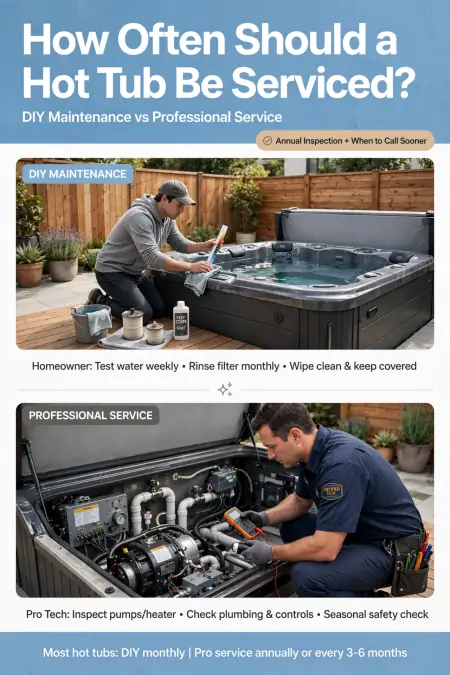
For a residential hot tub with consistent owner maintenance, consider a professional inspection about once a year. Schedule service sooner if the manufacturer requires it or if you notice leaks, error codes, heating trouble, weak circulation, unusual noises, or electrical concerns.
Do hot tubs need professional service every 3 to 4 months?
Not necessarily. Three to four months is a common drain-and-refill interval, but that routine water change does not automatically mean every residential spa needs a professional technician at the same interval.
Can I service my hot tub myself?
You can usually handle routine water testing, filter care, cleaning, and many drain-and-refill tasks by following the owner’s manual. Equipment diagnosis, warranty repairs, persistent leaks, and electrical work are better handled by appropriately qualified professionals.
What does a professional hot tub service include?
Service scope varies, but an inspection may cover accessible plumbing, pumps, heater operation, controls, circulation, filter condition, leaks, wear, and reported error codes. Ask the technician what the quoted visit includes before work begins.
When should I call a hot tub technician instead of waiting for annual service?
Call sooner for persistent leaks, heating failures, repeated error codes, abnormal pump noise, weak circulation that basic checks do not fix, or suspected electrical faults. A recurring equipment symptom is a better trigger for service than waiting for a calendar date.
The Bottom Line
How often should a hot tub be serviced? For most residential owners who keep up with routine care, an annual professional inspection is a practical baseline. Handle normal water and cleaning tasks between visits, follow your manufacturer’s requirements, and move the service date forward whenever the spa develops a persistent mechanical or electrical problem.