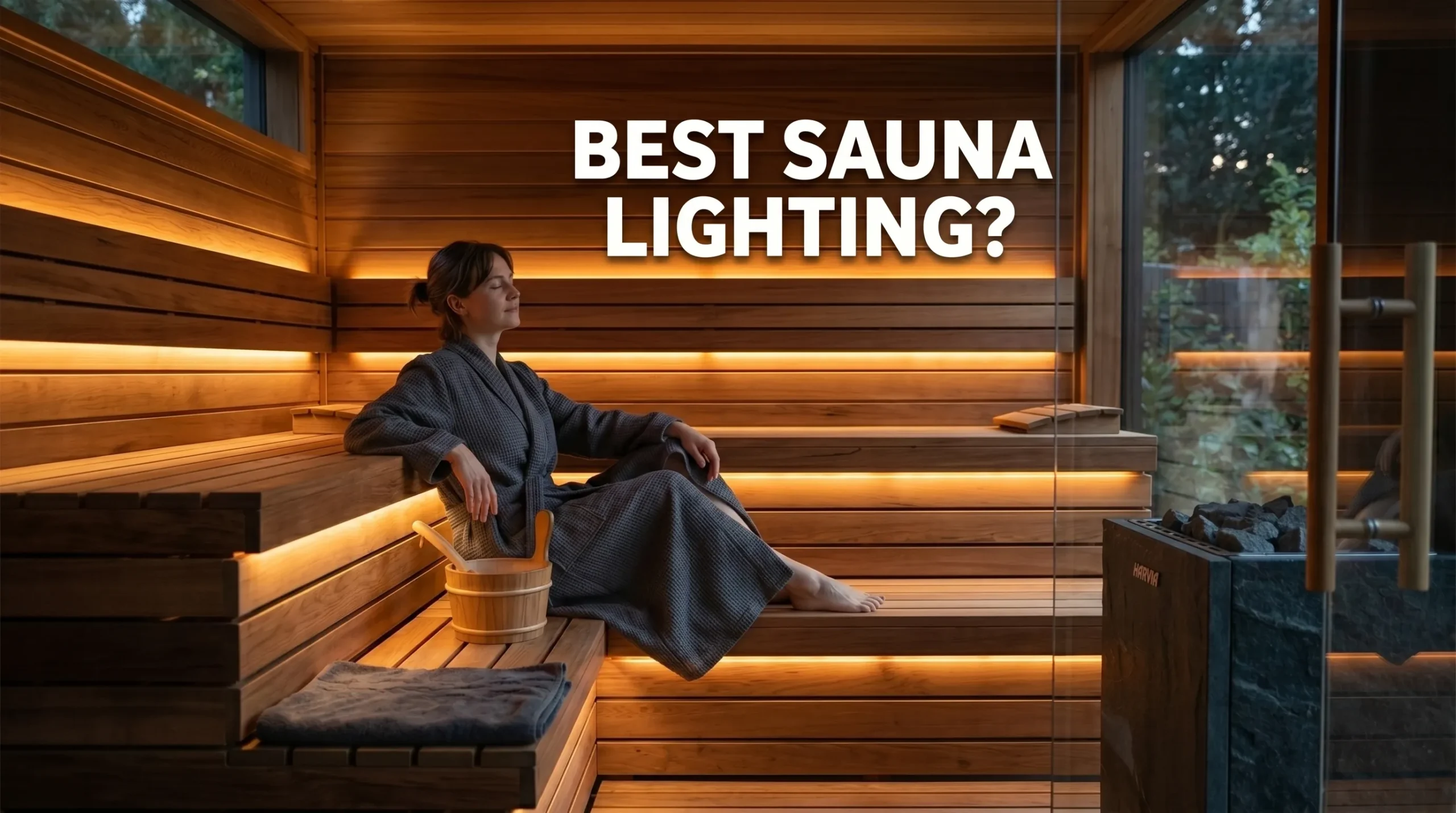
Modern cedar sauna with warm LED strip lighting and relaxing ambient glow.
|

What Kind of Light Is Best for a Sauna?

The best sauna lighting combines comfort, safety, and atmosphere. For most home sauna setups, warm indirect LED lighting gives the best overall experience.

Soft 2700K lighting, hidden fixtures, and sauna rated materials help create a calm environment that feels relaxing instead of harsh. Choosing proper heat and moisture resistant lighting from the beginning also helps avoid maintenance problems later.

If you’re upgrading a traditional sauna or designing a modern infrared sauna, thoughtful lighting makes a much bigger difference than most people expect.

Warm LED lighting glowing beneath cedar sauna benches in a relaxing spa setting.

What Kind of Light Can You Put in a Sauna?

You can safely use several types of sauna rated lighting, but not every household light fixture can handle sauna heat and humidity.

The best sauna safe lighting options include:

  • Heat resistant LED lights
  • Sauna rated recessed fixtures
  • Fiber optic sauna lighting
  • Moisture resistant LED strips
  • Indirect wall lighting systems

Traditional incandescent bulbs used to be common in older sauna rooms, but many people now prefer LEDs because they last longer and produce less excess heat.

A info graphic that show 5 style of sauna lights.

One thing people often overlook is how much humidity affects electrical fixtures inside a sauna cabin. Regular plastic fixtures or cheap LED strips often fail early when exposed to repeated heating and cooling cycles.

Avoid using:

  • Standard household LED bulbs
  • Plastic light covers not rated for heat
  • Exposed wiring
  • Bright office-style white lighting
  • Fixtures placed directly above the heater

If you’re building or upgrading a sauna, choosing sauna rated fixtures from the start helps avoid replacement issues later.

For a deeper breakdown of fixture styles, placement ideas, and heat safe options, check out this guide on sauna lighting.

What Is the Best Light for a Sauna?

Warm white LED lighting is usually the best choice for a sauna.

It creates a softer atmosphere, handles temperature changes better than many traditional bulbs, and uses less electricity during regular sauna sessions.

Most experienced sauna users prefer:

  • Warm white color temperatures
  • Indirect lighting
  • Lower brightness levels
  • Hidden or recessed fixtures

In real sauna sessions, softer lighting tends to feel calmer and less distracting. Bright overhead lighting can make the sauna feel more like a locker room than a relaxing wellness space.

For most home sauna designs, the ideal setup includes:

  • Warm 2700K LED lighting
  • Under bench LED strips
  • Dimmable controls
  • Moisture resistant fixtures

If you’re designing a modern sauna space, this guide to modern sauna design ideas can help you match your lighting with the overall room style.

Why LED Lights Are the Best Choice for Most Saunas

LED lighting has become the preferred option in both traditional sauna and infrared sauna setups.

Heat Resistance and Durability

Sauna environments put constant stress on lighting systems. Temperatures rise quickly, humidity changes often, and materials expand and contract repeatedly.

Many home sauna owners run into problems when they install regular fixtures that aren’t designed for sauna heat.

Sauna rated LED systems are built to tolerate:

  • High temperatures
  • Humidity exposure
  • Repeated heating cycles
  • Long operating times

Lower Heat Output

One practical benefit of LEDs is that they produce less heat than older bulb types.

That matters because traditional sauna rooms are already extremely hot. Additional unnecessary heat near the ceiling or walls can make the room feel less balanced.

Energy Efficiency

LED lighting uses very little electricity compared to traditional bulbs.

In everyday sauna use, this helps reduce operating costs, especially if your sauna includes:

  • dimmable lighting
  • multiple fixtures
  • accent lighting
  • smart controls

If you’re planning a full sauna setup, understanding overall sauna cost to run helps you estimate long term energy usage more accurately.

Longer Lifespan

Heat is one of the biggest reasons light fixtures fail early. Sauna rated LEDs generally last much longer than traditional bulbs in high temperature environments.

That means fewer replacements and less maintenance over time.

What Color Temperature Works Best in a Sauna?

Warm lighting almost always works best inside a sauna.

Most sauna owners prefer lighting around:

  • 2200K to 3000K
  • warm white
  • amber tones
  • soft indirect glow

A common mistake beginners make is choosing cool white or daylight LEDs because they appear brighter in stores.

Inside a sauna, though, cool white lighting often feels:

  • harsh
  • clinical
  • uncomfortable
  • overly bright

Warm 2700K lighting is especially popular because it resembles natural firelight and works beautifully with cedar wood interiors.

Warm White vs Cool White

Lighting TypeSauna Feel
Warm White (2700K)Relaxing and cozy
Soft AmberSpa-like atmosphere
Cool White (5000K+)Bright and harsh
Daylight LEDsClinical appearance

Many people find relaxation improves faster in softly lit sauna spaces. Lighting affects the overall mood much more than most beginners expect.

Best Places to Install Sauna Lights

Light placement matters just as much as the bulb type.

Indirect lighting usually feels best because it reduces glare and creates a softer atmosphere during sauna bathing.

Under Bench Lighting

This is one of the most popular modern sauna lighting ideas.

LED strips under benches:

  • hide the light source
  • reduce glare
  • create soft ambient lighting
  • make smaller saunas feel larger

Behind Backrests

Backrest lighting creates a warm glow without shining directly into your eyes.

In most home sauna setups, this placement feels more relaxing during longer sessions.

Corner Lighting

Corner fixtures work well in traditional sauna rooms where direct overhead lighting feels too intense.

Recessed Ceiling Lights

Recessed sauna rated fixtures can work well, but they should not be placed too close to the sauna heater.

One sign poor placement is causing problems is uneven brightness or excessive heat around the fixture.

Modern sauna with hidden LED lighting behind the backrests and under cedar benches.

Can You Use Regular LED Bulbs in a Sauna?

Usually, no.

Most standard household LED bulbs are not designed for:

  • sauna temperatures
  • high humidity
  • constant heat cycling

Some regular LEDs may work temporarily in cooler infrared sauna environments, but traditional saunas often exceed their safe operating range.

Always check:

  • maximum temperature rating
  • moisture resistance
  • IP rating
  • sauna compatibility

What IP Rating Should Sauna Lights Have?

Sauna lights should have moisture protection ratings suitable for humid environments.

Most sauna lighting systems use:

  • IP44 minimum
  • IP65 preferred near moisture exposure

Higher IP ratings provide better protection against:

  • steam
  • humidity
  • condensation
  • water exposure

If your sauna includes heavy steam or water splashing, higher protection becomes even more important.

For additional safety considerations, this guide on sauna fire safety guidelines covers several important installation tips.

Best Lighting for Traditional vs Infrared Saunas

Traditional saunas and infrared saunas have different lighting needs because their heat levels are very different.

Traditional Sauna Lighting

Traditional sauna rooms typically run much hotter.

That means:

  • fixture placement matters more
  • ceiling temperatures get extremely high
  • heat resistant materials become critical

In smaller saunas, heater placement makes a noticeable difference in how lighting performs over time.

Most traditional sauna owners use:

  • indirect LED strips
  • recessed sauna fixtures
  • protected wall lights

Infrared Sauna Lighting

Infrared saunas operate at lower temperatures, so lighting options are more flexible.

Many infrared sauna users add:

  • color therapy lighting
  • dimmable LEDs
  • chromotherapy systems
  • smart controls

If you’re comparing different sauna types, this guide to which sauna is right for me explains the differences in more detail.

Does Sauna Lighting Affect Relaxation and Stress Levels?

Lighting can absolutely influence how relaxing a sauna feels.

Soft warm lighting helps create a calmer environment, especially during evening sauna sessions. Many people naturally feel more relaxed in low glare spaces with warmer tones.

That said, the lighting itself does not directly treat high cortisol levels or medical conditions.

What usually happens is that the overall sauna experience may support relaxation by:

  • reducing sensory stress
  • encouraging quiet downtime
  • creating a calmer environment
  • helping people disconnect mentally

Some users report better sleep after evening sauna sessions, especially when the lighting is soft and dim rather than bright and stimulating.

If you want to learn more about sauna wellness routines, this guide to sauna therapy covers additional relaxation benefits.

Common Sauna Lighting Mistakes to Avoid

Many beginners expect any waterproof light to work in a sauna, but sauna environments are much tougher than regular bathrooms.

Installing Lights Too Close to the Heater

This is one of the most common problems.

Heat directly above the sauna heater can damage fixtures quickly.

Using Bright White Lighting

Overly bright lighting ruins the relaxing atmosphere most people want from sauna bathing.

Ignoring Moisture Ratings

Even if a light survives the heat, humidity can still damage internal components.

Using Cheap LED Strips

Low quality strips often fail after repeated heat exposure.

Forgetting About Dimmers

Dimmable lighting gives much better control over sauna ambiance.

Many experienced sauna users lower brightness during longer sessions because softer lighting feels easier on the eyes.

Sauna Lighting Ideas for a More Relaxing Setup

If you want your sauna to feel more luxurious, small lighting upgrades can make a huge difference.

Popular sauna lighting ideas include:

Hidden LED Strip Lighting

Creates a floating bench effect and soft glow.

Himalayan Salt Wall Lighting

Adds warm ambient tones and visual texture.

Wood Shade Fixtures

Softens direct brightness and matches cedar interiors.

Dimmable Lighting Systems

Lets you adjust brightness for different sauna sessions.

Smart Sauna Lighting

Some modern setups now include app or voice controlled systems.

If you enjoy smart home upgrades, this guide to a voice controlled sauna controller with wi-fi may give you additional setup ideas.

Luxury home sauna with warm LED lighting and calming spa atmosphere.

How to Choose the Right Sauna Light

Here’s a simple checklist that works well for most home sauna setups.

FeatureRecommended Choice
Light TypeLED
Color Temperature2700K warm white
PlacementIndirect lighting
Fixture TypeSauna rated
Moisture ProtectionIP44 or higher
BrightnessSoft and dimmable
Best LocationsUnder benches or behind backrests

When people start using a sauna regularly, they often discover softer lighting feels much better than bright overhead fixtures.

FAQs:

What kind of light can I put in a sauna?

You can use sauna rated LED lights, recessed fixtures, fiber optic systems, and moisture resistant LED strips designed for high heat environments.

What is the best light for a sauna?

Warm white LED lighting around 2700K is usually the best choice because it creates a relaxing atmosphere and handles sauna heat well.

Can LED strip lights go in a sauna?

Yes, but they should be heat resistant and moisture rated for sauna use. Cheap household strips often fail quickly in high temperatures.

Is warm or cool lighting better for a sauna?

Warm lighting is better for most saunas because it feels softer and more relaxing. Cool white lighting can feel too harsh in a sauna environment.

Should sauna lights be dimmable?

Dimmable lighting is a great option because it lets you adjust brightness depending on the mood and session length.

What is the 200 rule for saunas?

The 200 rule is a common sauna guideline suggesting the combined sauna temperature and humidity percentage should stay around 200. For example, 170°F with 30% humidity roughly follows the rule.

Does sauna help with stress and relaxation?

Many people use saunas to relax after stressful days. The heat and calm environment may help support relaxation and recovery.

Similar Post

Leave a Reply