

7 Essential Tips for Winterizing Your Hot Tub

Winterizing a hot tub means draining the water, flushing the lines, blowing out the jets, adding RV antifreeze to the plumbing, and sealing everything so nothing freezes. This protects the pump, heater, and pipes from cracking during freezing weather.
Most hot tubs take about 60 to 90 minutes to winterize, and skipping any step can lead to expensive repairs in spring. Skipping steps can lead to cracked pumps, broken heaters, and repairs that range from 300 to over 1,000 dollars.
What Winterizing Your Hot Tub Actually Means
Winterizing isn’t just draining the tub. Water hides in the plumbing, the pumps, the heater, and even the jets. When temps drop to 32°F, that leftover water can freeze in just a few hours. Once it freezes, it expands and cracks the plumbing or splits the pump housing.
That’s why winterizing focuses on:
• flushing out gunk
• removing hidden water
• protecting the plumbing with RV antifreeze
• sealing everything tight for the cold months
If any moisture stays behind, you’ll notice it when spring arrives and something leaks.
Supplies You’ll Need
Most people already have half of these at home.
• Garden hose
• Shop vac
• Hot tub surface cleaner
• Filter cleaner or filter soak
• cover cleaner
• Soft sponges and towels
• RV-safe antifreeze (non-toxic, never automotive)
DIY cost usually runs 40 to 90 dollars depending on what you already have.
How to Winterize Your Hot Tub (Simple Step-by-Step)
Winterizing your hot tub only takes a few steps, and each one helps protect the plumbing, pump, and heater from freezing in cold weather.
1. Turn off the power
Shut the power off at the breaker or unplug the spa completely. This keeps the pump and heater from kicking on while you’re working.
2. Drain the hot tub
Open the drain valve at the bottom of the tub and attach a garden hose. Let the water flow to a safe area away from your foundation.
3. Empty the pump housing, filter canister, and heater
Remove the drain plugs on each component. Let them drain until no water is left inside. These parts crack easily in freezing temperatures, so make sure they’re fully empty. Use a sump pump to drain water from difficult areas quickly.
4. Blow out all jet lines
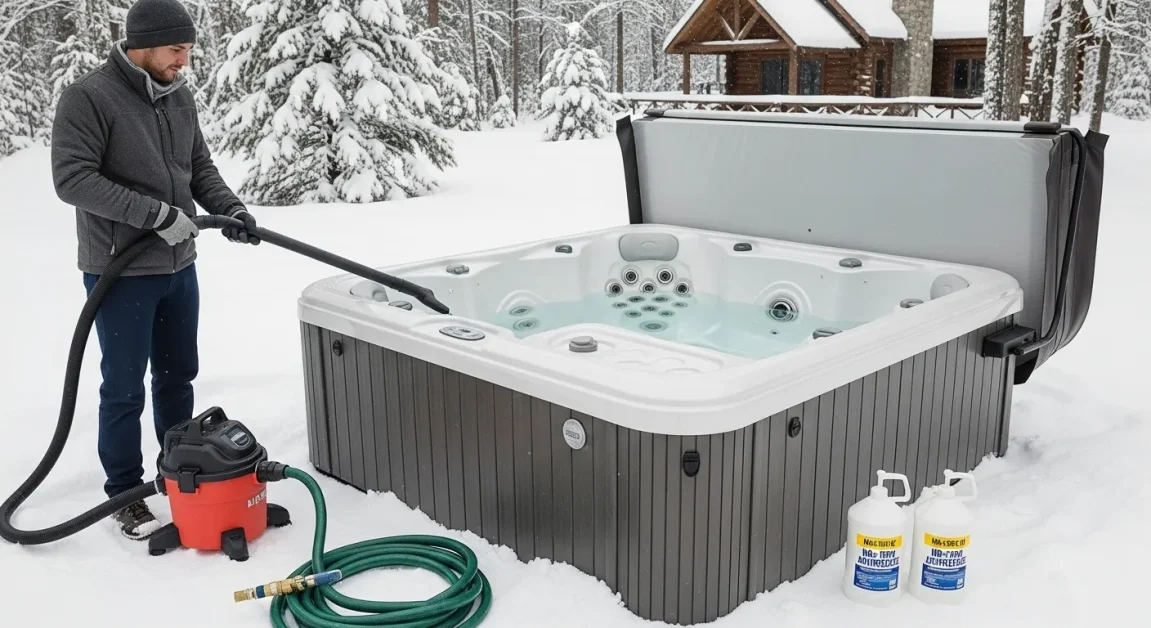
Attach a shop vac to each jet line and run it until no more water comes out. Do the same for air jets. This clears hidden water that can freeze and expand.
5. Clean the inside of the hot tub
Use a non-abrasive sponge and hot tub cleaner to wipe the shell, seats, and waterline. This keeps grime and buildup from sitting all winter.
6. Clean and dry the filter
Rinse the filter with a filter-cleaning solution, wash it well, and let it air-dry. Store it indoors so it stays clean until spring.
7. Secure the hot tub cover
Place the hard cover on the tub and tighten the straps so wind, snow, or debris can’t blow inside. A tight cover also reduces heat loss.
Optional Step: Add RV Antifreeze
RV-safe antifreeze adds an extra layer of protection in cold climates. Pour it into the plumbing through the drain or jet lines until it flows through the system. Never use automotive antifreeze.
Extra Tips
• Wrap the cabinet with insulation if you live in very cold areas.
• Check the tub occasionally to ensure the cover is tight and nothing has shifted.
• If you plan to use the tub during winter, de-winterize it first by flushing out antifreeze and refilling the spa.
Winterizing your spa correctly keeps every part protected so you’re ready for trouble-free soaking again in spring.

Safety Notes
These help readers avoid the most common mistakes and boost the authority of your content.
Safety Note 1: Never use automotive antifreeze
Regular car antifreeze is toxic and can damage your spa’s plumbing. Always use RV antifreeze, which is non-toxic and safe for plumbing systems.
Safety Note 2: Don’t run the pump while the tub is empty
Running the pump dry can burn out the motor within seconds. Always make sure the breaker is off when winterizing.
Safety Note 3: Don’t drain water close to your home’s foundation
Hot tub water can seep into the soil and cause shifting or ice buildup around your foundation during winter.
Safety Note 4: Avoid using harsh cleaners
Bleach or abrasive products can damage the spa shell and degrade rubber seals. Stick with hot tub-safe cleaners.
Safety Note 5: Make sure no kids or pets can access the empty tub
Draining the tub creates a slip hazard inside the shell, and antifreeze should always be kept out of reach of children and animals.
Safety Note 6: Don’t rely on the cover alone
Covers keep debris out, but they don’t stop freezing inside the plumbing. Draining and blowing out the lines is essential.
Safety Note 7: Never mix cleaning products
Some cleaners can react with each other and produce fumes. Rinse the shell well before applying anything new.
Climate-Specific Winterizing Advice
Your location changes how you winterize.
Mild climates (above 25°F)
• You can usually skip antifreeze
• Just drain, clean, and blow out the lines
• Make sure the cover stays tight during storms
Cold climates (below 20°F)
• Use antifreeze in all plumbing
• Add insulation to the cabinet
• Check the spa every 2 to 3 weeks
Extreme cold (Minnesota, North Dakota, Alaska, Canada)
• Use extra insulation blankets
• Use 2 to 3 gallons of antifreeze
• Clear heavy snow off the cover
• Make sure rodents can’t get into the cabinet
Common Winterizing Mistakes to Avoid
These mistakes are responsible for most expensive repairs.
• Using automotive antifreeze
• Not blowing out the jets long enough
• Leaving the filter in all winter
• Forgetting to remove water from the pump
• Letting snow or ice sit on the cover
• Not tightening drain plugs after adding antifreeze
• Draining water too close to your house foundation
Avoiding these keeps your hot tub safe until spring.
Cost to Winterize a Hot Tub
DIY cost
• Antifreeze, 10 to 20 dollars
• Filter cleaner, 8 to 15 dollars
• Cover cleaner, 10 to 20 dollars
• Shop vac rental (if needed), around 20 dollars
Most people spend 40 to 90 dollars total.
Professional cost
Spa companies usually charge 150 to 350 dollars depending on the tub.
Repair costs if you skip winterizing
• Cracked pump, 200 to 500 dollars
• Heater replacement, 300 to 900 dollars
• Plumbing repairs, 300 to 1,200 dollars
A little prep saves a lot of money later.
Real-World Case Study
A Michigan homeowner drained their tub but didn’t blow out the lines. Only a cup of water stayed in the pump, but when temps hit -12°F, it froze and cracked the pump housing.
The repair cost 430 dollars even though the tub looked fine from the outside. That tiny bit of leftover water was all it took.
Quick Winterizing Checklist
Keep this close while working.
• Power off
• Drain tub
• Flush plumbing
• Blow out jets and lines
• Remove drain plugs
• Add RV antifreeze
• Tighten valves and unions
• Remove filter
• Clean and lock down the cover
• Check every few weeks
How to De-Winterize Your Hot Tub in Spring
When the weather warms up, it takes only a few steps to get your tub running again. That’s it. Your tub is ready for the new season.
• Remove the cover and check for cracks
• Flush out any antifreeze
• Reconnect pump and heater fittings
• Install a clean filter
• Fill the tub to the proper level
• Turn power back on
• Test the water
Should You Winterize or Keep Your Hot Tub Running?
Some owners skip winterizing and just keep the spa heated.
Winterize if:
• You won’t use it for months
• You want to cut back on power bills
• You leave town often in winter
Keep it running if:
• You love winter soaking
• You live in a mild climate
• Your tub has strong freeze protection
Both options work. It just depends on how often you use it.
Winterizing Hot Tub Outdoor
To winterize an outdoor hot tub, follow the steps below:
Turn off the power to the hot tub. You can do this at the breaker box or by unplugging the hot tub.
- Drain the hot tub. There is usually a drain valve at the bottom of the hot tub. Connect a garden hose to the valve and drain the water into a suitable location.
- Drain the pump housing, filter canister, and heater. There are usually drain plugs on these components. Remove the plugs and allow the water to drain out.
- Blow water from the jet piping. You can use a shop vac to do this. Connect the shop vac to the jet line and turn it on. Vacuum the water out of the jet line until no more water emerges.
- Clean the shell of the hot tub. Use a hot tub cleaner and a non-abrasive sponge to clean the inside and outside of the hot tub.
- Clean the filter cartridge. Use a hot tub filter cleaner to clean the filter cartridge. Rinse the filter cartridge thoroughly with water and let it air dry.
- Secure the hard cover on the hot tub. Ensure the cover is tightly secured to prevent dirt and debris entering the hot tub.
Freezing & Damage Stats
• Water inside plumbing can freeze in as little as 3 to 6 hours once temperatures drop below 32°F.
• A frozen pump housing is one of the most common winter failures and usually costs 200 to 500 dollars to replace.
• Cracked spa plumbing repairs typically range from 300 to 1,200 dollars, depending on how hard it is to reach the damaged pipes.
• Around 70 percent of winter hot tub failures come from leftover water inside the pump or jet lines.
• RV antifreeze lowers freezing point protection to around –50°F, making it the safest choice for cold climates.
Usage & Maintenance Stats
• Most hot tubs lose 1 to 3°F per hour in winter if uncovered.
• A loose or sagging hot tub cover can increase heat loss by up to 40 percent.
• About 1 in 4 hot tub owners forget to remove the filter during winterizing, which often leads to mildew or cracking.
Related Products in Table
| Product | Description | Source |
|---|---|---|
| Flush line product | A product that helps to clear out any dirt or debris from your plumbing system. | Local pool or spa store, or online |
| Sump pump | A device that can help you drain your hot tub faster and easier. | Local hardware store, or online |
| Shop-vac | A powerful vacuum cleaner that can blow air or suck water. | Local hardware store, or online |
| Filter soak product | A product that helps to clean your filter cartridge and remove any dirt or oils that might have clogged it. | Local pool or spa store, or online |
| Non-toxic antifreeze | A liquid that lowers the freezing point of water and prevents it from expanding and bursting your pipes. | Local pool or spa store, or online |
| Cover cleaner | A product that helps to clean your cover and remove any dirt or stains. | Local pool or spa store, or online |
For additional information, visit Hot Tub Patio, or if you’re interested in more reading, see Guides and Reviews.
Final Words:
Winterizing hot tub is not difficult, but it requires some time and attention. Following these seven essential tips, you can prepare your hot tub for the cold weather and enjoy it again in spring. Happy winterizing!






4 Comments