Sauna Lighting Mistakes That Ruin Your Setup (And How to Fix Them)

Most people spend hours picking the right sauna heater, wood, and layout, but completely overlook lighting. That’s where things quietly go wrong.
Bad sauna lighting doesn’t just look off. It can make your sauna feel uncomfortable, unsafe, and honestly, way less relaxing than it should be.
If you’ve ever stepped into a sauna that felt too bright, too harsh, or just “not right,” lighting was probably the issue.
In this guide, you’ll learn the biggest sauna lighting mistakes, why they happen, and how to fix them so your sauna actually feels like a spa, not a storage room with heat.
Why Sauna Lighting Matters More Than You Think
Quick takeaway: lighting shapes the entire sauna experience, not just visibility.
In most home sauna setups, people assume lighting is just functional. But in reality, it affects everything from relaxation to safety.
Here’s why it matters:
- Comfort – Harsh light kills the calming effect
- Safety – Wrong fixtures can overheat or fail
- Ambiance – Lighting sets the mood for every session
- Heat performance – Some lights don’t survive high temperatures
Many first-time sauna users notice the heat feels intense, but what actually bothers them is the lighting being too bright or direct.
From a practical standpoint, sauna lighting needs to handle:
- High temperatures
- Humidity or steam
- Continuous exposure to heat cycles
If you want a full understanding of how all sauna elements work together, check out this helpful breakdown of a complete sauna guide.
The Most Common Sauna Lighting Mistakes
Quick takeaway: most sauna lighting problems come down to wrong materials, bad placement, or poor design choices.
Let’s break down the biggest mistakes people make.
Using Regular Lights Instead of Heat-Resistant Fixtures
This is the #1 mistake, and it causes most lighting failures.
Regular household lights aren’t built for sauna temperatures. Over time, what usually happens is:
- Bulbs burn out quickly
- Plastic components melt
- Wiring gets damaged
In real sauna sessions, temperatures can reach 150°F to 190°F or higher. That’s way beyond what standard fixtures can handle.
Why this matters:
Ignoring this leads to frequent replacements and potential safety risks.
Fix:
Always use sauna-rated or heat-resistant lighting designed specifically for high-temperature environments.
Placing Lights Too Close to the Heater
A common mistake beginners make is installing lights wherever there’s space, often near the heater.
But here’s the problem:
- The heater area is the hottest zone
- Heat rises and concentrates around it
- Fixtures degrade much faster in this spot
In smaller saunas, heater placement makes a noticeable difference in heat distribution, and lighting suffers the most in those areas.
What happens if ignored:
Lights fail faster, and in worst cases, it increases fire risk.
Fix:
Keep lighting away from the heater and install it in lower or side zones where heat is less intense.
Choosing Lights That Are Too Bright
Many beginners assume brighter is better. That works in kitchens, not in a sauna.
If you’ve ever used a sauna before, you’ve probably noticed that overly bright lighting feels uncomfortable after a few minutes.
Why this matters:
- It reduces relaxation
- It creates glare on wooden surfaces
- It makes the sauna feel more like a utility room
Fix:
- Use soft, warm lighting
- Avoid direct overhead glare
- Focus on ambient glow instead of brightness
Ignoring Moisture and IP Ratings
Saunas aren’t just hot. They’re also humid, especially in steam or traditional sauna setups.
One thing people often overlook is moisture resistance.
Without proper protection:
- Fixtures corrode
- Electrical components fail
- Lifespan drops significantly
Fix:
- Choose lights with proper IP ratings
- Use moisture-resistant or waterproof fixtures
Poor Light Placement (Ceiling-Only Setup)
Ceiling lights alone create harsh shadows and uneven lighting.
In everyday sauna use, this setup feels:
- Too direct
- Too bright
- Not relaxing
What usually happens is the light hits directly from above, creating uncomfortable contrast.
Fix:
Layer your lighting instead of relying on one source.
How to Fix Sauna Lighting the Right Way
Quick takeaway: the right lighting setup is simple, but it needs smart choices.
Choose Heat-Resistant Sauna Lighting
Start with the right foundation.
Look for:
- Sauna-rated LED lights
- Low-voltage systems
- Heat-resistant materials
These are designed to handle repeated heat exposure without breaking down.
Use Indirect Lighting for Better Ambiance
This is where your sauna starts to feel premium.
Indirect lighting spreads light evenly and softly.
Best options:
- Under-bench lighting
- Behind backrests
- Corner hidden lighting
Many experienced sauna users find that indirect lighting makes sessions feel more calming and less intense.
Pick the Right Color Temperature
Lighting color changes everything.
Best option:
Warm light around 2700K
Avoid:
- Cool white
- Blue-toned lighting
Why it matters:
- Warm tones feel natural and relaxing
- Cool tones feel clinical and harsh
Install Lights in Safe Zones
Placement is just as important as the light itself.
Best areas:
- Lower walls
- Under benches
- Behind seating areas
Avoid:
- Direct heater proximity
- Ceiling center spots
Best Sauna Lighting Layout (Simple Setup Guide)
Quick takeaway: you don’t need a complex system, just a smart layout.
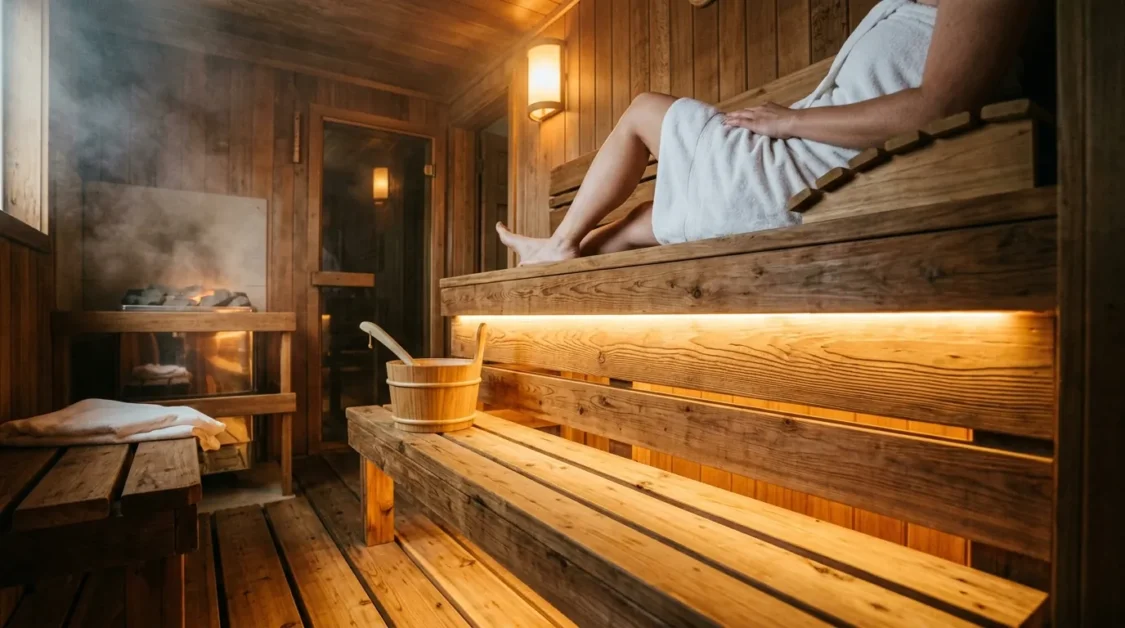
Here’s a simple setup that works in most home sauna builds:
Recommended Layout
- Under-bench LED strip for soft floor glow
- Backrest lighting for comfort and ambiance
- Optional corner light for depth
Why this works:
- Even light distribution
- No harsh glare
- Comfortable for longer sessions
In real sauna sessions, this type of layout helps your eyes relax while your body adjusts to the heat.
If you want more ideas and setups, check out these sauna lighting ideas and setups.
Common Beginner Mistakes to Avoid Again
Quick takeaway: small mistakes can ruin the whole experience.
Here’s a quick checklist:
- Installing only ceiling lights
- Using non-heat-resistant fixtures
- Placing lights near the heater
- Choosing cold white lighting
- Ignoring moisture protection
Many beginners expect the heat to be the main factor, but lighting often becomes the real comfort issue after a few sessions.
Pro Tips for a Better Sauna Lighting Experience
Quick takeaway: small upgrades can completely transform your sauna.
Here are some practical tips:
- Dim your lights for evening sessions
- Use multiple light sources instead of one
- Match lighting with wood tone for better aesthetics
- Consider color therapy lighting in infrared sauna setups
- Keep wiring simple and safe
One practical tip is to test your lighting before final installation. Sit inside the sauna and see how it actually feels.
Lighting that looks good outside may feel too bright inside.
For inspiration, you can explore different layouts in these modern sauna design ideas.
How Lighting Affects Your Sauna Experience Over Time
Quick takeaway: lighting impacts long-term comfort more than you expect.
Over time, most sauna users discover that lighting affects:
- Relaxation levels
- Session duration
- Overall enjoyment
During the first few minutes of a sauna session, the heat usually feels mild. But as time passes, your senses become more sensitive, including your eyes.
Harsh lighting becomes more noticeable, while soft lighting helps you settle in.
Many people find relaxation improves after switching to indirect, warm lighting.
Sauna Lighting and Different Sauna Types
Quick takeaway: not all saunas need the same lighting approach.
Traditional Sauna
- Higher heat levels
- Requires heat-resistant fixtures
- Best with indirect lighting
You can learn more about setups in a traditional sauna guide.
Infrared Sauna
- Lower temperatures
- More flexibility with lighting
- Often includes color therapy
Explore more about infrared sauna setups.
Outdoor Sauna
- Needs weather-resistant lighting
- Must handle temperature changes
Check out tips for outdoor sauna setups.
FAQs:
Can I use regular LED lights in a sauna?
No, most standard LEDs aren’t designed for high heat and can fail quickly.
What’s the best lighting for a sauna?
Heat-resistant, low-voltage LED lighting with warm tones works best.
Is it okay to put lights near the sauna heater?
No, it can damage fixtures and create safety risks.
Do I need waterproof lighting in a sauna?
Yes, moisture-resistant lighting helps prevent damage and improves lifespan.
What’s the best placement for sauna lights?
Under benches and behind backrests provide the best comfort and ambiance.