

Negative Effects of Hot Tubs: 11 Health Risks You Should Know

Hot tubs are popular for relaxing sore muscles and reducing stress. But many people don’t realize that spending too much time in hot water can cause several health problems.
While hot tubs are generally safe when used correctly, high temperatures, bacteria, and long exposure times can create real risks for certain people.
Understanding the possible negative effects helps you enjoy hot tubs safely and avoid unnecessary health issues.
If you’re new to owning a spa, it also helps to understand how hot tubs work and what to expect, which you can explore in this guide to understanding hot tubs.
What are the negative effects of hot tubs?
The most common negative effects of hot tubs include overheating, dehydration, dizziness, skin irritation, infections, and low blood pressure. These problems usually occur when water temperatures are too high, the tub is poorly maintained, or people stay in the water too long.
This helps Google grab a featured snippet and AI overview summary.

✔ Includes 30 hot tub test strips
✔ Provides clear digital readings in seconds
✔ Stores up to 100 test results
Are Hot Tubs Bad for You?
Hot tubs are not inherently dangerous, but they can become harmful when:
- the water temperature is too high
- the tub is not properly sanitized
- people stay in the water too long
- someone has an underlying medical condition
Most experts recommend limiting hot tub sessions to 15–20 minutes and keeping water temperatures below 104°F (40°C).
If you’re unsure what temperature is safest for soaking, check this detailed guide on the best hot tub temperature.
11 Negative Effects of Hot Tubs
1. Overheating (Hyperthermia)
Hot tubs can quickly raise your body temperature. When this happens, the body struggles to cool itself.
Symptoms include:
- dizziness
- nausea
- headache
- fainting
In extreme cases, overheating can lead to heat exhaustion or heatstroke.
2. Dehydration
Hot water causes the body to sweat more than most people realize. This can lead to dehydration if you don’t drink enough water.
Common signs include:
- thirst
- fatigue
- muscle cramps
- dry skin
Always drink water before and after using a hot tub.
3. Dizziness and Fainting
Hot water dilates blood vessels and lowers blood pressure.
This can cause people to feel lightheaded or even pass out, especially when standing up quickly after sitting in a hot tub.
This is one of the most common reasons people report feeling unusual after a long soak.
4. Skin Irritation and Itching
Many people experience itchy skin after leaving a hot tub.
Possible causes include:
- chlorine sensitivity
- hot water drying the skin
- bacteria in poorly maintained tubs
Rinsing with clean water after using a hot tub helps reduce irritation.
If you struggle with dry or sensitive skin, these best hot tub additives for dry skin can sometimes help reduce irritation.
5. Hot Tub Rash (Folliculitis)
Poorly sanitized hot tubs can harbor bacteria called Pseudomonas aeruginosa.
This can cause a condition known as hot tub rash, which appears as:
- red bumps
- itchy skin
- inflamed hair follicles
The rash usually appears 12–48 hours after exposure.
6. Ear Infections
Water trapped inside the ear canal can allow bacteria to grow.
This may lead to swimmer’s ear, especially in children or frequent hot tub users.
Keeping the water properly sanitized is one of the most important parts of hot tub maintenance.
7. Stomach Illness
In rare cases, contaminated hot tubs can spread bacteria such as E. coli.
Symptoms may include:
- stomach cramps
- diarrhea
- nausea
Swallowing hot tub water increases this risk.
Some contaminated hot tubs may contain harmful bacteria such as E. coli, which can cause stomach cramps, diarrhea, and digestive illness. According to the CDC guidance on E. coli infections, exposure to contaminated water is a common way these infections spread.
8. Respiratory Infections
Certain bacteria like Legionella can spread through steam or water droplets.
This can lead to Legionnaires’ disease, a severe lung infection.
While uncommon, outbreaks have been linked to poorly maintained hot tubs.
Medical research also shows that warm, poorly maintained water environments can allow certain bacteria to grow rapidly and increase the risk of skin or respiratory infections. More details are available in this NIH medical research on bacterial exposure.
9. Lower Blood Pressure
Warm water causes blood vessels to widen. This can lower blood pressure temporarily.
For healthy individuals this usually isn’t a problem, but for people with low blood pressure or heart conditions, it can lead to dizziness.
10. Fertility Concerns for Men
Long exposure to high temperatures may temporarily reduce sperm production.
Research shows that frequent hot tub use may lower sperm count in some men.
The effect is usually temporary once heat exposure decreases.
11. Pregnancy Risks
Pregnant women are often advised to avoid hot tubs.
High body temperatures during early pregnancy have been linked to increased risks of birth defects or pregnancy complications.
Always consult a doctor before using hot tubs during pregnancy.
Why Do Some People Feel Sick After Using a Hot Tub?
Feeling sick or queasy after a hot tub session is usually caused by one of these factors:
- overheating
- dehydration
- low blood pressure
- bacteria exposure
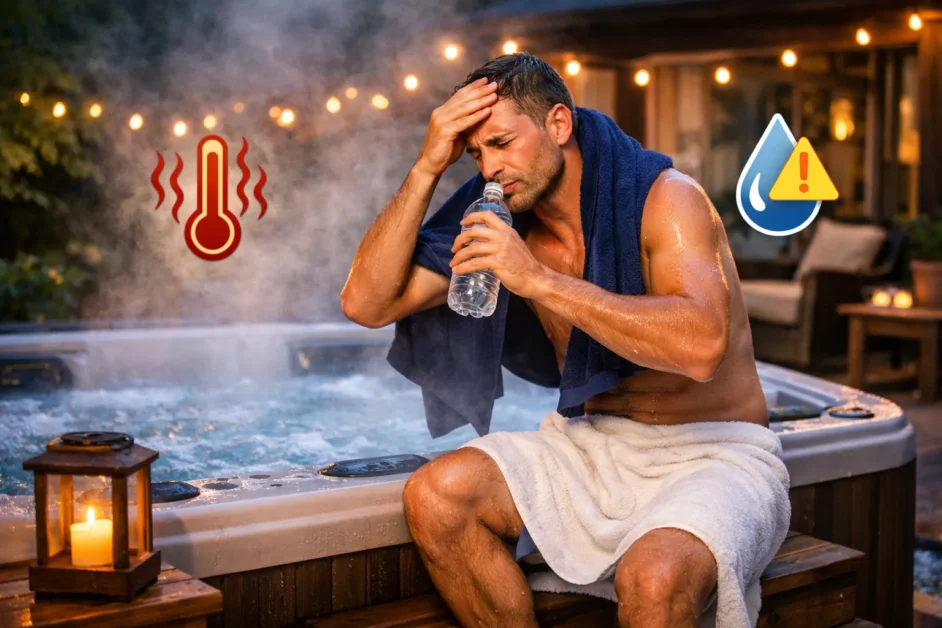
If symptoms include dizziness, nausea, or weakness, it is best to exit the tub immediately and cool down.
Drinking water and resting usually helps symptoms resolve quickly.
Who Should NOT Use a Hot Tub?
Some people should avoid hot tubs entirely or consult a doctor first.
These include:
- pregnant women
- people with heart disease
- individuals with low blood pressure
- people with open wounds or skin infections
- individuals with weakened immune systems
- people under the influence of alcohol or drugs
Children should also use hot tubs with supervision because they overheat more quickly than adults.
How Long Is Safe to Stay in a Hot Tub?
Health experts recommend limiting hot tub sessions to:
15–20 minutes at a time
Longer sessions increase the risk of:
- dehydration
- overheating
- dizziness
Taking breaks between sessions helps your body cool down.

Keeping your water clean is one of the most important safety steps, and following a proper hot tub water care guide helps prevent bacteria and chemical imbalances.
How to Use a Hot Tub Safely
Follow these simple guidelines to reduce risks:
✔ Limit sessions to 20 minutes or less
✔ Keep water temperature below 104°F
✔ Drink water before and after use
✔ Avoid alcohol while soaking
✔ Shower before entering the tub
✔ Ensure the tub is properly sanitized
Health experts also recommend limiting hot tub sessions and ensuring proper sanitation to reduce health risks. According to the WebMD hot tub safety guide, excessive heat exposure and poor maintenance are among the most common causes of hot tub related illness.
Proper maintenance and hygiene significantly reduce the risk of infection.
Can Hot Tubs Cause Infections?
Yes, infections can occur if hot tubs are not properly maintained.
Warm water provides an ideal environment for bacteria to grow.
Some common hot tub related infections include:
- hot tub rash (Pseudomonas)
- swimmer’s ear
- Legionnaires’ disease
- fungal skin infections
Regular cleaning and proper chemical balance help prevent these problems.
People with certain medical conditions should also be cautious. For example, individuals managing chronic health issues often ask whether soaking is safe, which is discussed in this article on hot tub therapy for diabetes.
Why Do I Feel Dizzy or Sick After Using a Hot Tub?
Feeling dizzy, nauseous, or lightheaded after using a hot tub is more common than many people realize. In most cases, the symptoms are caused by the way hot water affects blood circulation and body temperature.
Hot tubs usually operate at temperatures between 100°F and 104°F (37°C–40°C). Prolonged exposure to this heat can cause your blood vessels to expand, lowering blood pressure and reducing blood flow to the brain.
When this happens, people may experience:
- dizziness
- nausea
- headache
- fatigue
- fainting in severe cases
Another common cause is dehydration. Sitting in hot water causes the body to sweat, even if you don’t notice it. Losing fluids without replacing them can quickly lead to lightheadedness or weakness.
In some cases, symptoms may also occur if the hot tub water is poorly maintained. Contaminated water can expose users to bacteria that cause mild illness or skin irritation.
What to Do If You Feel Sick After a Hot Tub
If you start feeling unwell while using a hot tub:
- Exit the hot tub immediately
- Cool your body gradually
- Drink water to rehydrate
- Sit or lie down until symptoms pass
If symptoms persist or become severe, seek medical attention.
How to Prevent Dizziness in a Hot Tub
You can reduce the risk by following a few simple precautions:
- Limit hot tub sessions to 15–20 minutes
- Drink water before and after soaking
- Avoid alcohol while using a hot tub
- Stand up slowly when leaving the water
- Ensure the hot tub is properly sanitized
Using hot tubs responsibly allows you to enjoy their relaxing benefits without experiencing unpleasant side effects.
For more guides, maintenance tips, and hot tub safety advice, visit Hot Tub Patio:
If you are reading more about the Harmful Effects of Hot Tubs:
Frequently Asked Questions About Hot Tub Risks
Are hot tubs bad for your health?
Hot tubs are generally safe when used properly. However, staying in hot water too long or using poorly maintained hot tubs can increase the risk of dehydration, overheating, infections, and dizziness.
Who should not use a hot tub?
Certain people should avoid hot tubs or consult a doctor first, including pregnant women, people with heart disease, individuals with low blood pressure, and those with weakened immune systems.
Why do I feel dizzy or sick after a hot tub?
Hot water causes blood vessels to widen, which can lower blood pressure and make some people feel lightheaded or nauseous. Dehydration and overheating can also contribute to these symptoms.
Can hot tubs cause infections?
Yes. Poorly maintained hot tubs can contain bacteria that may cause skin rashes, ear infections, or stomach illness. Proper sanitation and regular maintenance significantly reduce this risk.
Why do I feel itchy after using a hot tub?
Itchy skin after a hot tub may be caused by chlorine sensitivity, dry skin from hot water exposure, or a bacterial condition known as hot tub rash.
How long should you stay in a hot tub?
Health experts recommend limiting hot tub sessions to 15–20 minutes to avoid overheating and dehydration.
Are public hot tubs safe?
Public hot tubs can be safe if they are properly cleaned and maintained. However, poorly maintained public spas carry a higher risk of bacterial exposure.
Regular cleaning and balanced chemicals are the best way to prevent bacteria growth, which is explained in this guide on how to maintain a hot tub properly.
Final Thought:
Hot tubs can be relaxing and beneficial for muscle recovery and stress relief. However, they should be used responsibly.
Most problems occur when people stay in too long, use poorly maintained tubs, or ignore health conditions.
By understanding the potential negative effects and following simple safety precautions, you can enjoy the benefits of hot tubs while minimizing the risks.





One Comment