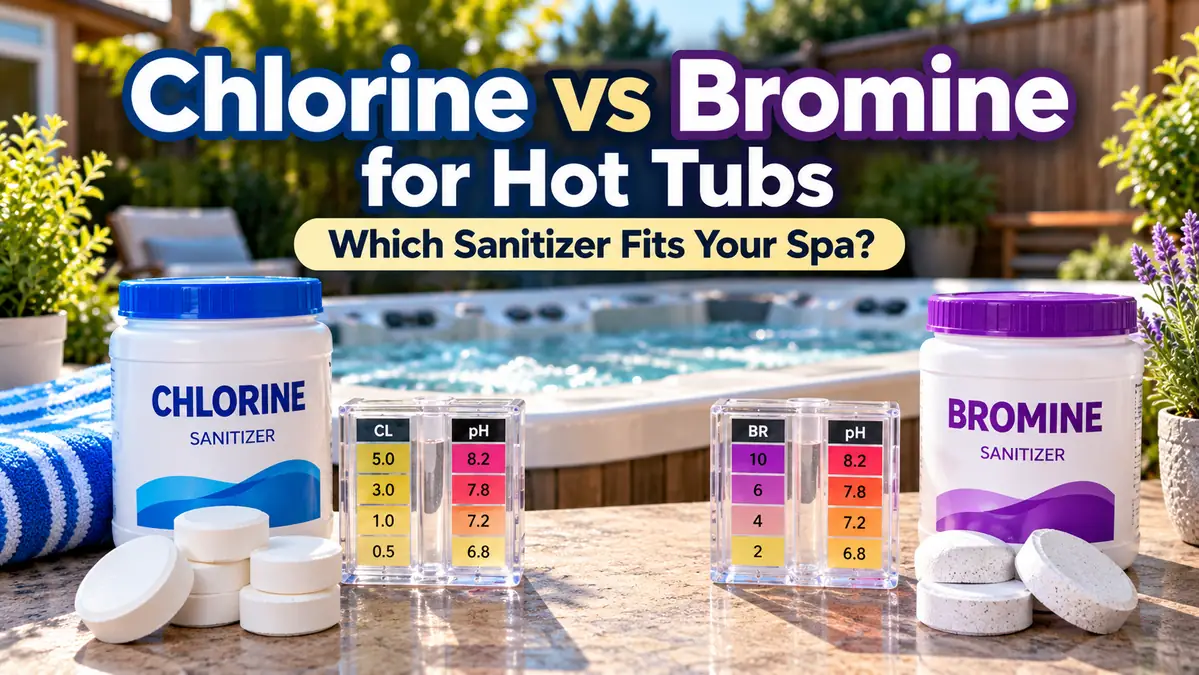
Chlorine vs Bromine for Hot Tubs: Which Sanitizer Fits Your Spa?

Choosing between chlorine and bromine for a hot tub is less about finding one universal winner and more about matching the sanitizer to your routine. Chlorine is usually cheaper, acts quickly, and is familiar to many owners. Bromine usually holds up better in hot water and can be easier to maintain with a tablet-based routine once the system is established.
The right choice depends on how often you soak, how much day-to-day testing you want to do, what your spa manufacturer allows, and how your skin and nose respond to the water. This guide compares the two systems by heat performance, cost, maintenance, smell, skin comfort, safety, and switching.
Quick Answer: Chlorine vs Bromine for Hot Tubs
- Choose chlorine if you want lower chemical cost, fast sanitizing action, and a simple dose-and-test routine.
- Choose bromine if you prefer a steadier sanitizer residual in hot water and a tablet-based maintenance routine that can need less frequent hands-on dosing.
- Check your owner’s manual first. Some hot tubs, cartridges, filters, surfaces, and water-care systems have specific sanitizer requirements.
- Never mix concentrated spa chemicals together. Add products separately and follow each product label.
For a public-health reference point, the CDC recommends at least 3 ppm free chlorine or 4 to 8 ppm bromine in hot tubs, with pH between 7.0 and 7.8. Your hot tub manufacturer or sanitizer label may give a more specific operating range for your equipment, so use the manual and product label as the final authority.
Chlorine vs Bromine at a Glance
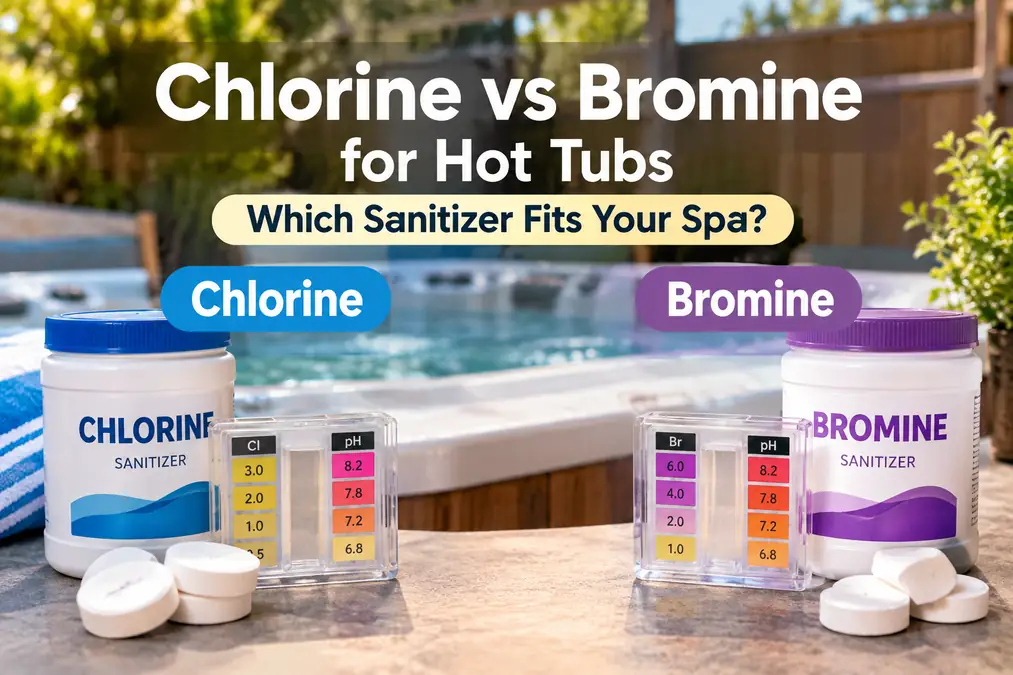
| Factor | Chlorine | Bromine |
|---|---|---|
| Sanitizing speed | Fast acting | Slower, steadier system |
| Heat stability | Can dissipate faster in hot water | Usually more stable at hot tub temperatures |
| Ongoing routine | Often requires more frequent dosing | Often maintained with tablets or a feeder |
| Upfront chemical cost | Usually lower | Usually higher |
| Odor | Strong odor can develop if chloramines build up | Often milder for many users |
| Skin and eye comfort | Can irritate some users if water is poorly balanced | Often feels gentler to some users, but irritation can still occur |
| Setup complexity | Usually simpler | Can require a more specific startup routine |
| Best fit | Budget-focused owners who do not mind frequent testing and dosing | Frequent users who want a steadier hot-water sanitizer routine |
How Chlorine Works in a Hot Tub
Chlorine sanitizes hot tub water by killing germs and oxidizing contaminants from bathers, such as sweat, body oils, and other organic material. In spas, granular chlorine products are commonly used because they dissolve quickly and can raise sanitizer levels fast.
The main advantage is speed. If testing shows low sanitizer, a correctly measured chlorine dose can restore the residual quickly. That makes chlorine appealing to owners who like a simple routine of test, dose, circulate, and retest.
The tradeoff is that hot water, heavy bather load, jets, and aeration can reduce the chlorine residual faster. If your tub gets used often, you may need to test and add sanitizer more frequently. If you already use a dichlor system, our Dichlor-to-Bleach Switch Calculator can help you understand CYA buildup before making changes to your routine.
How Bromine Works in a Hot Tub
Bromine also sanitizes spa water, but the ownership routine is different. Many bromine systems use slow-dissolving tablets or a feeder to maintain a steady residual. Some systems also use a bromide reserve that is activated by an oxidizer. The exact startup process depends on the products you are using, so follow the product label rather than copying a generic recipe.
Bromine is popular in hot tubs because it tends to remain effective in hot water longer than chlorine. That can make the sanitizer level feel more stable from one soak to the next, especially for owners who use the spa several times a week.
For a deeper maintenance guide, see Bromine Hot Tub Maintenance. If you are considering alternatives beyond chlorine and bromine, compare them in Hot Tub Water Care Alternatives.
Which Handles Hot Tub Temperatures Better?
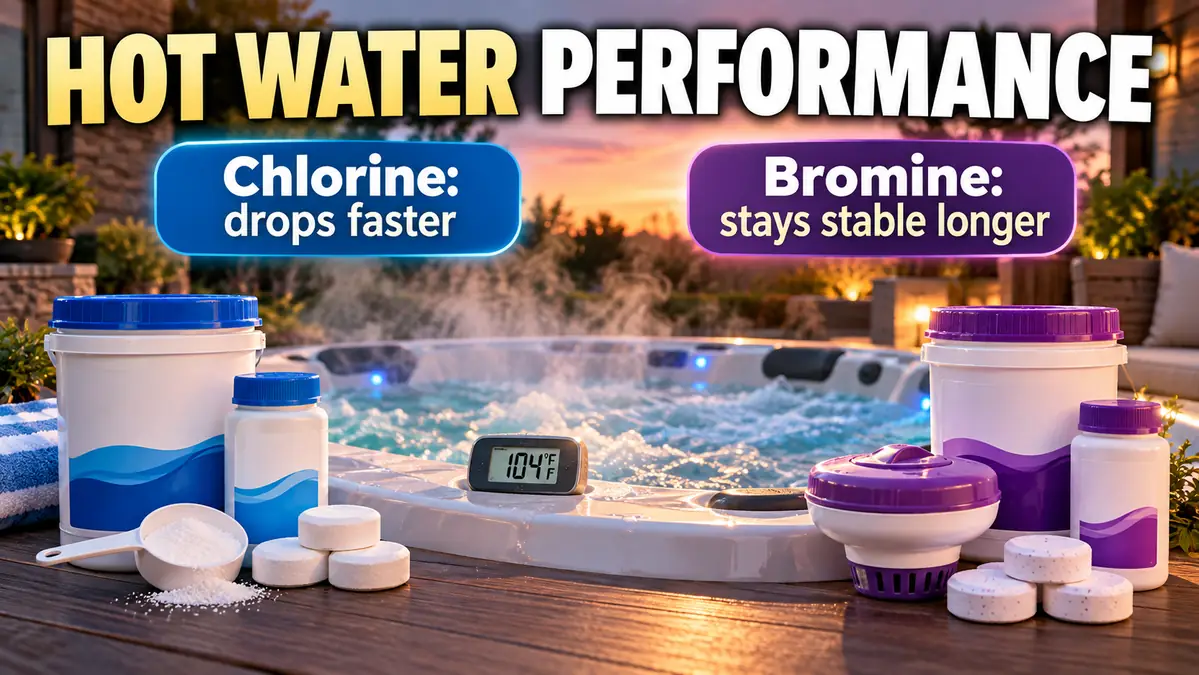
Bromine generally has the advantage in hot water. Hot tubs commonly operate close to 100°F to 104°F, and bromine usually holds its residual better at those temperatures. Chlorine works very well too, but the level may drop faster and require more frequent attention.
This does not mean bromine is automatically better for every owner. A chlorine system that is tested and maintained consistently can keep a hot tub properly sanitized. The practical question is whether you prefer quicker manual dosing or a steadier feeder-based routine.
Which Is Easier to Maintain?
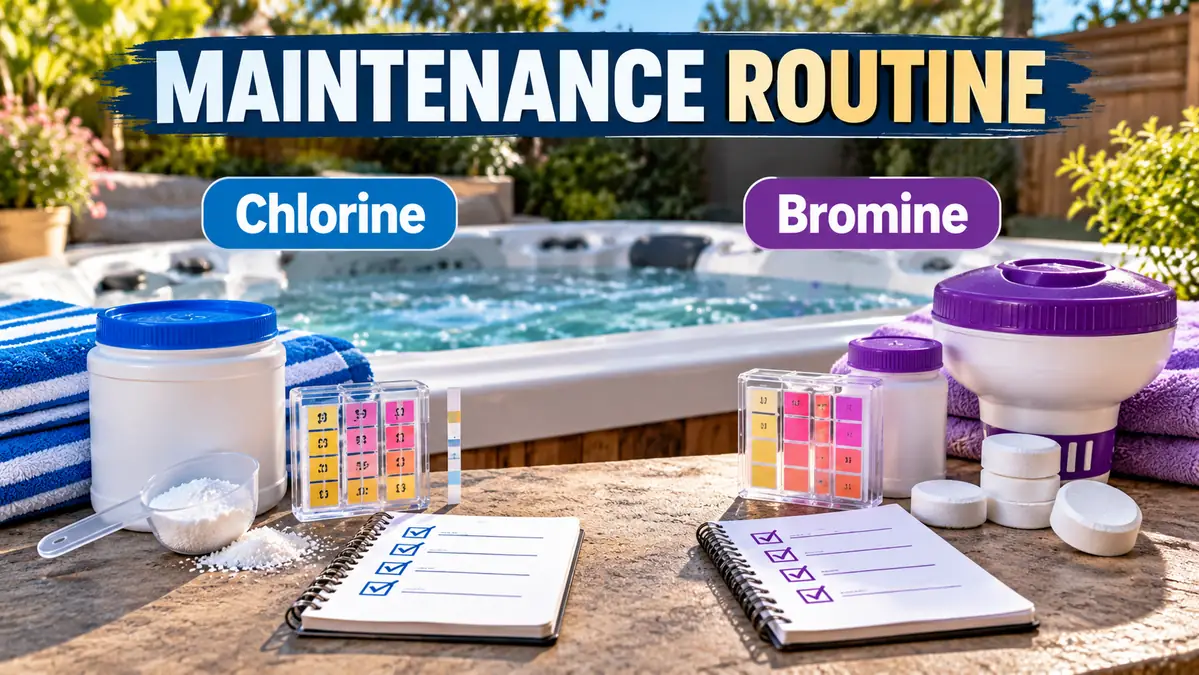
The answer changes depending on whether you mean startup or ongoing maintenance.
Chlorine is often simpler to start
For many owners, chlorine is straightforward. Test the water, add the manufacturer-recommended dose, circulate, and retest. There is usually less setup to understand at the beginning.
Bromine can feel easier once established
Once the bromine system is running correctly, tablets or a feeder can maintain a more consistent sanitizer residual. That can reduce the feeling that you need to add sanitizer after every small change in usage. You still need to test the water, balance pH and alkalinity, clean filters, and shock according to the product and spa instructions.
If you are still getting comfortable with water care, our Hot Tub Water Chemistry Guide explains the relationship between sanitizer, pH, alkalinity, and filtration.
Chlorine vs Bromine Cost
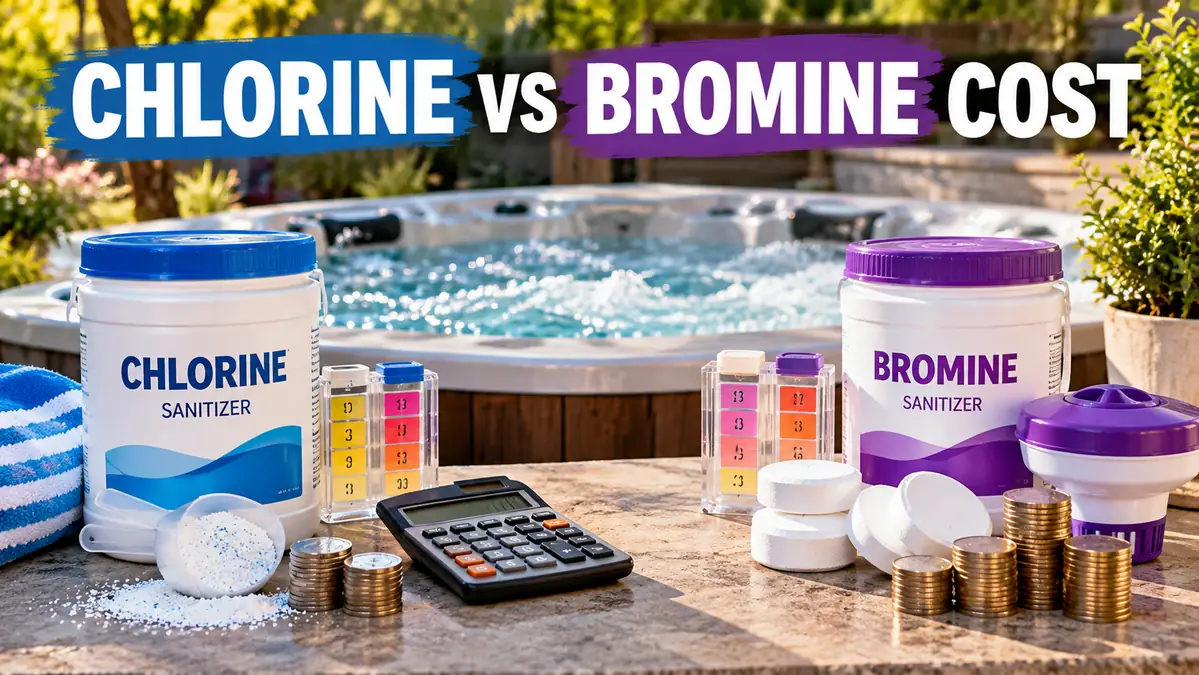
Chlorine is usually the less expensive sanitizer to buy. Bromine tablets and startup products often cost more. However, chemical price alone does not tell you the full ownership cost.
If chlorine requires more frequent dosing in your spa, the gap can narrow. If a bromine feeder is set too high, you can also waste product. Your actual monthly cost depends on spa volume, water temperature, bather load, how often the cover is open, and how carefully you maintain the target residual.
- Chlorine may suit you better if keeping chemical cost low is a top priority and you are comfortable testing often.
- Bromine may suit you better if you value a steadier routine and are willing to pay more for that convenience.
Smell, Skin Comfort, and Eye Irritation
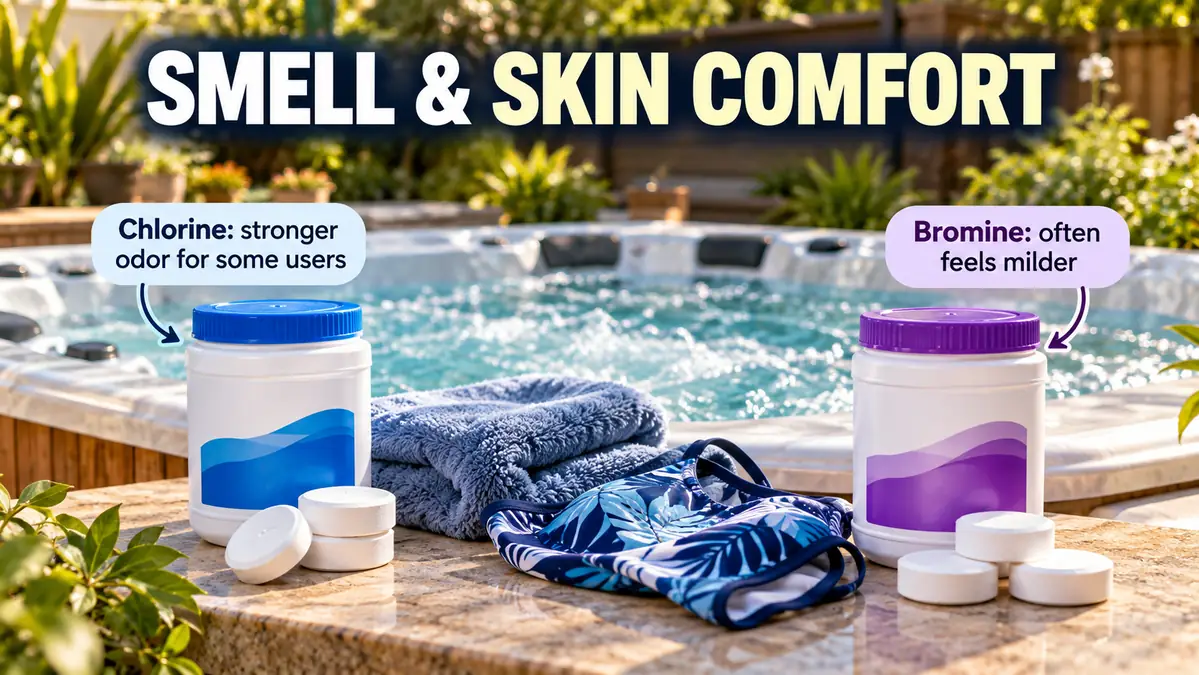
A strong “chlorine smell” does not automatically mean there is too much free chlorine. The CDC notes that a properly chlorinated hot tub should have little odor, and a strong chemical smell can indicate a water-quality problem.
Bromine is often described as milder smelling, and some users say it feels gentler on their skin or eyes. That does not make bromine hypoallergenic or irritation-free. Either sanitizer can cause discomfort if the sanitizer level or pH is outside the correct range, and some individuals simply react better to one system than the other.
If irritation keeps happening even when your test results are in range, stop using the spa until you identify the cause. Check the sanitizer, pH, alkalinity, filter condition, recent chemical additions, and your spa manufacturer’s recommendations.
Which Is Better for Frequent Hot Tub Use?
Bromine can be a strong fit for a spa that is used frequently because it usually maintains a steadier residual in hot water. A feeder or tablet system can be convenient when the tub sees several soaking sessions each week.
Chlorine can also work very well for frequent use, but expect the sanitizer demand to rise after heavy bather load. After a busy evening, test the water before assuming the normal dose is enough. For high-use situations, our Chlorine Shock for Hot Tub guide explains when oxidation becomes part of the cleanup routine.
Which Is Better for Occasional Use?
Chlorine can make sense if you use the hot tub occasionally and do not mind testing and dosing before or after use. The system is simple, widely available, and easy to understand.
Bromine can still work well for occasional use, especially if the spa remains heated and covered between sessions. The deciding factor is whether you prefer maintaining a steady sanitizer residual even during periods when nobody is soaking.
What About Inflatable Hot Tubs?
Do not assume an inflatable hot tub can use the same sanitizer hardware or routine as a permanent acrylic spa. Some manufacturers have specific rules about floaters, tablet types, cartridges, or chemical concentrations.
Read the owner’s manual before using bromine tablets, a floating dispenser, or any sanitizer system that was not supplied with the tub. Hot Spring, for example, warns owners to use only sanitizers approved for their specific spa and notes that some dispensing methods can damage surfaces. The same principle applies to inflatable spas: manufacturer compatibility comes first.
Can You Switch From Chlorine to Bromine?
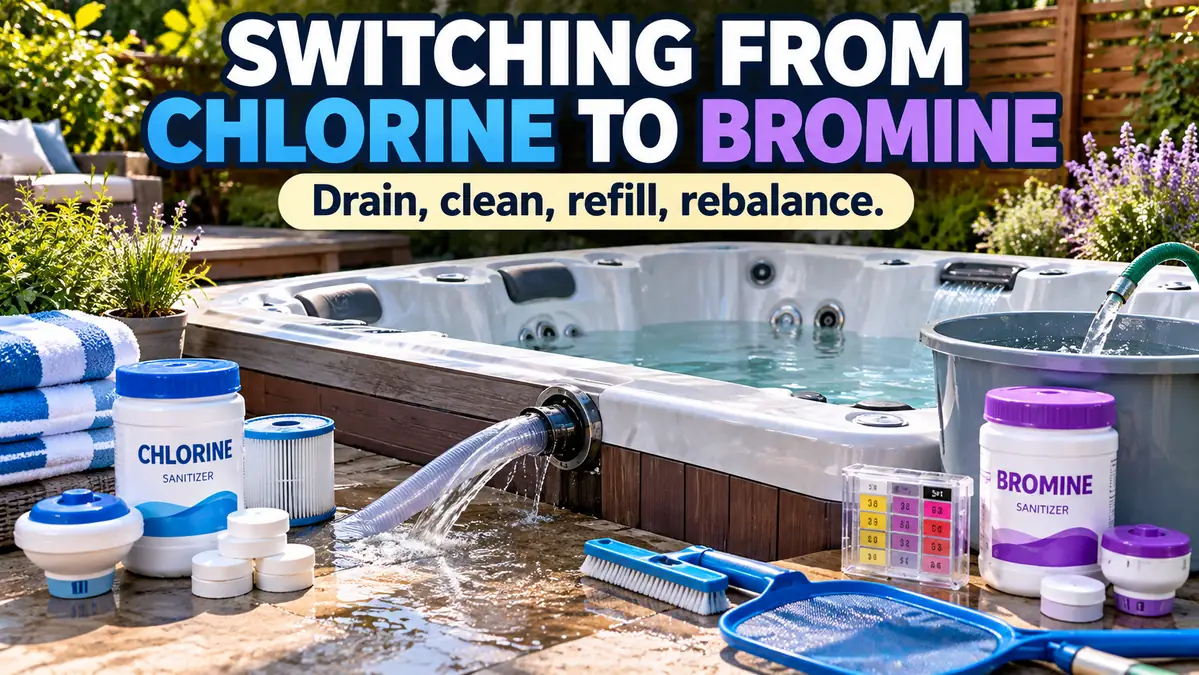
Yes, but a drain-and-refill is the cleanest way to switch systems. It gives you a known starting point and prevents confusion about what chemistry remains in the water.
- Turn off dosing devices and remove old sanitizer products.
- Drain the spa according to the owner’s manual.
- Clean the shell and service the filter as needed.
- Refill with fresh water.
- Balance alkalinity and pH.
- Start the new sanitizer system using its product label and the spa manufacturer’s instructions.
Switching from bromine back to chlorine is especially important to handle with a fresh fill because an established bromide reserve can be reactivated by oxidizers. A drain-and-refill avoids trying to operate two different systems in the same water.
Can You Mix Chlorine and Bromine?
Never mix concentrated chlorine and bromine products together in a container, feeder, scoop, or storage area. Combining concentrated pool and spa chemicals can cause dangerous reactions.
In the water itself, the chemistry is more complicated because oxidizers can activate bromide into bromine. For an owner, the safest rule is simpler: run one clearly defined sanitizer system, follow the product label, and use a drain-and-refill when you intentionally change systems.
Recommended Chlorine, Bromine, and pH Levels
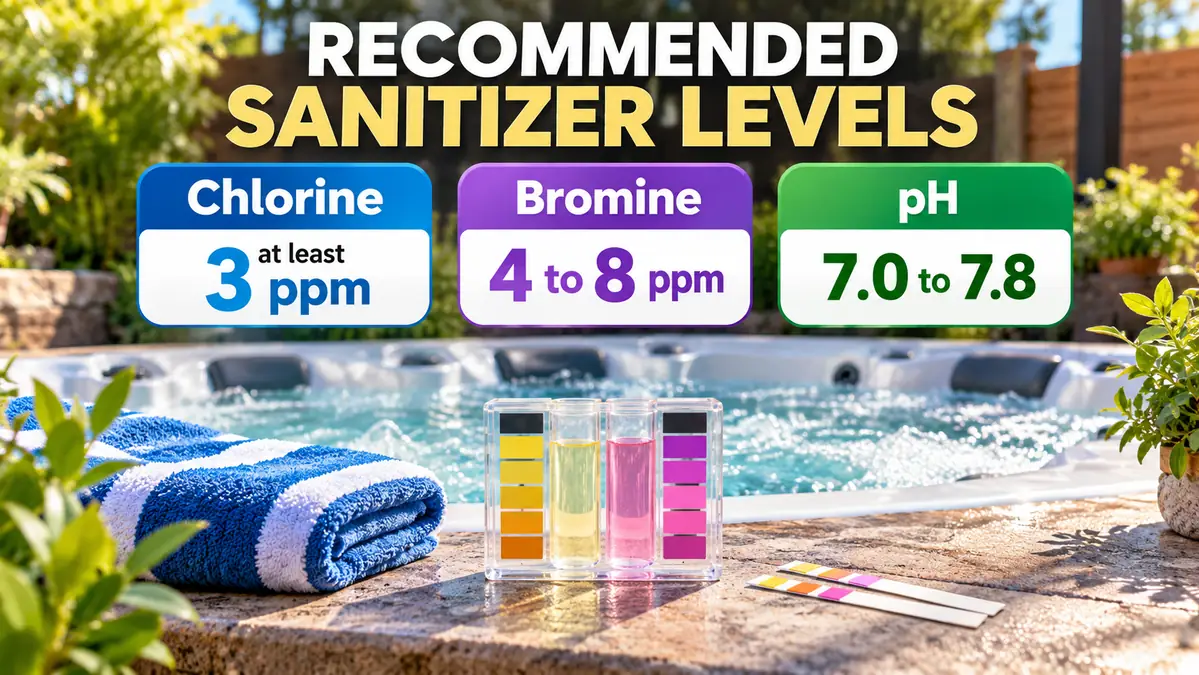
The CDC’s public hot tub guidance recommends:
- Free chlorine: at least 3 ppm
- Bromine: 4 to 8 ppm
- pH: 7.0 to 7.8
- Water temperature: no higher than 104°F
Home-spa manuals can specify different operating targets based on the equipment and water-care system. For example, some manufacturers publish narrower ranges for their residential spas. Use the spa manual and sanitizer label for your normal operating target, and use the CDC guidance as a useful public-health reference.
Test strips are only useful when they are fresh, stored correctly, and read at the right time. If your readings seem inconsistent, compare them with a fresh strip or a liquid test before adding more chemicals. Our Hot Tub Test Strips Guide covers what to look for.
Choose Chlorine If…
- You want the lower-cost option.
- You prefer a simple test-and-dose routine.
- You are comfortable checking sanitizer more often.
- You want fast sanitizer response after heavy use.
- Your spa manufacturer recommends or requires a chlorine-based system.
Choose Bromine If…
- You use the spa frequently.
- You want a sanitizer that generally holds up well in hot water.
- You prefer a feeder or tablet-based maintenance routine.
- You find properly balanced bromine water more comfortable.
- Your spa manufacturer approves the bromine products and dispensing method you plan to use.
Common Mistakes With Both Sanitizers
- Adding chemicals without testing first. Guessing often creates a second problem.
- Ignoring pH. Sanitizer performance and bather comfort both depend on balanced water.
- Using the pool version of a chemical without checking the spa label. Hot tubs have different volume, heat, and equipment requirements.
- Leaving tablets in a dispenser that your spa manufacturer does not approve. Concentrated chemicals can damage surfaces or equipment.
- Assuming smell equals sanitizer strength. Strong odor can indicate combined sanitizer and contamination rather than clean water.
- Mixing concentrated chemicals. Keep products separate and use clean, dedicated measuring tools.
- Ignoring bather load. Four people soaking for an hour create far more sanitizer demand than one person soaking for 15 minutes.
- Changing systems without a fresh start. Drain and refill when switching between chlorine and bromine systems.
Final Verdict
Chlorine is usually the better fit for owners who want lower cost, fast action, and a straightforward manual dosing routine. Bromine is usually the better fit for owners who use their hot tub frequently and want a steadier sanitizer residual in hot water.
Neither choice removes the need for testing, balanced pH, filter care, and regular water replacement. The best sanitizer is the one your spa supports, your household tolerates well, and you can maintain consistently.
FAQs
Is bromine better than chlorine for a hot tub?
Bromine is often preferred for hot tubs because it generally stays stable in hot water longer and can be maintained with a tablet-based routine. Chlorine is usually cheaper and acts faster. The better choice depends on your spa, usage pattern, and maintenance preference.
Which is cheaper, chlorine or bromine?
Chlorine is usually cheaper to buy. Bromine products often cost more, but the sanitizer may need less frequent hands-on dosing in some hot tubs. Compare total monthly use rather than package price alone.
Does bromine work better in hot water?
Bromine generally maintains its effectiveness well at typical hot tub temperatures, which is one reason it is popular in spas. Chlorine also works when the correct residual and pH are maintained, but it may dissipate faster.
Is bromine gentler on skin than chlorine?
Some users report that properly balanced bromine water feels gentler, but either sanitizer can irritate skin or eyes if the level or pH is wrong. Individual sensitivity also varies.
Can I put bromine tablets in any hot tub?
Not automatically. Check the owner’s manual first. Some manufacturers restrict specific tablets, floaters, cartridges, or sanitizer systems because they can damage equipment or interfere with other water-care components.
Can I switch from chlorine to bromine without draining?
A drain-and-refill is the cleanest and easiest way to switch systems. It gives you fresh water and a clear starting point for the new sanitizer routine.
What sanitizer level should a hot tub have?
CDC guidance recommends at least 3 ppm free chlorine or 4 to 8 ppm bromine, with pH between 7.0 and 7.8. For your home spa’s normal operating range, follow the owner’s manual and sanitizer product label.